
















Copyright: ©Author(s) 2026.
World J Gastroenterol. Jul 28, 2026; 32(28): 118370
Published online Jul 28, 2026. doi: 10.3748/wjg.118370
Published online Jul 28, 2026. doi: 10.3748/wjg.118370
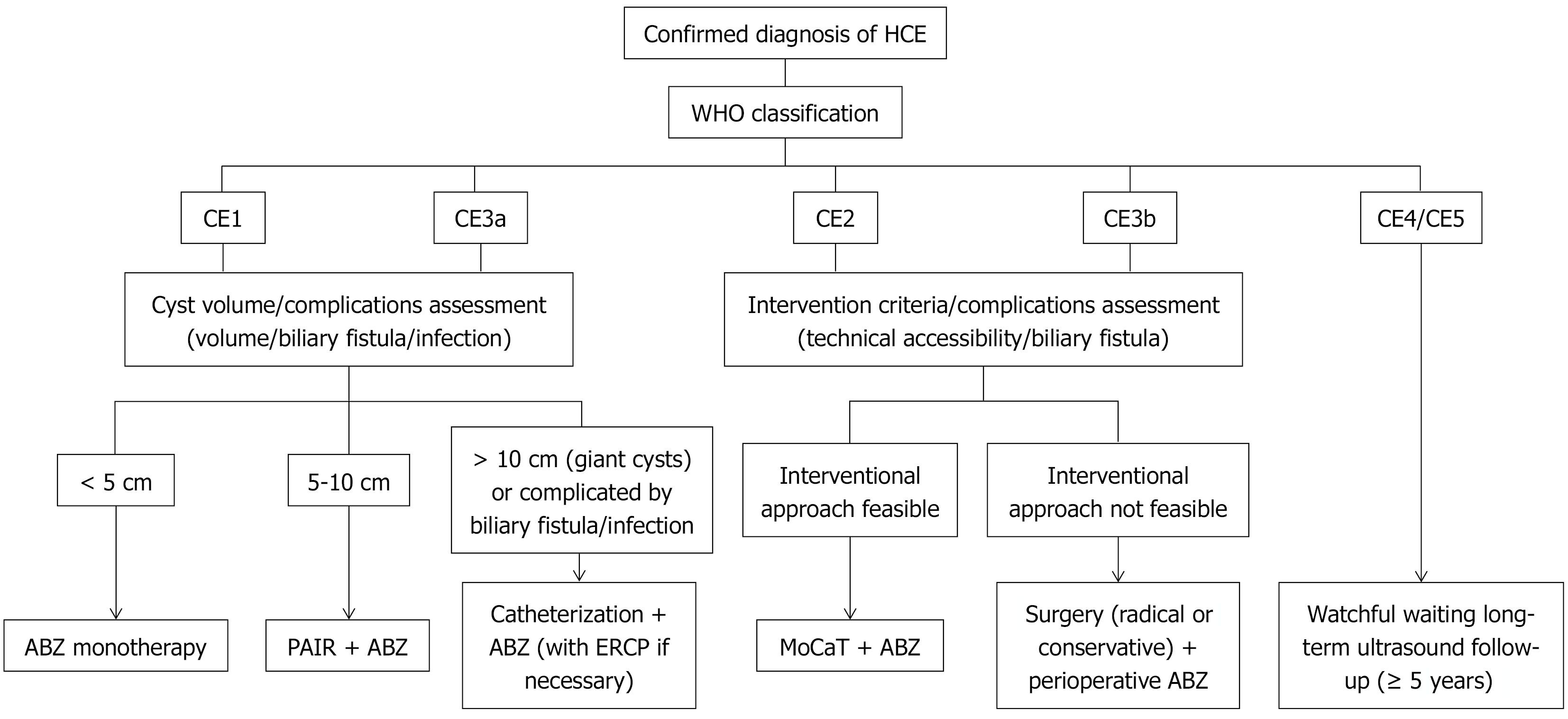
Figure 1 Clinical decision-making algorithm for hepatic cystic echinococcosis based on World Health Organization classification and cyst characteristics.
This flowchart illustrates a stratified, stepwise approach to treatment selection for hepatic cystic echinococcosis. The algorithm begins with confirmation of diagnosis and World Health Organization cyst stage classification (CE1, CE3a, CE2, CE3b, CE4/CE5). Decision-making then proceeds through assessment of cyst volume, presence of complications (biliary fistula, infection), and technical accessibility of interventional procedures. For small uncomplicated cysts (< 5 cm) of CE1/CE3a types, albendazole monotherapy is recommended. For larger or complicated cysts, the choice between percutaneous techniques (puncture-aspiration-injection-reaspiration, catheterization, modified catheterization technique) and surgery is guided by cyst characteristics and local expertise. Inactive cysts (CE4/CE5) are managed with watchful waiting and long-term ultrasound follow-up. HCE: Hepatic cystic echinococcosis; WHO: World Health Organization; CE: Cystic echinococcosis; ABZ: Albendazole; PAIR: Puncture-aspiration-injection-reaspiration; MoCaT: Modified catheterization technique; ERCP: Endoscopic retrograde cholangiopancreatography.
- Citation: Zhang XY, Li BQ, Cao WN, Zhang ZL, Xin Q, Jia KF. Percutaneous vs surgical management of hepatic cystic echinococcosis: A perspective on evolving clinical pathways. World J Gastroenterol 2026; 32(28): 118370
- URL: https://www.wjgnet.com/1007-9327/full/v32/i28/118370.htm
- DOI: https://dx.doi.org/10.3748/wjg.118370