
















Copyright: ©Author(s) 2026.
World J Gastroenterol. Jul 14, 2026; 32(26): 114936
Published online Jul 14, 2026. doi: 10.3748/wjg.114936
Published online Jul 14, 2026. doi: 10.3748/wjg.114936
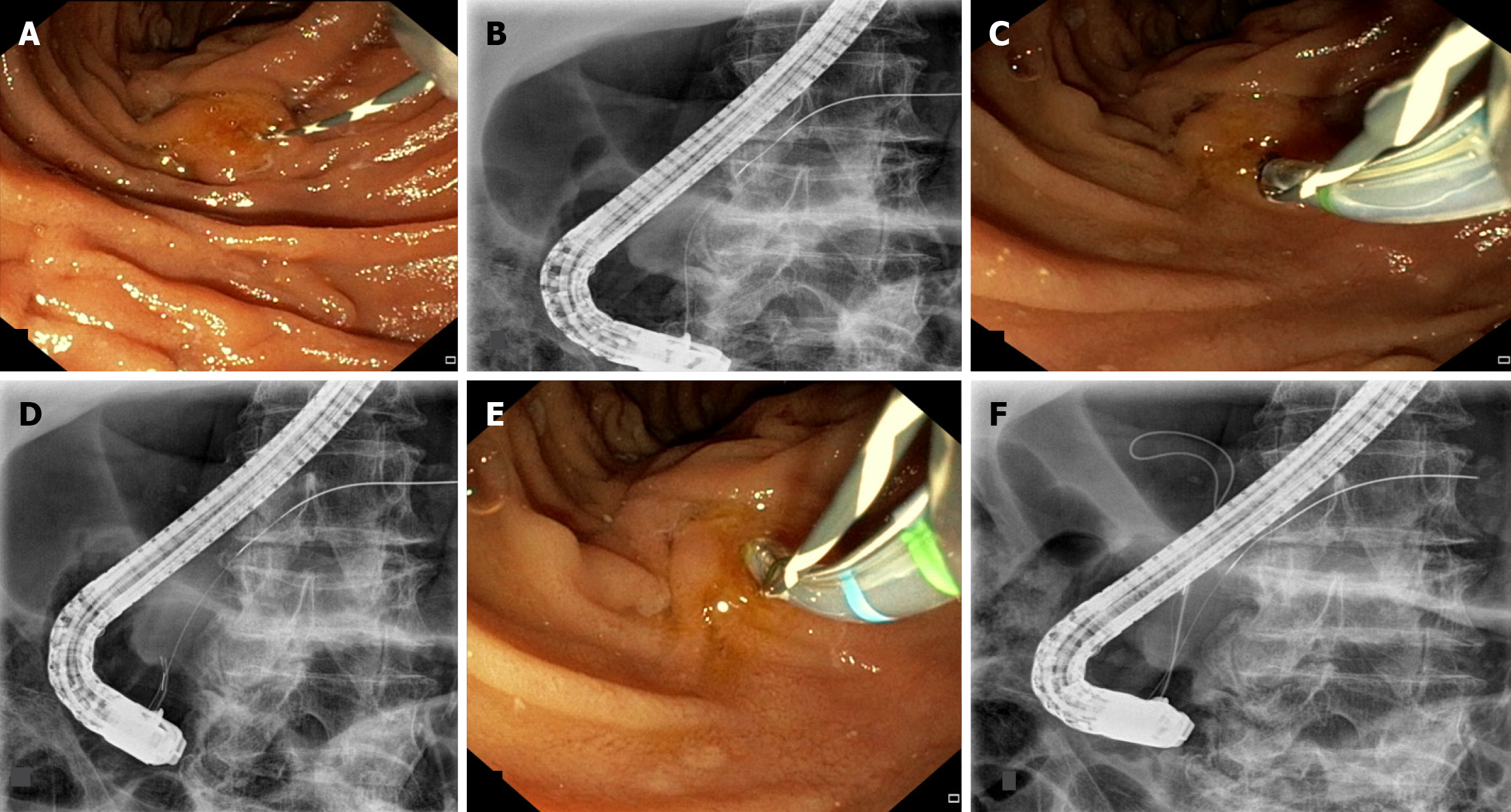
Figure 1 Double guidewire technique for difficult biliary cannulation.
A and B: Inadvertent pancreatic duct (PD) cannulation during conventional endoscopic retrograde cholangiopancreatography (guidewire entering PD) (A) on endoscopic image and on fluoroscopic image (B); C and D: With the guidewire in place in PD, sphincterotome used to selectively cannulate the bile duct (double guidewire technique) (C), this was which was confirmed on fluoroscopic image (D); E and F: Once bile duct cannulation is confirmed, deep cannulation was achieved and was successful (E), as confirmed on fluoroscopic image (F).
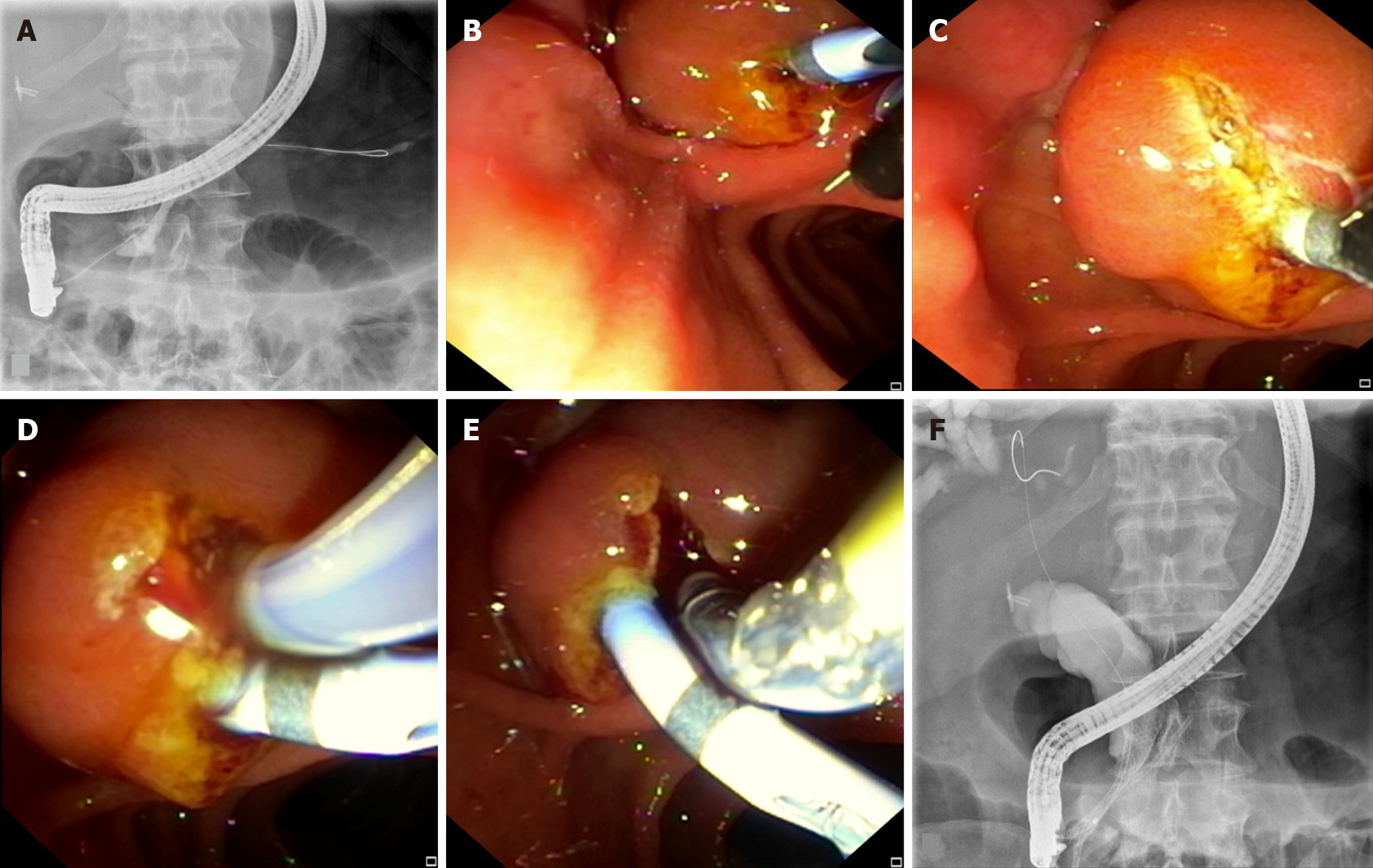
Figure 2 Pre-cut sphincterotomy over pancreatic duct stent.
A: Inadvertent pancreatic duct (PD) cannulation during conventional endoscopic retrograde cholangiopancreatography (guidewire entering PD) on fluoroscopic image; also noted are metallic clips near cystic duct stump; B: Endoscopic image showing PD stent in place and needle knife for performing fistulotomy over PD stent; C: Fistulotomy performed over the bulging papilla using needle knife sphincterotome to access the bile duct; D: Once adequate fistulotomy was achieved, standard sphincterotome was used to selectively canulate the bile duct; E: Once selective cannulation was achieved, a self-expanding metal stent was loaded over the guidewire; F: Self-expanding metal stent deployed in the biliary system with free flow of contrast; also noted is the PD stent in place.
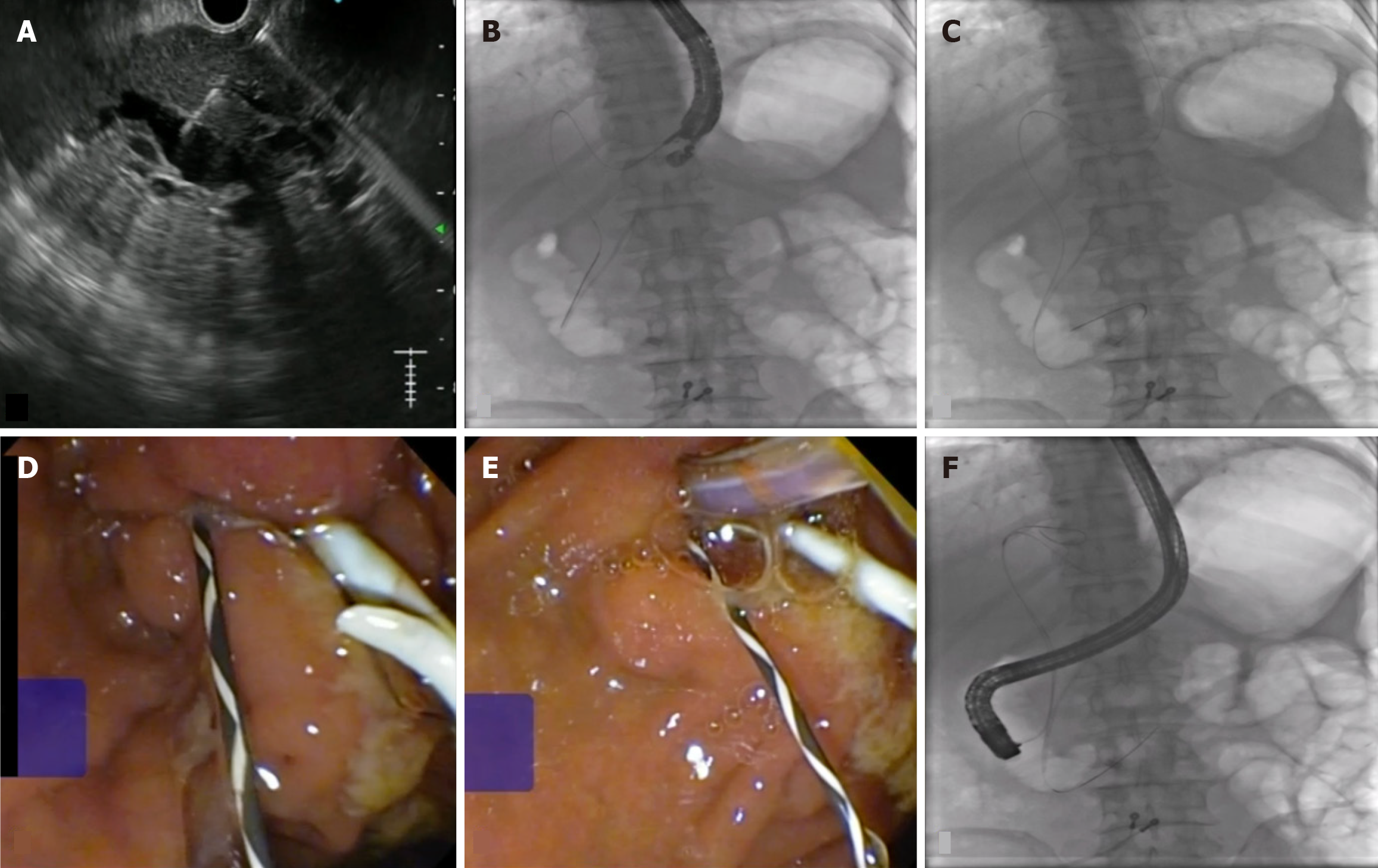
Figure 3 Conventional endoscopic ultrasound guided rendezvous technique (intrahepatic route): A: Endoscopic ultrasound (EUS) image showing dilated intrahepatic biliary radicle and puncture made using 19-G EUS-fine needle aspiration needle; B: After bile aspiration and confirming bile duct puncture, guidewire passed across the papilla into the duodenum as shown in the fluoroscopic image; C: After coiling the guidewire in the duodenum, the EUS scope was exchanged over the guidewire; D: Endoscopic image of the papilla showing a straight plastic stent placed in pancreatic duct (at the time of difficult biliary cannulation during conventional endoscopic retrograde cholangiopancreatography) and the guidewire in the bile duct passed during EUS-rendezvous procedure; E: Selective cannulation of bile duct performed using a sphincterotome by the side of the guidewire; F: Fluoroscopic image showing deep cannulation of the bile duct during endoscopic retrograde cholangiopancreatography procedure; also noted is the guidewire within the bile duct (placed during EUS-rendezvous procedure) with pancreatic duct stent in place.
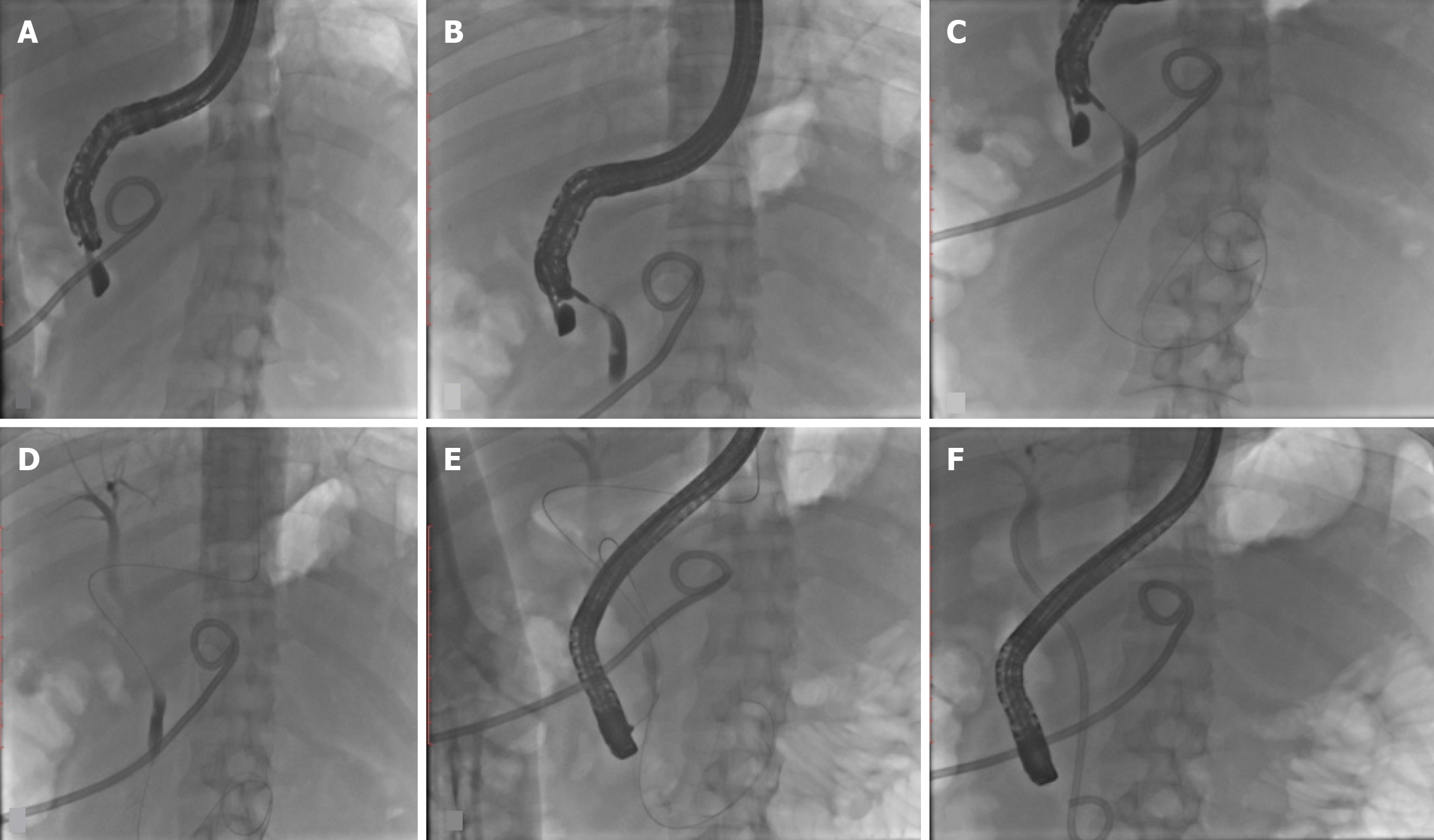
Figure 4 Conventional endoscopic ultrasound guided rendezvous technique (extrahepatic route) being performed in a case of acute biliary pancreatitis (percutaneous catheter drain in situ) diagnosed with choledocholithiasis.
A: Endoscopic ultrasound (EUS) scope positioned in short scope position in D1-D2 junction; B: After common bile duct puncture (access diameter 43 mm) using 19 G EUS- fine needle aspiration needle, bile aspiration was done to confirm position and thereafter, contrast was injected to delineate the bile duct; C: Guidewire was passed across the papilla and coiled in the duodenum; D: EUS scope was exchanged with guidewire in place; E: Subsequent endoscopic retrograde cholangiopancreatography was performed using a duodenoscope and successful biliary cannulation was achieved along the side of the exiting guidewire; F: After stone extraction using balloon sweeps, common bile duct stent (7 French × 7 cm double pigtail stent) was placed.
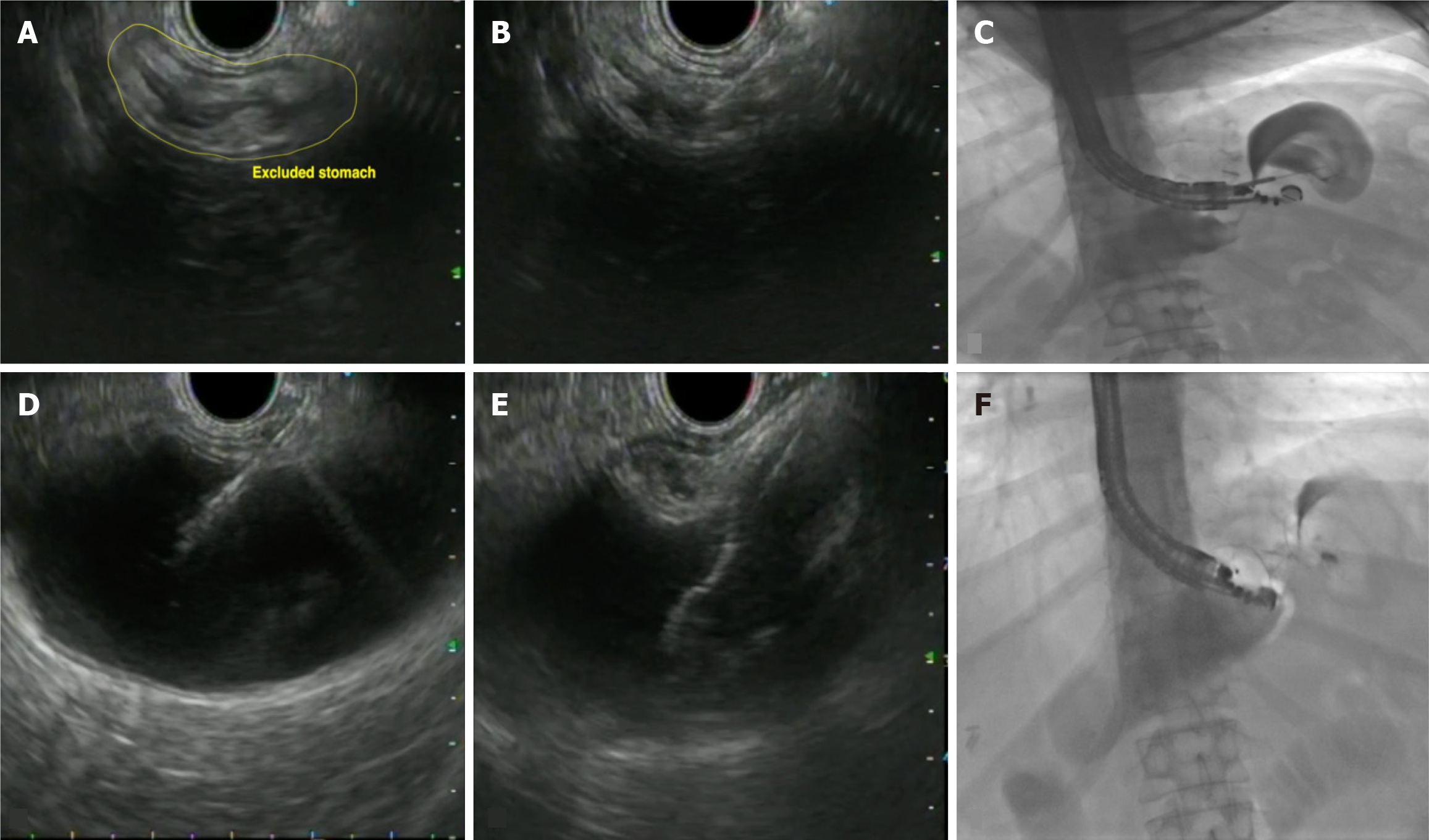
Figure 5 Endoscopic ultrasound-directed trans-gastric endoscopic retrograde cholangiopancreatography for management of biliary obstruction in altered anatomy.
A: Endoscopic ultrasound (EUS)-directed trans-gastric endoscopic retrograde cholangiopancreatography being performed in a patient for the management of choledocholithiasis in a Roux-en-Y gastric bypass anatomy; Using linear echoendoscope, under EUS and fluoroscopic guidance, the excluded stomach was located endosonographically from the remnant gastric pouch; B: Once an optimal position was confirmed, the remnant stomach was punctured using a 19-G EUS-fine needle aspiration (FNA) (EZ shot 3 plus; Olympus, Japan) needle; C: Contrast along with 120 mL of water was injected using the FNA needle to confirm the position within and distend the excluded stomach; D: EUS image shows the distended stomach with FNA needle in-situ; E: The fistula tract was created using the freehand technique, by electrocautery-enhanced lumen apposing metal stent (size 20 × 10 mm; Hot-AXIOS; Boston Scientific, MA, United States) where the distal end was deployed in the excluded stomach and the proximal flange into the remnant gastric pouch; F: Fluoroscopic image shows the presence of lumen apposing metal stent in-situ creating a trans-mural tract.
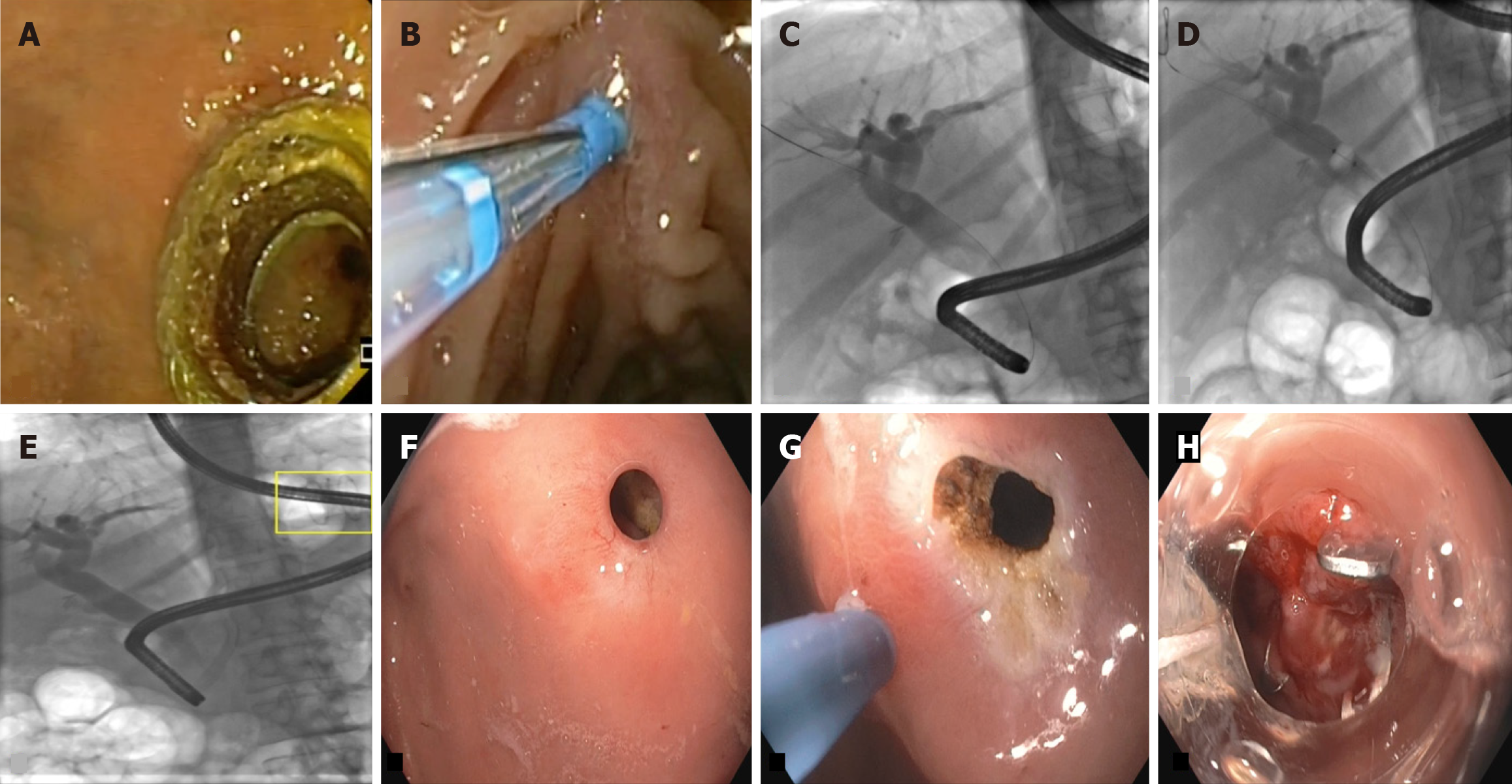
Figure 6 Endoscopic ultrasound-directed trans-gastric endoscopic retrograde cholangiopancreatography for management of biliary obstruction in altered anatomy.
A: Endoscopic image shows the presence of lumen apposing metal stent (LAMS) in-situ in the remnant gastric pouch; this is the route which is used through which the duodenoscope is passed to each of the papilla; B: Once papilla is reached, selective cannulation of bile duct is performed using a standard sphincterotome; C: Fluoroscopic image shows the guidewire in the common bile duct (CBD), following which contrast was given and cholangiogram was taken. Cholangiogram shows presence of dilated intrahepatic biliary radicles with a filling defect in CBD (likely stone); also noted are presence of metallic clips near cystic duct (indication of past laparoscopic cholecystectomy); D: Balloon sweeps were taken to clear the CBD of the stones or sludge; E: Check cholangiogram shows no filling defect in CBD; yellow box denoted the presence of LAMS through which the duodenoscope has passed; after completion of endoscopic retrograde cholangiopancreatography, LAMS was removed in same session; F: Follow up endoscopy after a month revealed persistent gastro-gastrostomy fistula; G: Margins were made raw by argon plasma coagulation; H: The fistula was closed using an 11/6t over-the-scope clip.
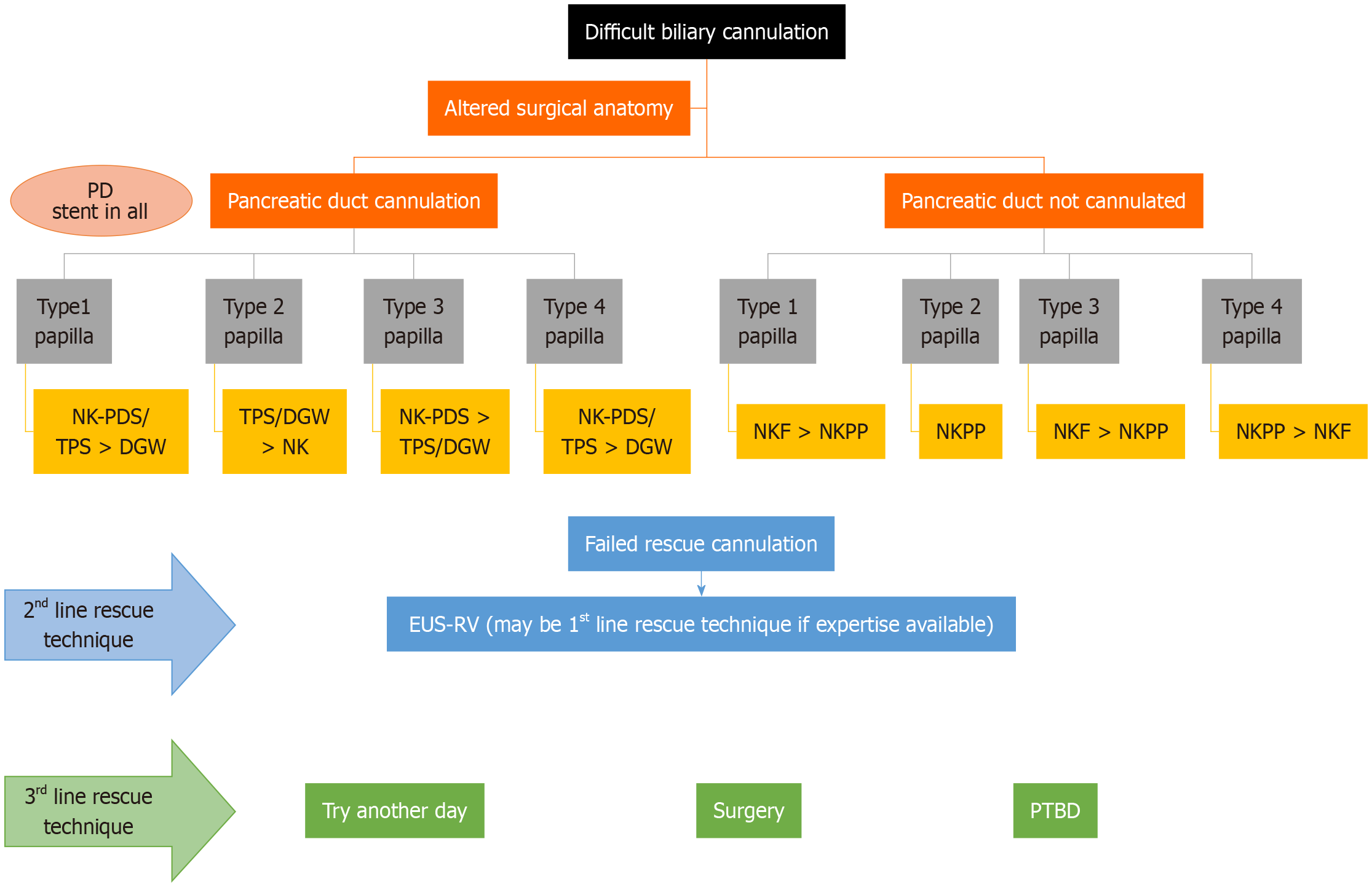
Figure 7 Algorithm for approach to a case of difficult biliary cannulation during endoscopic retrograde cholangiopancreatography.
PD: Pancreatic duct; NK: Needle knife; PDS: Pancreatic duct stent; TPS: Transpancreatic sphincterotomy; DGW: Double guidewire; NKF: Needle knife fistulotomy; NKPP: Needle knife precut papillotomy; EUS-RV: Endoscopic ultrasound guided rendezvous technique; PTBD: Percutaneous trans-hepatic biliary drainage.
- Citation: Mishra S, Dhar J, Crinò SF, Samanta J. Technical overview of difficult biliary cannulation in endoscopic retrograde cholangiopancreatography: A guide for the endoscopist. World J Gastroenterol 2026; 32(26): 114936
- URL: https://www.wjgnet.com/1007-9327/full/v32/i26/114936.htm
- DOI: https://dx.doi.org/10.3748/wjg.114936