
















Copyright: ©Author(s) 2026.
World J Gastroenterol. Jul 7, 2026; 32(25): 119364
Published online Jul 7, 2026. doi: 10.3748/wjg.119364
Published online Jul 7, 2026. doi: 10.3748/wjg.119364
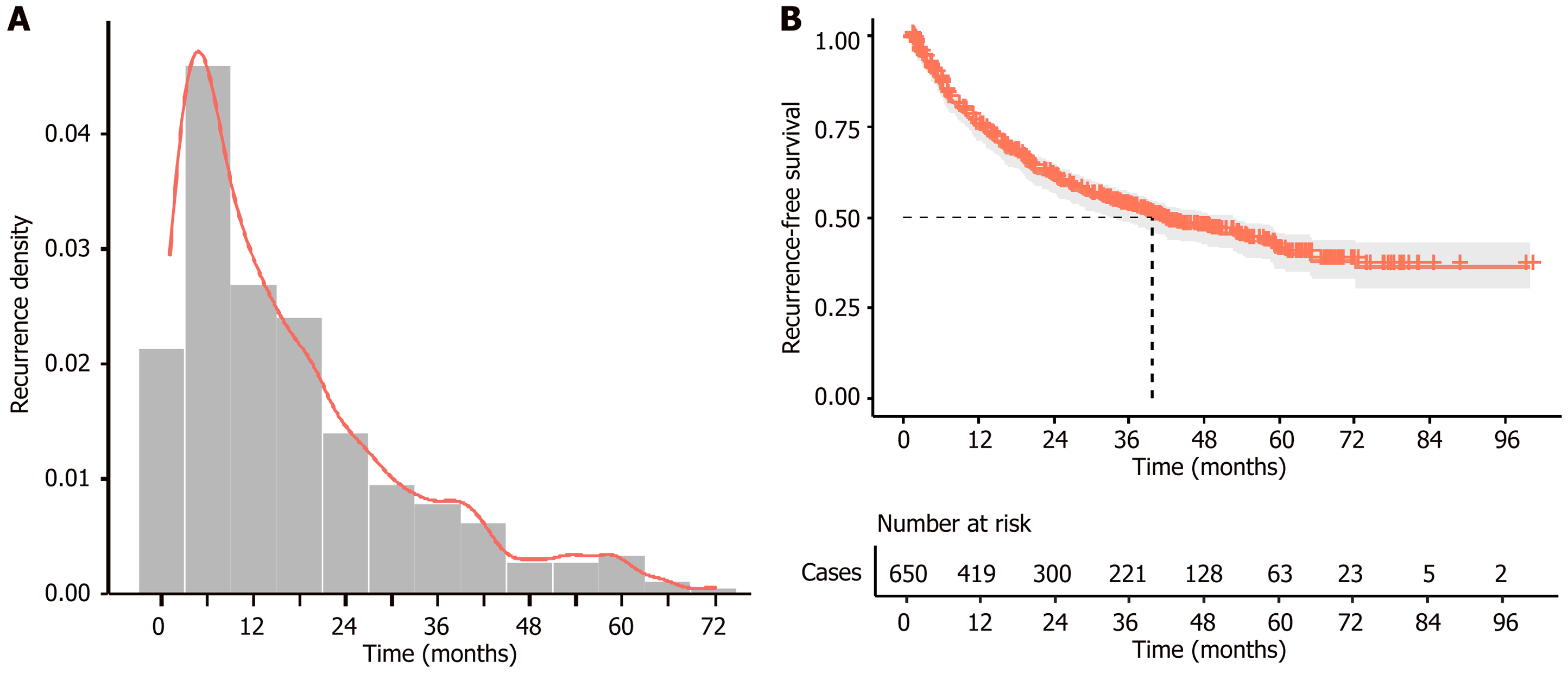
Figure 1 Overall recurrence distribution and recurrence-free survival of 650 hepatitis B virus-related hepatocellular carcinoma patients with maximal tumor diameter ≤ 5 cm.
A: Overall recurrence distribution; B: Recurrence-free survival.
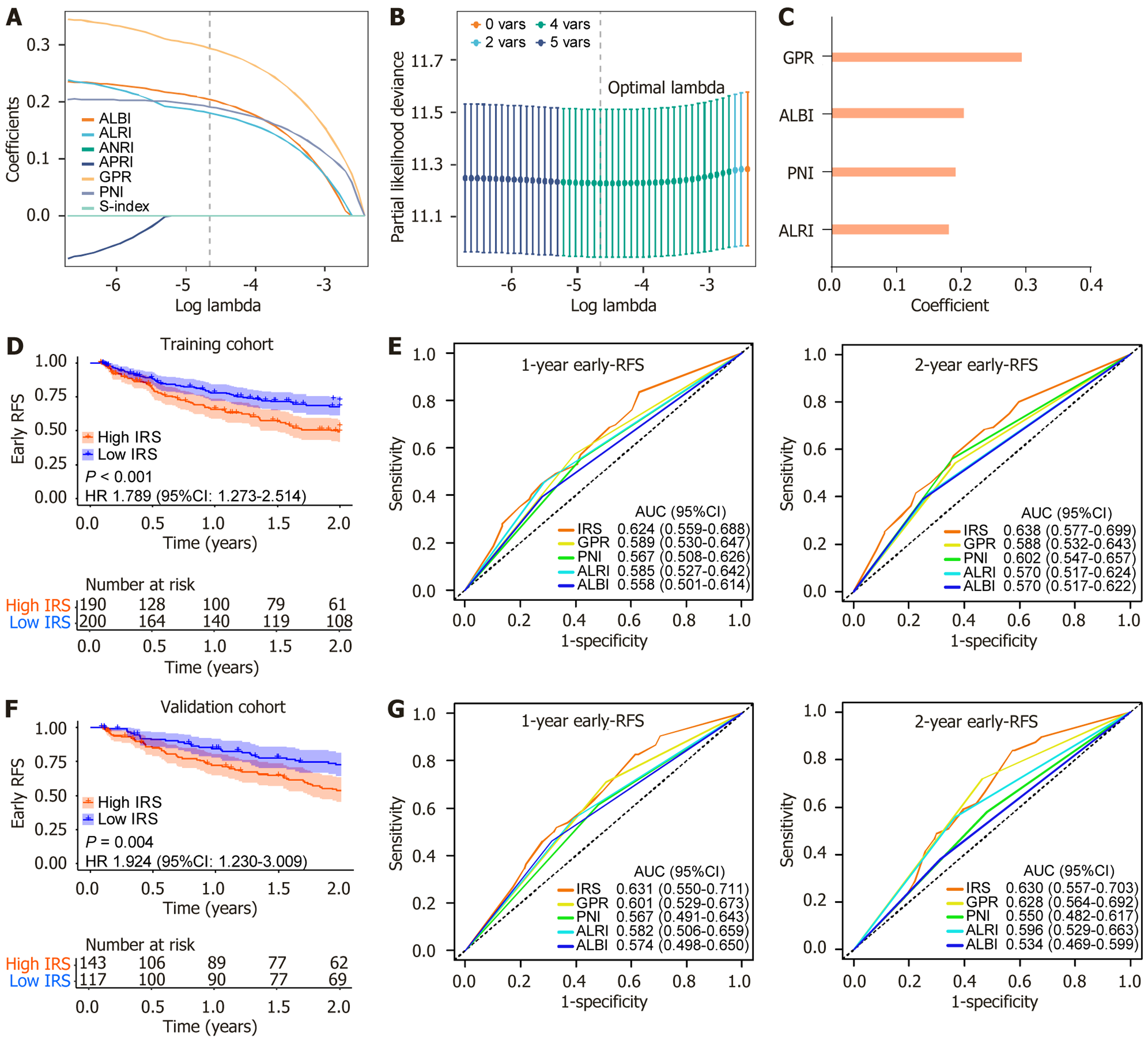
Figure 2 Construction and evaluation of an inflammation-related score model based on various inflammation indices for predicting early recurrence of hepatitis B virus-related hepatocellular carcinoma ≤ 5 cm.
A and B: Screening of inflammation indices for inflammation-related score (IRS) model construction using least absolute shrinkage and selection operator regression in the training cohort; C: Coefficients of each inflammation index integrated into the IRS model in the training cohort; D: Early recurrence-free survival (RFS) curves for hepatocellular carcinoma (HCC) patients with high and low IRS in the training cohort; E: Receiver operating characteristic (ROC) curves of IRS and inflammation indices on 1- and 2-year RFS of HCC patients in the training cohort; F: Early RFS curves for HCC patients with high and low IRS in the validation cohort; G: ROC curves of IRS and inflammation indices on 1- and 2-year RFS of HCC patients in the validation cohort. ALBI: Albumin-bilirubin index; ALRI: Aspartate aminotransferase to lymphocyte ratio index; ANRI: Aspartate aminotransferase to neutrophil ratio index; APRI: Aspartate aminotransferase to platelet ratio index; GPR: Gamma-glutamyl transpeptidase-to-platelet ratio; PNI: Prognostic nutritional index; RFS: Recurrence-free survival; IRS: Inflammation-related score; AUC: Areas under the curve.
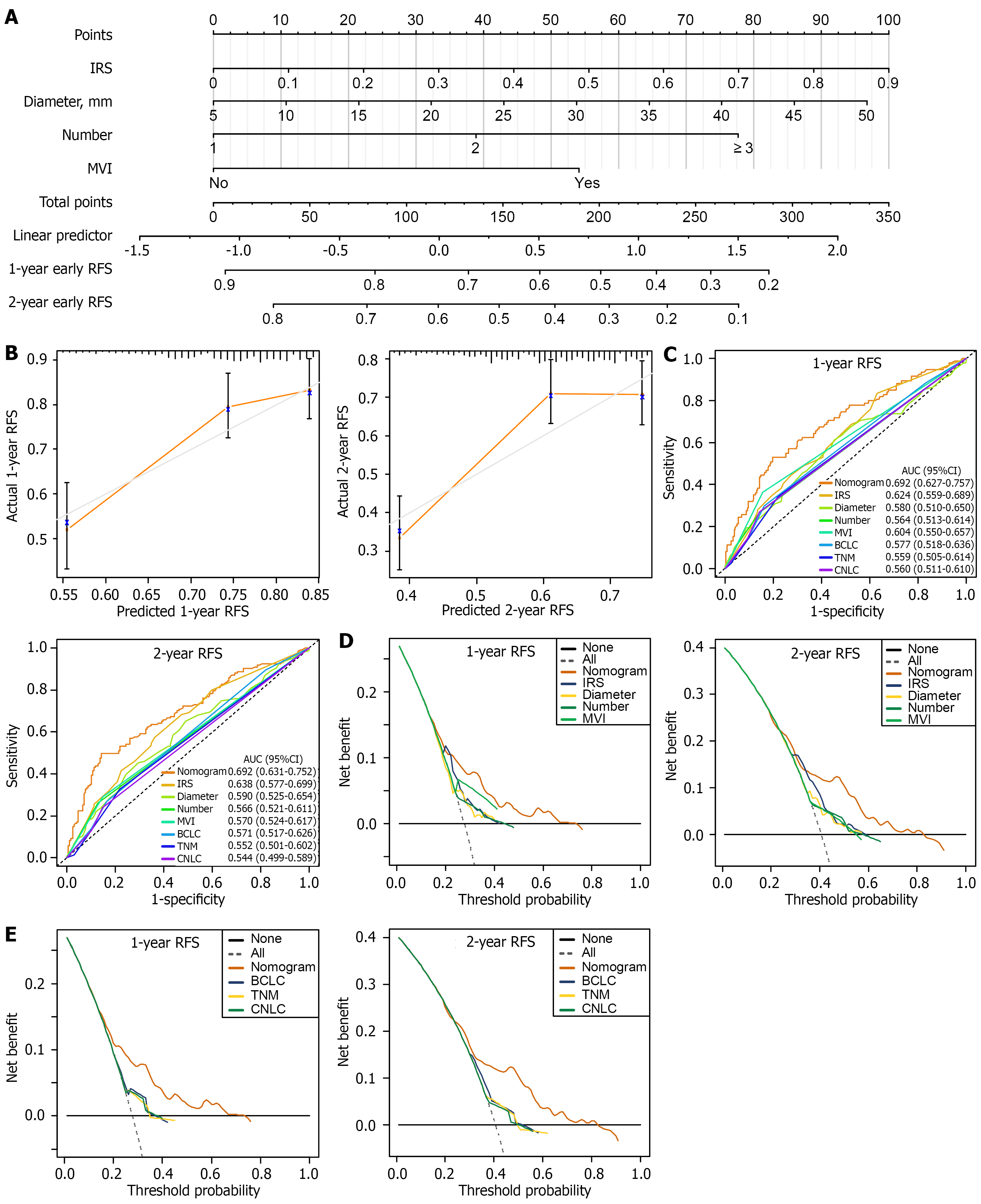
Figure 3 Construction and evaluation of an inflammation-related score-based nomogram for predicting the early recurrence of hepatitis B virus-related hepatocellular carcinoma ≤ 5 cm in the training cohort.
A: The inflammation-related score-based nomogram for 1-, and 2-year recurrence-free survival (RFS) prediction of hepatocellular carcinoma (HCC) patients; B: Calibration curves of the nomogram for prediction of the early RFS of HCC patients; C: Receiver operating characteristic curves of the nomogram and other parameters and staging systems for discrimination evaluation of the early RFS of HCC patients; D and E: Decision analysis curves for beneficial evaluation of the nomogram and other parameters and staging systems for early RFS of HCC patients. RFS: Recurrence-free survival; IRS: Inflammation-related score; AUC: Areas under the curve; MVI: Microvascular invasion; BCLC: Barcelona Clinic Liver Cancer; TNM: Tumor-node-metastasis; CNLC: China Liver Cancer.
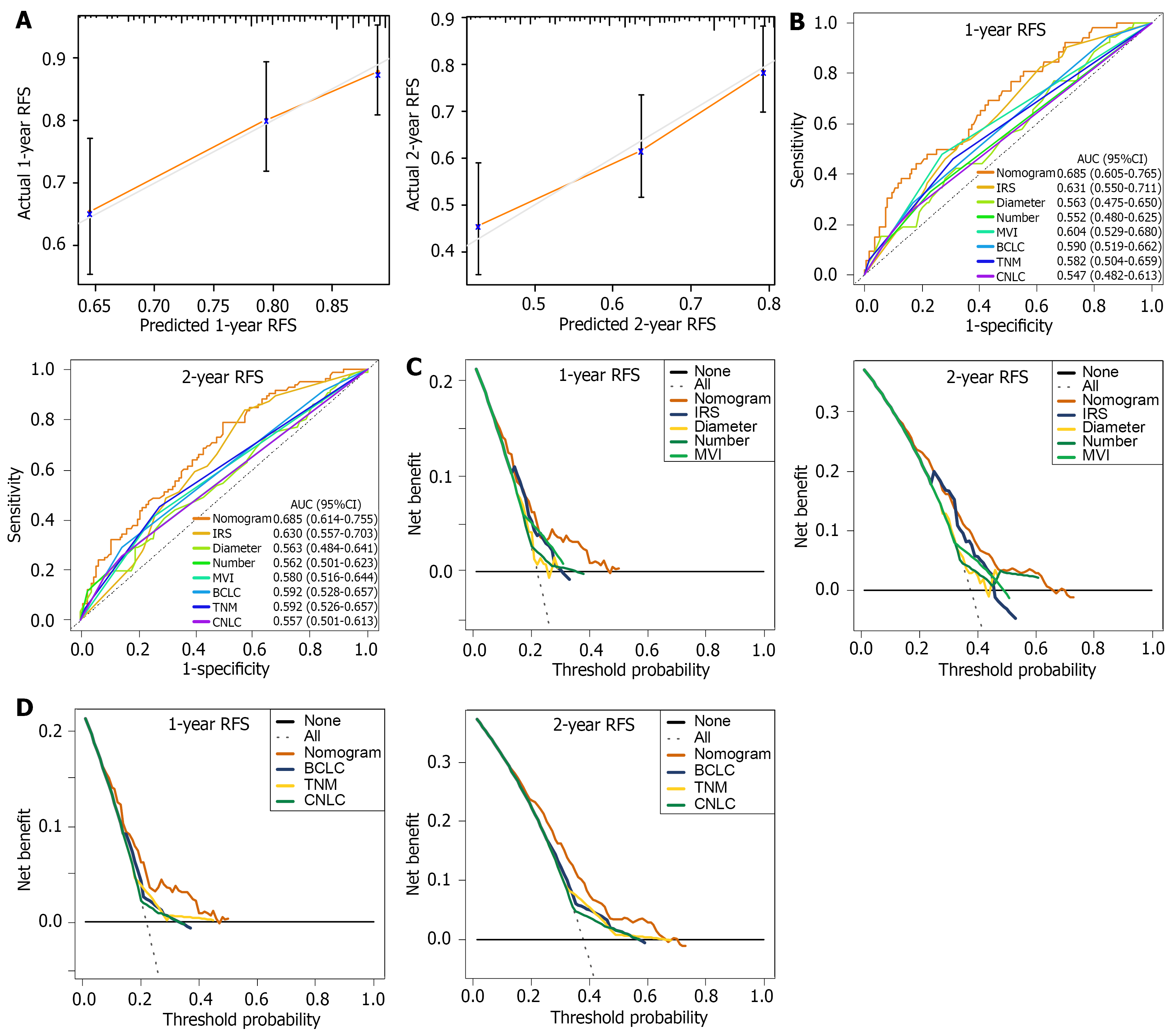
Figure 4 Evaluation of the predictive efficacy of the inflammation-related score-based nomogram model for early recurrence of hepatitis B virus-related hepatocellular carcinoma ≤ 5 cm in a validation cohort.
A: Calibration curves based on the nomogram for early recurrence prediction in the validation cohort; B: Receiver operating characteristic curves of the nomogram and other parameters and staging systems for discrimination evaluation of the early recurrence-free survival (RFS) in the validation cohort; C and D: Decision analysis curves for beneficial evaluation of the nomogram and other parameters and staging systems for early RFS in the validation cohort. RFS: Recurrence-free survival; IRS: Inflammation-related score; AUC: Areas under the curve; MVI: Microvascular invasion; BCLC: Barcelona Clinic Liver Cancer; TNM: Tumor-node-metastasis; CNLC: China Liver Cancer.
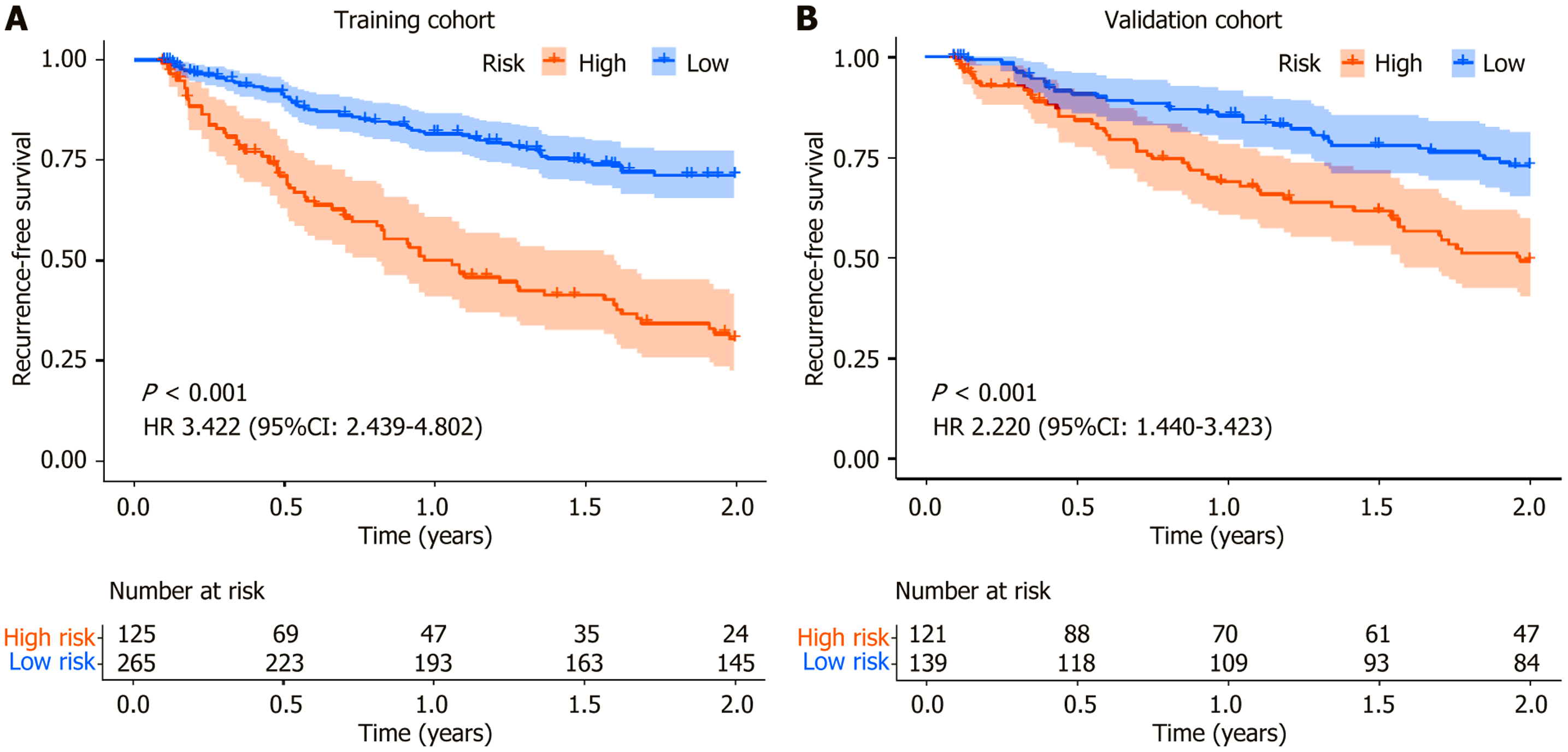
Figure 5 Risk stratification for early recurrence of hepatitis B virus-related hepatocellular carcinoma ≤ 5 cm based on the nomogram scores.
A: Training cohort; B: Validation cohort.
- Citation: Dai TX, Li J, Li H, Wang GY. Novel inflammation-based model for postoperative early recurrence prediction of hepatitis B virus-related hepatocellular carcinoma ≤ 5 cm. World J Gastroenterol 2026; 32(25): 119364
- URL: https://www.wjgnet.com/1007-9327/full/v32/i25/119364.htm
- DOI: https://dx.doi.org/10.3748/wjg.119364