
















Copyright: ©Author(s) 2026.
World J Gastroenterol. Jun 21, 2026; 32(23): 118826
Published online Jun 21, 2026. doi: 10.3748/wjg.v32.i23.118826
Published online Jun 21, 2026. doi: 10.3748/wjg.v32.i23.118826
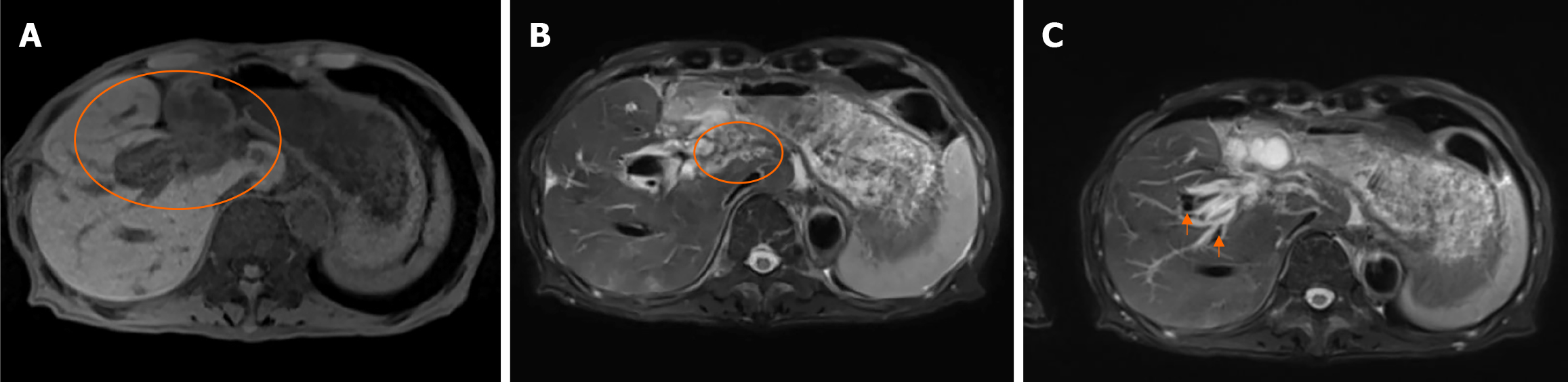
Figure 1 Admission magnetic resonance imaging.
A: The tumor shows ill-defined margins with involvement of the right intrahepatic bile ducts and the pylorus (circle); B: Multiple small metastatic lymph nodes (circle); C: Dilated intrahepatic bile ducts (arrow).
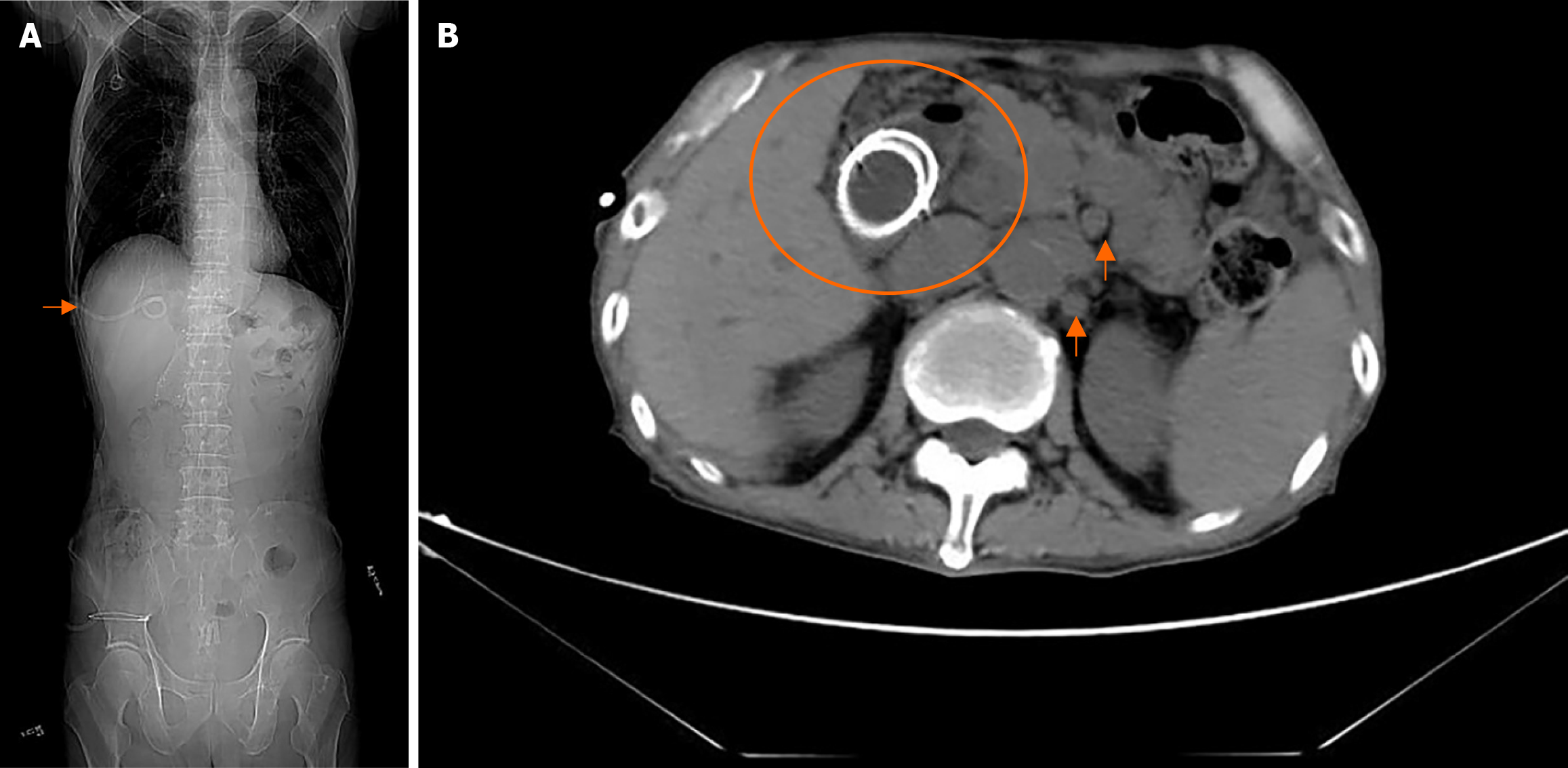
Figure 2 Admission computed tomography.
A: Percutaneous transhepatic biliary drainage catheter (arrow); B: Deformation and luminal narrowing of the descending duodenal stent (circle) and the hepatogastric hiatus and multiple small retroperitoneal lymph nodes (arrow).
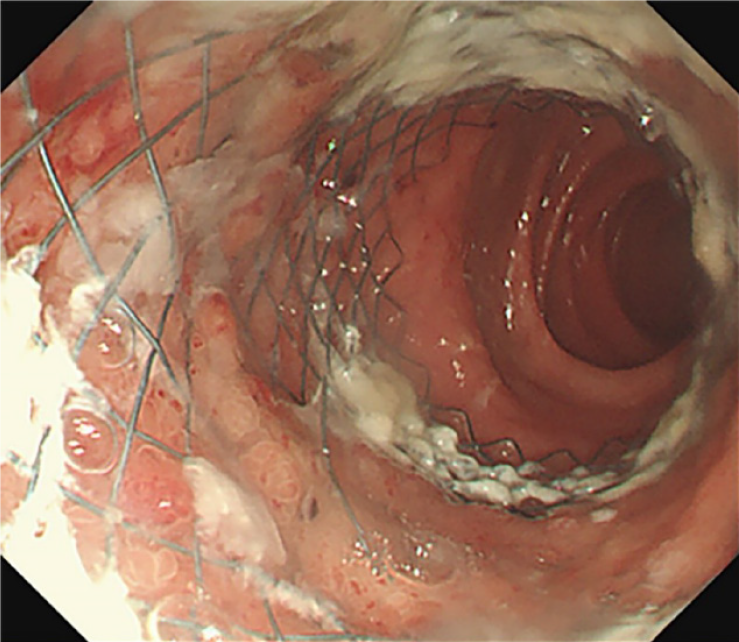
Figure 3
Pyloric stenting well-positioned.
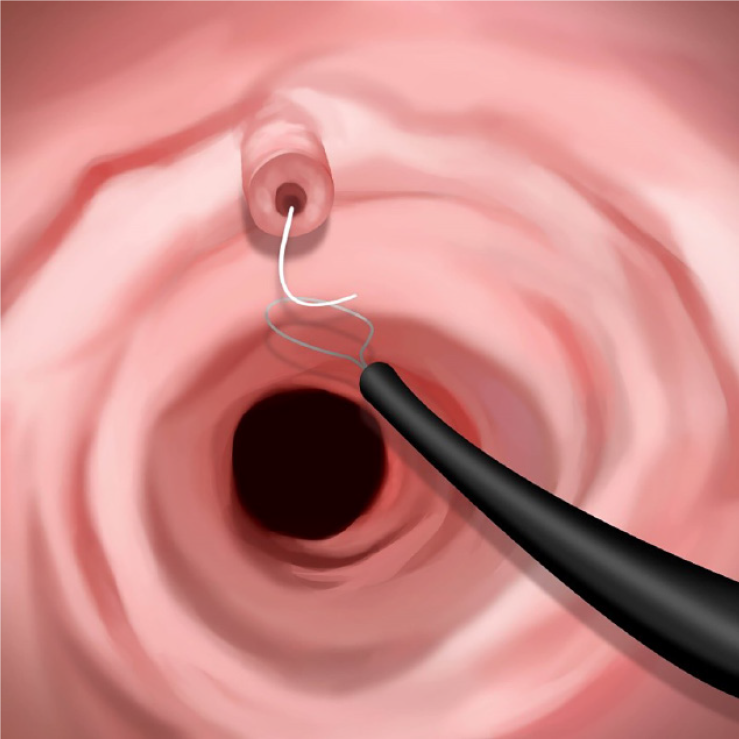
Figure 4
Schematic illustration of the guidewire slowly withdrawn by the coiled device (Supplementary material).
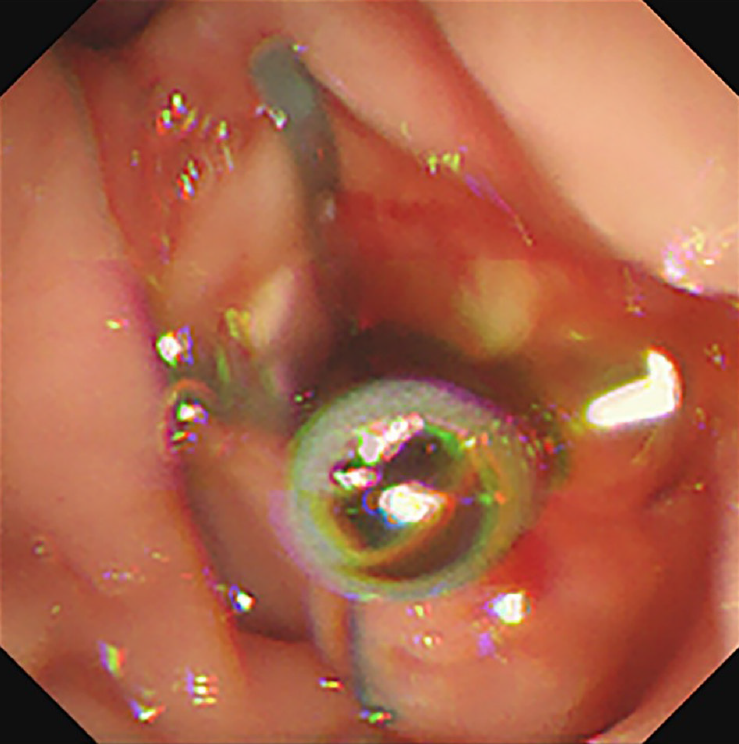
Figure 5
Multi-flap plastic biliary stent and visible bile flow.
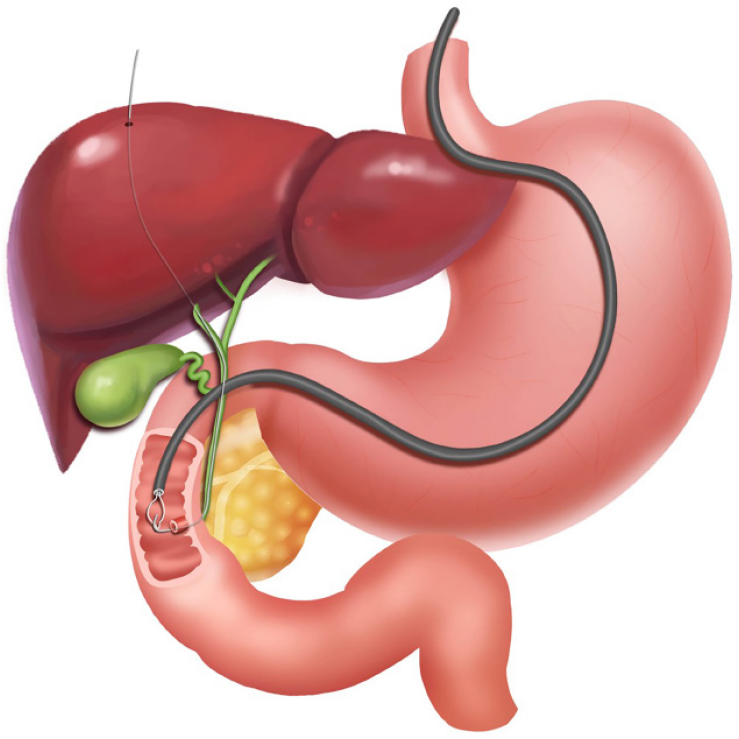
Figure 6
Overall conceptual diagram of the endoscopic retrograde cholangiopancreatography and percutaneous transhepatic biliary drainage (Supplementary material).
- Citation: Guo CY, Wei YX, Li J, Ren GH, Cao J, Sun L, Zhao JY. Percutaneous transhepatic biliary drainage guided endoscopic retrograde cholangiopancreatography rendezvous technique for biliary stent placement: A case report. World J Gastroenterol 2026; 32(23): 118826
- URL: https://www.wjgnet.com/1007-9327/full/v32/i23/118826.htm
- DOI: https://dx.doi.org/10.3748/wjg.v32.i23.118826