
















Copyright: ©Author(s) 2026.
World J Gastroenterol. Jun 14, 2026; 32(22): 115807
Published online Jun 14, 2026. doi: 10.3748/wjg.v32.i22.115807
Published online Jun 14, 2026. doi: 10.3748/wjg.v32.i22.115807
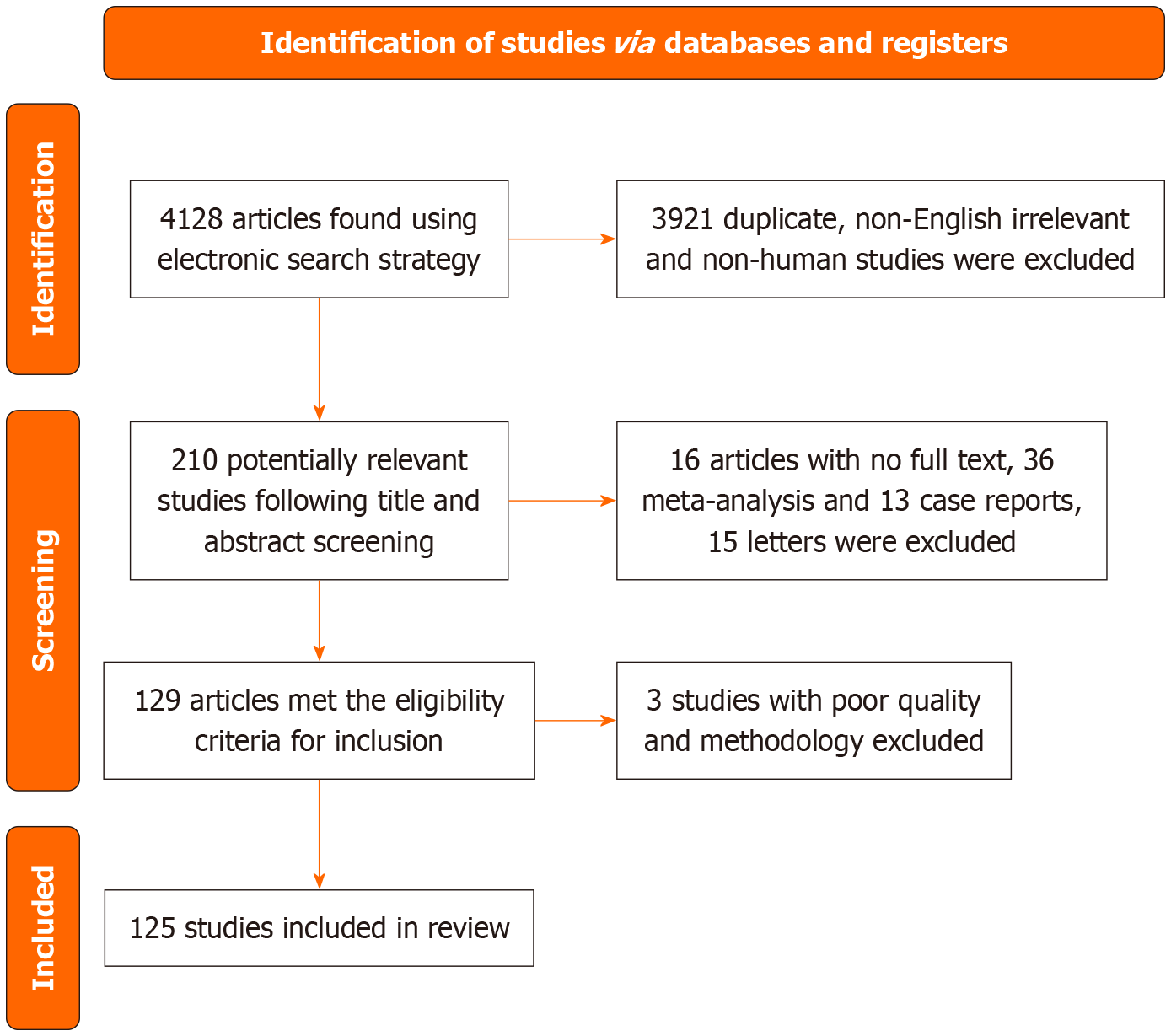
Figure 1
PRISMA flow chart for the study selection for systematic review.
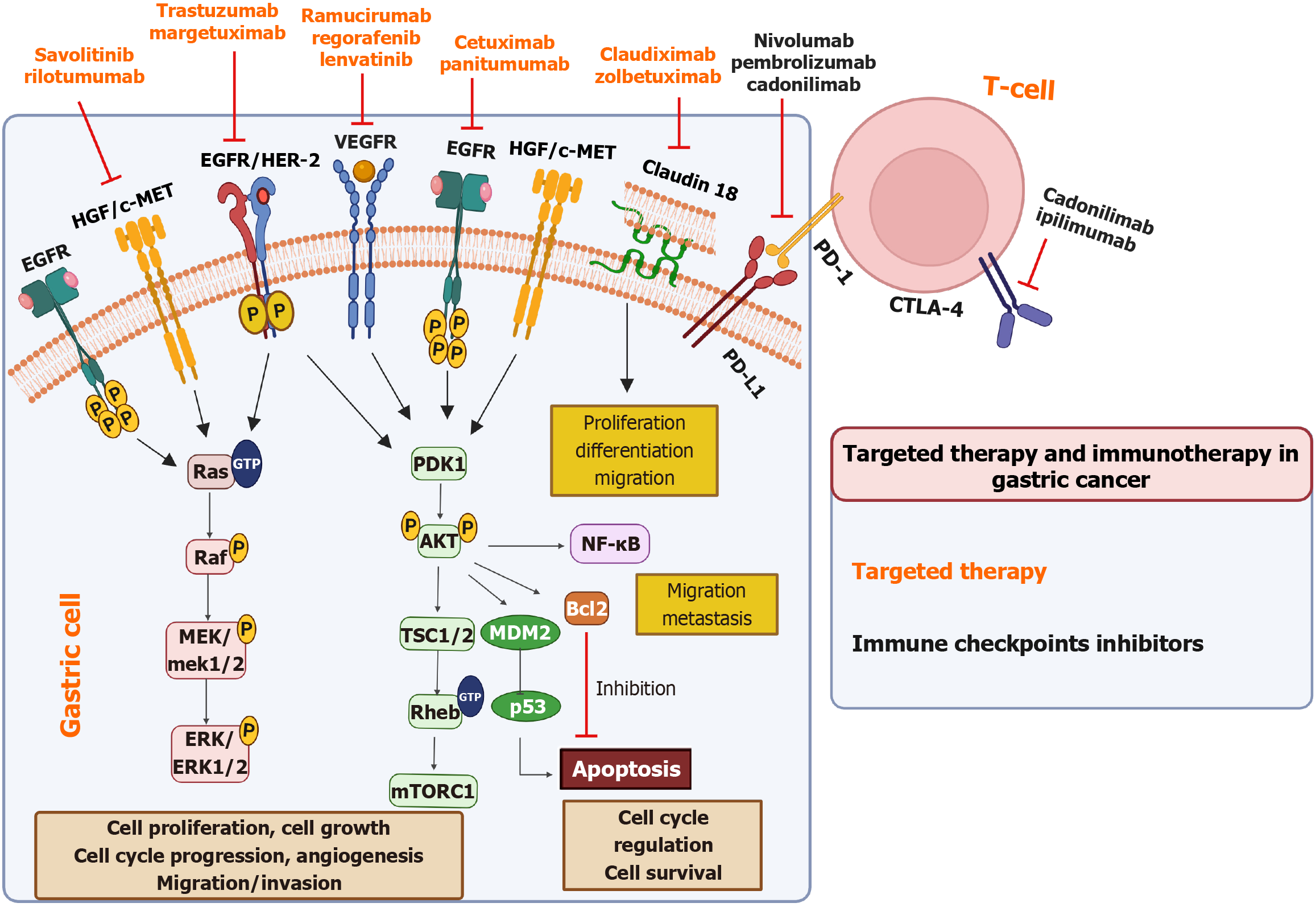
Figure 2 Overview of signaling pathways in gastric cancer: Targeted molecular therapy and immunotherapy integration.
Alterations in signaling pathways leading to gastric cancer (GC) development and progression, such as RAS/RAF/mitogen-activated protein kinase (MAPK)/extracellular signal-regulated kinase (ERK)/ERK1/2, phosphoinositide 3-kinase (PI3K)/protein kinase B (AKT)/mammalian target of rapamycin (mTOR) pathways, human epidermal growth factor receptor 2 (HER2), hepatocyte growth factor (HGF)/c-mesenchymal-epithelial transition (MET), p53, nuclear factor kappa B (NF-κB), claudin 18, programmed cell death protein 1 (PD-1)/programmed death-ligand 1 (PD-L1) and cytotoxic T-lymphocyte-associated protein 4 (CTLA-4) are depicted. Some of the representative therapeutic targets (targeted or immunotherapeutic) in GC are illustrated. PDK1: Phosphoinositide-dependent kinase 1; VEGFR: Vascular endothelial growth factor receptor. Created in https://BioRender.com (Supplementary material).
- Citation: Ratre YK, Ghritlahre N, Pande B, Sahu T, Sahithi LS, Swarnkar S, Verma HK. Strategic integration of immunotherapy with chemotherapy, radiotherapy, and targeted therapy in gastric cancer management: A systematic review. World J Gastroenterol 2026; 32(22): 115807
- URL: https://www.wjgnet.com/1007-9327/full/v32/i22/115807.htm
- DOI: https://dx.doi.org/10.3748/wjg.v32.i22.115807