
















Copyright: ©Author(s) 2026.
World J Gastroenterol. May 14, 2026; 32(18): 118499
Published online May 14, 2026. doi: 10.3748/wjg.v32.i18.118499
Published online May 14, 2026. doi: 10.3748/wjg.v32.i18.118499
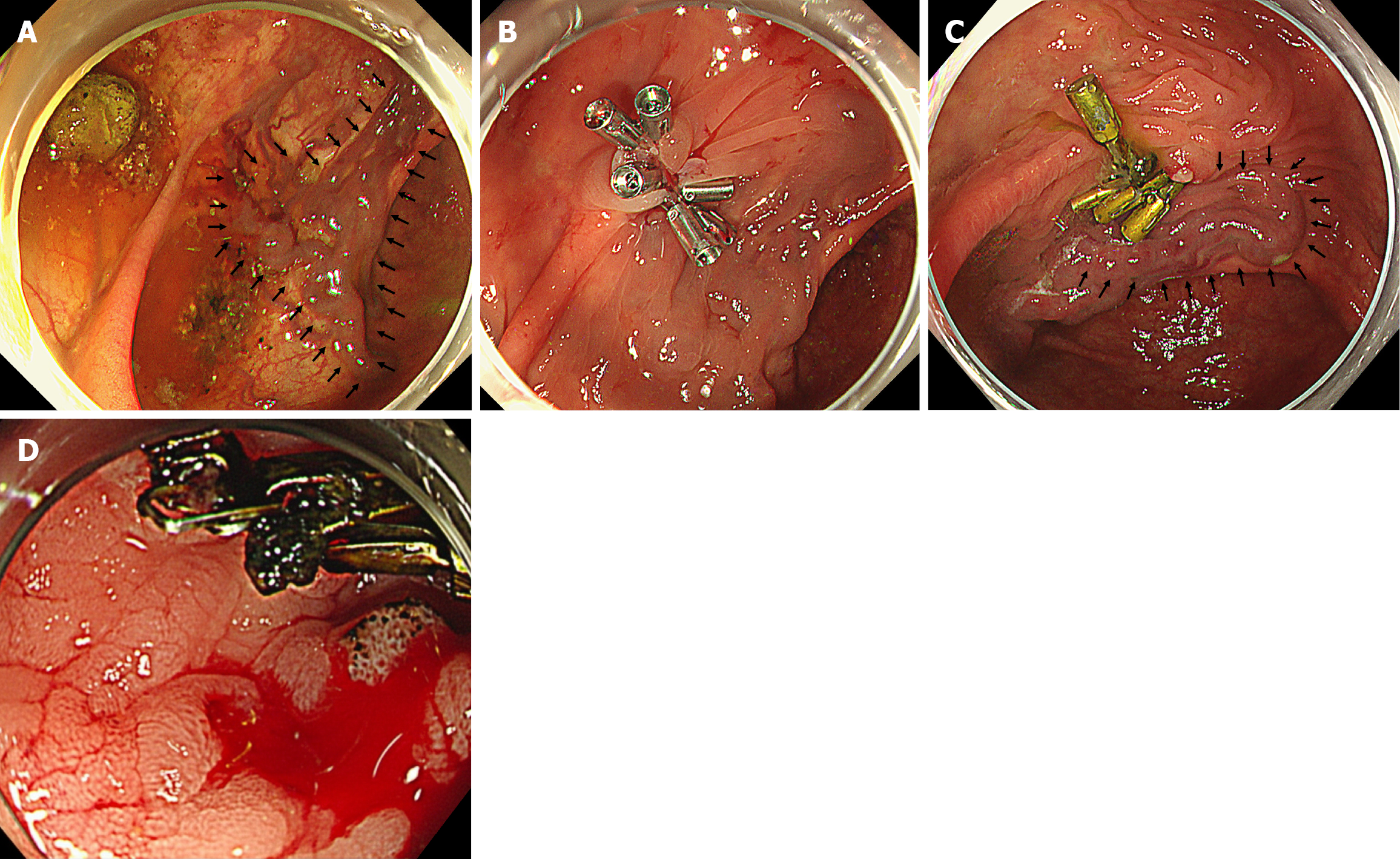
Figure 1 Colonoscopy findings.
A: First endoscopy. Markedly dilated and tortuous submucosal veins (black arrows) around the anastomotic site with active bleeding from the varix; B: Hemostasis was achieved by clipping; C: Second endoscopy. Venous dilatation (black arrows) was observed near the anastomotic site. Exudative bleeding was identified at a location different from the previous clip site; D: Third endoscopy. Recurrent bleeding was observed at a different site from the prior clipping sites.
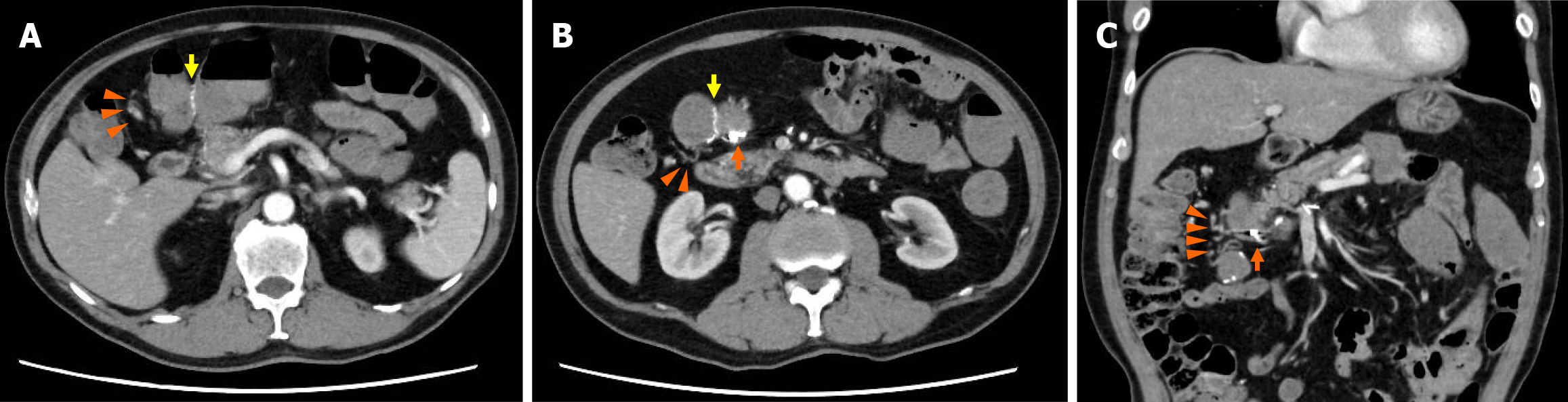
Figure 2 Computed tomography findings.
A and B: Axial contrast-enhanced computed tomography images obtained before the third endoscopic hemostasis procedure. Metallic clips (orange arrow) were observed at the anastomotic site (yellow arrow), with abnormal vascular structures (orange arrowheads) noted around it. A slightly hyperdense intraluminal fluid collection was noted; however, no active extravasation was observed. No imaging findings indicated liver cirrhosis or portal hypertension; C: The coronal view.
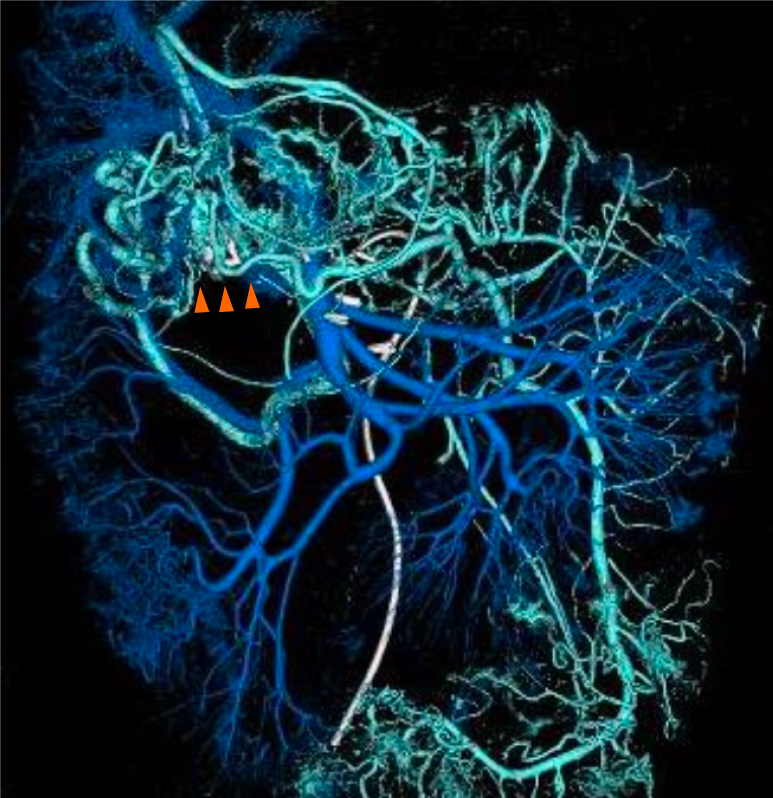
Figure 3 Portal-phase angiography with computed tomography portography.
Portal-phase venography via the superior mesenteric artery (SMA) and inferior mesenteric artery (IMA) demonstrated that transverse colonic varices (orange arrowheads) had developed as collateral venous drainage at the anastomotic site. Blue vessels: Venous return system from the SMA. Light blue vessels: Venous return system from the IMA.
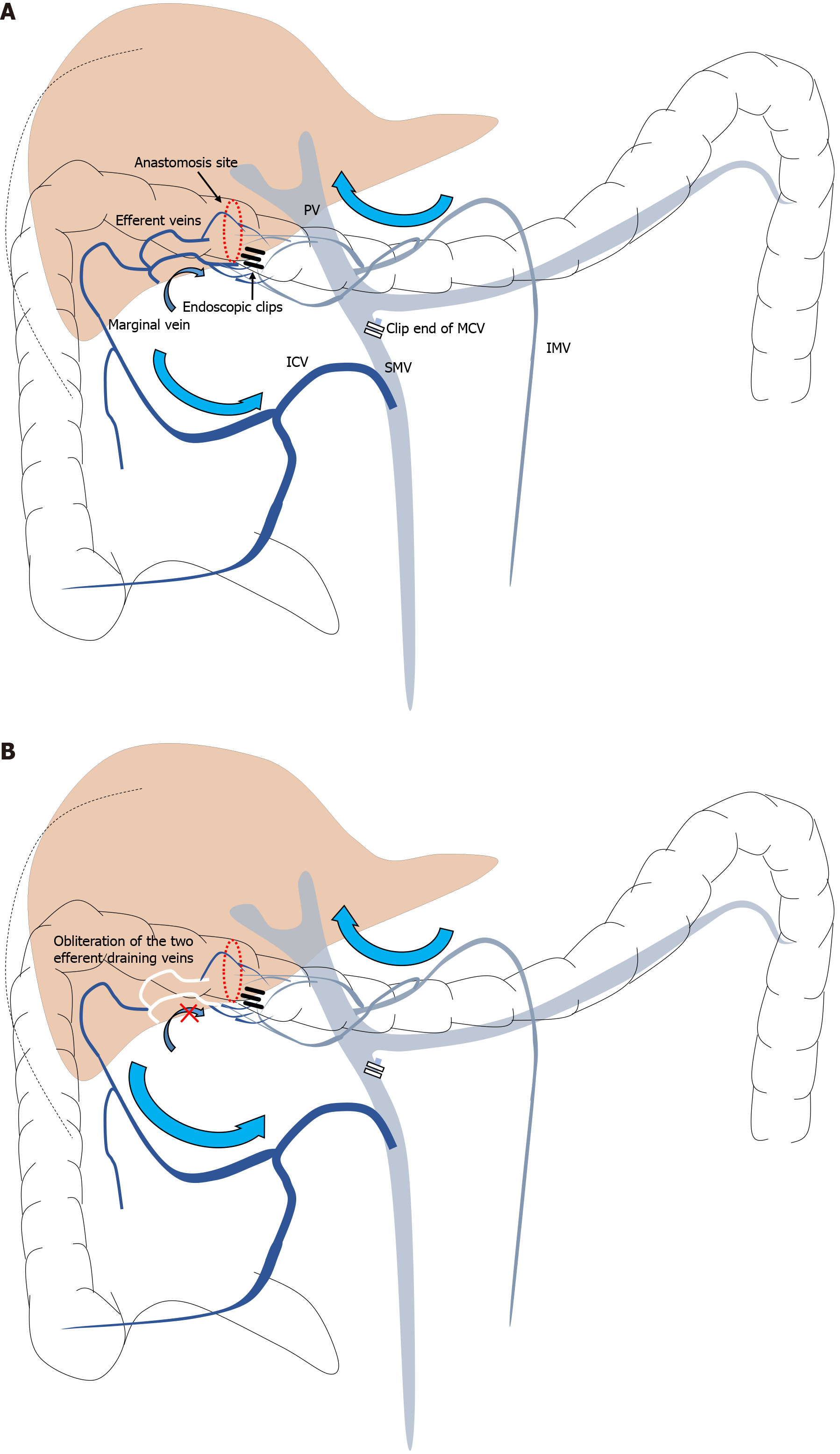
Figure 4 Schematic illustration of venous anatomy.
A: Schematic illustration of venous drainage around the transverse colonic anastomosis after central ligation of the middle colic vein (preembolization). The venous inflow from the marginal vein (superior mesenteric vein territory) converged at the anastomosis site (red dotted circle) and drained into the inferior mesenteric vein via two efferent veins; B: Post-embolization. The two efferent draining veins were selectively embolized with N-butyl-2-cyanoacrylate to establish unilateral flow control, and ethanolamine oleate was injected under balloon occlusion to achieve diffuse thrombosis of the variceal plexus. PV: Portal vein; SMV: Superior mesenteric vein; IMV: Inferior mesenteric vein; ICV: Ileocolic vein; MCV: Middle colic vein.
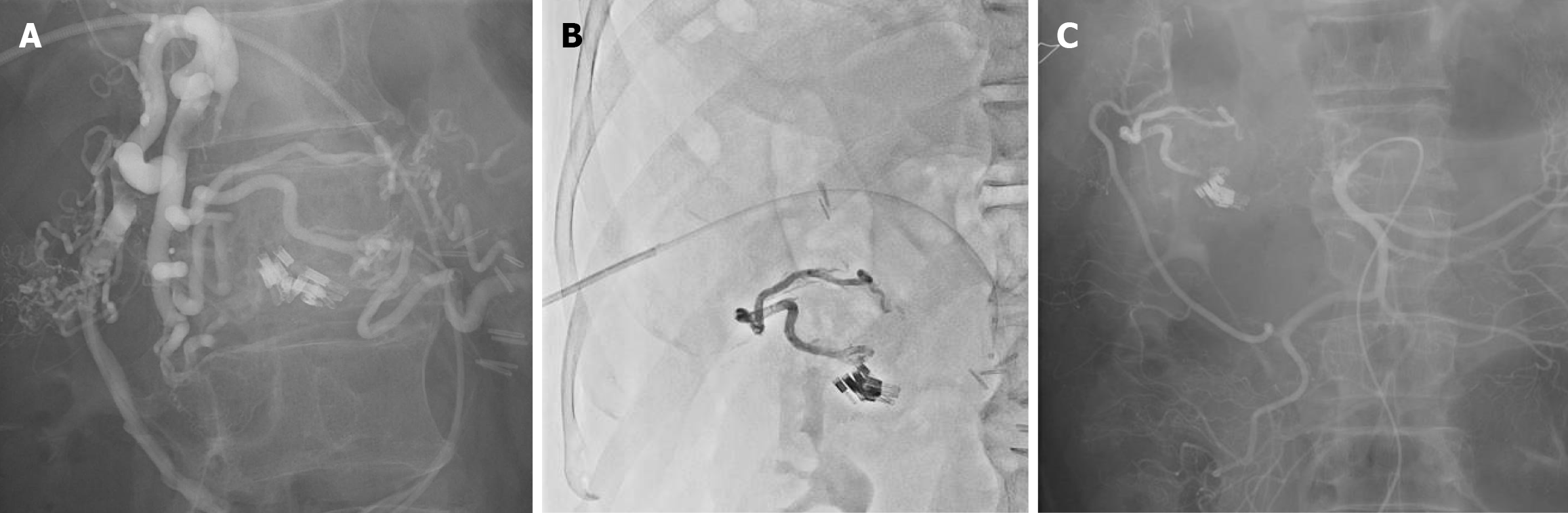
Figure 5 Angiography.
A: The catheter was advanced via the ileocolic vein into the marginal vein, and positioned at the right aspect of the anastomotic varices. Balloon-occluded retrograde venography demonstrated that the variceal drainage extended beyond the previously placed endoscopic clips and drained toward the inferior mesenteric vein; B: Selective occlusion of the two efferent draining veins, achieving unilateral flow control and directing the sclerosing agent into the targeted variceal complex; C: Final angiography demonstrated complete disappearance of the anastomotic varices and elimination of the previously visualized outflow tract, confirming successful obliteration.
- Citation: Tomita D, Yamamoto M, Wakamatsu M, Shibayama R, Maeda Y, Hiramatsu K, Hanaoka Y, Toda S, Ueno M, Matoba S, Kuroyanagi H. Anastomotic colonic varices after colectomy treated by obliteration via a transhepatic portal approach: A case report. World J Gastroenterol 2026; 32(18): 118499
- URL: https://www.wjgnet.com/1007-9327/full/v32/i18/118499.htm
- DOI: https://dx.doi.org/10.3748/wjg.v32.i18.118499