
















©2014 Baishideng Publishing Group Co.
World J Gastroenterol. Jan 28, 2014; 20(4): 943-956
Published online Jan 28, 2014. doi: 10.3748/wjg.v20.i4.943
Published online Jan 28, 2014. doi: 10.3748/wjg.v20.i4.943
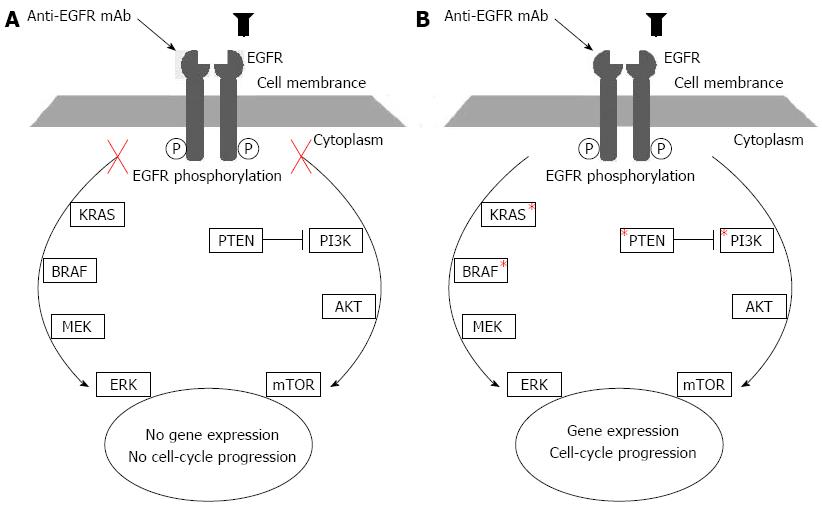
Figure 1 Representation of epidermal growth factor receptor pathway in response to therapy with anti-epidermal growth factor receptor inhibitors in wild-type and mutant patients.
A: The binding of monoclonal antibodies (mAb) to EGFR normally causes the blockage (indicated with a red cross) of downstream RAS/RAF/MAPK and PI3K/AKT/mTOR signalling pathways and so the blockage of gene expression and cell cycle progression; B: Mutations in any gene of this pathway (indicated with a red star) cause a constitutive activation of the pathway leading to gene expression, upregulated proliferation, impaired differentiation and no response to monoclonal inhibitors. EGFR: Epidermal growth factor receptor; KRAS: v-Ki-ras2 Kirsten rat sarcoma viral oncogene homolog gene; BRAF: V-raf murine sarcoma viral oncogenes homolog B1; MEK: MAPK/ERK kinase; ERK: Extracellular signal-regulated kinases; PTEN: Phosphatase and tensin homolog; PI3K: Phosphatidylinositide-3-kinases; AKT: Protein Kinase B (PKB); mTOR: Mammalian target of rapamycin.
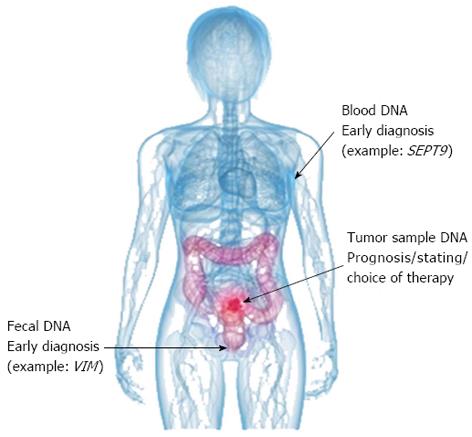
Figure 2 Sources of epigenetic biomarkers of colorectal cancer.
Blood and fecal DNA samples represent available non-invasive sources of epigenetic diagnostic biomarkers of colorectal cancer, such as the analysis of methylation of septin 9 (SEPT9) and vimentin (VIM) genes, respectively. In addition, the analysis of DNA samples from bioptic tumor tissues could be of relevance for the best choice of therapeutic intervention.
- Citation: Coppedè F, Lopomo A, Spisni R, Migliore L. Genetic and epigenetic biomarkers for diagnosis, prognosis and treatment of colorectal cancer. World J Gastroenterol 2014; 20(4): 943-956
- URL: https://www.wjgnet.com/1007-9327/full/v20/i4/943.htm
- DOI: https://dx.doi.org/10.3748/wjg.v20.i4.943