
















©2013 Baishideng Publishing Group Co.
World J Gastroenterol. Mar 28, 2013; 19(12): 1962-1967
Published online Mar 28, 2013. doi: 10.3748/wjg.v19.i12.1962
Published online Mar 28, 2013. doi: 10.3748/wjg.v19.i12.1962
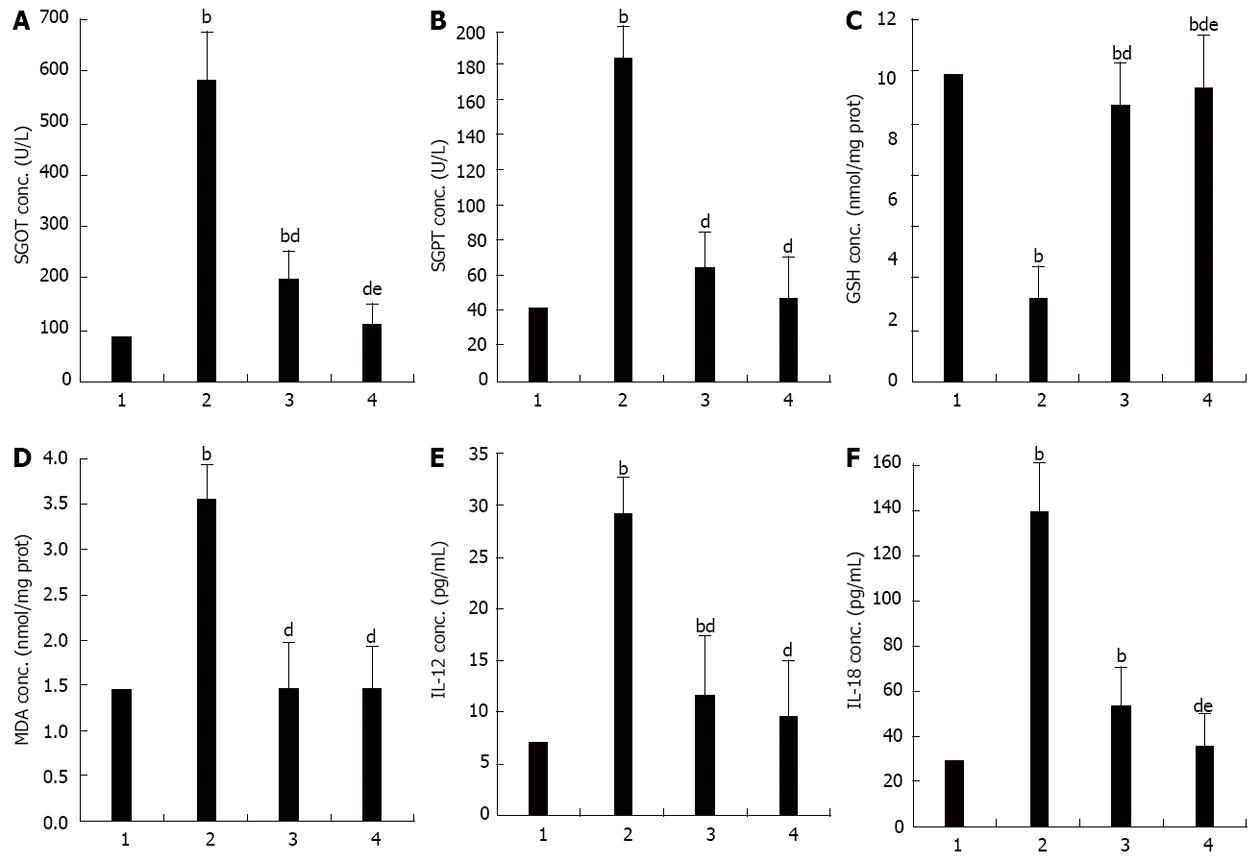
Figure 1 Effects of curcumin on serum glutamic oxaloacetic transaminase, serum glutamic pyruvic transaminase, hepatic glutathione, hepatic malondialdehyde, interleukin-12, interleukin-18 in mice with paracetamol overdose.
A: Serum glutamic oxaloacetic transaminase (SGOT); B: Serum glutamic pyruvic transaminase (SGPT); C: Hepatic glutathione (GSH); D: Hepatic malondialdehyde (MDA); E: Interleukin (IL)-12; F: IL-18. bP < 0.01 vs control group; dP < 0.01 vs N-acetyl-P-aminophenol (APAP) group; eP < 0.05 vs APAP + curcumin (CUR) 200 group. 1: Control; 2: APAP; 3: APAP + CUR 200; 4: APAP + CUR 600.
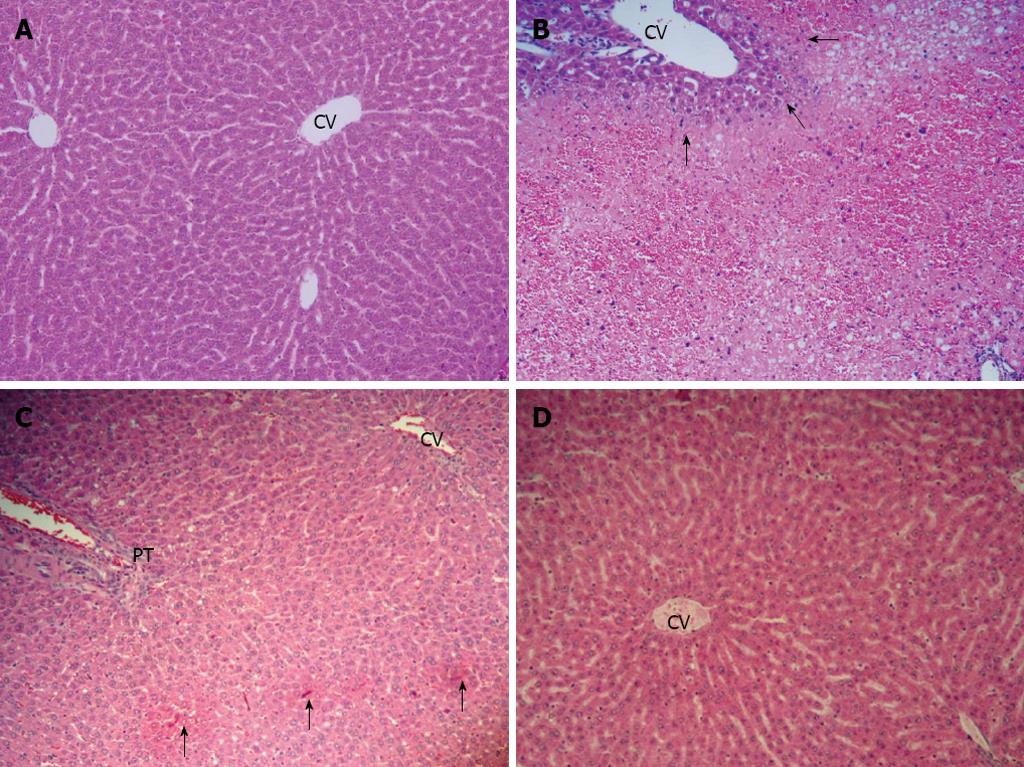
Figure 2 Effects of curcumin improved liver histopathology (hematoxylin and eosin stain, ×10).
A: Control group showed normal; B: N-acetyl-P-aminophenol (APAP) group showed extensive hemorrhagic hepatic necrosis at all zones; C: APAP + curcumin (CUR) 200 group showed mild focal necrosis and hepatic lobule was preserved; D: APAP + CUR 600 group showed the hepatic lobule was preserved with limited hepatic change. Arrows indicate hepatic necrosis, CV indicate central vein, and PT indicate portal system.
- Citation: Somanawat K, Thong-Ngam D, Klaikeaw N. Curcumin attenuated paracetamol overdose induced hepatitis. World J Gastroenterol 2013; 19(12): 1962-1967
- URL: https://www.wjgnet.com/1007-9327/full/v19/i12/1962.htm
- DOI: https://dx.doi.org/10.3748/wjg.v19.i12.1962