
















Copyright: ©Author(s) 2026.
Artif Intell Gastroenterol. Aug 8, 2026; 7(2): 121977
Published online Aug 8, 2026. doi: 10.35712/aig.121977
Published online Aug 8, 2026. doi: 10.35712/aig.121977
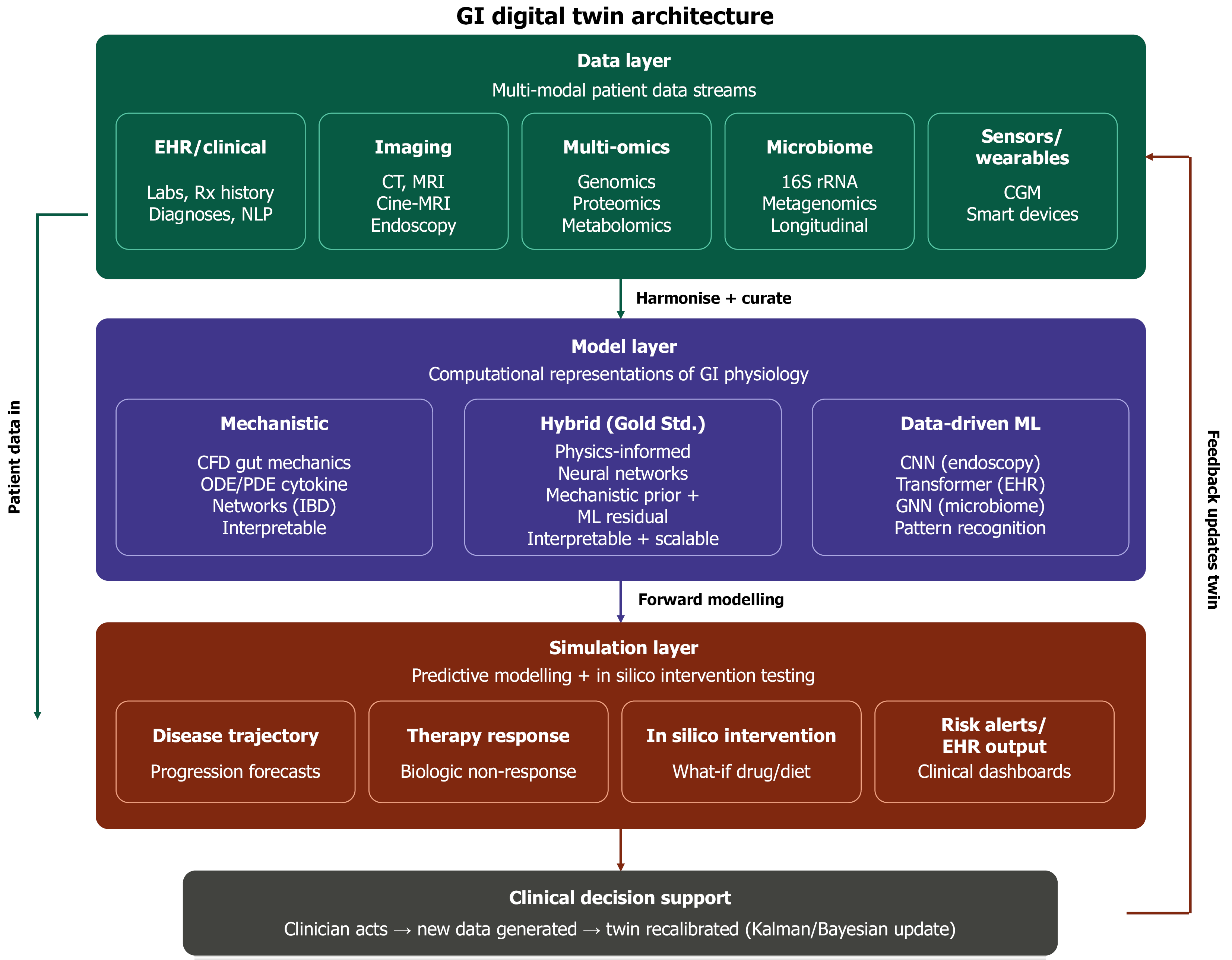
Figure 1 Gastrointestinal digital twin architecture.
Architecture of a gastrointestinal digital twin. The gastrointestinal (GI) digital twin operates across three interoperating layers. The data layer aggregates and harmonizes multi-modal patient streams, electronic health record, imaging, multi-omics, microbiome sequencing, and physiological sensors. The model layer houses mechanistic, data-driven, and hybrid physics-informed neural network models of GI physiology; hybrid architectures are considered the current gold standard. The simulation layer executes forward modeling to generate disease trajectory projections, therapy response probabilities, in silico intervention scenarios, and clinical risk alerts. A bidirectional link; afferent and efferent defines the system as a true digital twin rather than a static predictive model. EHR: Electronic health record; GI: Gastrointestinal; CT: Computed tomography; MRI: Magnetic resonance imaging; ODE: Ordinary differential equation; CFD: Computational fluid dynamics; PDE: Partial differential equation; CNN: Convolutional neural network; CGM: Continuous glucose monitoring; GNN: Graph neural network; NLP: Natural language processing; IBD: Inflammatory bowel disease.
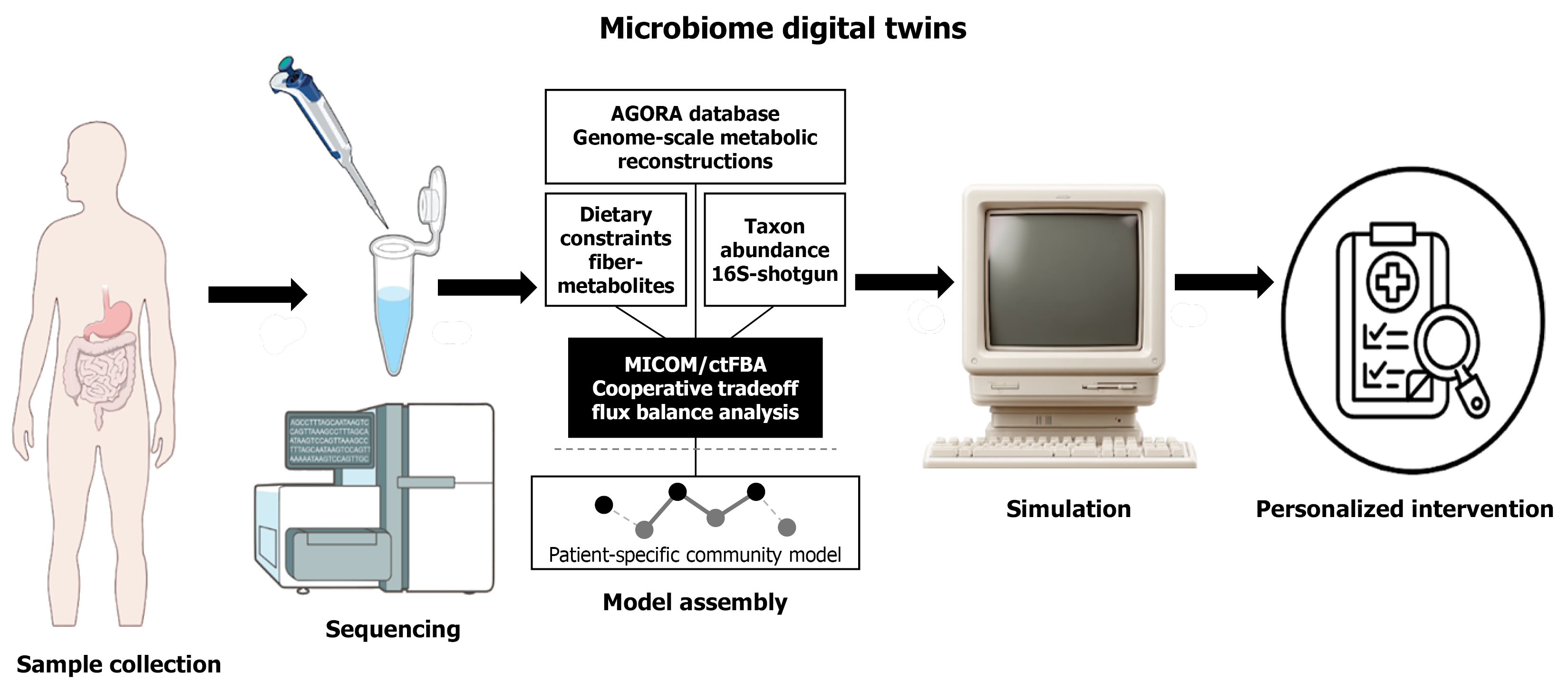
Figure 2 Microbiome digital twin workflow using microbial community-scale metabolic modelling.
Stool samples undergo microbial sequencing (16S rRNA or shotgun metagenomics) to determine taxonomic abundances. These data are integrated with dietary constraints and genome-scale metabolic models from the AGORA database to build patient-specific community models using microbial community-scale metabolic modelling. Cooperative tradeoff flux balance analysis is applied to predict steady-state microbial growth and metabolic outputs, including short-chain fatty acid production. ctFBA: Cooperative tradeoff flux balance analysis; MICOM: Microbial community-scale metabolic modelling.
- Citation: Chowdhary R, Iftequar Y, Anveshak F, Parikh A, Jindal K, Arora K, Chowdhary R. Digital twins in gastroenterology: From computational modeling to precision medicine and clinical translation. Artif Intell Gastroenterol 2026; 7(2): 121977
- URL: https://www.wjgnet.com/2644-3236/full/v7/i2/121977.htm
- DOI: https://dx.doi.org/10.35712/aig.121977