
















Copyright: ©Author(s) 2026.
Artif Intell Cancer. Sep 8, 2026; 7(1): 124432
Published online Sep 8, 2026. doi: 10.35713/aic.124432
Published online Sep 8, 2026. doi: 10.35713/aic.124432
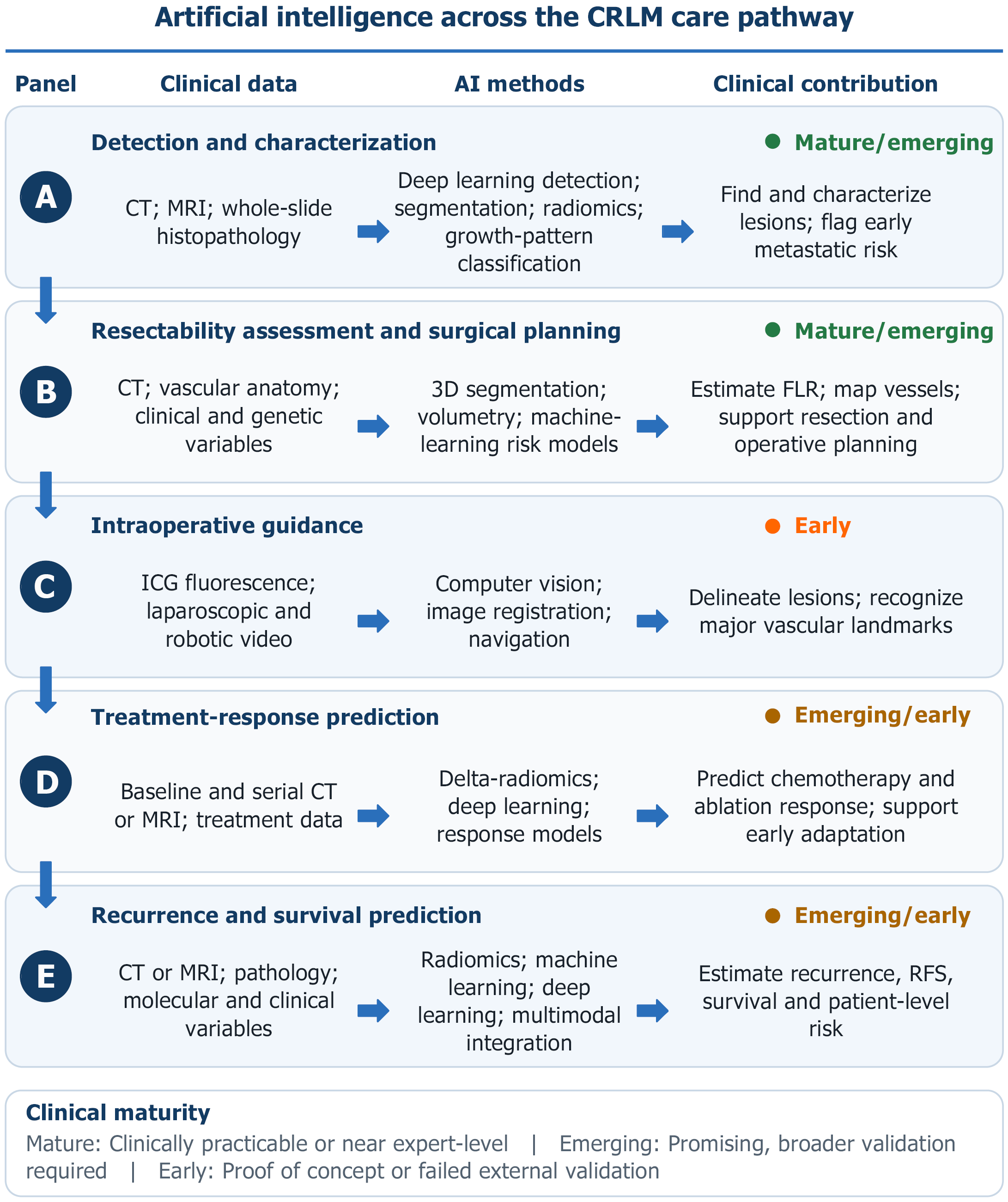
Figure 1 Conceptual framework for artificial intelligence across the colorectal liver metastasis care pathway.
The pathway is shown as five sequential domains: A: Detection and characterization; B: Resectability assessment and surgical planning; C: Intraoperative guidance; D: Treatment-response prediction; E: Recurrence and survival prediction. Input data types (computed tomography, magnetic resonance imaging, whole-slide histopathology, molecular and clinical variables) feed the corresponding artificial intelligence methods (radiomics, machine learning, deep learning), and each domain is annotated with its current stage of clinical maturity. 3D: Three-dimensional; CRLM: Colorectal liver metastases; CT: Computed tomography; FLR: Future liver remnant; ICG: Indocyanine green; MRI: Magnetic resonance imaging; RFS: Recurrence-free survival.
- Citation: Salman A, Elewa A, Salman MA. Artificial intelligence in colorectal liver metastases: From detection and resectability to treatment response and recurrence prediction. Artif Intell Cancer 2026; 7(1): 124432
- URL: https://www.wjgnet.com/2644-3228/full/v7/i1/124432.htm
- DOI: https://dx.doi.org/10.35713/aic.124432