
















Copyright: ©Author(s) 2026.
World J Methodol. Sep 20, 2026; 16(3): 115265
Published online Sep 20, 2026. doi: 10.5662/wjm.115265
Published online Sep 20, 2026. doi: 10.5662/wjm.115265
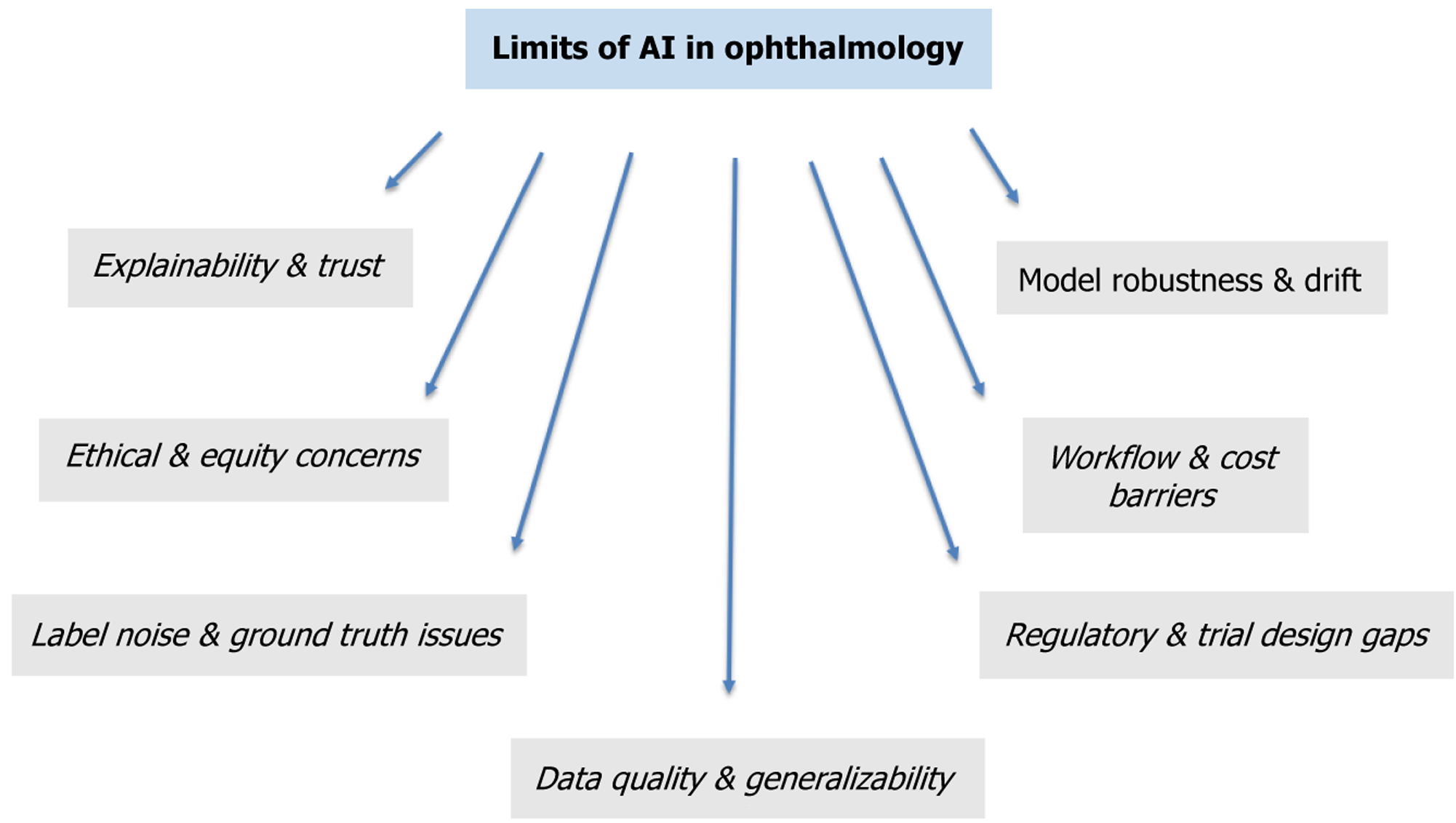
Figure 1 Flowchart delineating the principal constraints of artificial intelligence in the management of ophthalmic conditions.
Primary obstacles encompass data quality and generalizability, label noise and inconsistencies in ground truth, robustness and drift of deployed models, insufficient ability to explain, clinician trust, deficiencies in regulatory frameworks and clinical trial design, ethical and equity issues, challenges in workflow integration, and costs. These aspects elucidate why elevated image-level accuracy does not necessarily result in enhanced patient outcomes. AI: Artificial intelligence.
- Citation: Zeppieri M, Capobianco M, Visalli F, Khouyyi M, Musa M, Avitabile A, Leandro I, Giglio R, Tognetto D, Gagliano C, D’Esposito F, Cappellani F. Artificial intelligence in ophthalmology: From diagnostic accuracy to clinical application. World J Methodol 2026; 16(3): 115265
- URL: https://www.wjgnet.com/2222-0682/full/v16/i3/115265.htm
- DOI: https://dx.doi.org/10.5662/wjm.115265