
















©The Author(s) 2026.
World J Methodol. Mar 20, 2026; 16(1): 108381
Published online Mar 20, 2026. doi: 10.5662/wjm.v16.i1.108381
Published online Mar 20, 2026. doi: 10.5662/wjm.v16.i1.108381
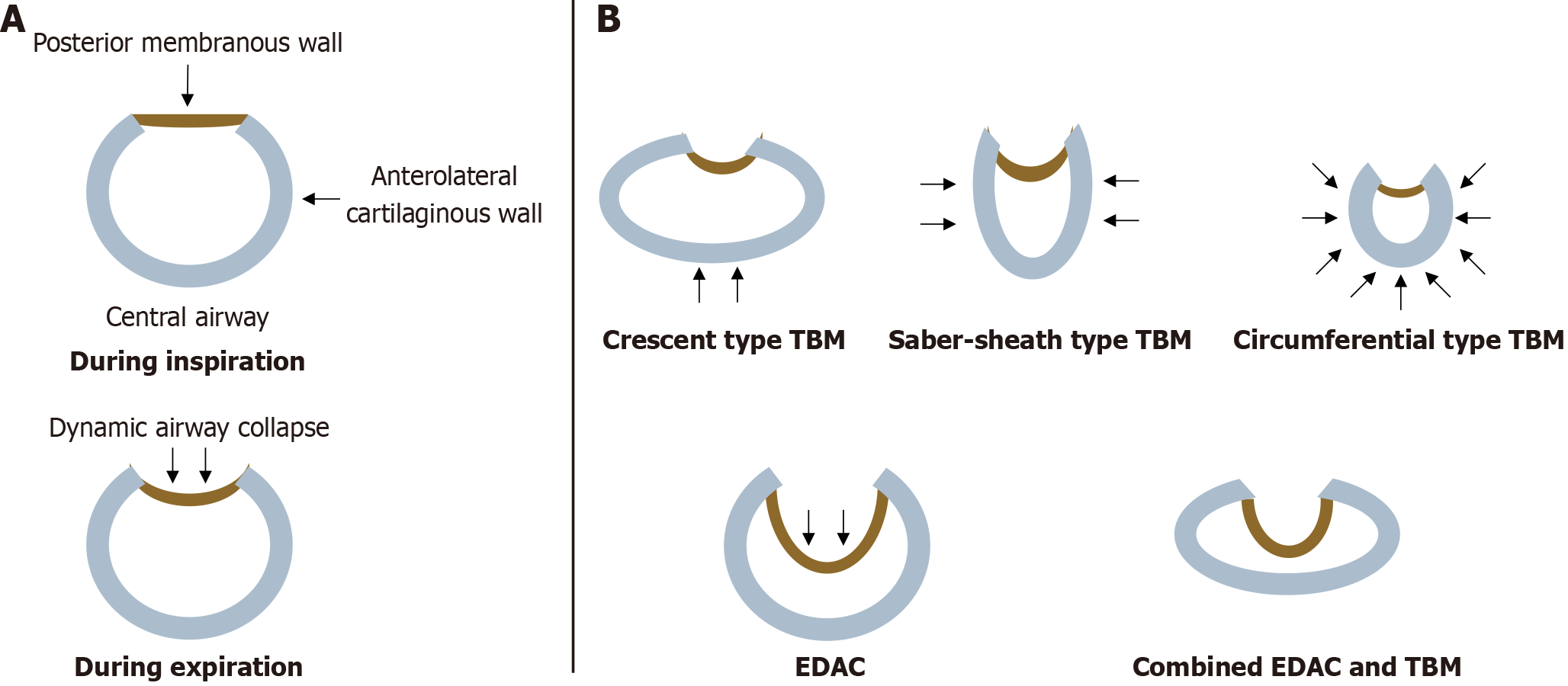
Figure 1 The bronchoscopy or dynamic computed tomography visualization of central airways during expiration.
A: It demonstrates the anatomical composition of the central airways which includes trachea and main bronchi. The posterior wall shows membranous portion while anterolateral wall represents the cartilaginous portion. The alteration in central airways during different phases of respiration are highlighted, where dynamic airway collapse can be appreciated in expiratory phase; B: It demonstrates different types of expiratory central airway collapse (ECAC), where defective membranous wall and cartilaginous wall result in the development of EDAC and different forms of tracheobronchomalacia. The arrows show diverse movement of airway lumen in varieties of ECAC. EDAC: Excessive dynamic airway collapse; TBM: Tracheobronchomalacia.
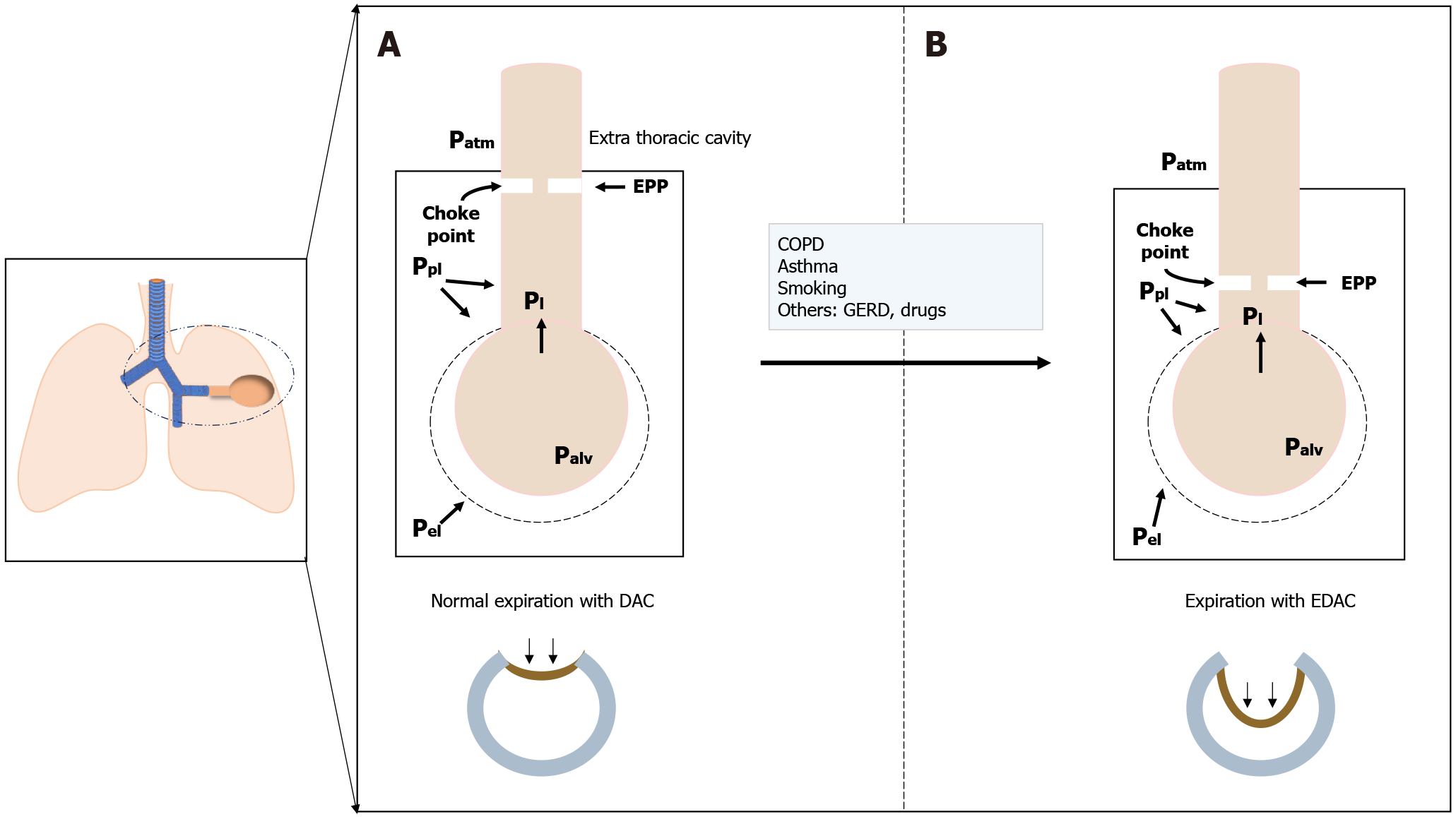
Figure 2 Schematic representation of expiratory flow limitation based on equal pressure point and wave speed theories, with dynamic airway collapse during normal expiration and with excessive dynamic airway collapse secondary to various causes.
A: Dynamic airway collapses during normal expiration; B: Excessive dynamic airway collapses secondary to various causes. COPD: Chronic obstructive pulmonary disease; DAC: Dynamic airway collapse; EDAC: Excessive dynamic airway collapse; EPP: Equal pressure point; GERD: Gastroesophageal reflux disease; Palv: Alveolar pressure (Palv = Ppl + Pel); Patm: Atmospheric pressure; Pel: Total elastic recoil pressure; Pl: Intraluminal pressure; Ppl: Pleural pressure.
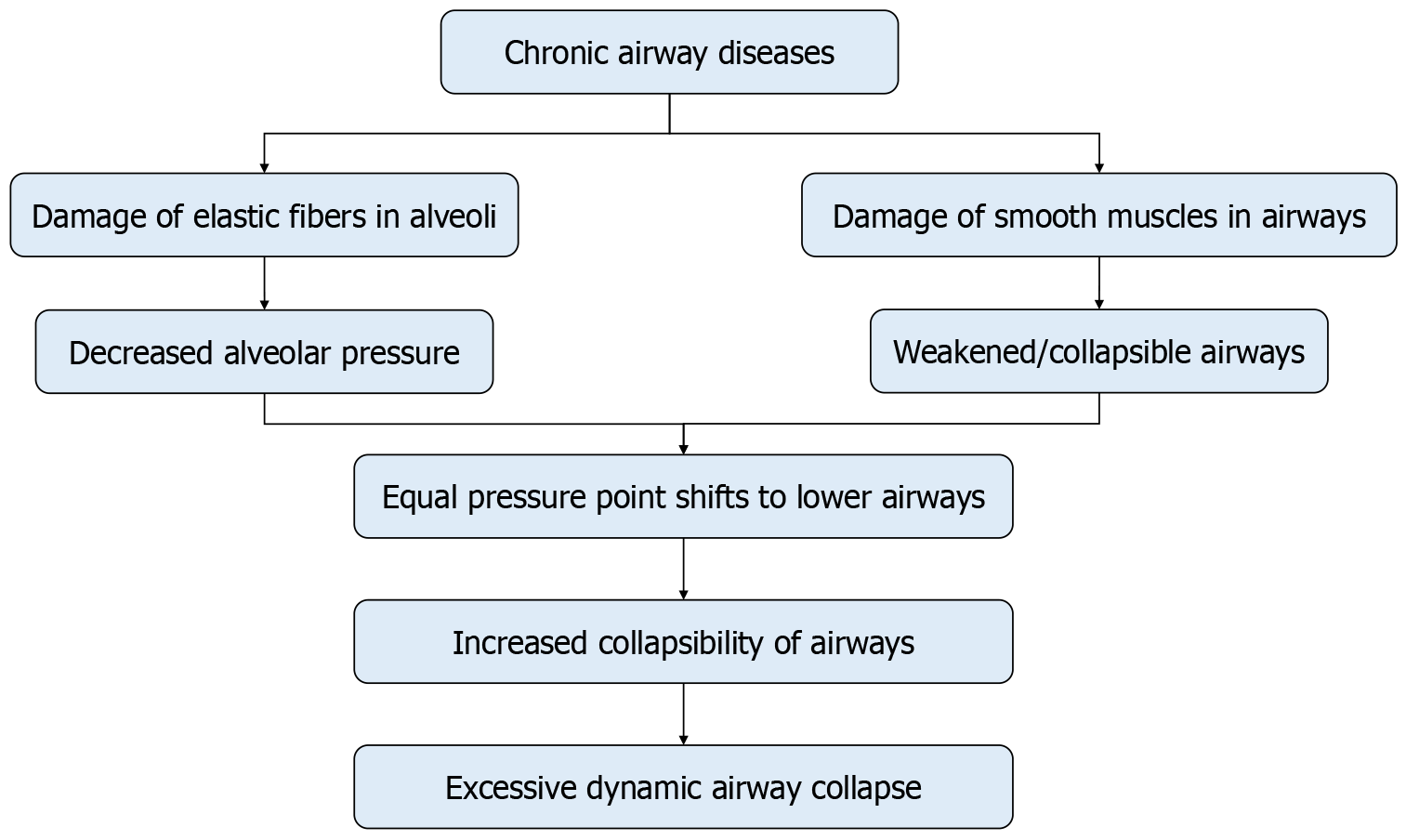
Figure 3
Flowchart showing the pathophysiology of excessive dynamic airway collapse in chronic airway diseases.
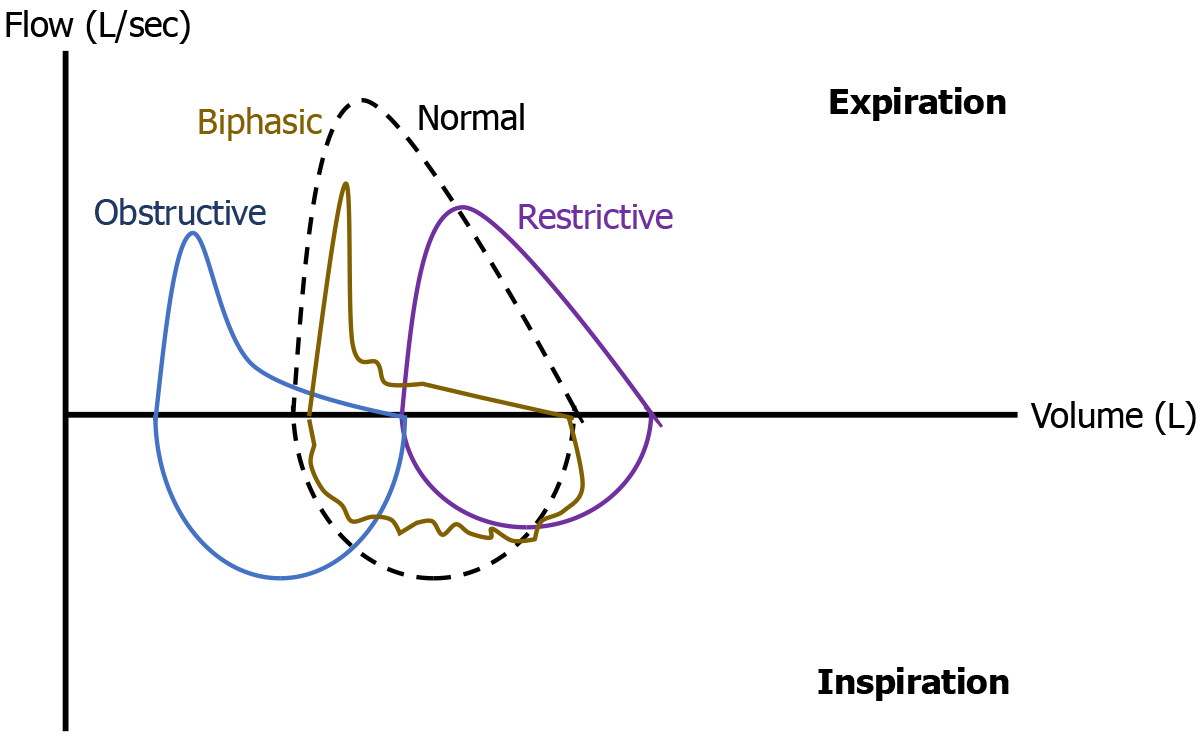
Figure 4
Normal flow-volume loop with variable abnormal patterns.
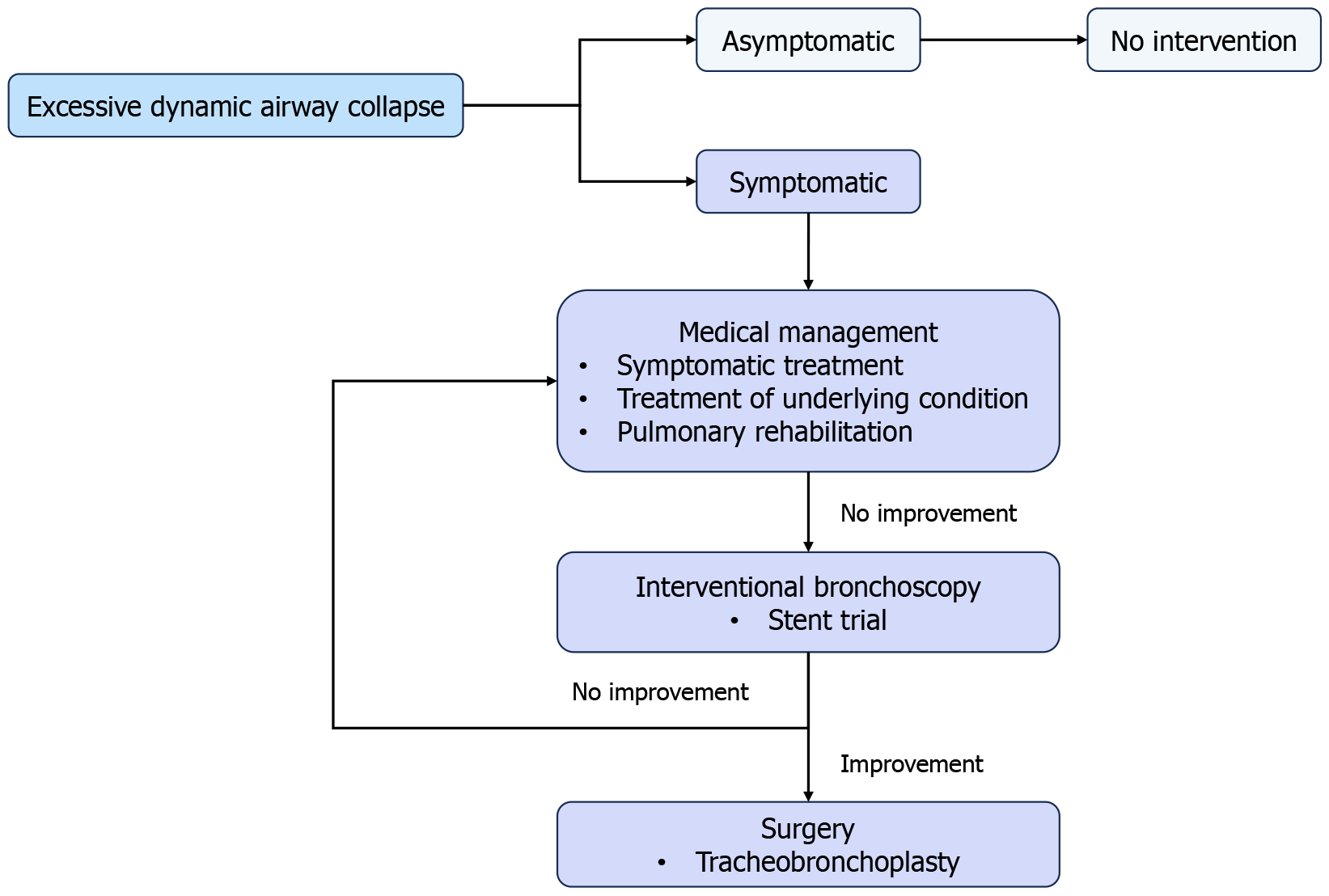
Figure 5
Approach to management of excessive dynamic airway collapse.
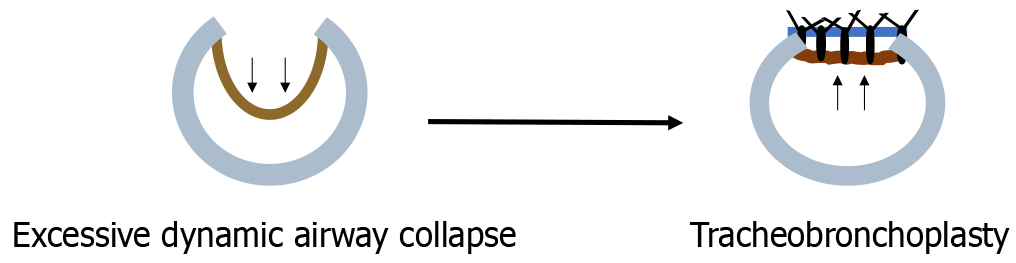
Figure 6
Schematic representation showing plication of the posterior membranous wall with polypropylene mesh with the restoration of D-shaped airway during expiration.
- Citation: Paudyal V, Thapa R, Itani A, Sharma M, Rayamajhi R, Ratnani I, Surani S. Excessive dynamic airway collapse: A condition behind the veil. World J Methodol 2026; 16(1): 108381
- URL: https://www.wjgnet.com/2222-0682/full/v16/i1/108381.htm
- DOI: https://dx.doi.org/10.5662/wjm.v16.i1.108381