







Copyright: ©Author(s) 2026.
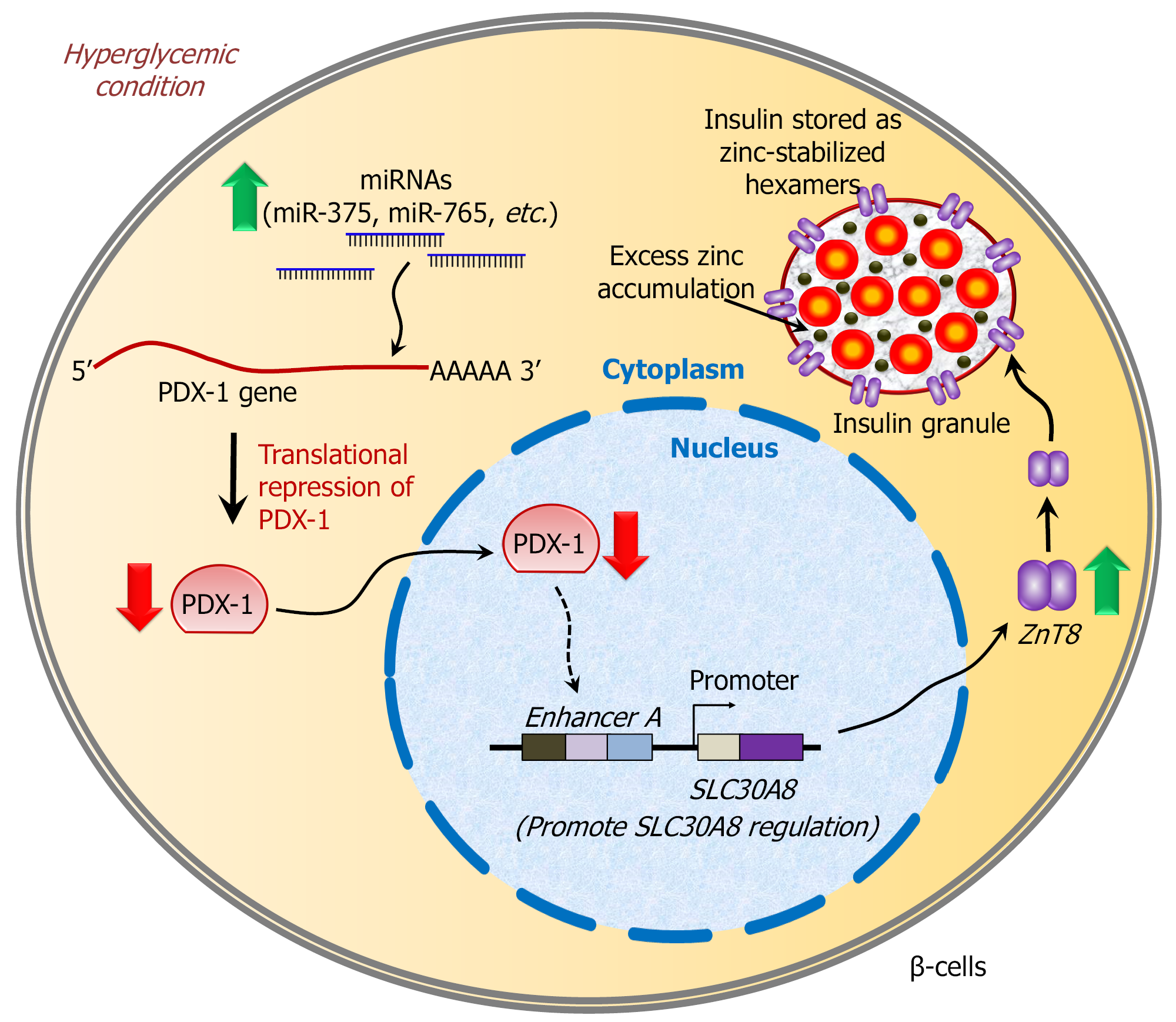
Figure 1 MiRNA-mediated suppression of PDX-1 disrupts slc30a8/znt8 regulation and insulin granule zinc homeostasis under hy perglycemic conditions schematic representation of the molecular interplay between hyperglycemia-induced microRNAs and PDX-1–ZnT8 signaling in pancreatic β-cells.
Under hyperglycemic conditions, upregulation of specific microRNAs (e.g., miR-375, miR-765) leads to translational repression of PDX-1 mRNA in the cytoplasm, resulting in reduced nuclear PDX-1 levels. Attenuated PDX-1 binding to Enhancer A, a regulatory element associated with the SLC30A8 locus compromises transcriptional regulation of ZnT8. Dysregulated ZnT8 expression alters zinc transport into insulin granules, affecting zinc-stabilized insulin hexamer formation and contributing to β-cell dysfunction. This pathway highlights miRNA-driven epigenetic control as a critical mechanism linking chronic hyperglycemia to impaired insulin storage and secretion in diabetes.
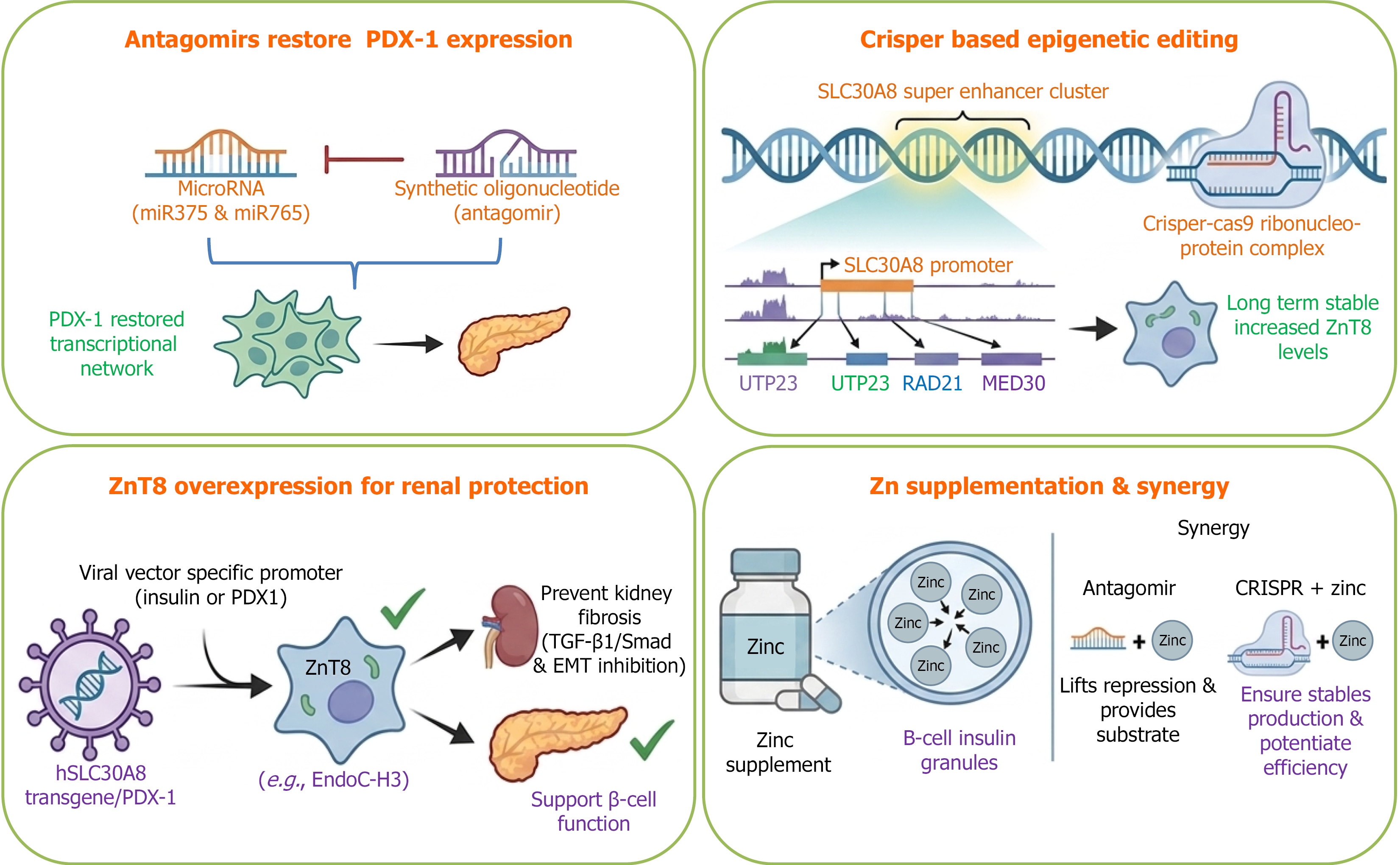
Figure 2
Restoring PDX-1 and ZnT8 homeostasis in diabetes and nephropathy through novel therapeutic approaches.
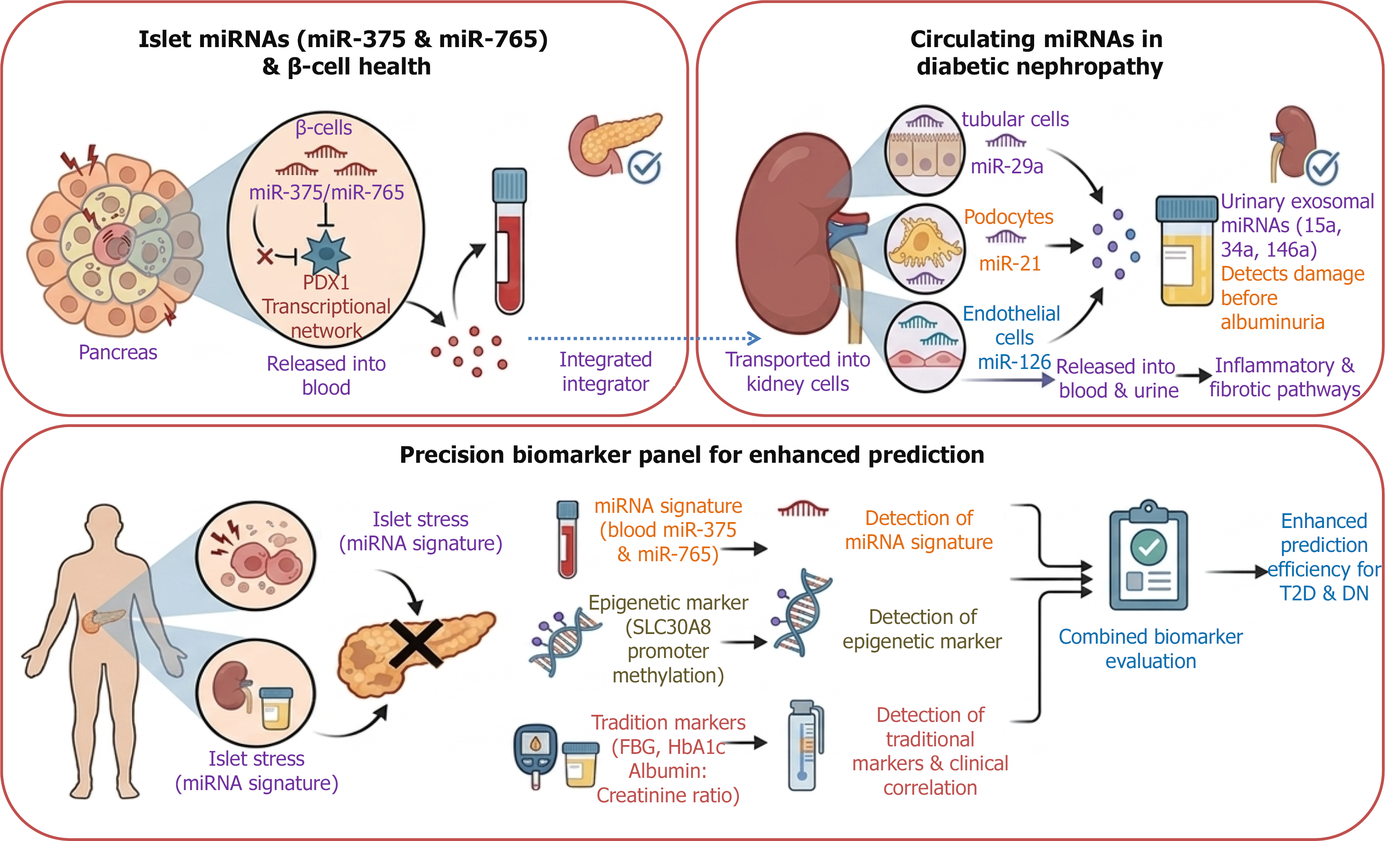
Figure 3 Circulating miR-375 and miR-765 as promising biomarkers for early detection of type 2 diabetes mellitus and diabetic neph ropathy, integrated with epigenetic and clinical markers.
T2DM: Type 2 diabetes mellitus; DN: Diabetic nephropathy; FBG: Fasting blood glucose.
- Citation: Sharma VK, Beg MMA, Singh S, Singh SK, Shrivastav D. SLC30A8 (ZnT8) at the crossroads of epigenetics and microRNA regulation in type 2 diabetes and nephropathy. World J Nephrol 2026; 15(3): 122565
- URL: https://www.wjgnet.com/2220-6124/full/v15/i3/122565.htm
- DOI: https://dx.doi.org/10.5527/wjn.122565