
















Copyright: ©Author(s) 2026.
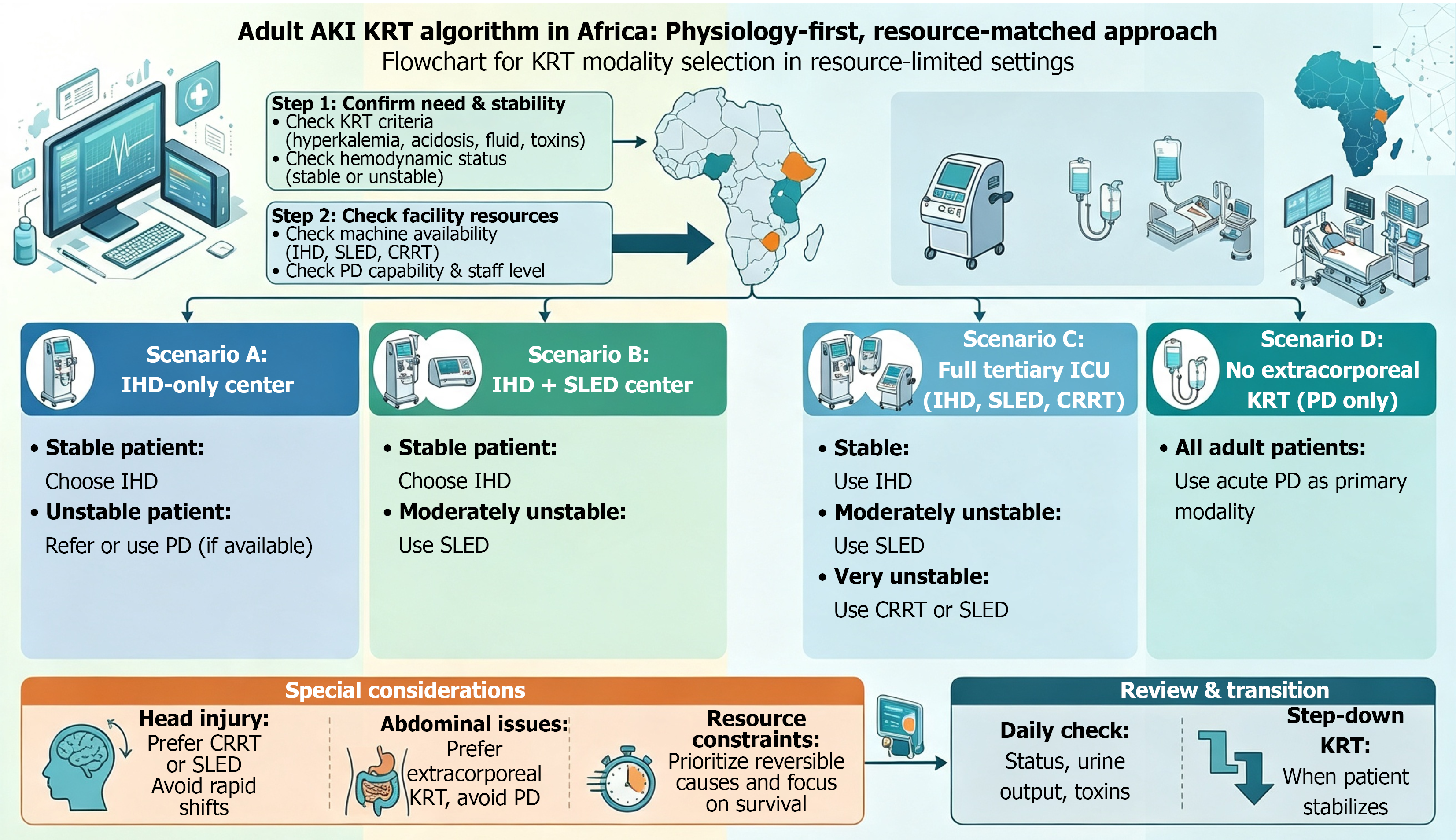
Figure 1 Algorithm for kidney replacement therapy modality selection in adult acute kidney injury in Africa.
The algorithm first confirms the need for kidney replacement therapy (KRT) based on life-threatening complications (refractory hyperkalemia, severe metabolic acidosis, pulmonary edema, uremic manifestations, or rapidly rising nitrogenous waste) despite optimal medical management, then stratifies patients by hemodynamic status (stable/borderline vs markedly unstable) and availability of intensive care unit (ICU)-level monitoring. Local resource assessment distinguishes four settings: A: Centers with only intermittent hemodialysis (IHD); B: Centers with IHD plus sustained low-efficiency dialysis (SLED); C: Tertiary ICUs with IHD, SLED and continuous KRT (CRRT); and D: Hospitals without extracorporeal therapies but with capacity for acute peritoneal dialysis (PD). In stable adults, IHD is recommended as first-line where available, whereas in unstable patients SLED is preferred in intermediate-resource ICUs and CRRT in tertiary ICUs, with step-down from CRRT to SLED to IHD as hemodynamics improve. In facilities lacking extracorporeal KRT, or when cost or vascular access precludes IHD/CRRT, acute PD is recommended as the primary modality following International Society for Peritoneal Dialysis acute kidney injury dosing and aseptic technique, except in patients with major intra-abdominal contraindications. AKI: Acute kidney injury; KRT: Kidney replacement therapy; IHD: Intermittent hemodialysis; PD: Peritoneal dialysis; SLED: Sustained low-efficiency dialysis; CRRT: Continuous kidney replacement therapy.
- Citation: Abdelhamid YM, Fayed A, Mayamba Nlandu Y, Ghosh S. Kidney replacement therapy for acute kidney injury in low-resource settings: Lessons from Africa. World J Nephrol 2026; 15(3): 122148
- URL: https://www.wjgnet.com/2220-6124/full/v15/i3/122148.htm
- DOI: https://dx.doi.org/10.5527/wjn.122148