
















Copyright: ©Author(s) 2026.
World J Nephrol. Jun 25, 2026; 15(2): 117336
Published online Jun 25, 2026. doi: 10.5527/wjn.v15.i2.117336
Published online Jun 25, 2026. doi: 10.5527/wjn.v15.i2.117336
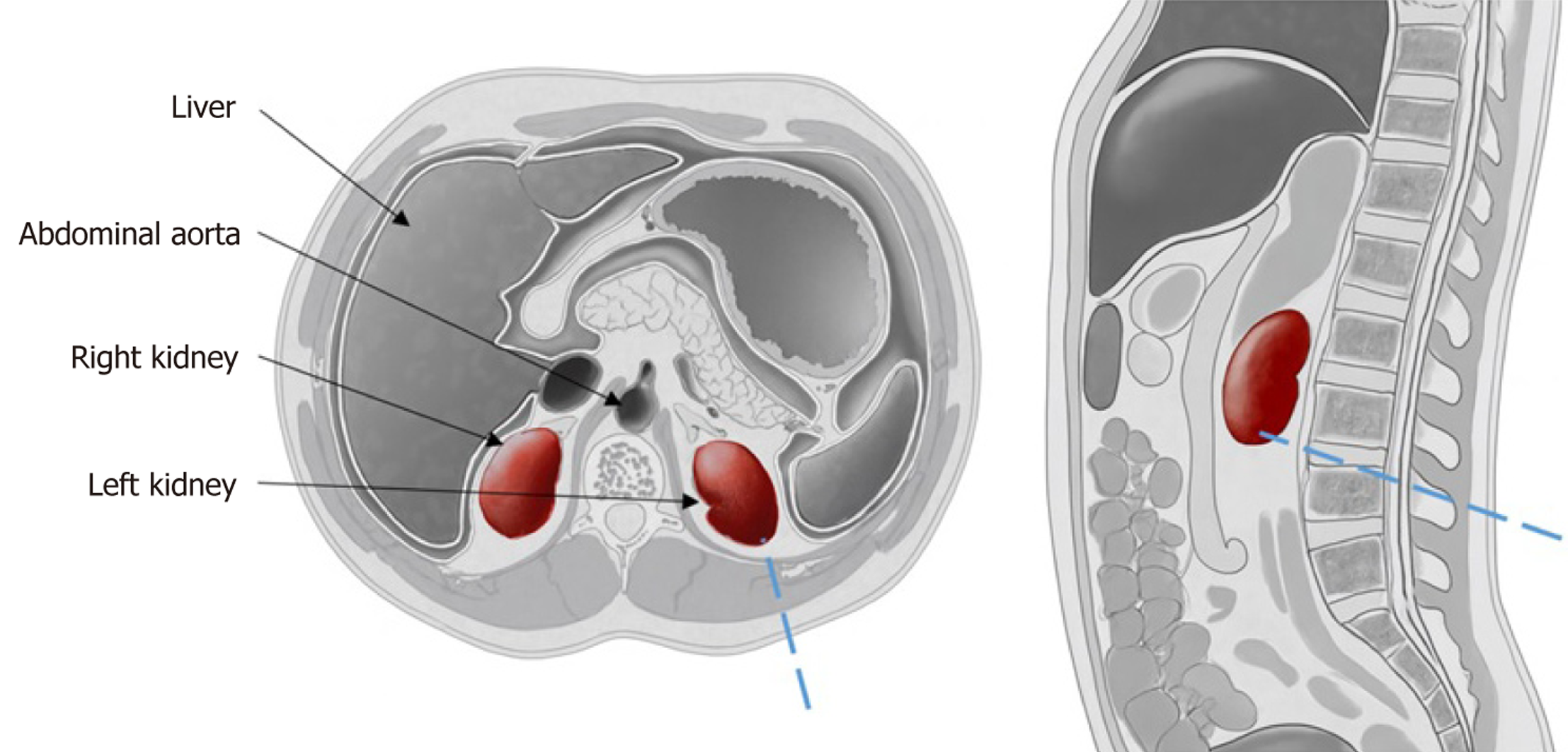
Figure 1 Anatomical relations to the kidney and depiction of a typical percutaneous biopsy path (dashed lines) in axial and sagittal planes.
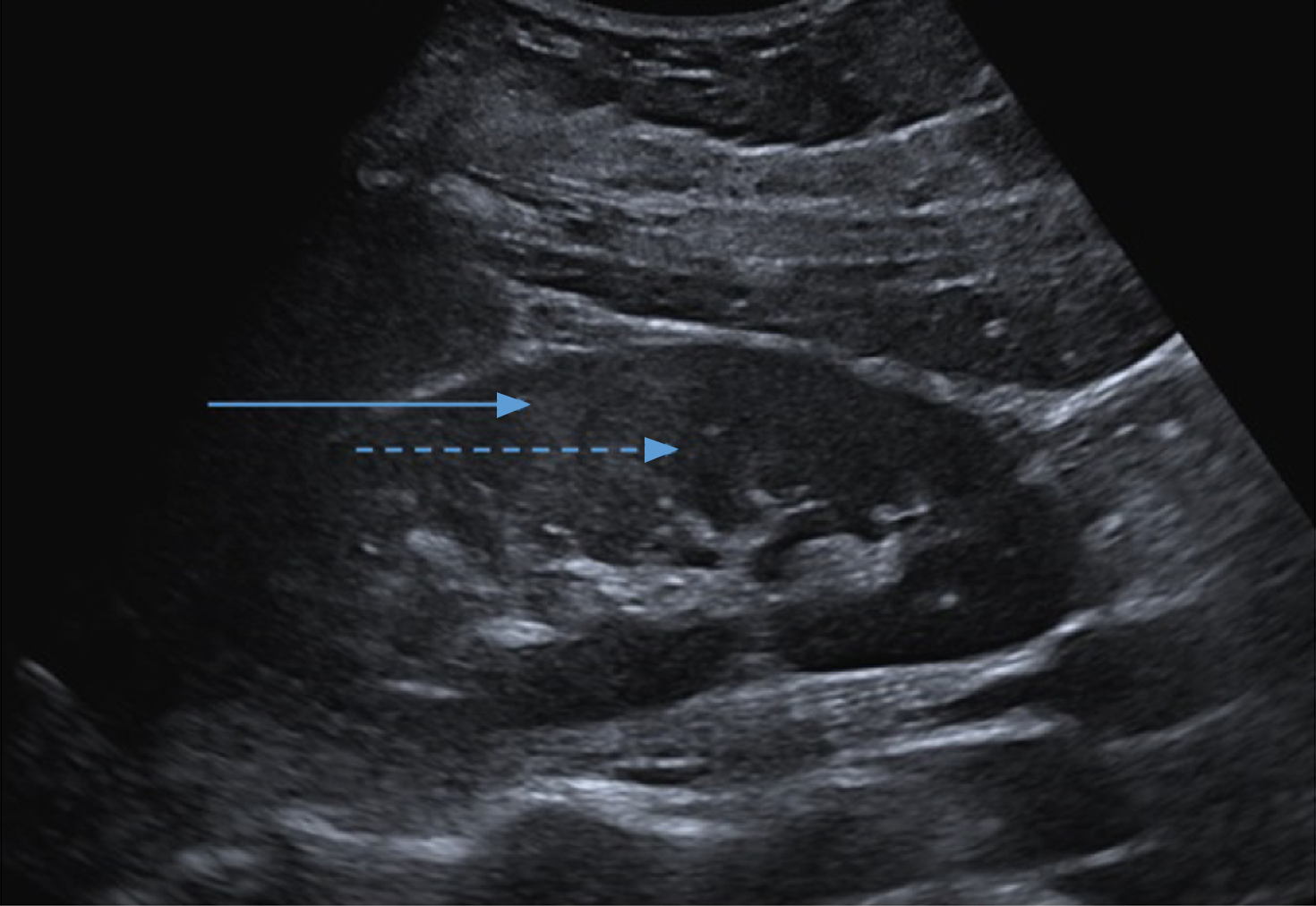
Figure 2 Ultrasound of the right kidney demonstrating preserved corticomedullary differentiation in which cortex is hyperechoic (solid line) relative to medulla (dashed line).
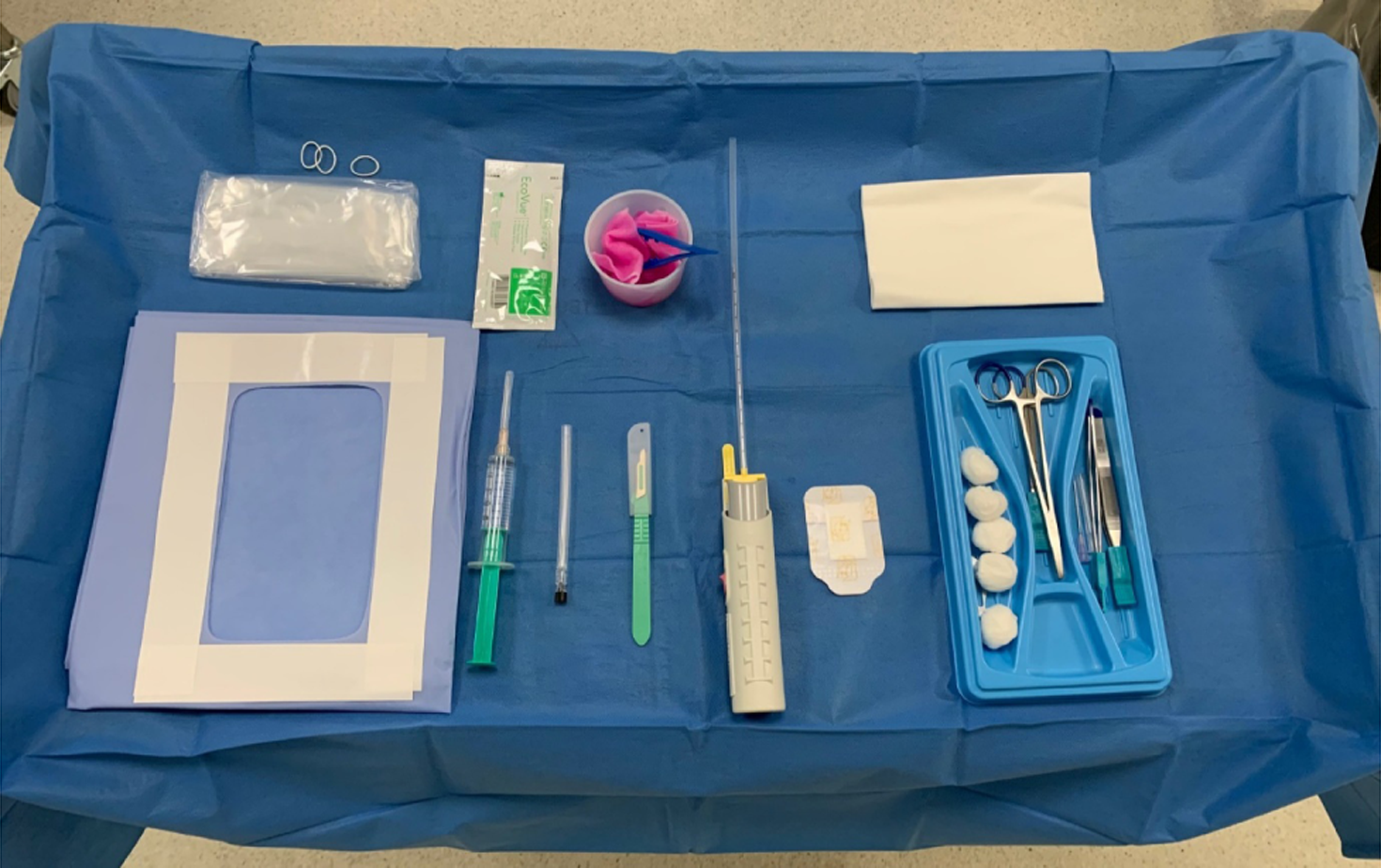
Figure 3 Standard equipment and trolley setup for percutaneous biopsy.
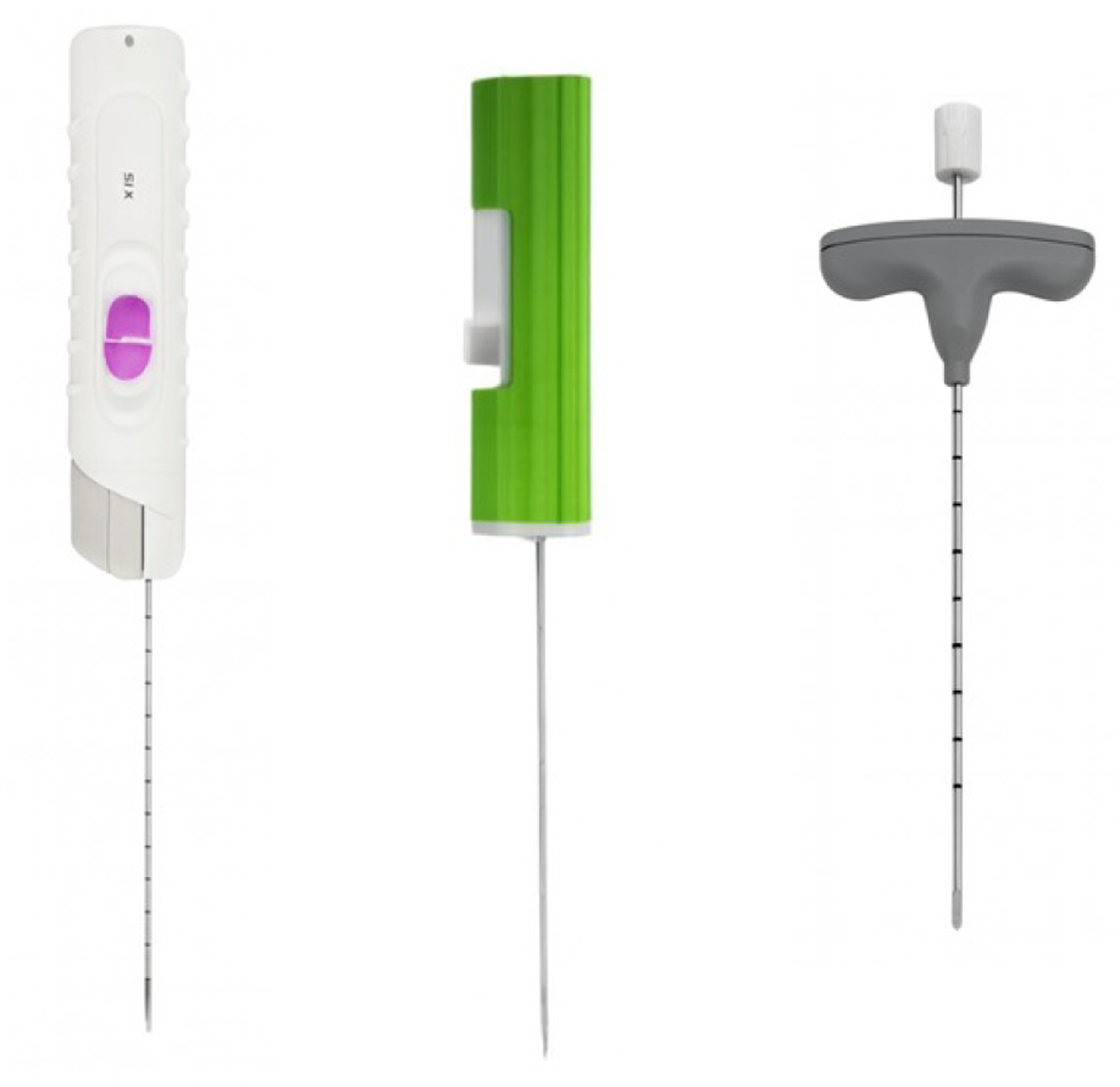
Figure 4 Examples of disposable automatic (left), sterilisable automatic (centre) and manual (right) needle biopsy devices.
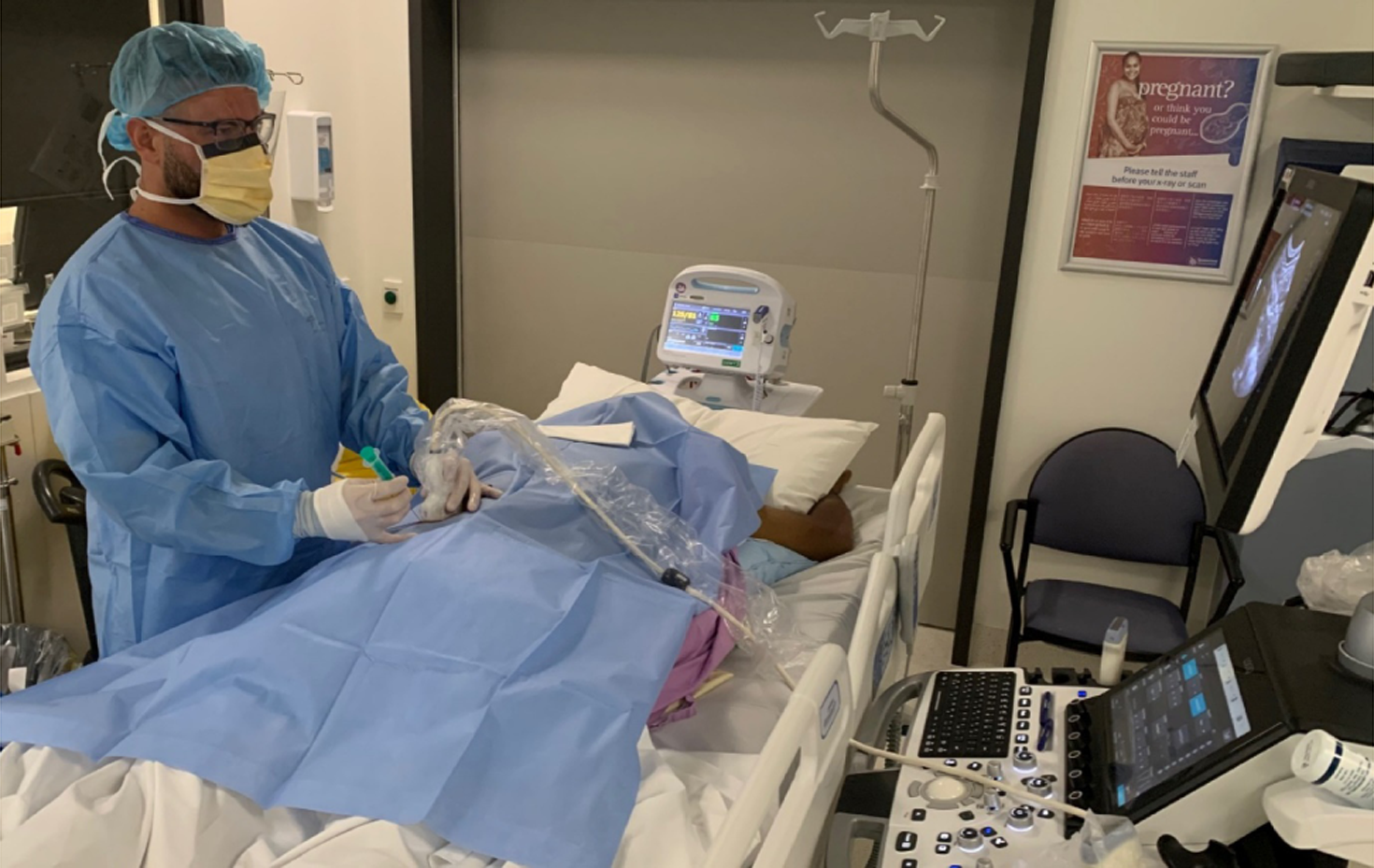
Figure 5 Patient positioning for kidney biopsy.
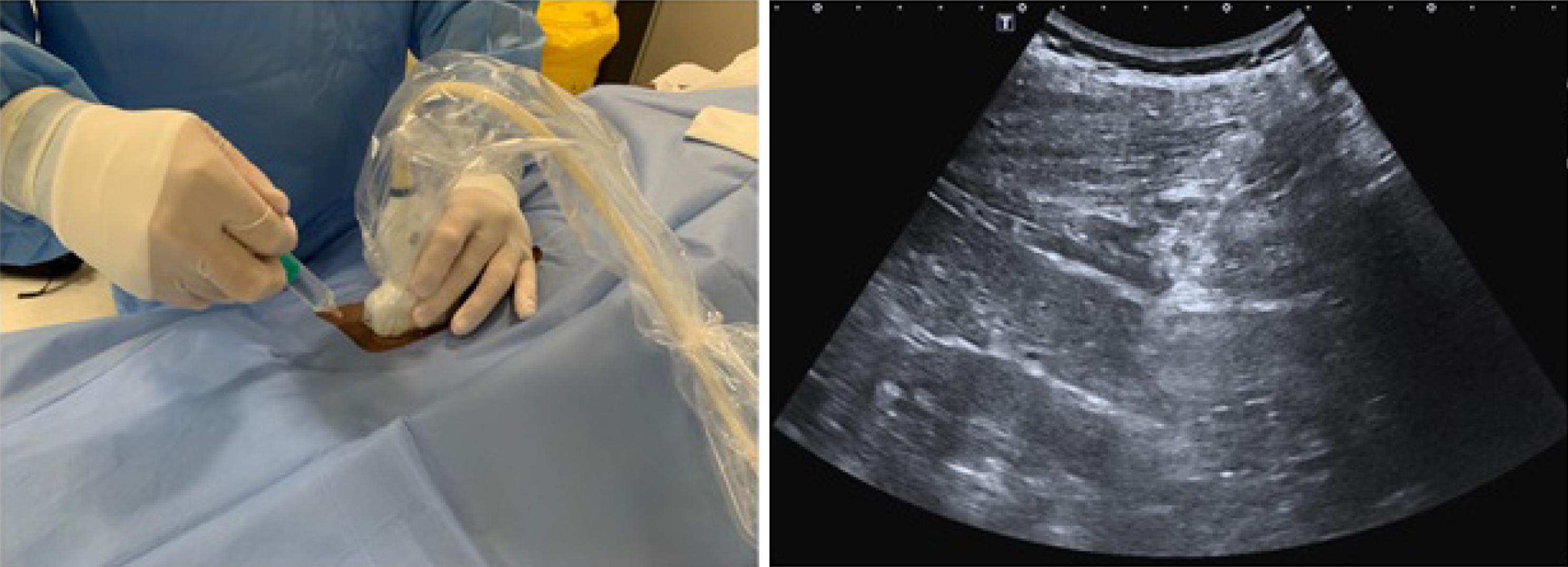
Figure 6 Real-time long-axis needle visualisation along a tract from the skin to the level of the kidney.
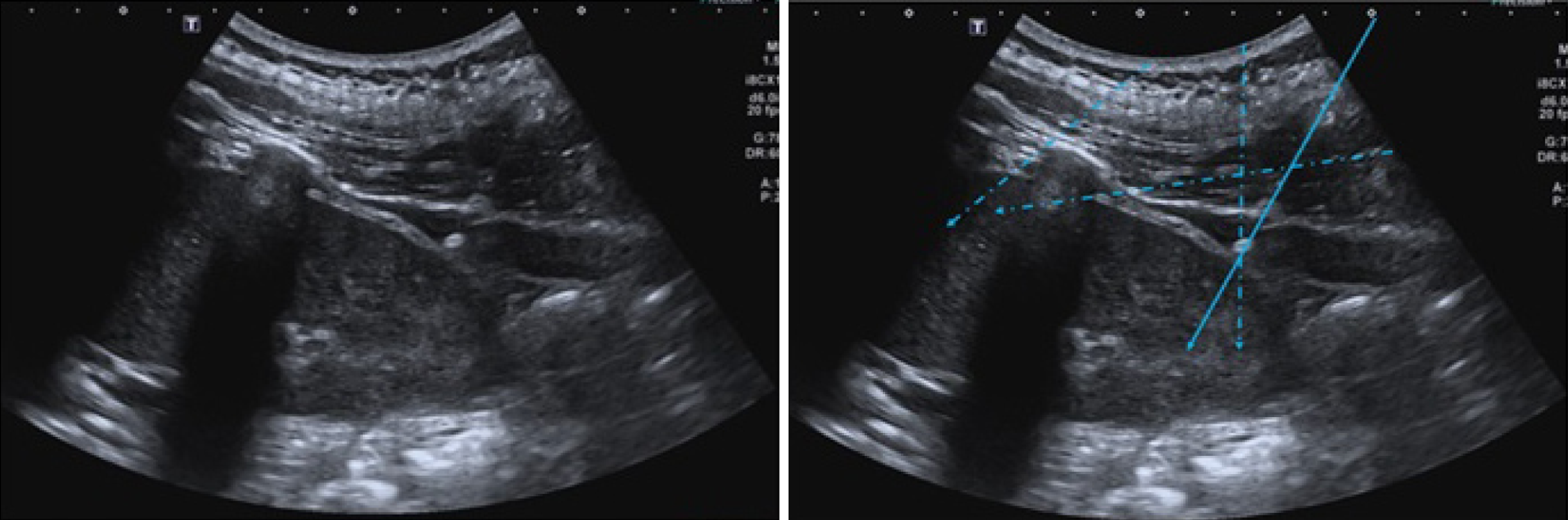
Figure 7 Biopsy needle tip approaching the left kidney lower pole at approximately 45 degrees (left), and examples of alternative needle trajectories targeting renal cortex (right, dashed lines) relative to the standard trajectory (right, solid line).
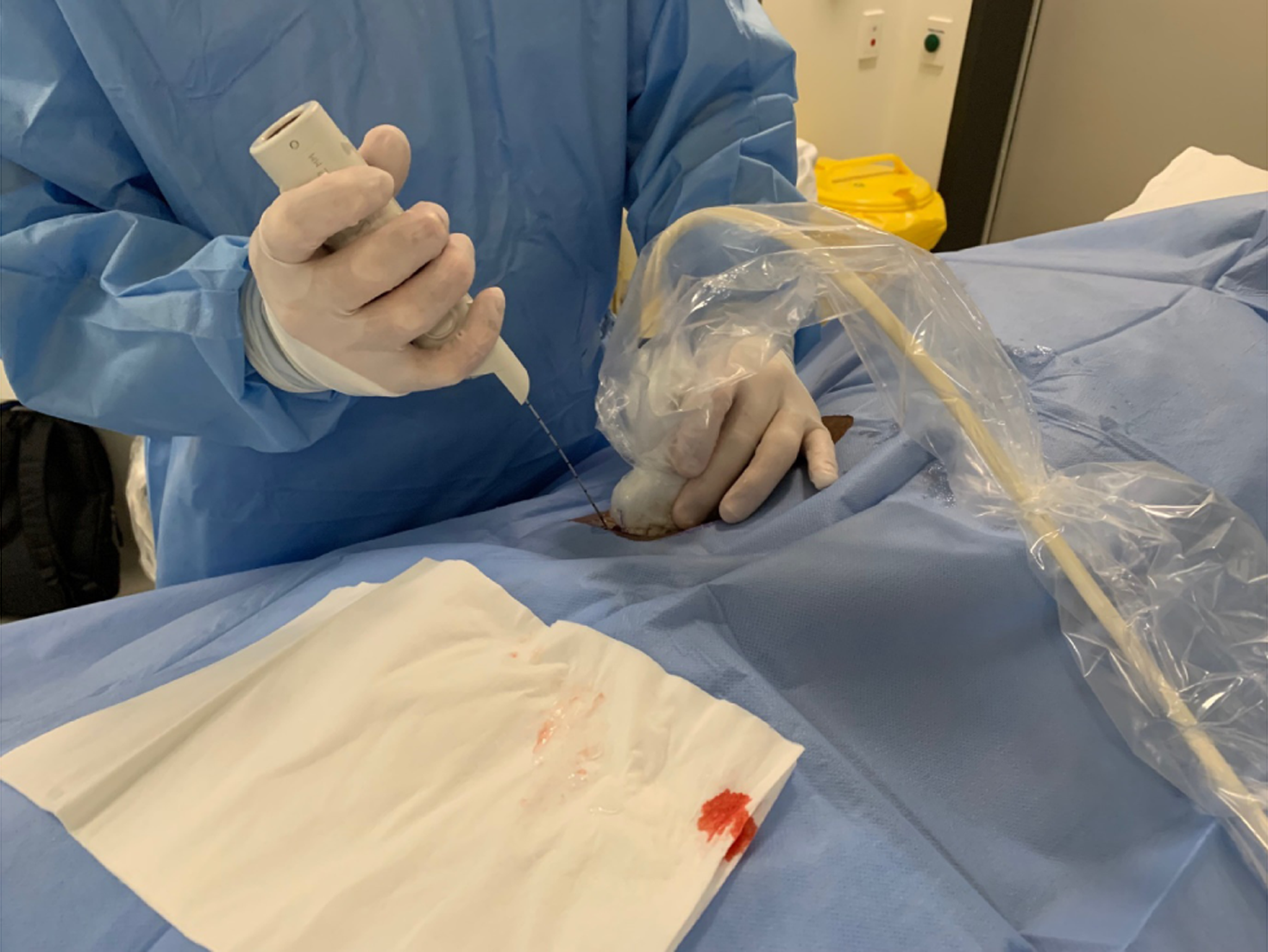
Figure 8 Advancing the biopsy needle under real-time ultrasound guidance.
- Citation: Yaxley J, Scott T, Burnett C, Kurtkoti J. Performing a percutaneous kidney biopsy. World J Nephrol 2026; 15(2): 117336
- URL: https://www.wjgnet.com/2220-6124/full/v15/i2/117336.htm
- DOI: https://dx.doi.org/10.5527/wjn.v15.i2.117336