











Copyright: ©Author(s) 2026.
World J Transplant. Jun 18, 2026; 16(2): 118169
Published online Jun 18, 2026. doi: 10.5500/wjt.v16.i2.118169
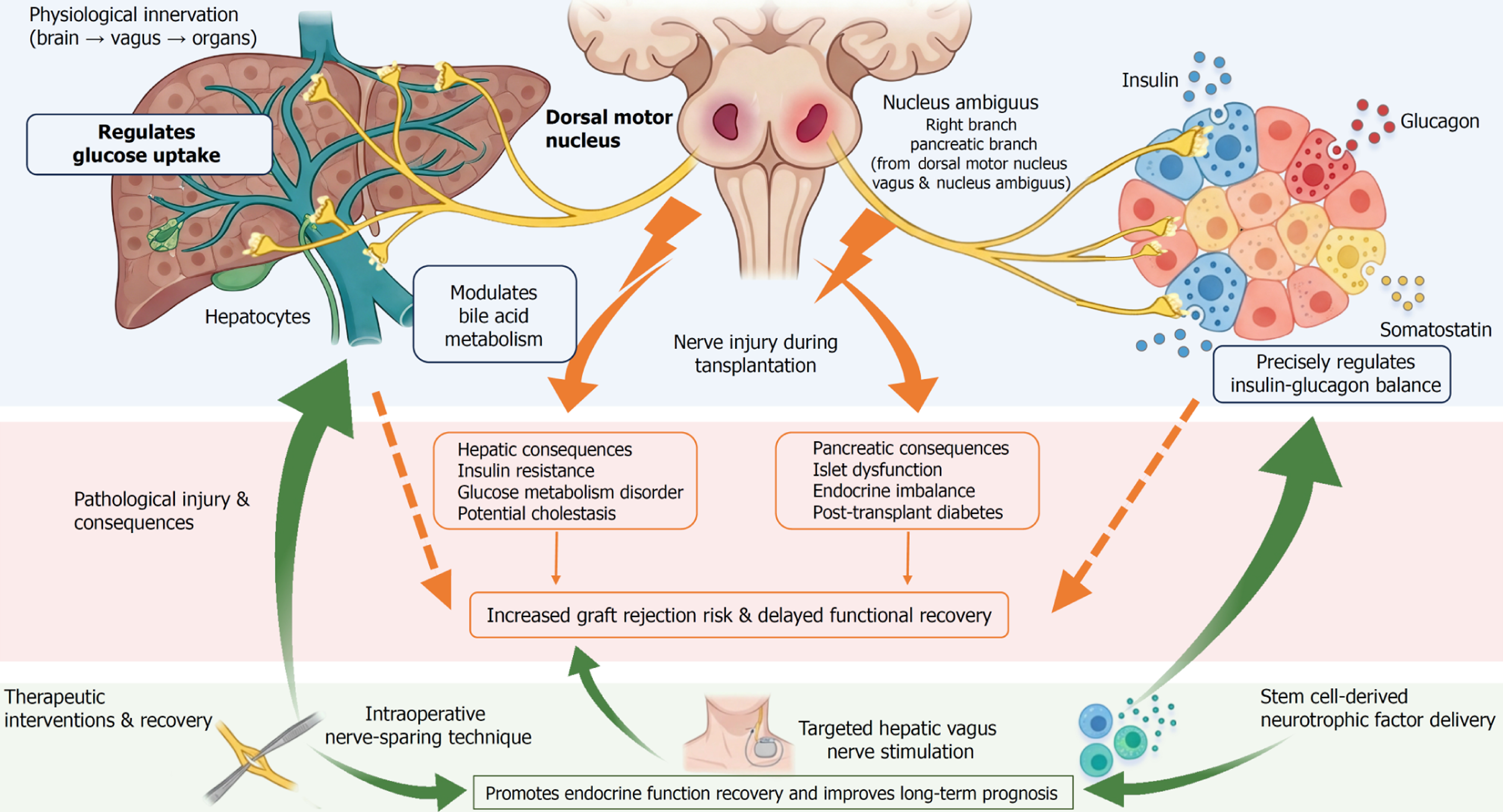
Figure 1 Organ-specific vagus nerve innervation in liver-pancreas transplantation: Mechanisms and therapeutic interventions.
Pregan glionic neurons originating from the dorsal motor nucleus and nucleus ambiguus give rise to hepatic and pancreatic branches. The hepatic branches traverse alongside the portal vein, regulating glucose uptake and bile-acid metabolism, while the pancreatic branches synapse with α, β, and δ cells to maintain the balance between insulin and glucagon. Transection of these nerves during organ retrieval and implantation results in hepatic insulin resistance, glucose dysregulation, and cholestasis, subsequently leading to islet dysfunction, endocrine imbalance, and post-transplant diabetes, which increases the risk of rejection and delays recovery. We propose three interventions: Preserving the nerves during dissection; applying low-frequency vagus nerve stimulation to the hepatic branch to enhance metabolic function; and injecting stem-cell-derived neurotrophic factors into the portal vein to facilitate nerve regeneration. Neural elements are depicted in yellow, injury in orange, and therapy in green.
- Citation: Zhang AY, Guo ZH, Huang Y, Shi YR, Song X, Wang SY, Yang GH, Liu Y, Xu TC. Vagal nerve innervation divergence in liver/pancreas: A forgotten key to endocrine recovery after transplantation? World J Transplant 2026; 16(2): 118169
- URL: https://www.wjgnet.com/2220-3230/full/v16/i2/118169.htm
- DOI: https://dx.doi.org/10.5500/wjt.v16.i2.118169