
















Copyright: ©Author(s) 2026.
World J Transplant. Jun 18, 2026; 16(2): 117357
Published online Jun 18, 2026. doi: 10.5500/wjt.v16.i2.117357
Published online Jun 18, 2026. doi: 10.5500/wjt.v16.i2.117357
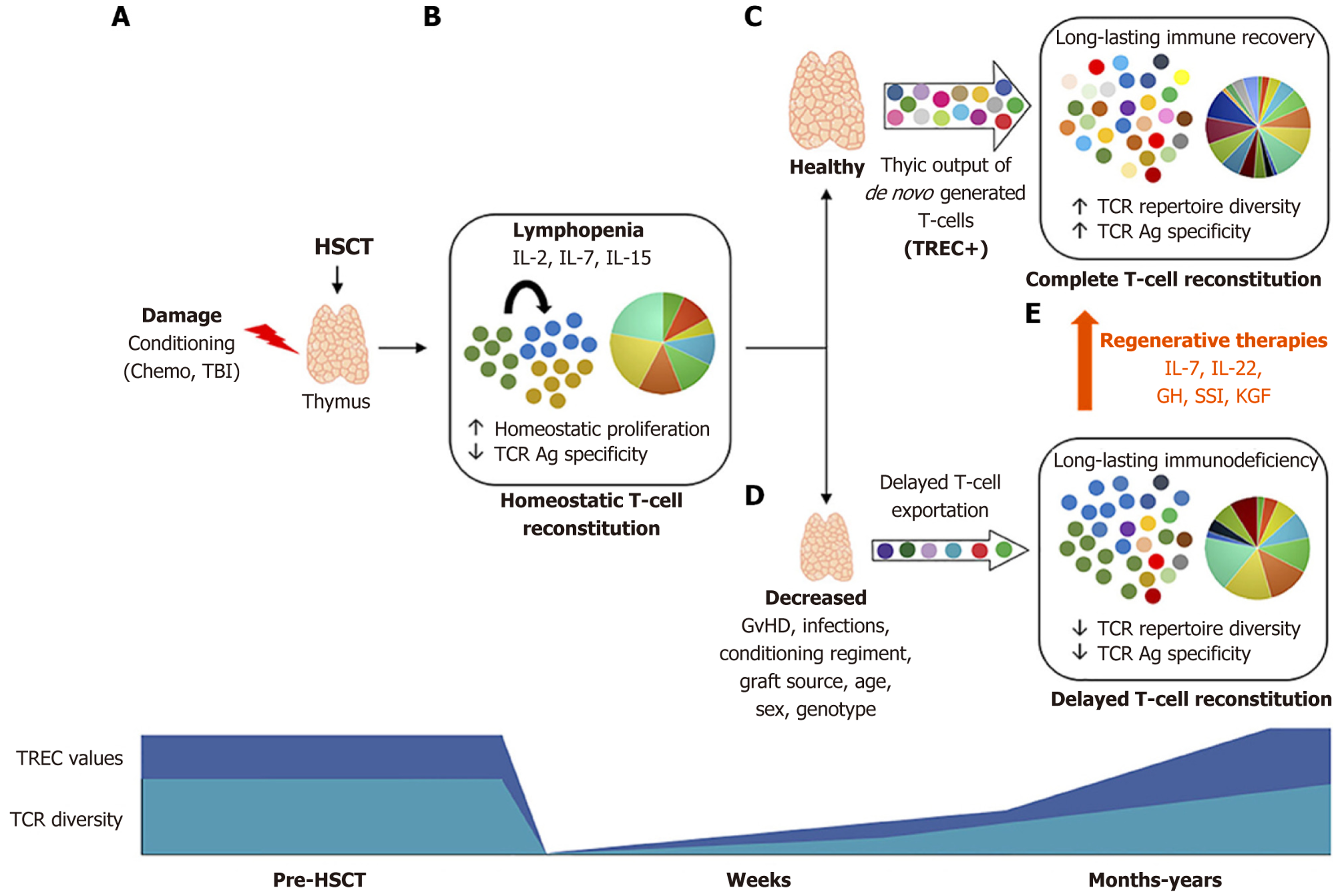
Figure 1 Thymic function and T-cell reconstitution after hematopoietic stem cell transplantation.
A: During hematopoietic stem cell transplantation (HSCT), the thymus is damaged by conditioning regimens, corticosteroids, and other agents included in the transplant protocol, resulting in impaired thymic activity; B: The profound lymphopenia induced by immunosuppression triggers homeostatic proliferation of residual non-depleted T cells or donor-derived T cells, driven by homeostatic cytokines (interleukin-2, interleukin-7, and interleukin-15). This process leads to oligoclonal expansion and reduced T cell receptor (TCR) repertoire diversity; C: Within a few months after HSCT, endogenous thymic regeneration begins, and the thymus starts to release newly generated T cells containing TCR excision circles. The emergence of self-tolerant T cells with a broader TCR repertoire supports durable immune recovery and progressive, eventually complete, T-cell reconstitution, accompanied by better infection control and fewer HSCT-related complications; D: In some patients, due to host- or HSCT protocol-related factors, thymic reactivation remains suboptimal, resulting in restricted TCR diversity and defective T-cell reconstitution, which is associated with higher infection risk and increased mortality; E: Thymus-targeted regenerative interventions may enhance thymic function after HSCT and facilitate more complete T-cell reconstitution. Bottom panel: TCR excision circles levels (dark blue) and TCR diversity (light blue) are markedly decreased early after HSCT and then gradually recover toward baseline over months to years, reflecting thymic rebound. HSCT: Hematopoietic stem cell transplantation; TBI: Total body irradiation; IL: Interleukin; TCR: T cell receptor; TREC: T cell receptor excision circle; GH: Growth hormone; KGF: Keratinocyte growth factor. Citation: Gaballa A, Clave E, Uhlin M, Toubert A, Arruda LCM. Evaluating Thymic Function After Human Hematopoietic Stem Cell Transplantation in the Personalized Medicine Era. Front Immunol 2020; 11: 1341. Copyright© 2020 Gaballa, Clave, Uhlin, Toubert and Arruda. This is an open-access article distributed under the terms of the Creative Commons Attribution License (CC BY). The use, distribution or reproduction in other forums is permitted, provided the original author(s) and the copyright owner(s) are credited and that the original publication in this journal is cited, in accordance with accepted academic practice. No use, distribution or reproduction is permitted which does not comply with these terms (Supplementary material).
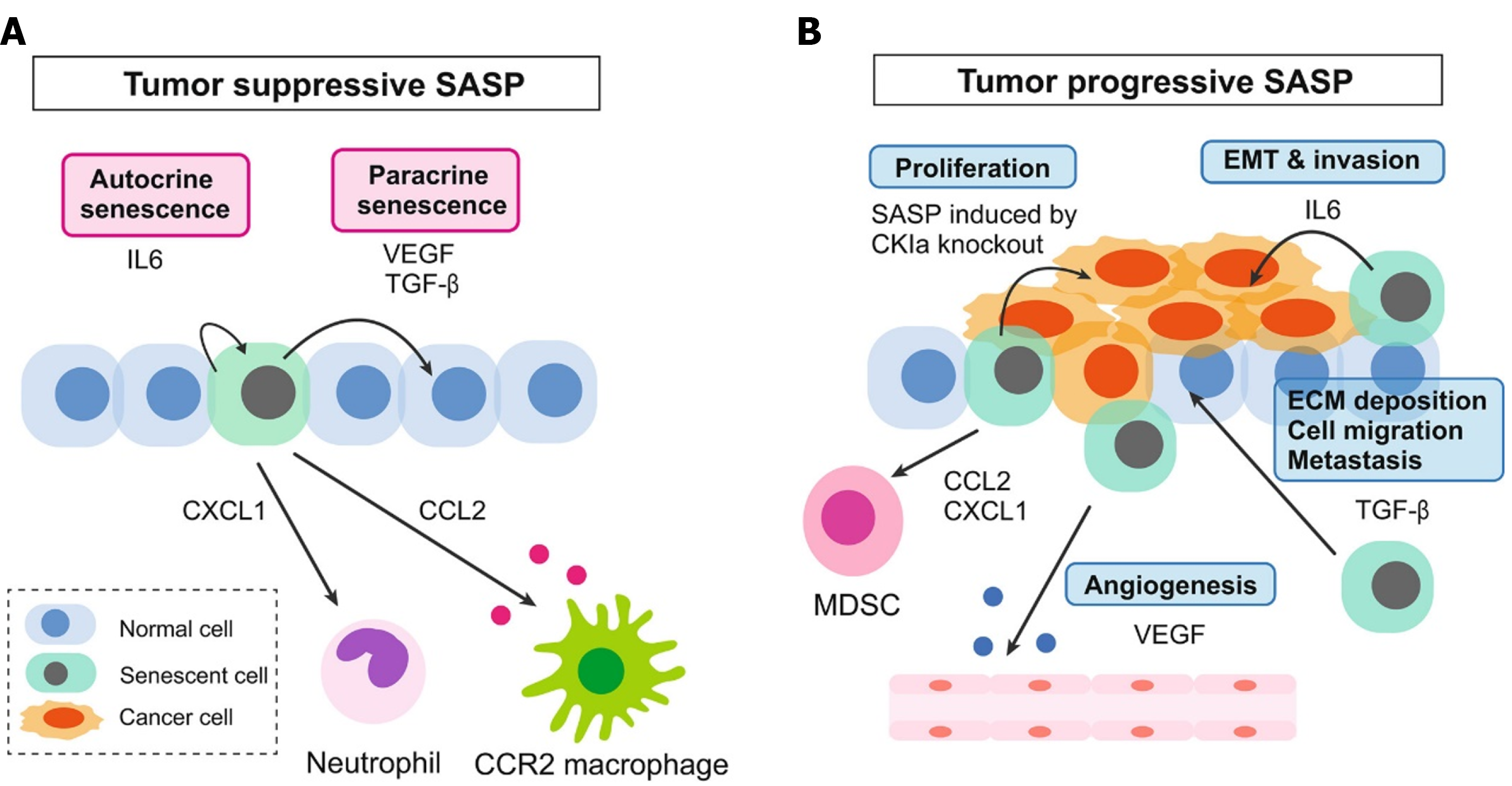
Figure 2 Context-dependent functions of the senescence-associated secretory phenotype in the tumour microenvironment.
A: Tumour-suppressive senescence-associated secretory phenotype (SASP). In normal or premalignant tissues, senescent cells exert a tumour-suppressive effect by reinforcing the senescent state through SASP signals, which act in both an autocrine and paracrine manner. Through the secretion of SASP factors, these cells can recruit immune populations that recognize and eliminate them, a process known as senescence surveillance; B: Tumour-promoting SASP. In established or advanced tumours, however, SASP factors produced by senescent cells can instead foster tumour progression by stimulating angiogenesis, driving cancer cell proliferation, promoting epithelial-mesenchymal transition, and facilitating metastatic dissemination. Moreover, SASP components can dampen anti-tumour immune responses, thereby further supporting cancer growth. SASP: Senescence-associated secretory phenotype; IL: Interleukin; VEGF: Vascular endothelial growth factor; TGF-β: Transforming growth factor-β; CXCL1: Chemokine (C-X-C motif) ligand 1; CCL2: Chemokine (C-C motif) ligand 2; CCR2: C-C chemokine receptor 2; EMT: Epithelial-mesenchymal transition; MDSC: Myeloid-derived suppressor cells; ECM: Extracellular matrix; CKIa: Casein kinase Iα. Citation: Takasugi M, Yoshida Y, Ohtani N. Cellular senescence and the tumour microenvironment. Mol Oncol 2022; 16: 3333-3351. ©2022 The Authors. Molecular Oncology published by John Wiley & Sons Ltd on behalf of Federation of European Biochemical Societies. This is an open access article under the terms of the http://creativecommons.org/Licenses/by/4.0/ License, which permits use, distribution and reproduction in any medium, provided the original work is properly cited (Supplementary material).
- Citation: Arafat AMA, Soliman SMA, Elfandy H, Othman MO, Elsayed W, Lotfy MM, Ebrahim NAA. Immunosenescence and cancer predisposition in pediatric transplant recipients: An emerging paradigm. World J Transplant 2026; 16(2): 117357
- URL: https://www.wjgnet.com/2220-3230/full/v16/i2/117357.htm
- DOI: https://dx.doi.org/10.5500/wjt.v16.i2.117357