
















Copyright: ©Author(s) 2026.
World J Crit Care Med. Sep 9, 2026; 15(3): 123372
Published online Sep 9, 2026. doi: 10.5492/wjccm.123372
Published online Sep 9, 2026. doi: 10.5492/wjccm.123372
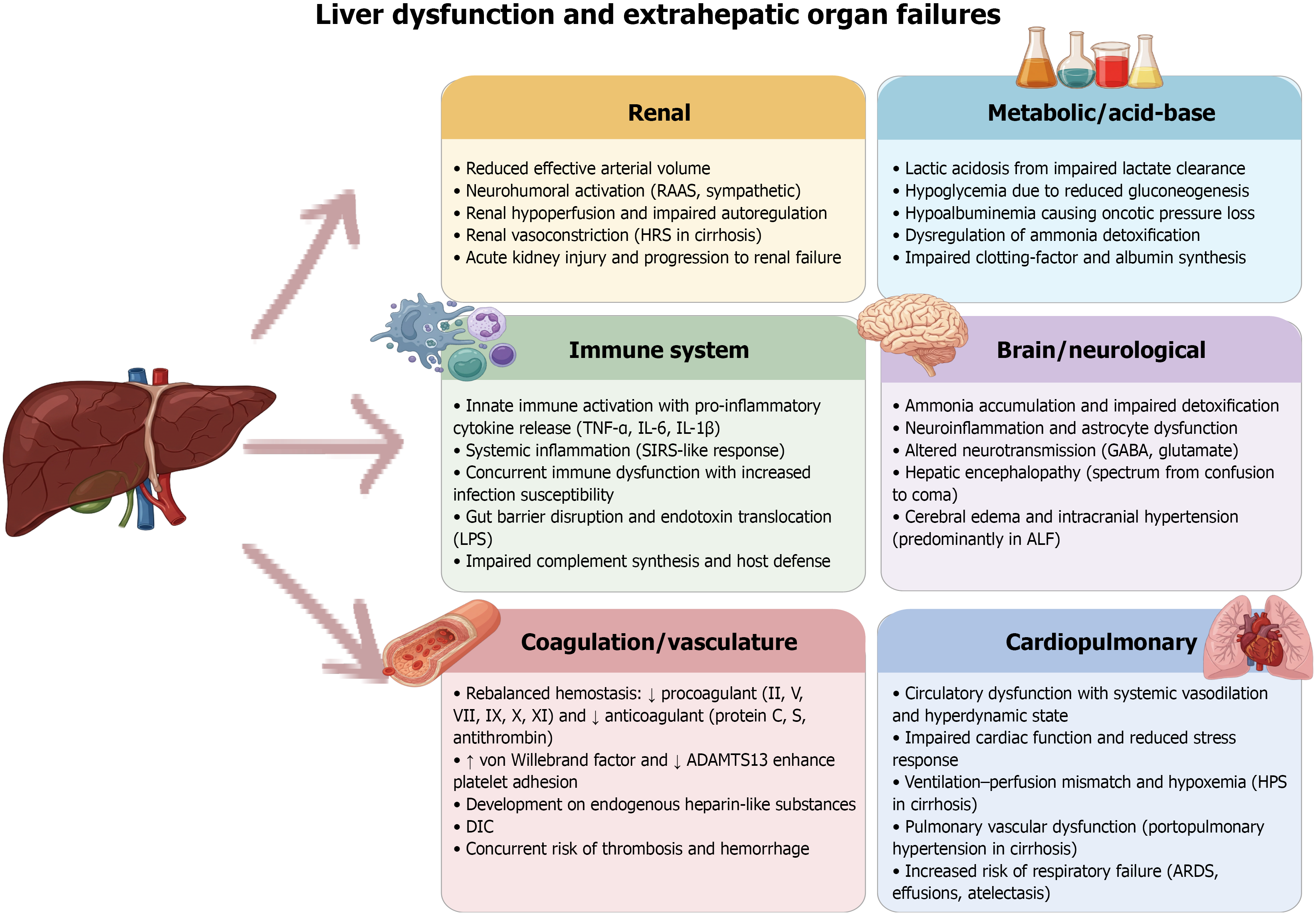
Figure 1 Systemic consequences of liver dysfunction and the development of extrahepatic organ failure although liver injury is the defi
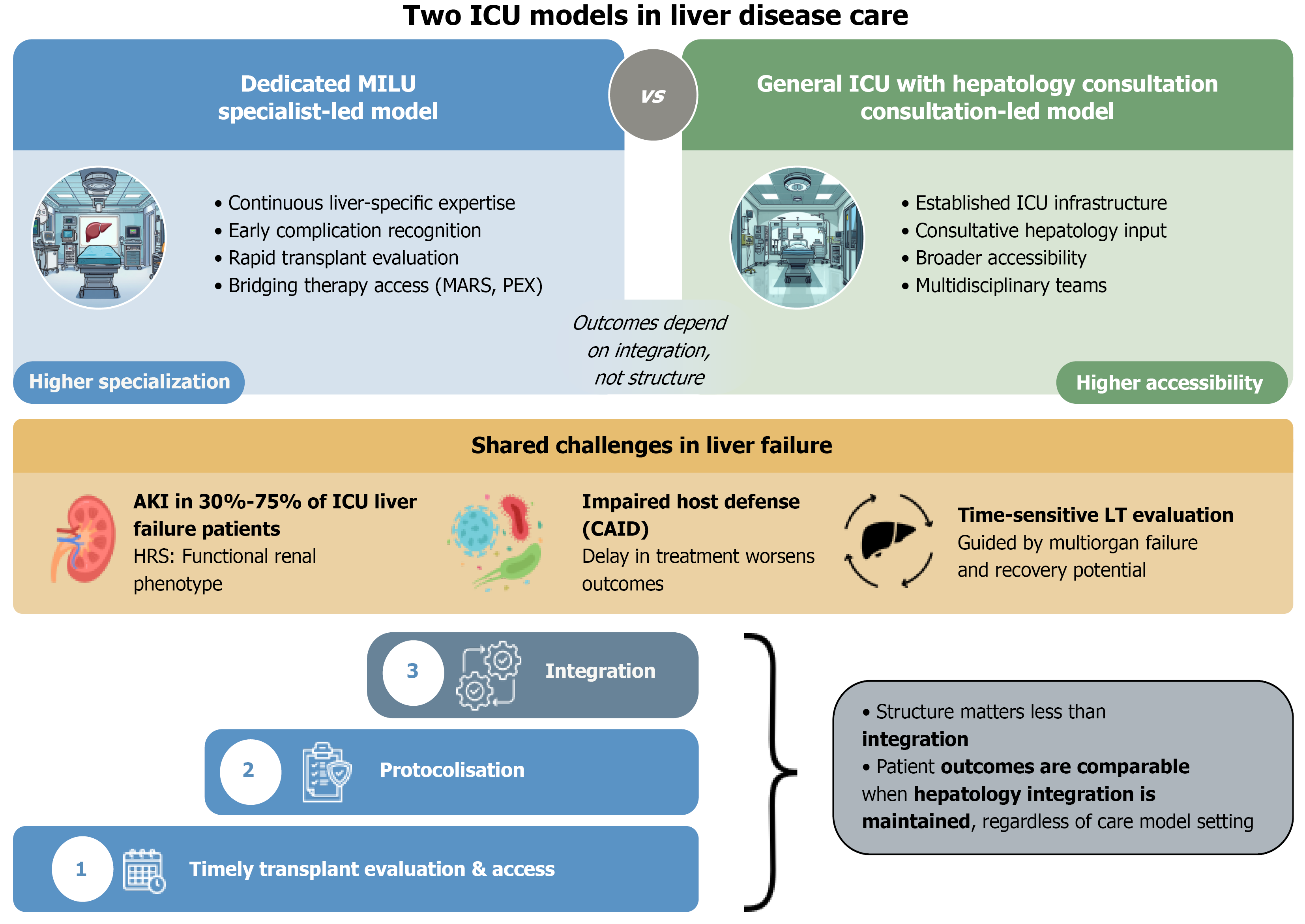
Figure 2 Models of intensive care delivery in patients with liver failure: Structure vs integration two organizational approaches commonly used to deliver care for critically ill patients with liver disease are illustrated: Dedicated liver-focused intensive care units and general intensive care units supported by specialist hepatology consultation.
Although these models differ in structure, both aim to provide timely transplant evaluation, standardized management of organ failure, and coordinated multidisciplinary care. Current evidence suggests that outcomes depend less on the physical setting itself than on effective integration between hepatology, intensive care, and transplant services, supported by protocolized pathways and access to specialized expertise. ICU: Intensive care unit; MILU: Medical intensive liver unit; MARS: Molecular adsorbent recirculating system; PEX: Plasma exchange; CAID: Cirrhosis-associated immune dysfunction; LT: Liver transplantation.
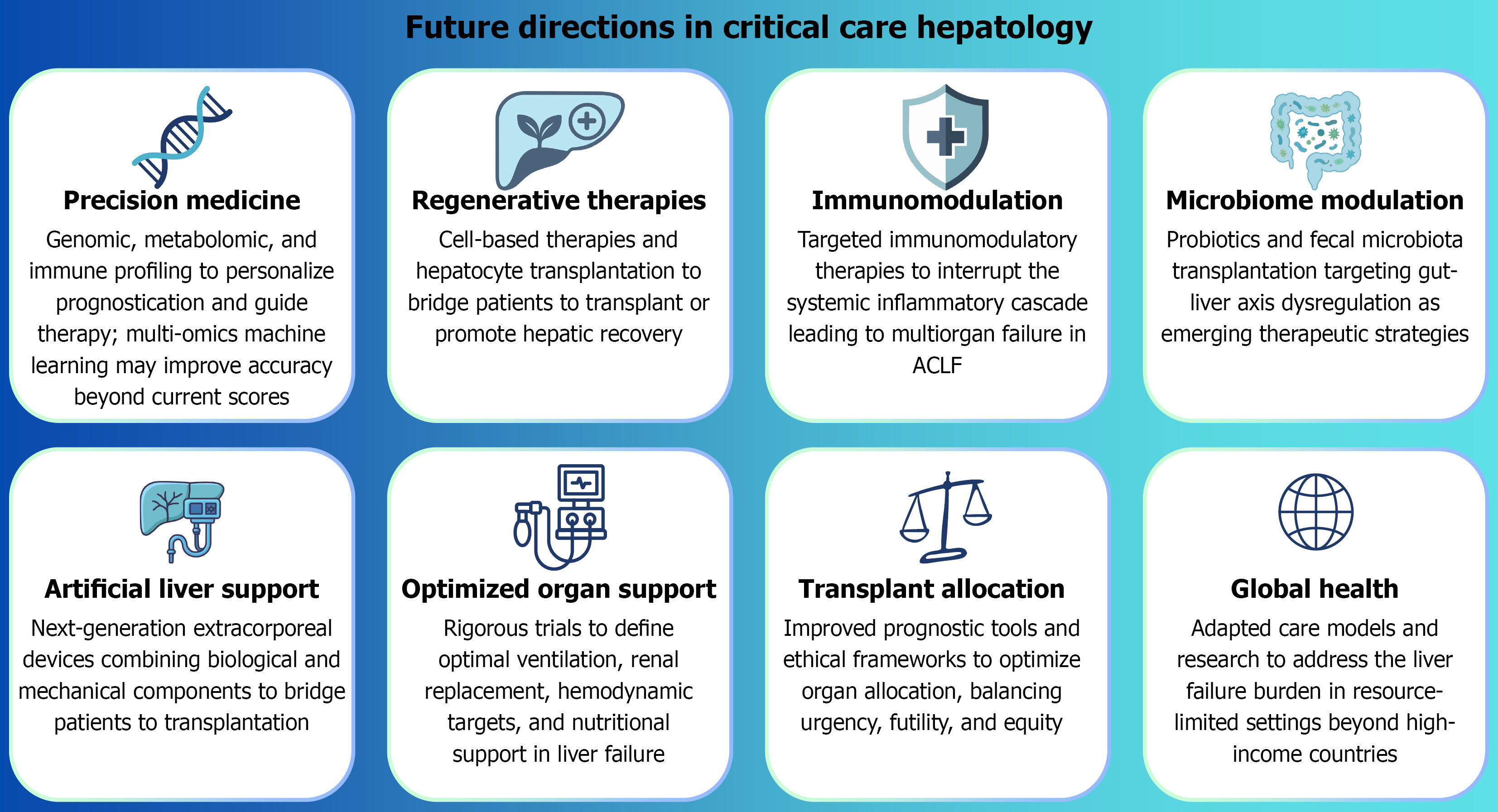
Figure 3 Emerging priorities and research directions in critical care hepatology overview of key areas for future development, including precision medicine, regenerative therapies, immunomodulation, microbiome modulation, advanced organ support, transplant allocation strategies, and global health adaptation.
These areas reflect evolving efforts to improve prognostication, therapeutic targeting, and care delivery. ACLF: Acute-on-chronic liver failure.
- Citation: Kosuta I, Curcic Karabaic E, Beluhan N, Zlopasa F, Babel J. Critical care hepatology: A narrative review of current concepts and management. World J Crit Care Med 2026; 15(3): 123372
- URL: https://www.wjgnet.com/2220-3141/full/v15/i3/123372.htm
- DOI: https://dx.doi.org/10.5492/wjccm.123372