
















Copyright: ©Author(s) 2026.
World J Clin Pediatr. Jun 9, 2026; 15(2): 117968
Published online Jun 9, 2026. doi: 10.5409/wjcp.v15.i2.117968
Published online Jun 9, 2026. doi: 10.5409/wjcp.v15.i2.117968
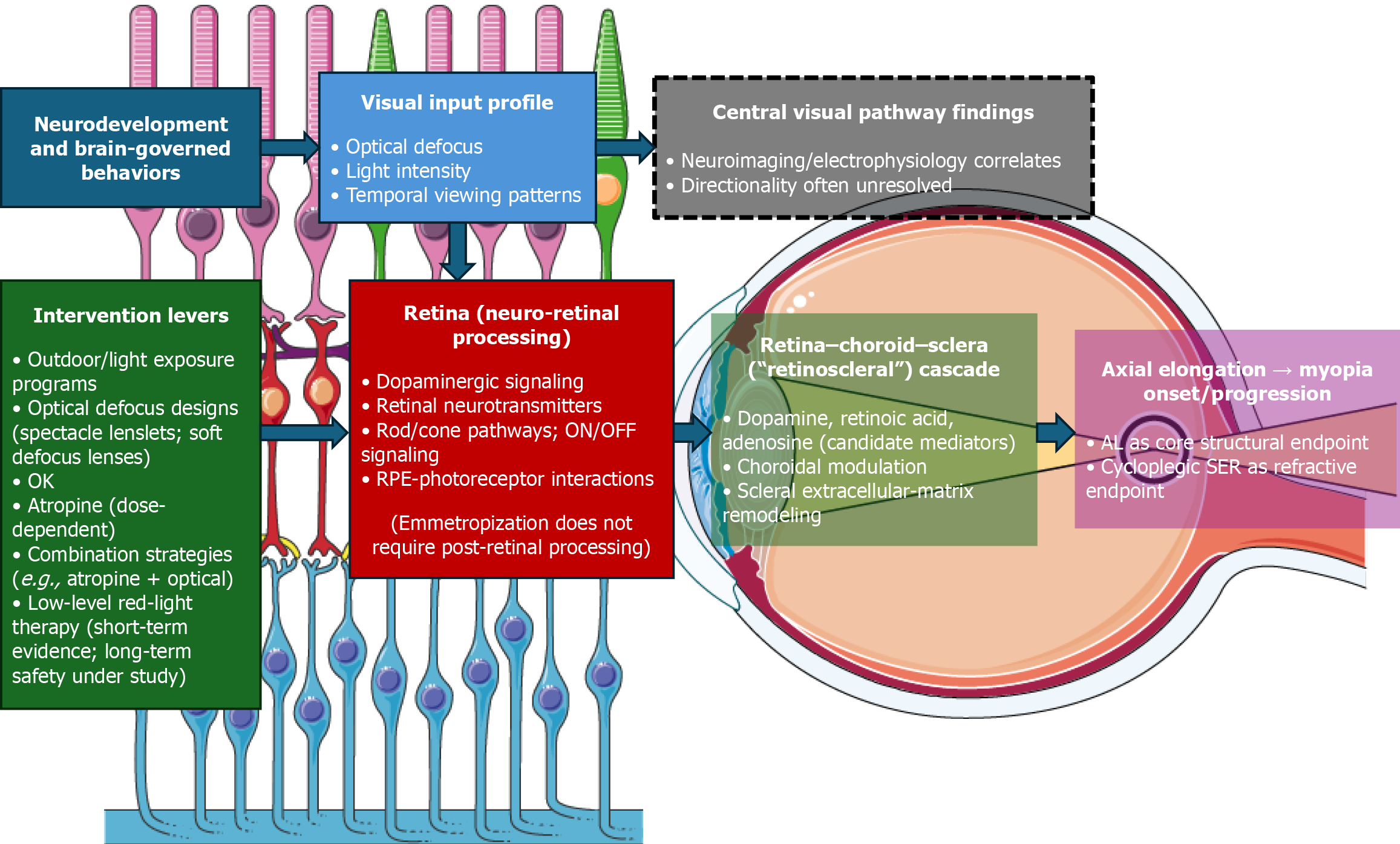
Figure 1 Eye–brain axis framework for pediatric myopia.
Brain-governed behaviors shape the visual input profile, driving retinal signaling and the retina–choroid–sclera (“retinoscleral”) cascade that promotes axial elongation and myopia progression. Central visual pathway findings are included as correlates, although directionality remains uncertain, and emmetropization can occur without post-retinal processing. Biomarkers/endpoints (axial length, cycloplegic spherical equivalent refraction, choroidal thickness, optical coherence tomography angiography, electroretinography/visual evoked potentials, neuroimaging) support risk phenotyping and monitoring. AL: Axial length; RPE: Retinal pigment epithelium; SER: Spherical equivalent refraction; OK: Orthokeratology.
- Citation: Capobianco M, Nicolosi SG, Dammino E, Cappellani F, Khouyyi M, D’Esposito F, Gagliano C, Zeppieri M. Neuro-ophthalmic review on pediatric myopia: Advancing from refraction to a brain-centric model of axial growth. World J Clin Pediatr 2026; 15(2): 117968
- URL: https://www.wjgnet.com/2219-2808/full/v15/i2/117968.htm
- DOI: https://dx.doi.org/10.5409/wjcp.v15.i2.117968