
















Copyright: ©Author(s) 2026.
World J Clin Pediatr. Jun 9, 2026; 15(2): 117841
Published online Jun 9, 2026. doi: 10.5409/wjcp.v15.i2.117841
Published online Jun 9, 2026. doi: 10.5409/wjcp.v15.i2.117841
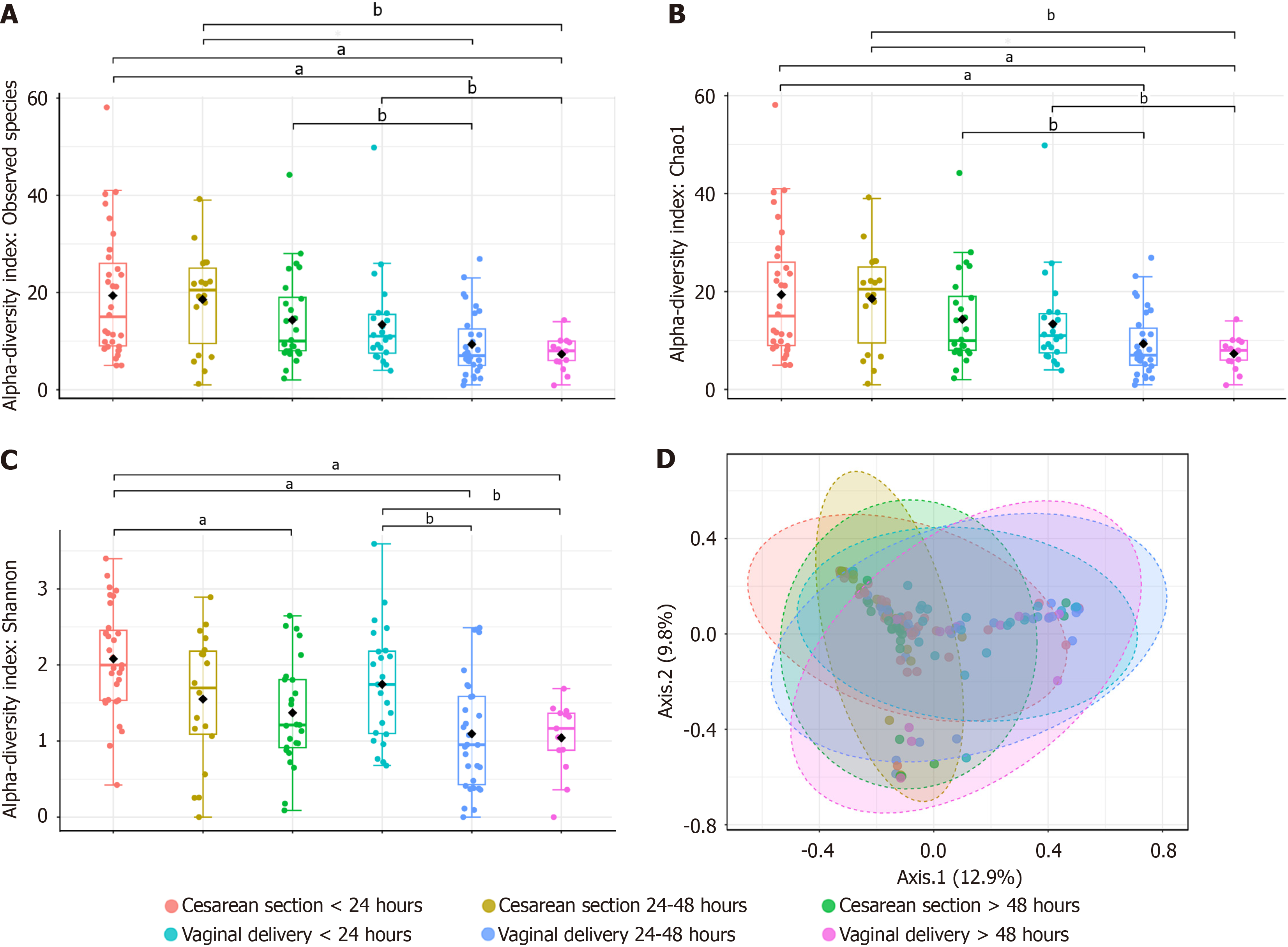
Figure 1 Bacterial diversities in the stool of predominant breastfed neonates according to mode of delivery and time of stool collection.
A total of 140 samples were analyzed (cesarean section < 24 hours, n = 31; cesarean section 24-48 hours, n = 18; cesarean section > 48 hours, n = 25; vaginal delivery < 24 hours, n = 23; vaginal delivery 24-48 hours, n = 30; vaginal delivery > 48 hours, n = 13). A: Observed species; B: Alpha diversity based on species richness (Chao1 index); C: Alpha diversity based on species richness and evenness (Shannon index) were used to assess within-sample diversity; D: Beta diversity between samples was assessed using Bray-Curtis dissimilarity and visualized by principal coordinate analysis. Statistical differences in alpha diversity were evaluated using the Kruskal–Wallis test, while differences in beta diversity were assessed using PERMANOVA, aP < 0.001; bP < 0.05.
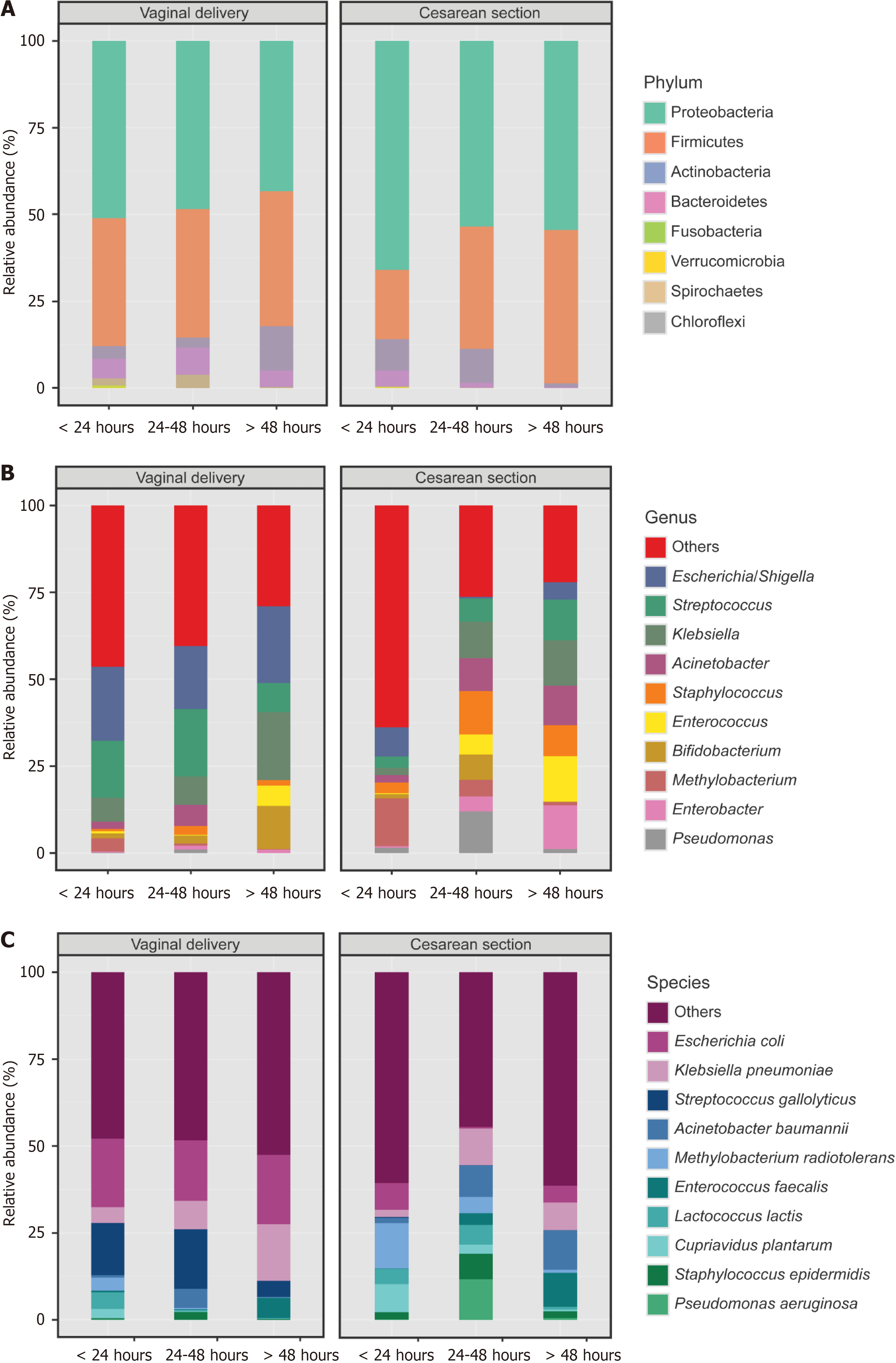
Figure 2 Differences in relative abundance of bacterial taxa in stool specimens of predominant breastfed neonates with different delivery modes and time of stool collection.
A total of 140 samples were analyzed (cesarean section < 24 hours, n = 31; cesarean section 2448 hours, n = 18; cesarean section > 48 hours, n = 25; vaginal delivery < 24 hours, n = 23; vaginal delivery 24-48 hours, n = 30; vaginal delivery > 48 hours, n = 13). Relative abundance profiles are shown at: A: Phylum level; B: Genus level (top 10 genera); C: Species level (top 10 species).
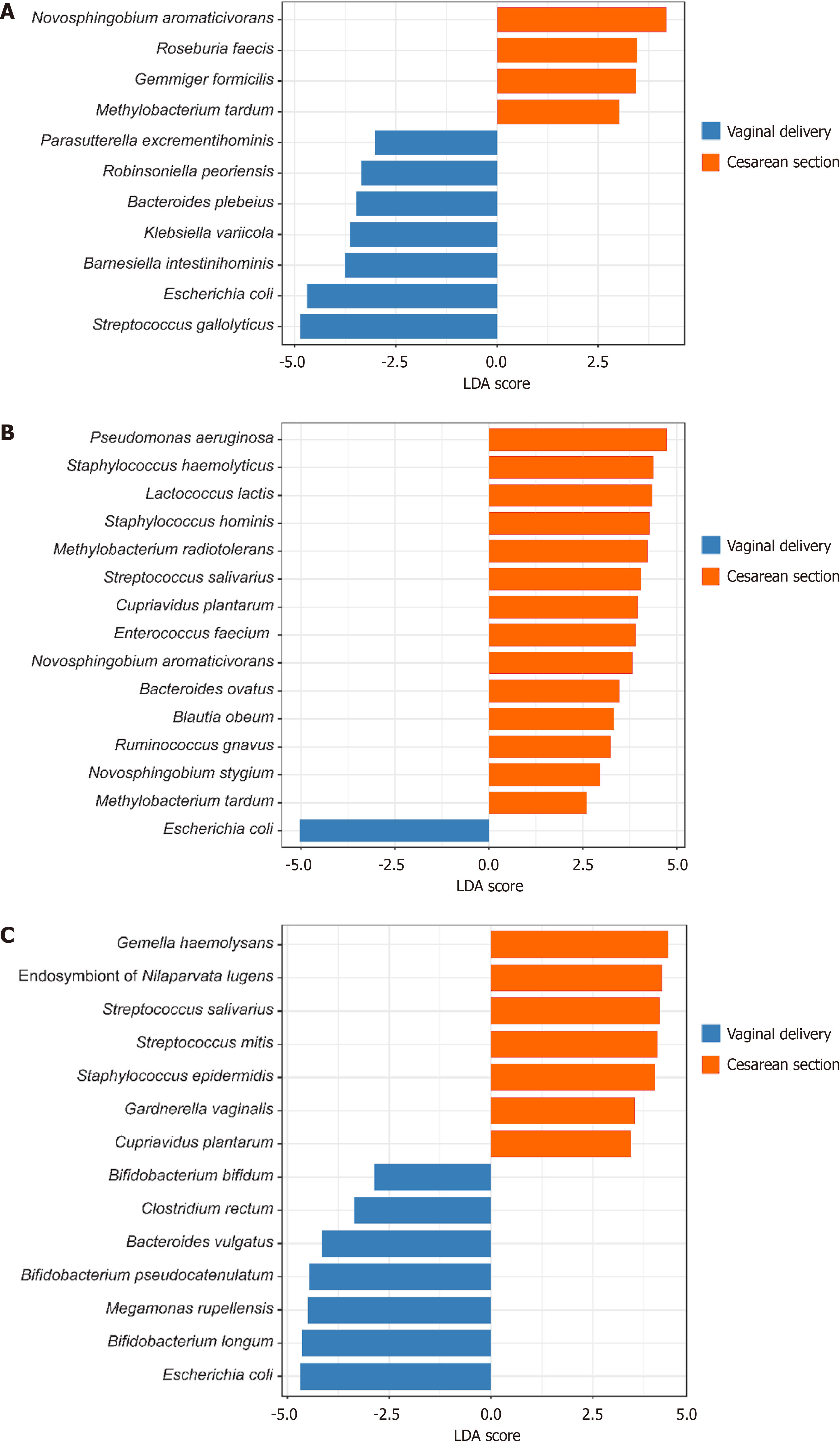
Figure 3 Differentially abundant bacterial taxa identified by linear discriminant analysis effect size analysis according to mode of delivery and time of stool collection.
Linear discriminant analysis effect size was used to identify bacterial taxa with LDA scores > 2.0 and P < 0.05 (Kruskal–Wallis test) between delivery modes. A total of 140 samples were included (cesarean section < 24 hours, n = 31; cesarean section 24-48 hours, n = 18; cesarean section > 48 hours, n = 25; vaginal delivery < 24 hours, n = 23; vaginal delivery 24-48 hours, n = 30; vaginal delivery > 48 hours, n = 13). Analyses were performed separately for samples collected at: A: < 24 hours; B: 24-48 hours; C: > 48 hours after birth.
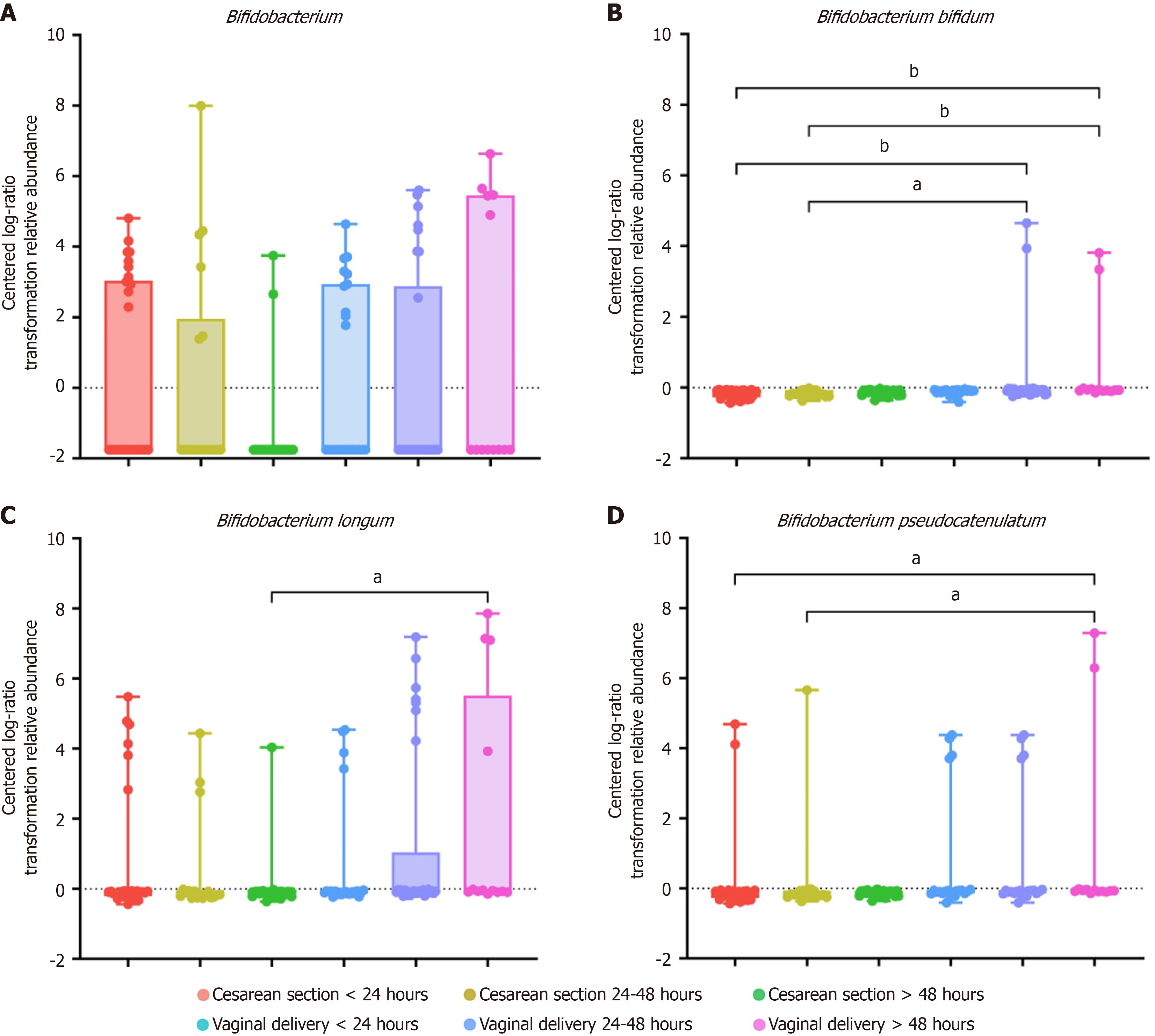
Figure 4 Centered log-ratio transformed relative abundance of Bifidobacterium taxa significantly enriched by linear discriminant analysis effect size analysis.
Box-and-whisker plots show the centered log-ratio-transformed relative abundance of: A: Bifidobacterium (genus); B: Bifidobacterium bifidum; C: Bifidobacterium longum; D: Bifidobacterium pseudocatenulatum across different time points (< 24 hours, 24-48 hours, and > 48 hours). A total of 140 samples were analyzed (cesarean section < 24 hours, n = 31; cesarean section 24-48 hours, n = 18; cesarean section > 48 hours, n = 25; vaginal delivery < 24 hours, n = 23; vaginal delivery 24-48 hours, n = 30; vaginal delivery > 48 hours, n = 13). Boxes represent the median and interquartile range, with whiskers indicating the minimum and maximum values. Statistical differences among time-point groups were evaluated using the Kruskal–Wallis test, followed by Dunn’s post hoc test with multiple-testing correction. Adjusted P values are indicated in the plots, aP < 0.05; bP < 0.01.
- Citation: Sintusek P, Klomkliew P, Visedthorn S, Phutthawong K, Noicharoen T, Soontornsook A, Tran DL, Payungporn S. Distinct early gut microbiota patterns by delivery mode within 100 hours of birth. World J Clin Pediatr 2026; 15(2): 117841
- URL: https://www.wjgnet.com/2219-2808/full/v15/i2/117841.htm
- DOI: https://dx.doi.org/10.5409/wjcp.v15.i2.117841