
















Copyright: ©Author(s) 2026.
World J Clin Pediatr. Jun 9, 2026; 15(2): 114189
Published online Jun 9, 2026. doi: 10.5409/wjcp.v15.i2.114189
Published online Jun 9, 2026. doi: 10.5409/wjcp.v15.i2.114189
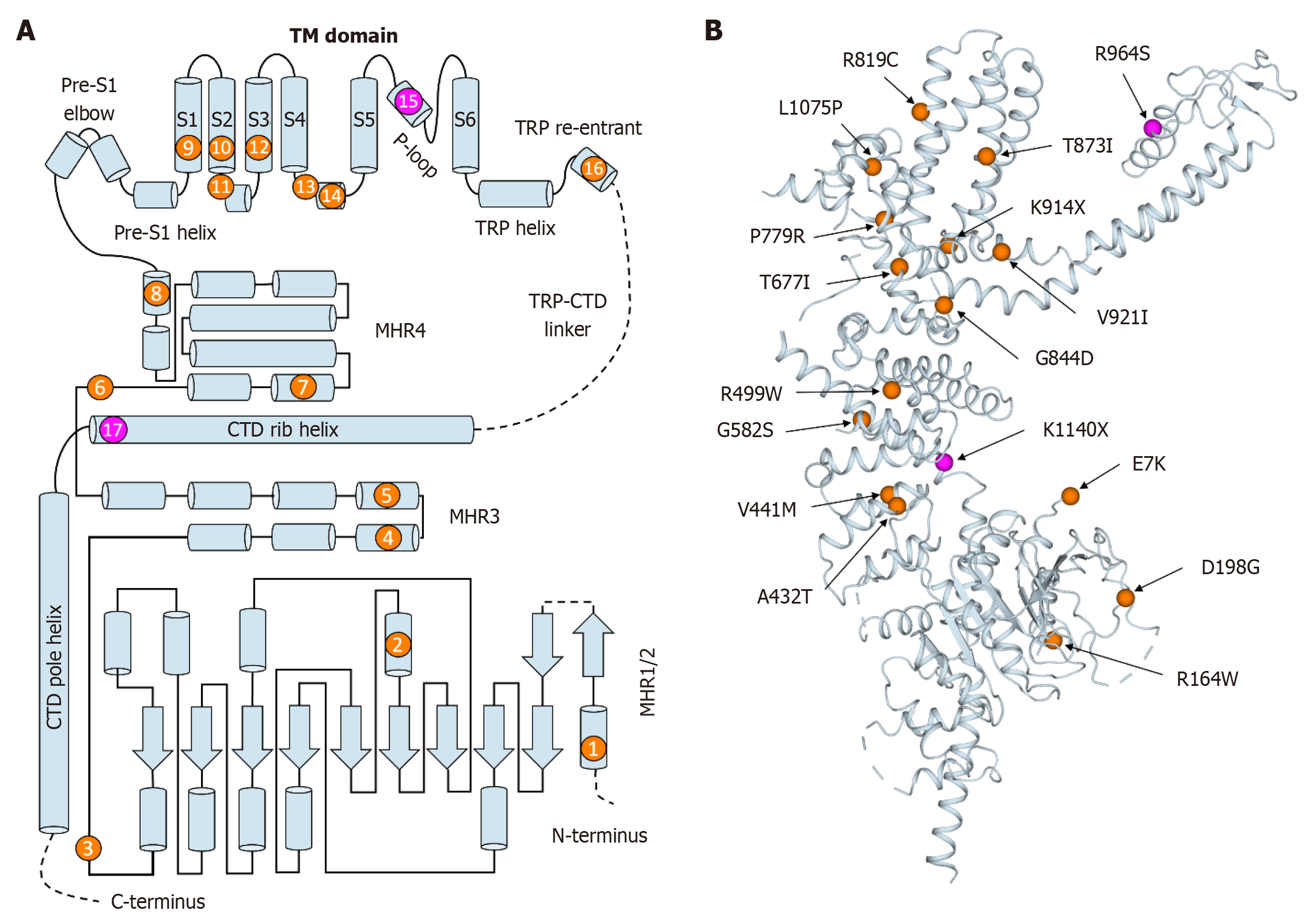
Figure 1 Overall architecture of the hTRPM4 subunit.
A: A schematic representation of the major structural components in hTRPM4; the N-terminus has four melastatin regions and Pre-S1 region; the transmembrane domain contains six helices (S1-S6); helices S5, S6 and P-loop form pore module; the C-terminus contains transient receptor potential and C-terminal domain helices; alpha-helices are represented by cylinders and beta-strands are indicated by arrows; variants are numbered: 1-E7K; 2-R164W; 3-D198G; 4-A432T; 5-V441M; 6-R499W; 7-G582S; 8-T677I; 9-P779R; 10-R819C; 11-G844D; 12-T873I; 13-K914X; 14-V921I; 15-R964S; 16-L1075P; 17-K1140X; B: 3D model of the hTRPM4 subunit (PDB ID: 5WP6). MHR1-4: Four melastatin regions; TM: Transmembrane; TRP: Transient receptor potential; CTD: C-terminal domain.
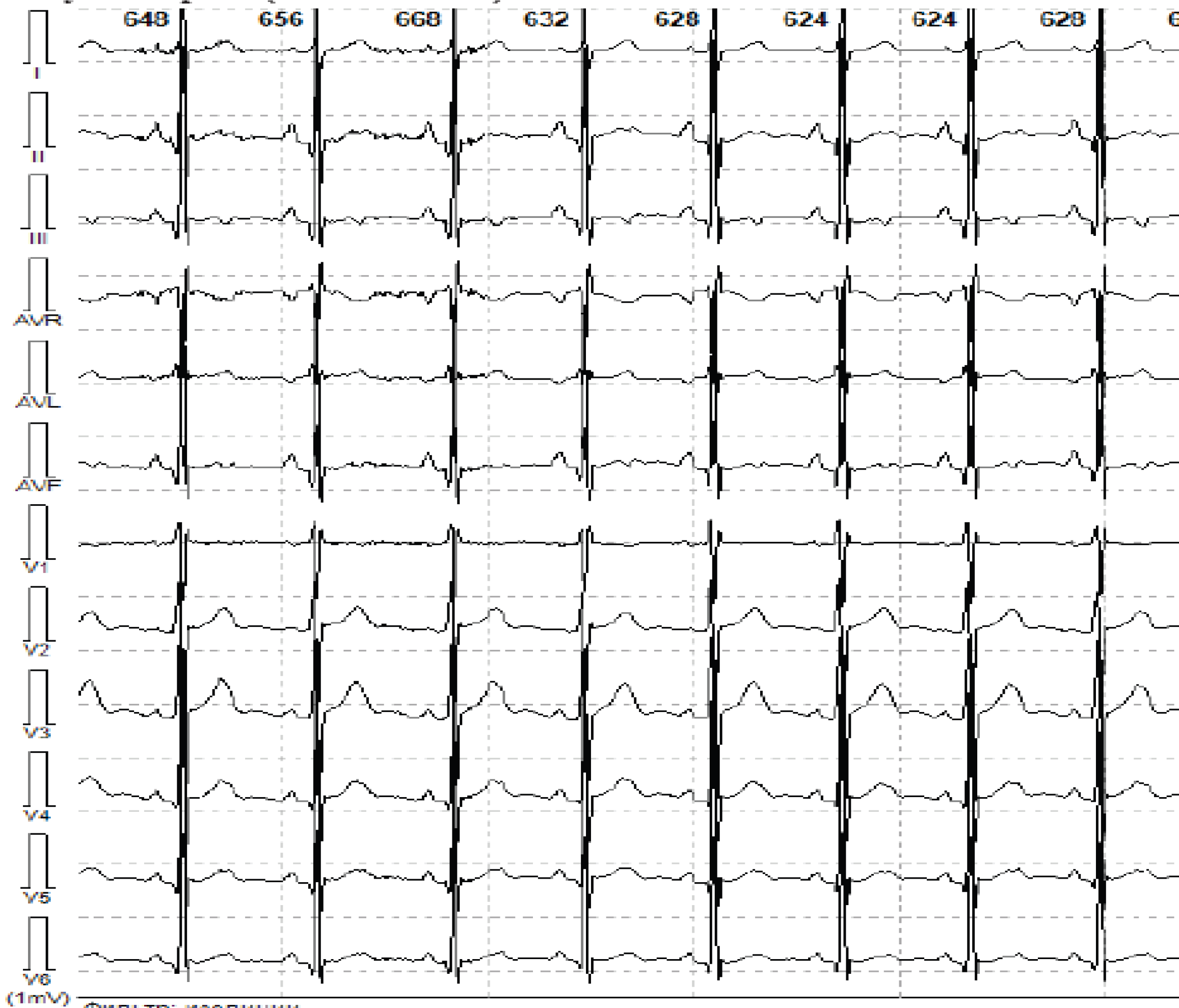
Figure 2 Electrocardiography during sinus rhythm with heart rate 85-154 bpm.
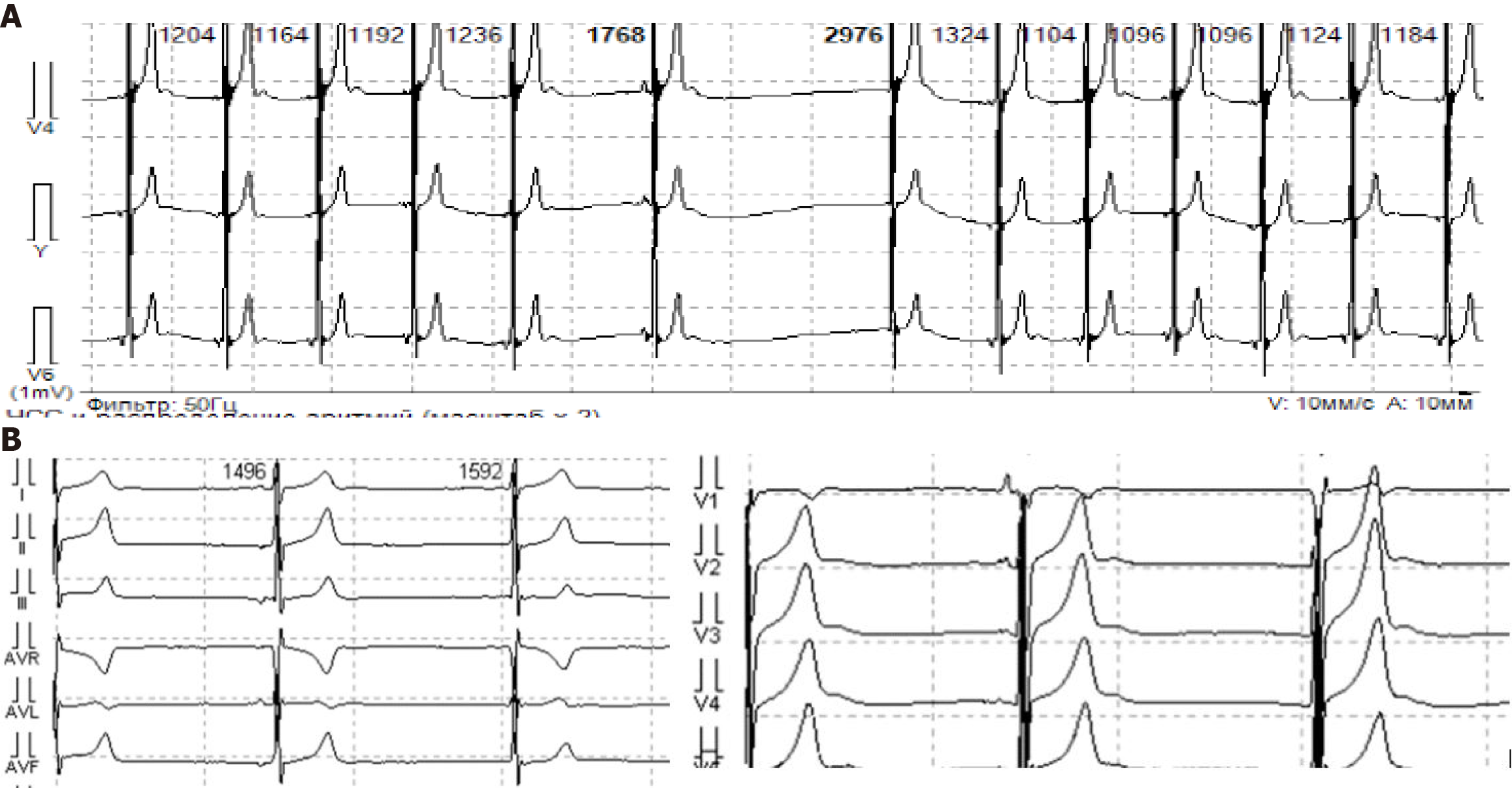
Figure 3 The duration of rhythm pauses ranged from 1800 milliseconds to 2976 milliseconds.
А: Pectoral leads; B: Standard leads.
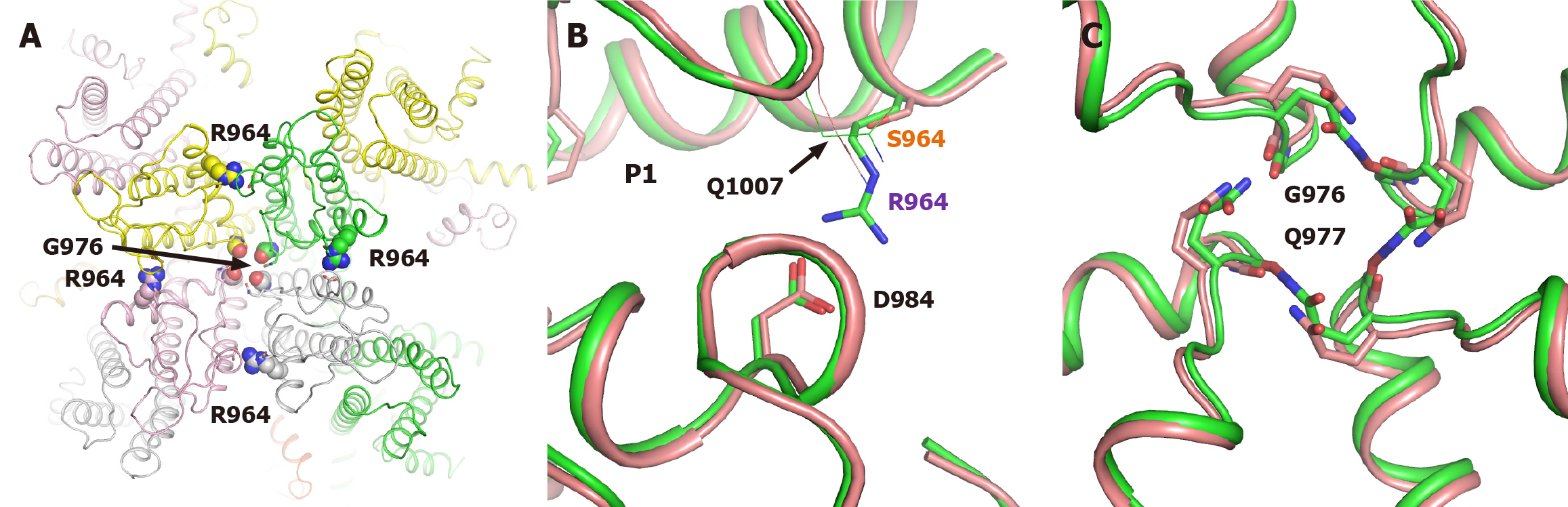
Figure 4 TRPM4 cryoEM structure.
A: Extracellular view of the TRPM4 cryoEM structure (PDB ID: 5wp6). Four identical subunits are differently colored to highlight intersubunit contacts of the four R964 residues, which stabilize the folding of P-loops that harbor the channel selectivity-filter; arginine R964 in P-loop helix P1 and glycine G976 in the selectivity filter are shown by spherical atoms; B: Close-up views of 3D-aligned AlphaFold 3 (AF3) models of the wildtype channel TRPM4 (green) and R964S mutant channel (brown); mutation R964S eliminates the salt bridge that stabilizes an intersubunit contact between helix P1 and a linker connecting the selectivity filter and helix S6; C: Close-up view of the selectivity filter region in the AF3 models; elimination of the intersubunit contact (B) cases a noticeable widening of the selectivity-filter region that likely affects the ion selectivity of the channel.
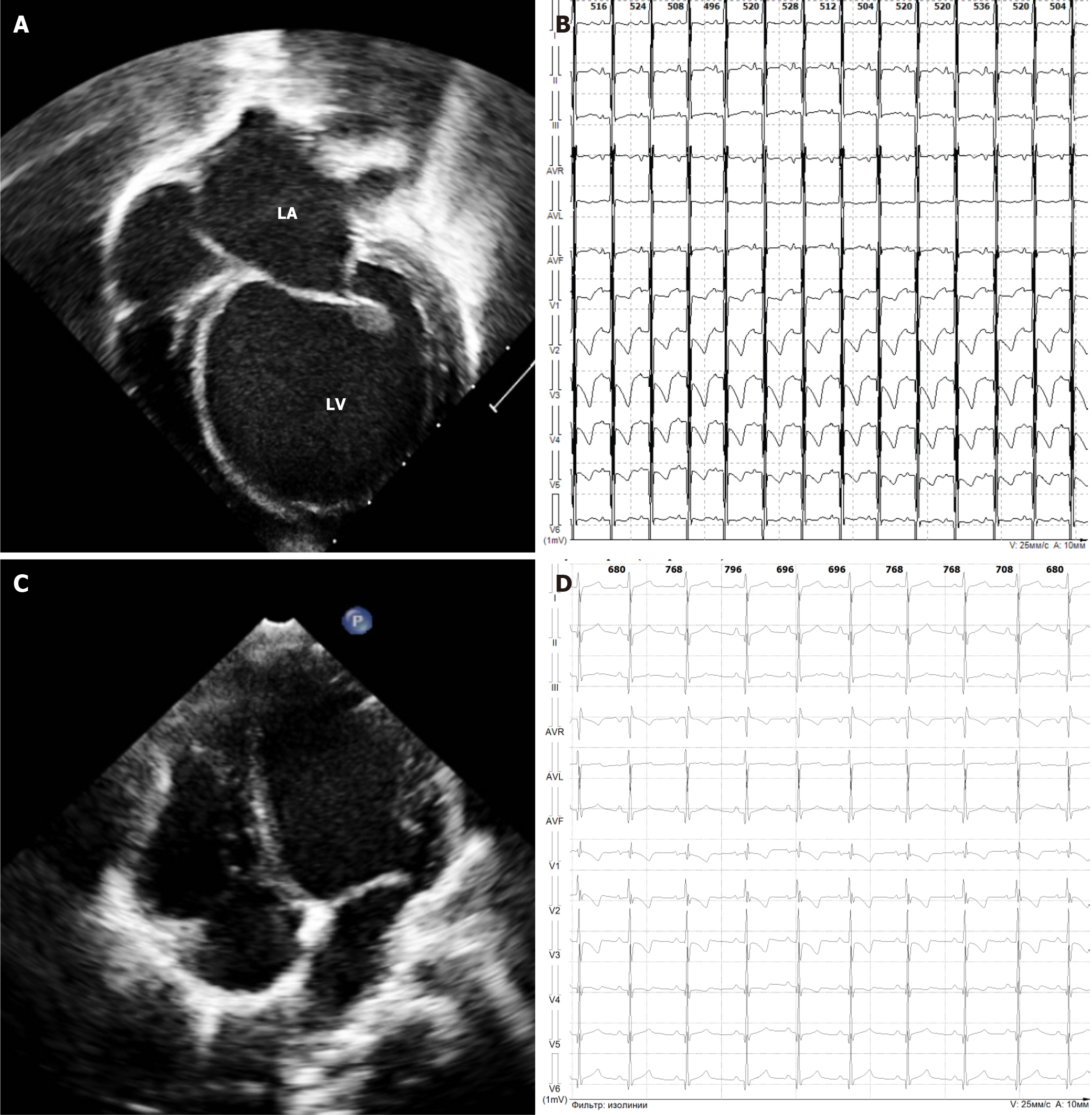
Figure 5 Echocardiography and Electrocardiography findings: A and B: At 3 months of age: Left ventricular dilation with spherical configuration and diffuse repolarization abnormalities, including T-wave inversion on electrocardiography (ECG); C and D: At 2 years of age: Normalization of left ventricular size (LVEDD 24.
5 mm; Z-score +1.96) and resolution of T-wave inversion with normalized repolarization patterns on ECG.
- Citation: Melnik OV, Kulichik OE, Zaytseva AK, Kofeynikova OA, Fetisova SG, Tarnovskaya SI, Fomicheva YV, Vasichkina ES, Zhorov BS, Kalinina OV, Kostareva AA. Role of TRPM4 ion channel in pediatric arrhythmic syndromes. World J Clin Pediatr 2026; 15(2): 114189
- URL: https://www.wjgnet.com/2219-2808/full/v15/i2/114189.htm
- DOI: https://dx.doi.org/10.5409/wjcp.v15.i2.114189