
















Copyright: ©Author(s) 2026.
World J Clin Pediatr. Jun 9, 2026; 15(2): 113603
Published online Jun 9, 2026. doi: 10.5409/wjcp.v15.i2.113603
Published online Jun 9, 2026. doi: 10.5409/wjcp.v15.i2.113603

Figure 1 Fractures according to the Salter Harris classification.
The top left one represents a non-fractured pediatric bone. Type 1: Split/Separated physis; Type 2: Above the physis (involving the metaphysis); Type 3: Below the physis (involving the epiphysis); Type 4: Through the physis (involving both the metaphysis and epiphysis); Type 5: “smashed” physis (i.e. compression injury)[3]. Citation: Skalski M. Salter-Harris illustrations. Case study, Radiopaedia.org 2014. Copyright ©The Authors 2014. Published by Radiopaedia. The authors have obtained the permission (Supplementary material).
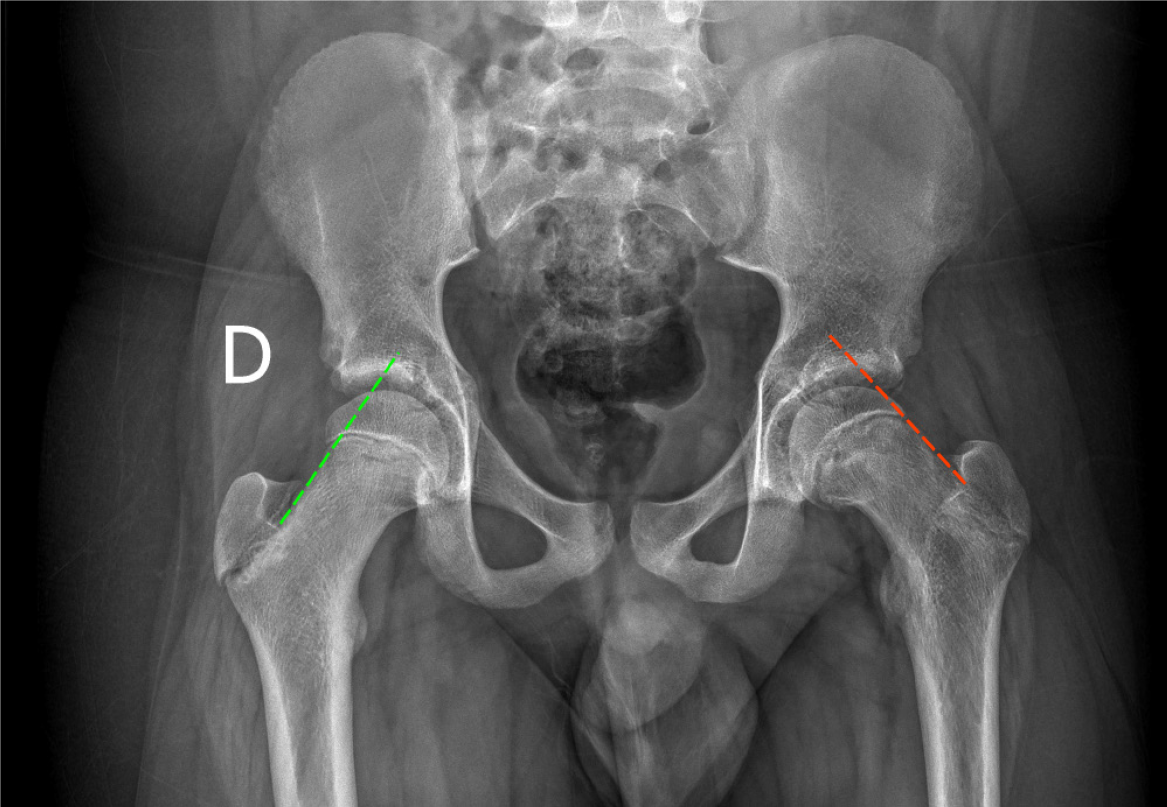
Figure 2 The Klein line is traced along the outer edge of the femoral neck and should normally pass through part of the lateral capital epiphysis.
On the right side, the green line shows the expected, normal course of the Klein line. On the left side, the red line is abnormal, as it barely makes contact with the capital epiphysis[5]. Citation: Lustosa L. Slipped capital femoral epiphysis (SCFE). Case study, Radiopaedia.org 2023. Copyright ©The Authors 2023. Published by Radiopaedia. The authors have obtained the permission (Supplementary material).
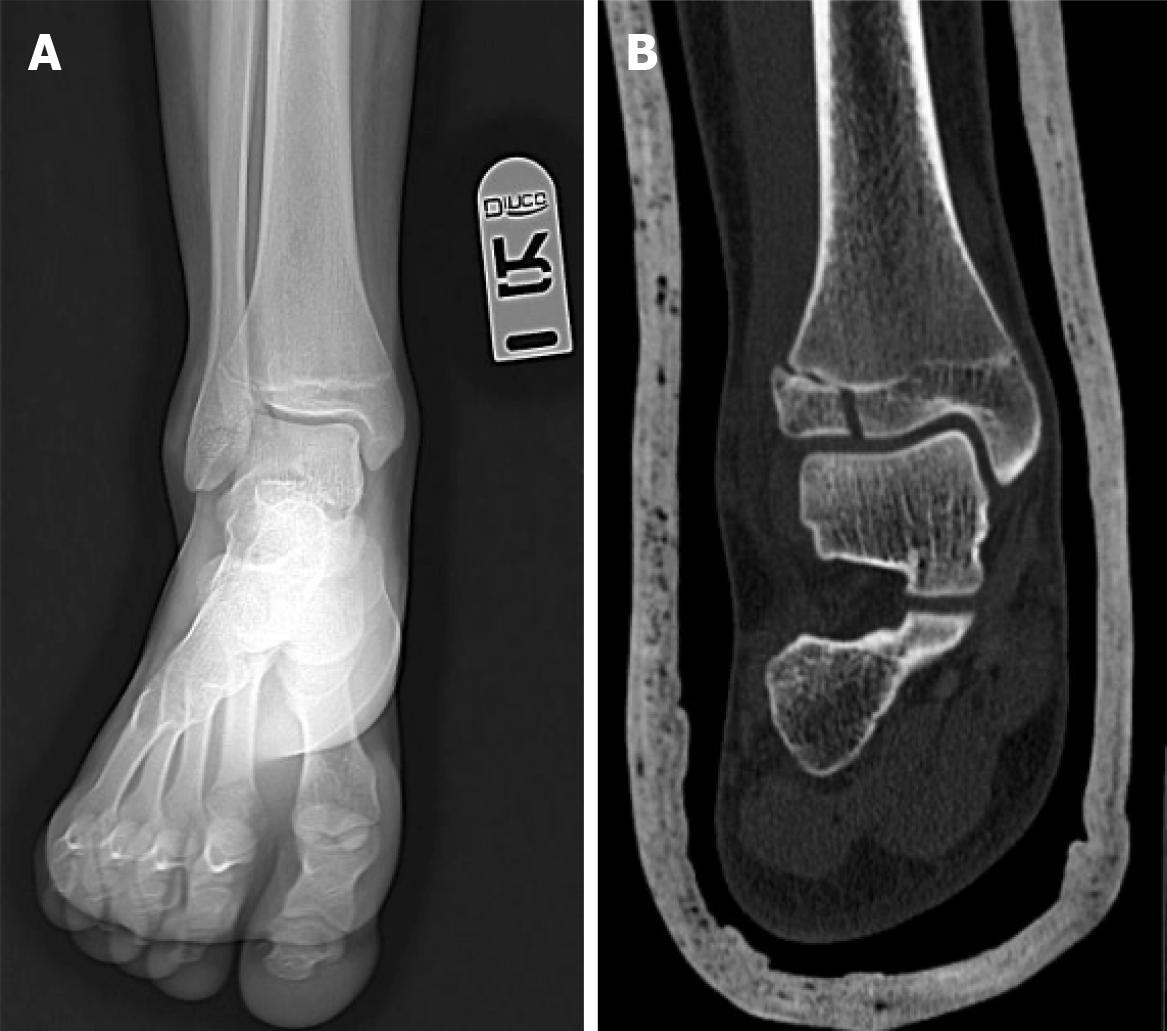
Figure 3 Tillaux fracture.
A: Salter-Harris III fracture of anterolateral aspect of distal tibial epiphysis, minimally displaced; B: Computed tomography performed to rule out occult fractures with none demonstrated[8]. Citation: Glick Y. Tillaux fracture. Case study, Radiopaedia.org 2017. Copyright ©The Authors 2017. Published by Radiopaedia. The authors have obtained the permission (Supplementary material).
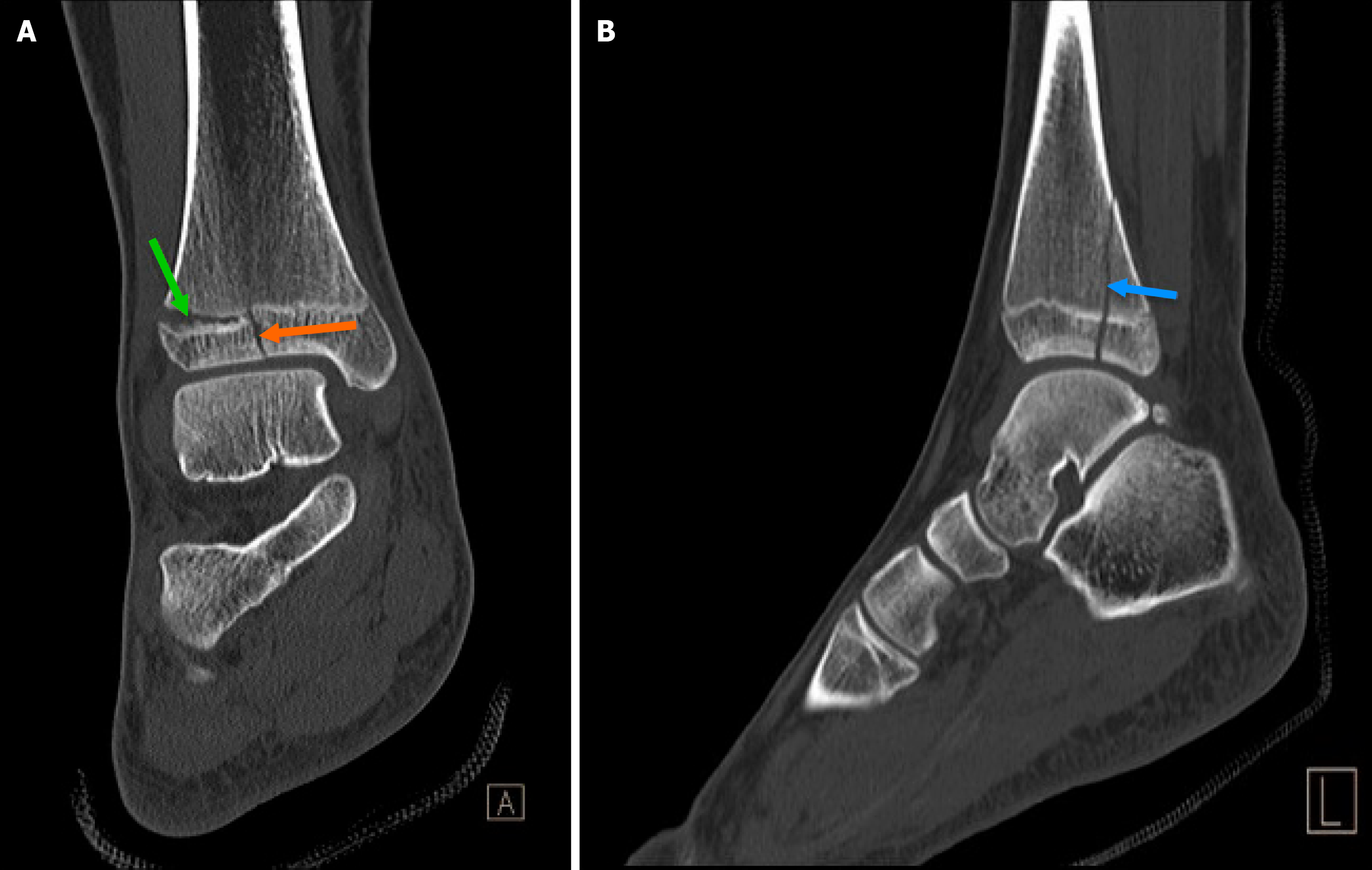
Figure 4 This is a triplane fracture (fracture across 3 planes).
A: Sagittal (orange arrow), axial (green arrow); B: Coronal (blue arrow) fracture. The coronal fracture can be seen on the sagittal view in the image on the right[12]. Citation: Al Salam H. Triplanar fracture. Case study, Radiopaedia.org 2015. Copyright ©The Authors 2015. Published by Radiopaedia. The authors have obtained the permission (Supplementary material).
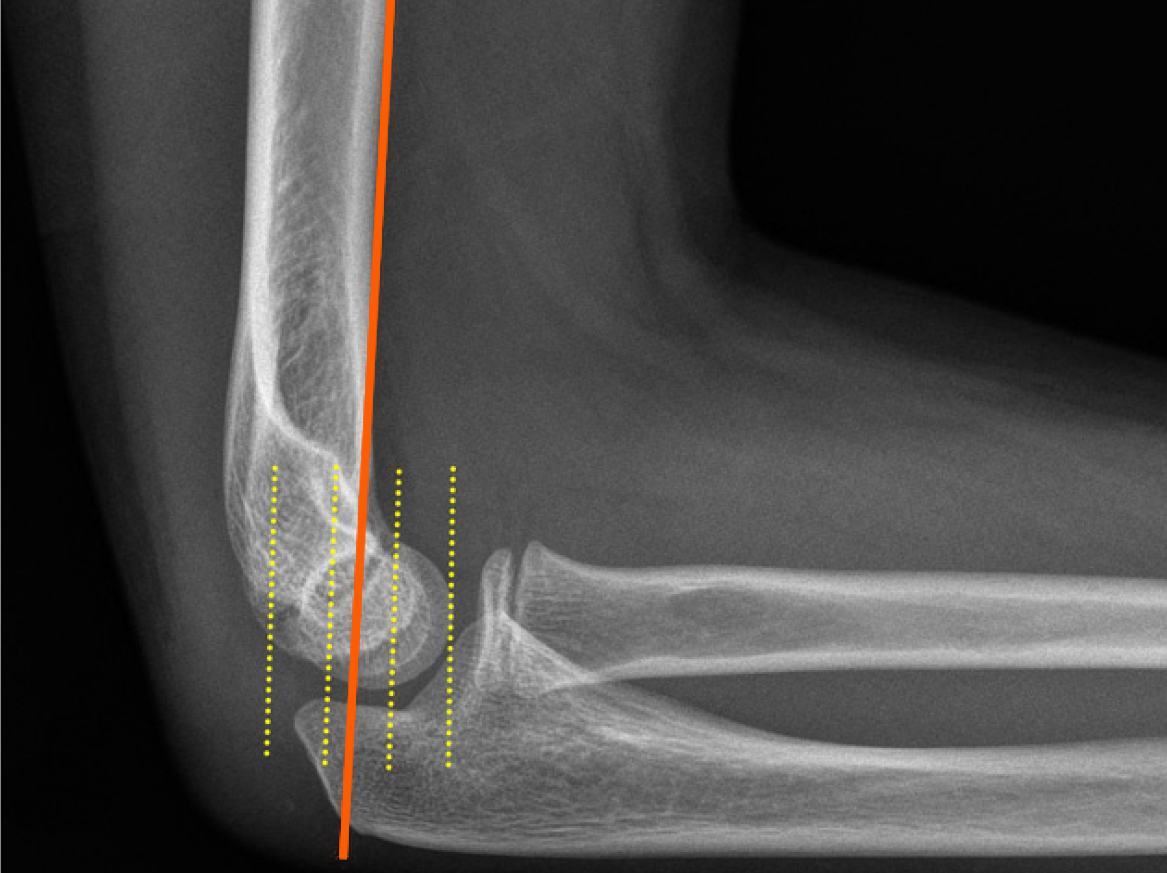
Figure 5 Anterior humeral line along the anterior humeral cortex.
On a normal elbow, the AHL should pass through the middle third of the humeral capitulum[16]. Citation: Benoudina S. Anterior humeral line. Case study, Radiopaedia.org 2015. Copyright ©The Authors 2015. Published by Radiopaedia. The authors have obtained the permission (Supplementary material).
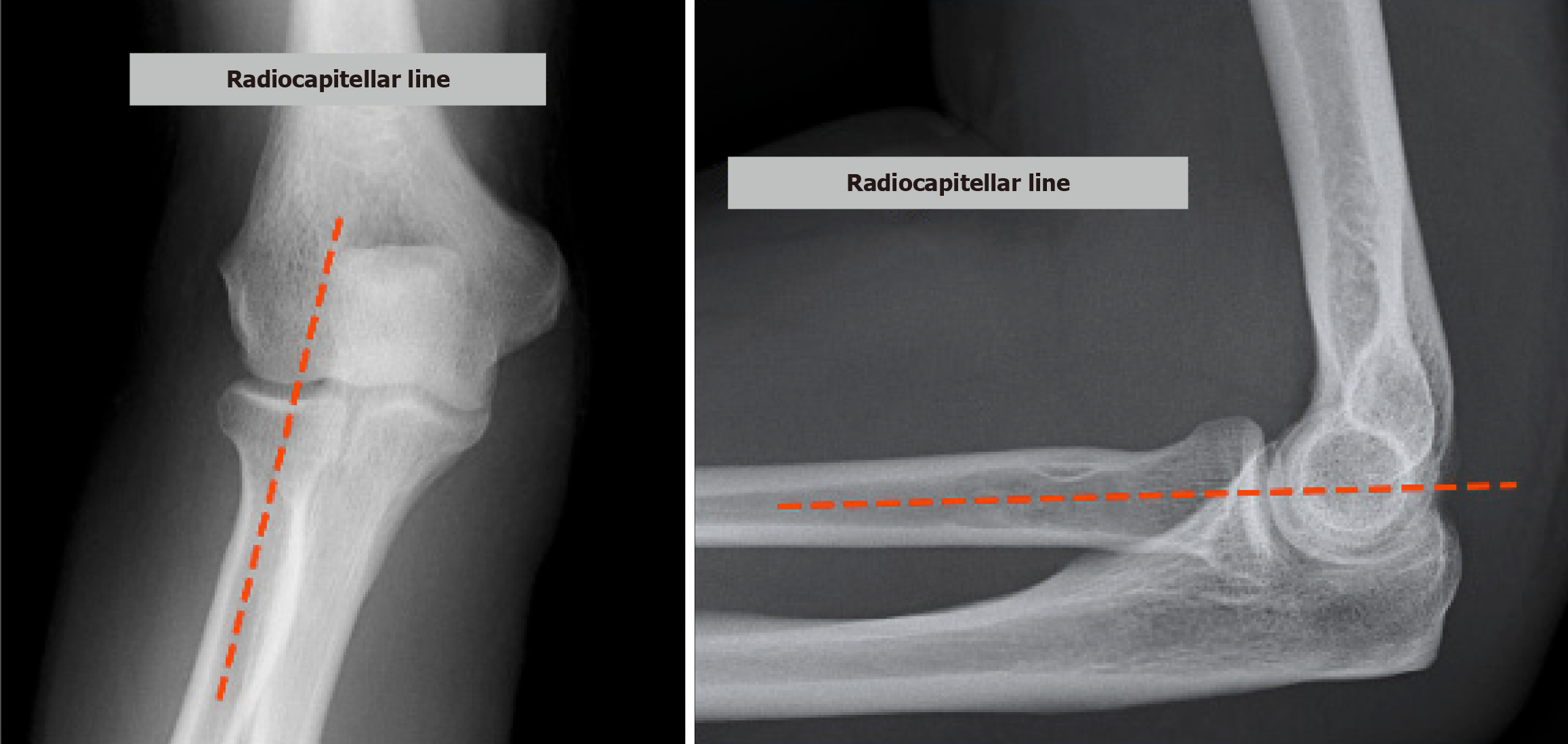
Figure 6 Radial head-capitellar line[18].
Citation: Benoudina S. Radiocapitellar line. Case study, Radiopaedia.org 2015. Copyright ©The Authors 2015. Published by Radiopaedia. The authors have obtained the permission (Supplementary material).
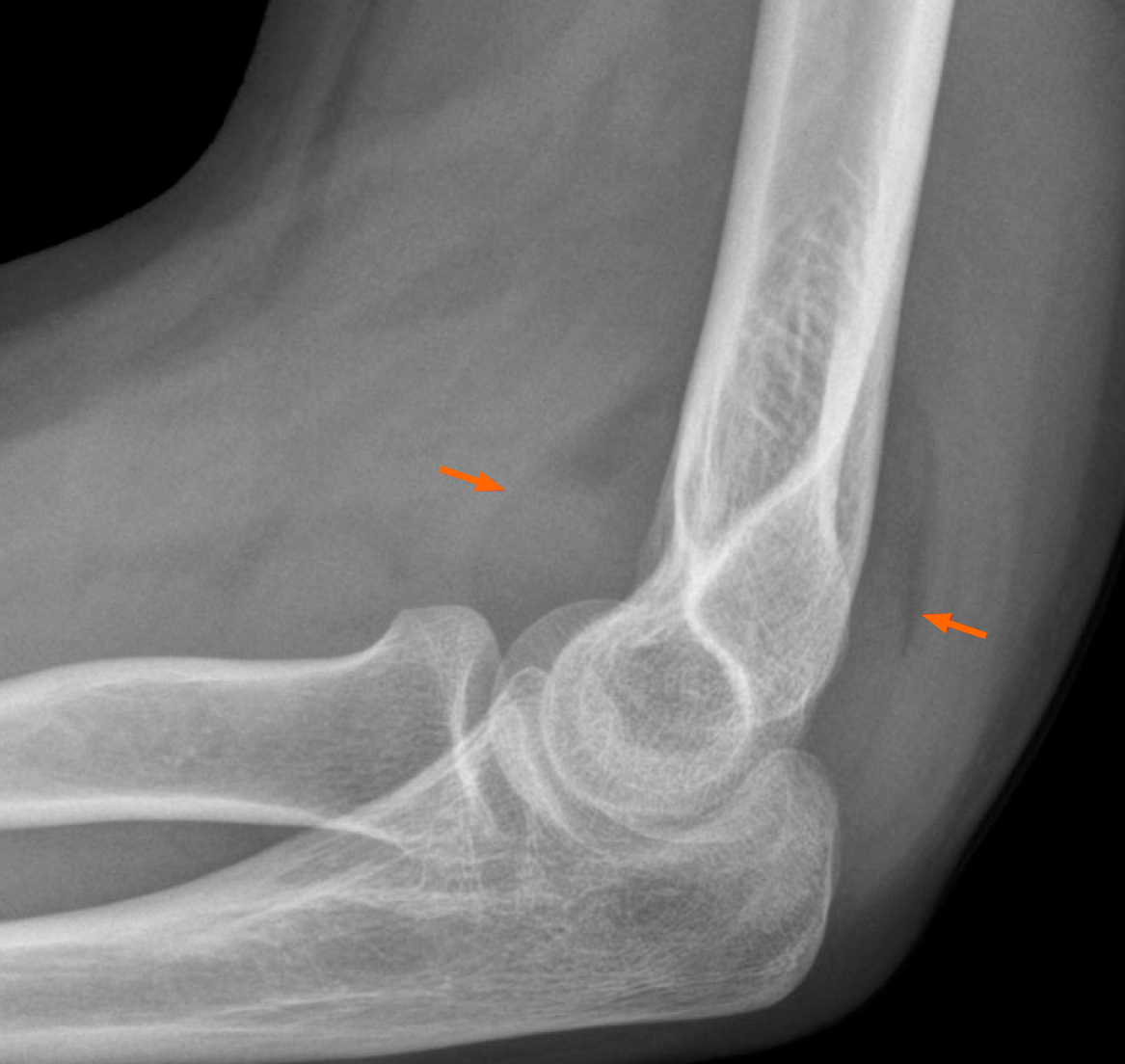
Figure 7 Fat pad sign (right arrow)[20].
This image shows some effusion, which has displaced both the anterior (left arrow) and posterior fat pads. Citation: Hellerhoff. Fat pad sign: Ventral fat pad bowed and dorsal fat pad visible in a case of a nondisplaced fracture of the radius head which is not visible directly. Copyright ©The Authors 2026. The authors have obtained the permission (Supplementary material).
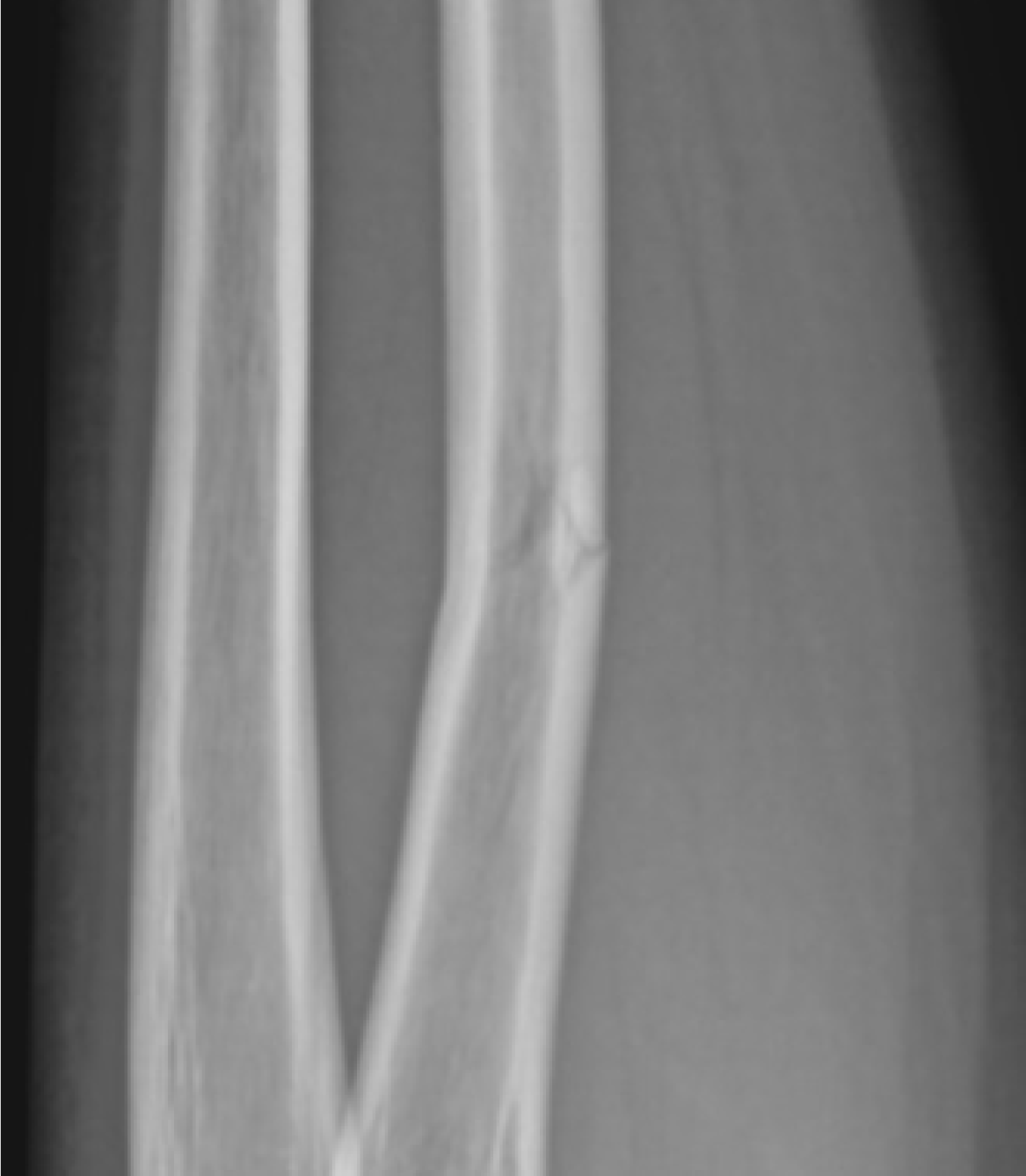
Figure 8 Incomplete fracture (cortical breach of only volar side) of the middle third of radius with mild dorsal angulation[30].
Citation: Kahveci S. Greenstick fractures-radius. Case study, Radiopaedia.org 2021. Copyright ©The Authors 2021. Published by Radiopaedia. The authors have obtained the permission (Supplementary material).
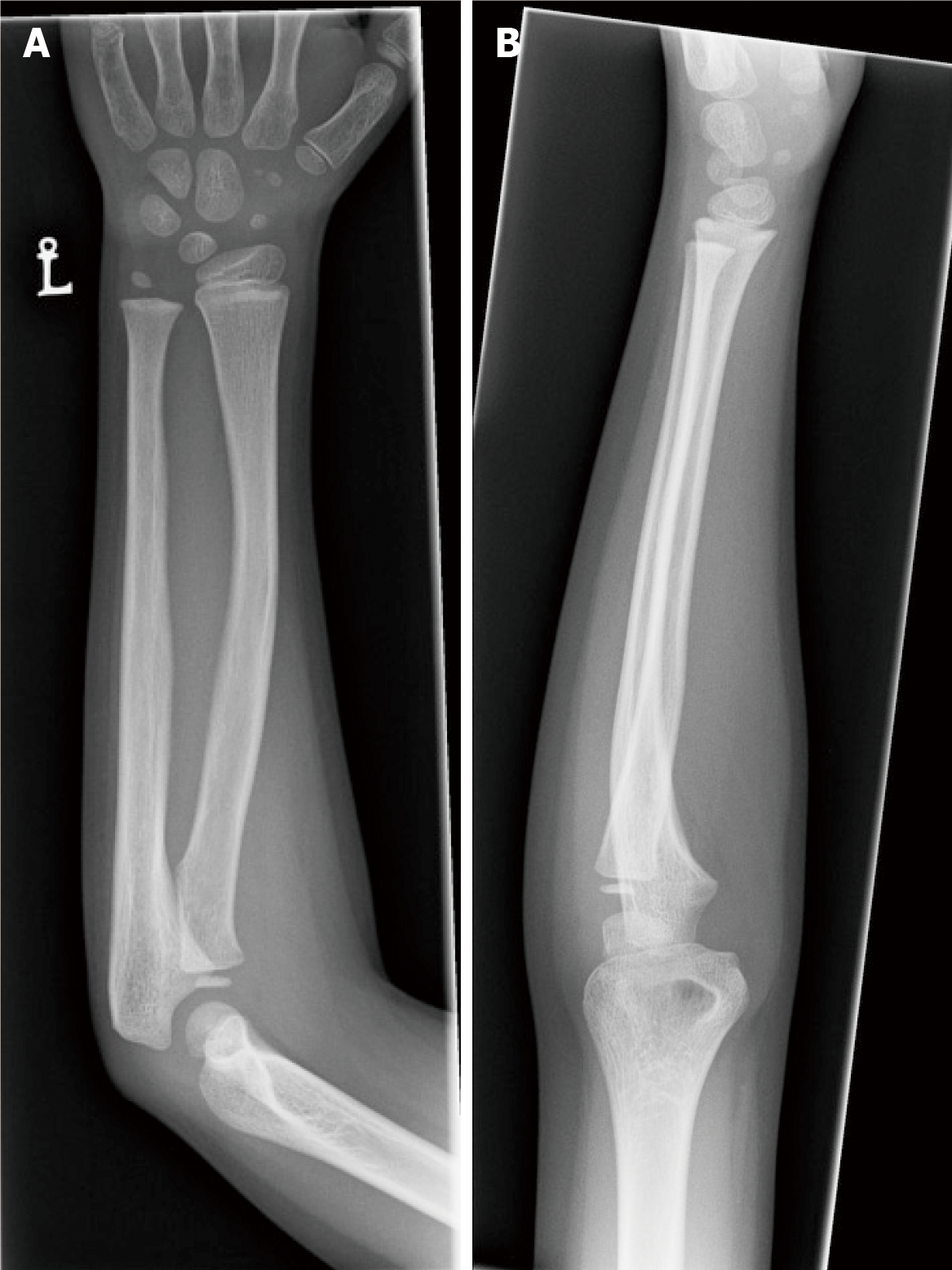
Figure 9 7-year-old girl who had a fall onto outstretched arm while playing in a play-park.
A: Focal bowing of the radius in the mid-diaphysis is seen on the frontal radiograph. Associated bowing of the proximal ulna in a plane perpendicular to the radial bow. Radial head is in joint; B: Note how in the lateral projection on the right, the image is aligned with the plane of the bow, and thus the bone looks entirely normal[37]. Citation: Jones J. Radial bowing fracture. Case study, Radiopaedia.org 2016. Copyright ©The Authors 2016. Published by Radiopaedia. The authors have obtained the permission (Supplementary material).
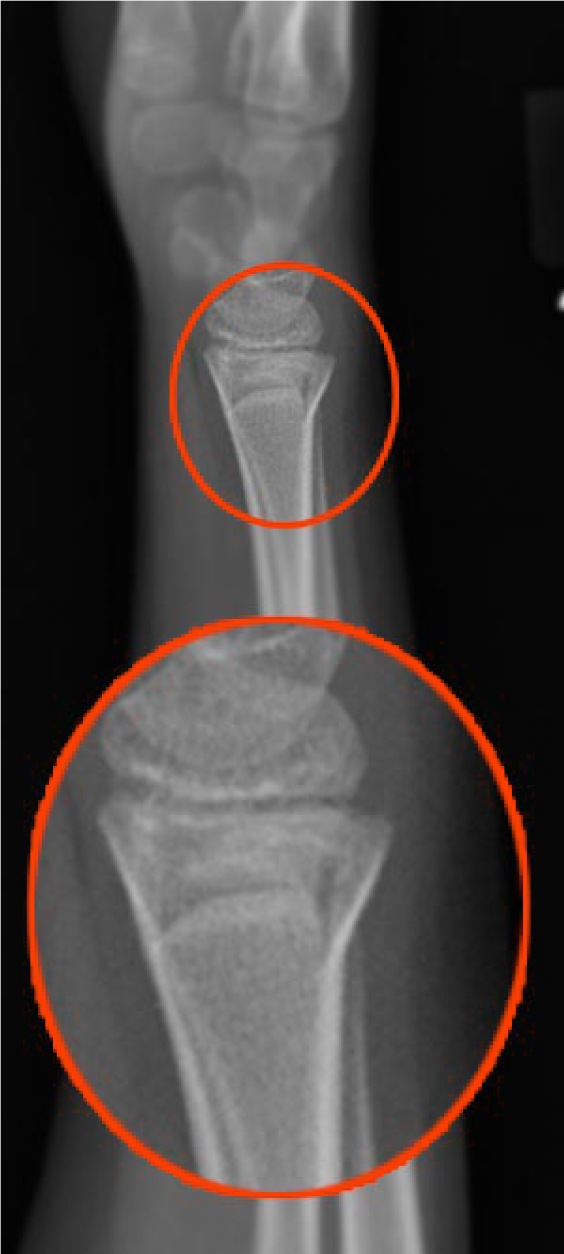
Figure 10 Radiograph demonstrate a distal radial torus fracture appearing as a subtle cortical bulging, particularly at the metaphysis[43].
Citation: Radswiki T. Torus fracture. Case study, Radiopaedia.org 2010. Copyright ©The Authors 2010. Published by Radiopaedia. The authors have obtained the permission (Supplementary material).
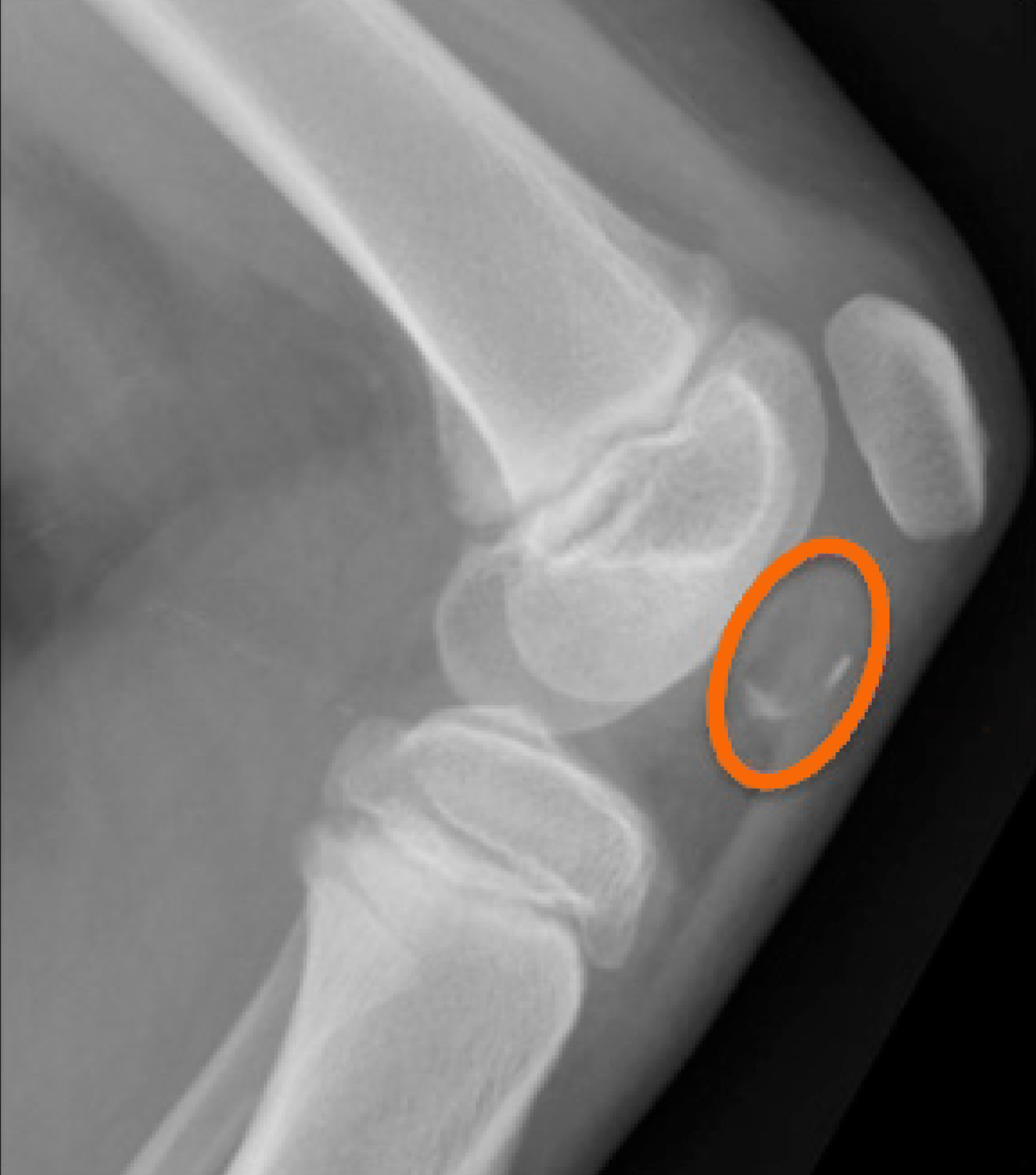
Figure 11 Another example of an avulsion fracture.
This is a patellar sleeve avulsion fracture. There’s a bone fragment that has been avulsed off of the inferior pole of the patella. An acute force has been applied at the patellar tendon and as a result has avulsed a piece of the patella off. Note: The bony fragments often underestimate the degree of injury, and so a magnetic resonance imaging could be obtain to understand how much chondral injury there is.
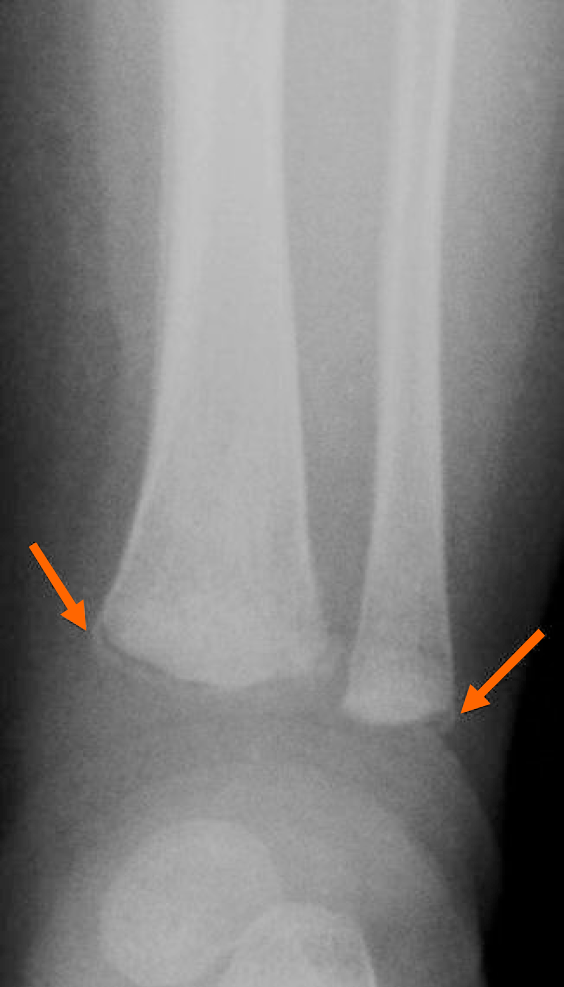
Figure 12 Classic metaphyseal lesions showing bucket handle configuration at the distal tibia and fibula (arrows).
- Citation: Perera Molligoda Arachchige AS, Schmiliver B, Patel HA. Imaging of pediatric musculoskeletal trauma: Age-specific considerations and challenges. World J Clin Pediatr 2026; 15(2): 113603
- URL: https://www.wjgnet.com/2219-2808/full/v15/i2/113603.htm
- DOI: https://dx.doi.org/10.5409/wjcp.v15.i2.113603