
















©Author(s) (or their employer(s)) 2026.
World J Clin Pediatr. Mar 9, 2026; 15(1): 114242
Published online Mar 9, 2026. doi: 10.5409/wjcp.v15.i1.114242
Published online Mar 9, 2026. doi: 10.5409/wjcp.v15.i1.114242
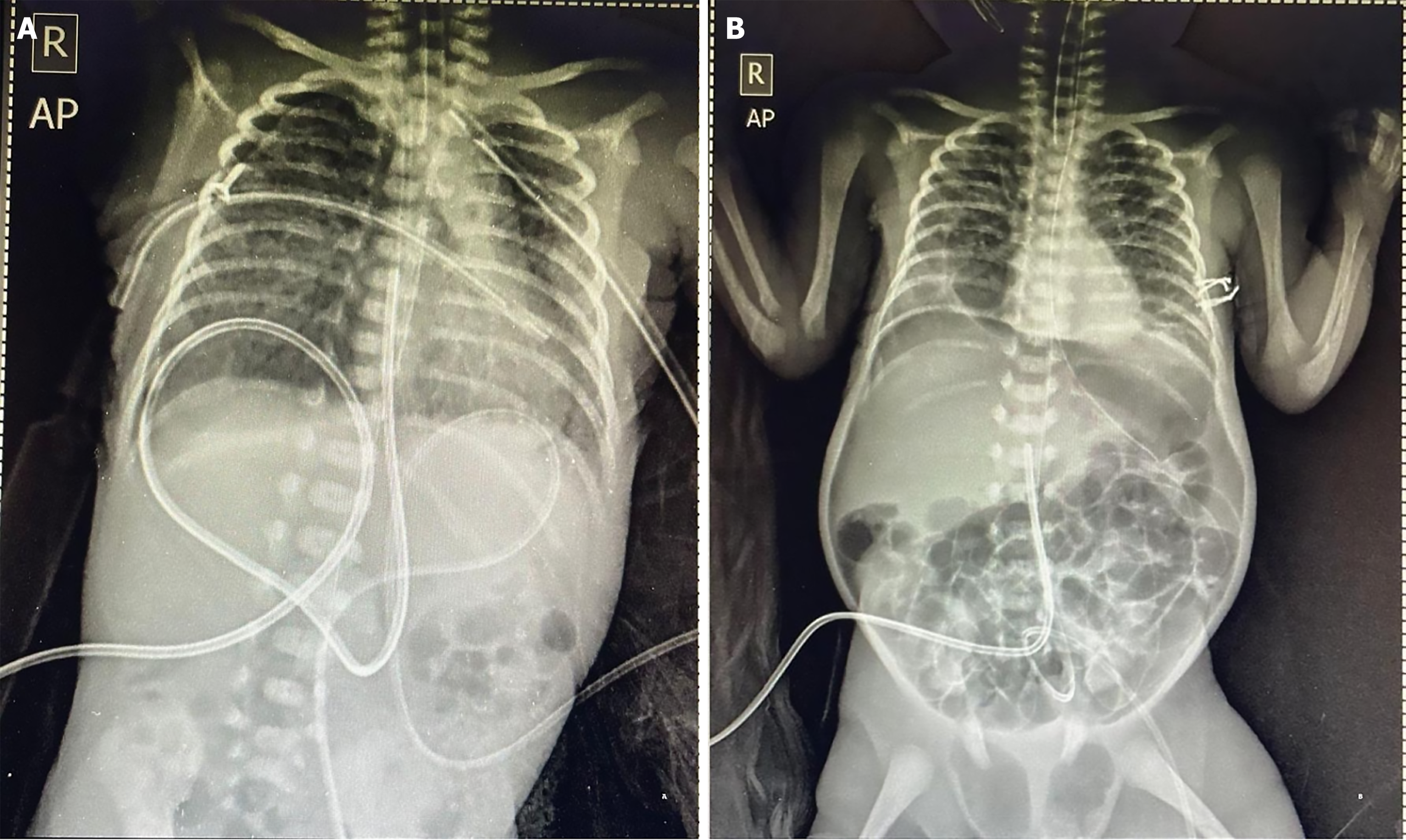
Figure 1 Abdominal radiograph.
A: Chest and abdominal radiograph (anteroposterior view) obtained on the first day of life, demonstrating the central position of the umbilical venous catheter; B: Chest and abdominal radiograph (anteroposterior view) obtained on the seventh day of life, demonstrating the penumoperitoneum (football sign) and position of the umbilical venous catheter.
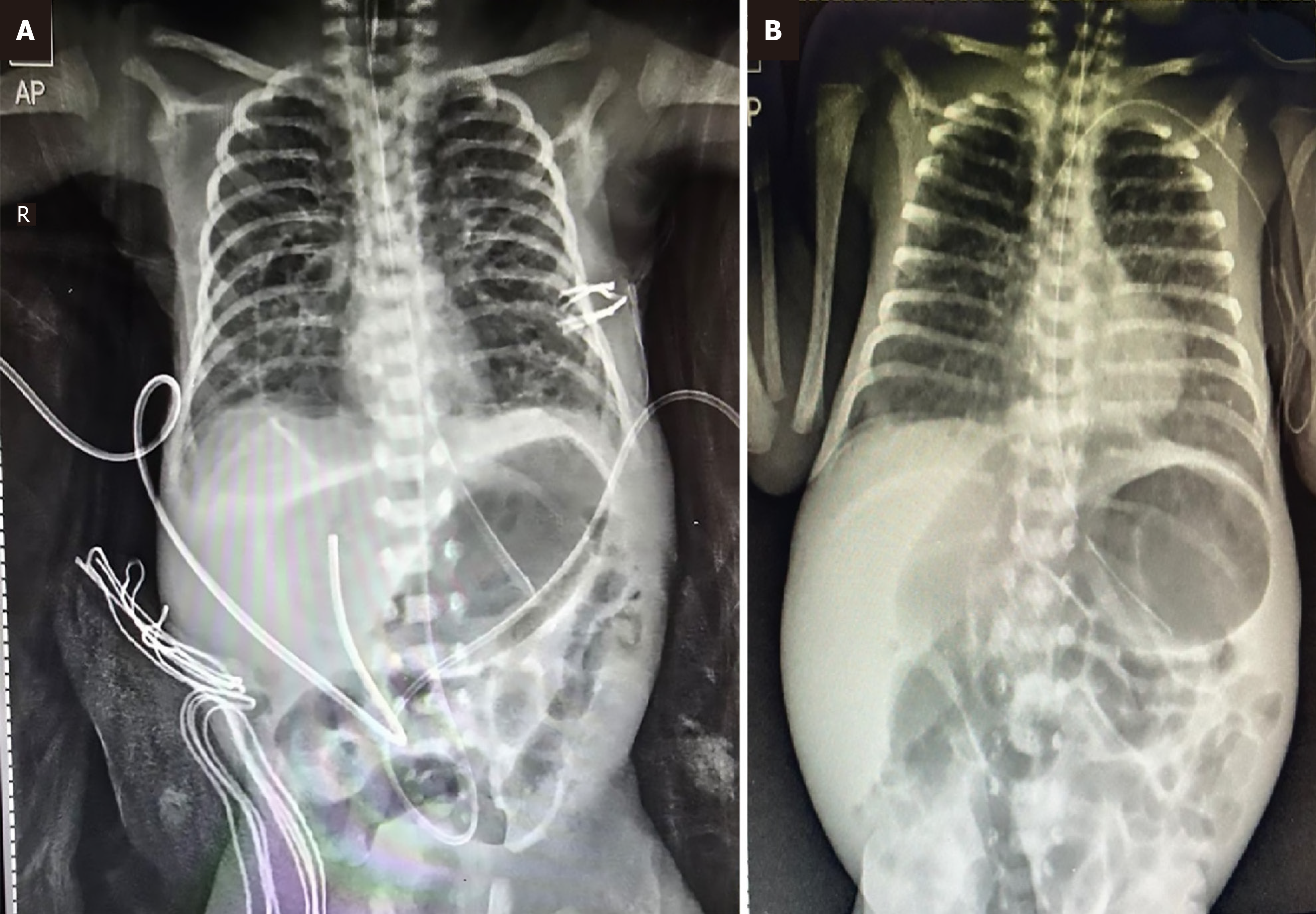
Figure 2 Chest and abdominal radiograph.
A: Chest and abdominal radiograph (anteroposterior view) obtained on day 8 of life, showing the migrated umbilical venous catheter positioned within the liver. The radio-opaque gauze pieces were placed at the site of the peritoneal drain on the right iliac region; B: Chest and abdominal radiograph (anteroposterior view) shows central position of the peripherally inserted central catheter with improvement in bowel gas pattern after removal of the umbilical venous catheter.
- Citation: Kumar A, Sidaraddi S, Patil P, Ghawade AP, Moralwar P, Pillai A. Not all that drains is gut - umbilical venous catheter extravasation masquerading as intestinal perforation: A case report. World J Clin Pediatr 2026; 15(1): 114242
- URL: https://www.wjgnet.com/2219-2808/full/v15/i1/114242.htm
- DOI: https://dx.doi.org/10.5409/wjcp.v15.i1.114242