
















Copyright: ©Author(s) 2026.
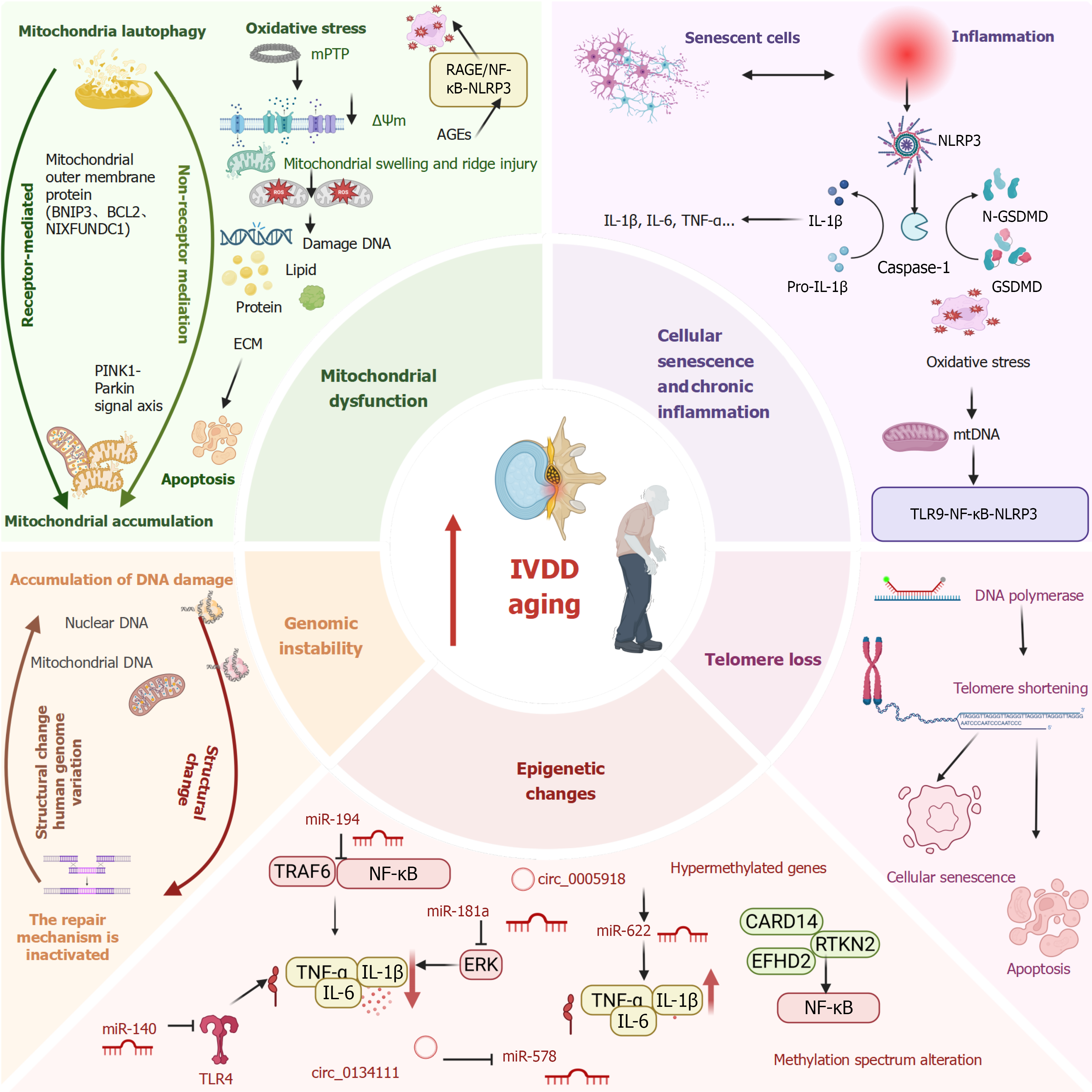
Figure 1 Diagram of the common mechanisms driving intervertebral disc degeneration and aging.
The figure illustrates the principal mechanisms shared by intervertebral disc degeneration (IVDD) and aging, including mitochondrial dysfunction, cellular senescence and chronic inflammation, telomere loss, genomic instability, and epigenetic alterations. These processes are closely interconnected and collectively contribute to disc cell senescence, apoptosis, extracellular matrix imbalance, and progressive disc degeneration. Mitochondrial dysfunction involves oxidative stress, impaired mitophagy, mitochondrial swelling, and reduced mitochondrial membrane potential. Senescence-associated inflammation is amplified through the NLRP3 inflammasome and downstream inflammatory mediators. Genomic instability and telomere attrition further promote cellular dysfunction, whereas epigenetic dysregulation, including abnormal non-coding RNA expression and DNA methylation changes, modulates multiple pathogenic pathways. Overall, these shared aging-related hallmarks accelerate the onset and progression of IVDD. IVDD: Intervertebral disc degeneration; ECM: Extracellular matrix; ΔΨm: Mitochondrial membrane potential; IL: Interleukin; TNF-α: Tumor necrosis factor-alpha; AGE: Advanced glycation end.
- Citation: Wang ZP, Zhang HW, Zhao XY, Li YZ, Zhang XG, Zhao R, Qin DP. Intervertebral disc degeneration and aging: Shared molecular mechanisms and therapeutic interventions. World J Orthop 2026; 17(7): 120800
- URL: https://www.wjgnet.com/2218-5836/full/v17/i7/120800.htm
- DOI: https://dx.doi.org/10.5312/wjo.120800