















Copyright: ©Author(s) 2026.
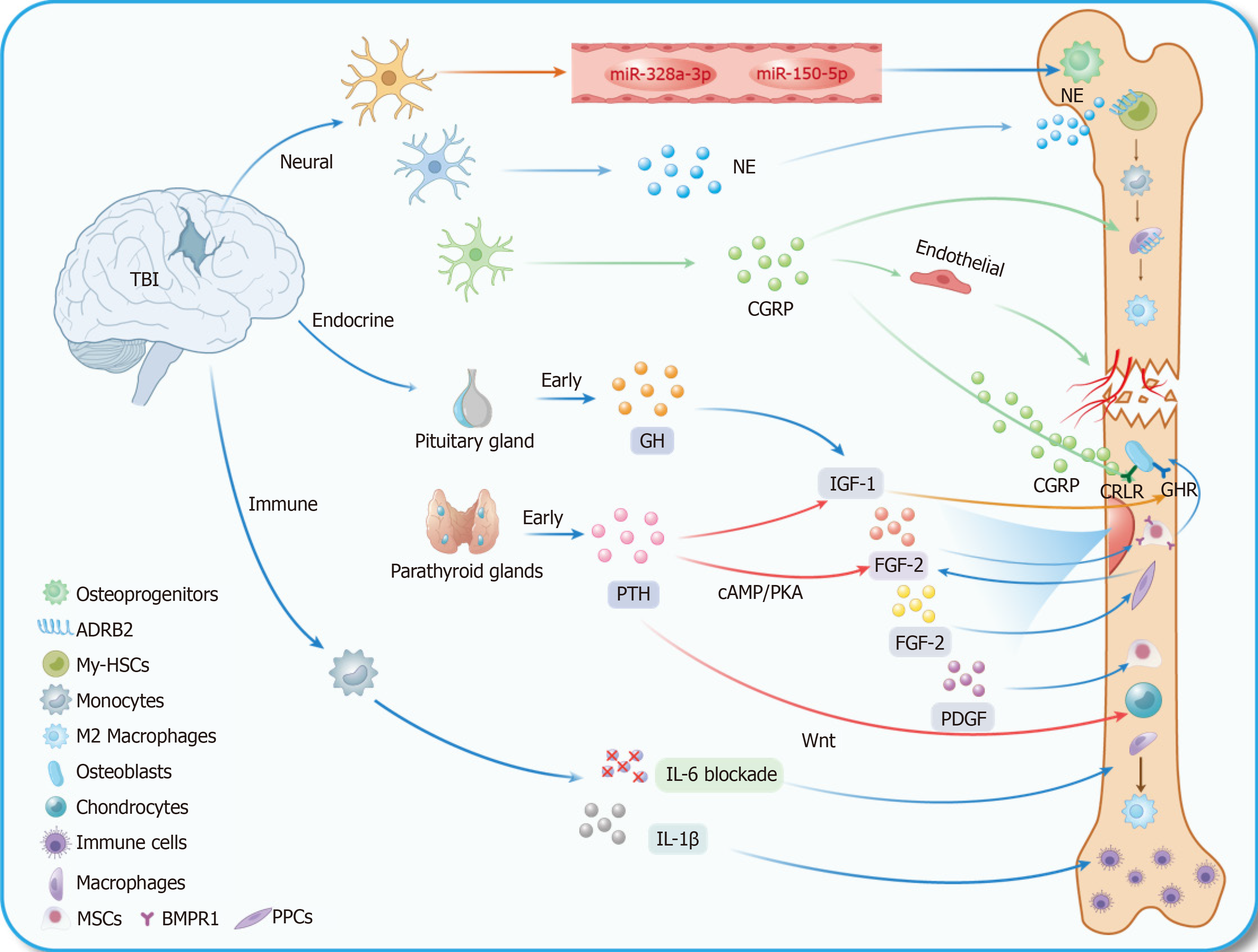
Figure 1 Proposed mechanisms underlying accelerated fracture healing after traumatic brain injury via neuroendocrine-neuroimmune crosstalk.
Traumatic brain injury triggers coordinated neural, endocrine, and immune responses that influence fracture repair. Sympathetic signaling, neuropeptides, endocrine mediators [e.g., growth hormone, parathyroid hormone, and inflammatory cytokines (e.g., interleukin-1β and interleukin-6) collectively regulate osteogenesis, angiogenesis, and callus formation, ultimately contributing to enhanced fracture healing]. TBI: Traumatic brain injury; NE: Norepinephrine; CGRP: Calcitonin gene-related peptide; GH: Growth hormone; IGF-1: Insulin-like growth factor-1; PTH: Parathyroid hormone; FGF-2: Fibroblast growth factor-2; PDGF: Platelet-derived growth factor; cAMP/PKA: Cyclic adenosine monophosphate/protein kinase A; IL-6: Interleukin-6; IL-1β: Interleukin-1β; GHR: Growth hormone receptor; CRLR: Calcitonin receptor-like receptor; ADRB2: Β2-adrenergic receptor; My-HSCs: Myeloid-biased hematopoietic stem cells; MSCs: Mesenchymal stem cells; BMPR1: Bone morphogenetic protein receptor type I; PPCs: Periosteal progenitor cells; Wnt: Wingless-related integration site.
- Citation: Chen X, Kuang SX, Zhou FG, Zhang CG. Neuroinflammatory regulation of fracture healing after traumatic brain injury: Clinical evidence and emerging mechanistic insights. World J Orthop 2026; 17(7): 120345
- URL: https://www.wjgnet.com/2218-5836/full/v17/i7/120345.htm
- DOI: https://dx.doi.org/10.5312/wjo.120345