
















Copyright: ©Author(s) 2026.
World J Orthop. Jun 18, 2026; 17(6): 120581
Published online Jun 18, 2026. doi: 10.5312/wjo.v17.i6.120581
Published online Jun 18, 2026. doi: 10.5312/wjo.v17.i6.120581
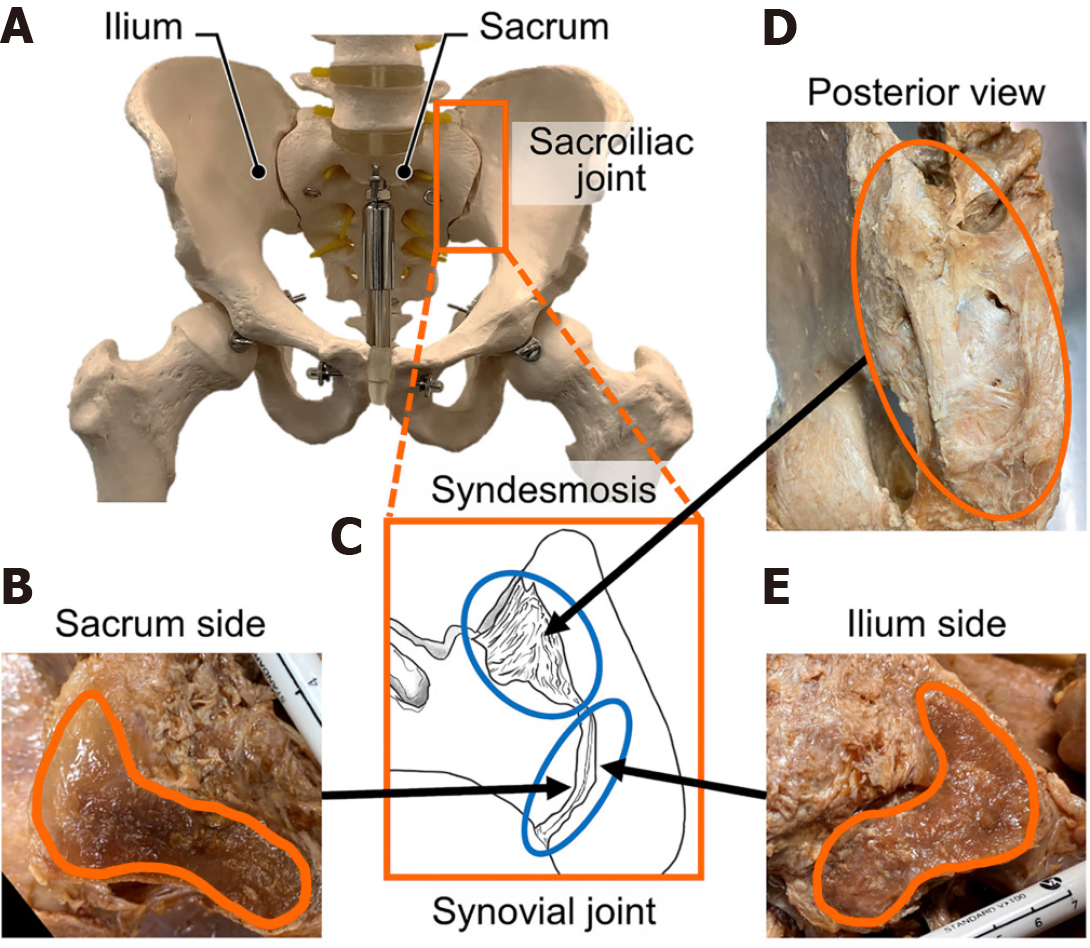
Figure 1 Joint structure[10].
A: The sacroiliac joint is in a position, where joint lines run parallel to the line of gravity; B: The sacral articular surface; C: The cross-sectional image of joint, shows posterior and anterior regions are syndesmoses and synovial joints; D: Syndesmosis, which is composed of sacrospinous ligaments, posterior sacroiliac ligaments, iliolumbar ligaments, and scarotuberous ligaments from posterior side; E: The ilium articular surface. Meanwhile, the redlines on both sacrum and ilium side indicate the synovial regions. Citations: Toyohara R, Ohashi T. A literature review of biomechanical studies on physiological and pathological sacroiliac joints: Articular surface structure, joint motion, dysfunction and treatments. Clin Biomech (Bristol) 2024; 114: 106233. Copyright ©The Author(s) 2024. Published by Elsevier Ltd. The article is open access (Supplementary material).
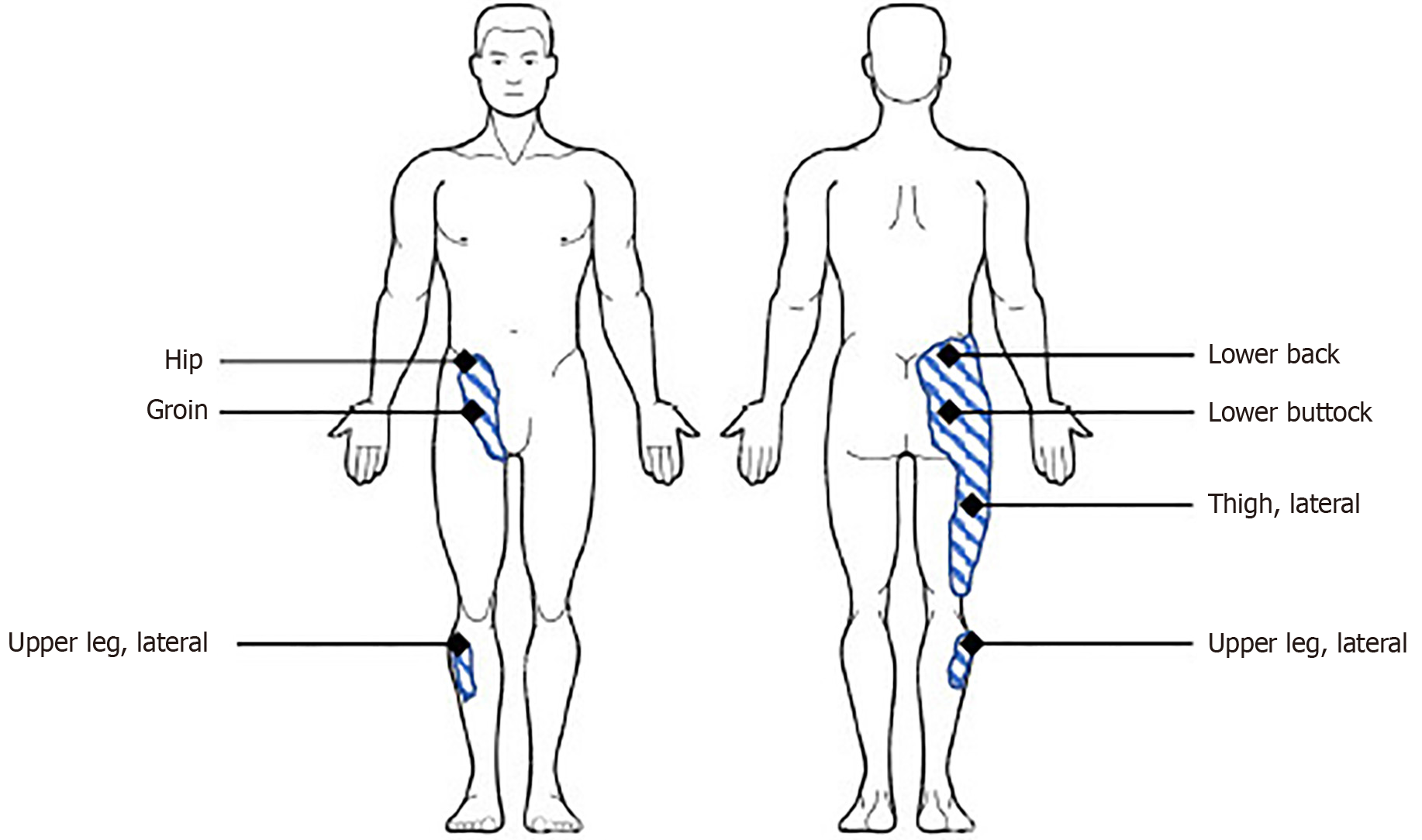
Figure 2 Most typical sacroiliac joint pain referral sites are associated with sacroiliac joint pain[2].
This illustration represents a typical region of referred pain originating from the SI joint, shown in both anterior and posterior views. In the anterior view, pain commonly localizes to the hip and groin regions, with extension into lateral aspect of the upper leg. In the posterior view, the most frequent pain distribution includes the lower back and lower buttock, with radiation extending along the lateral thigh and upper leg. Citations: Samolsky Dekel BG, Campesato M, Salis E, Secli R, Sorella MC, Vasarri A, Ventola M. Things to know about Sacroiliac Joint Pain. Open Pain J 2024; 17: E18763863320151. Copyright ©The author(s) 2024. Published by Bentham Open. The article is open access (Supplementary material).
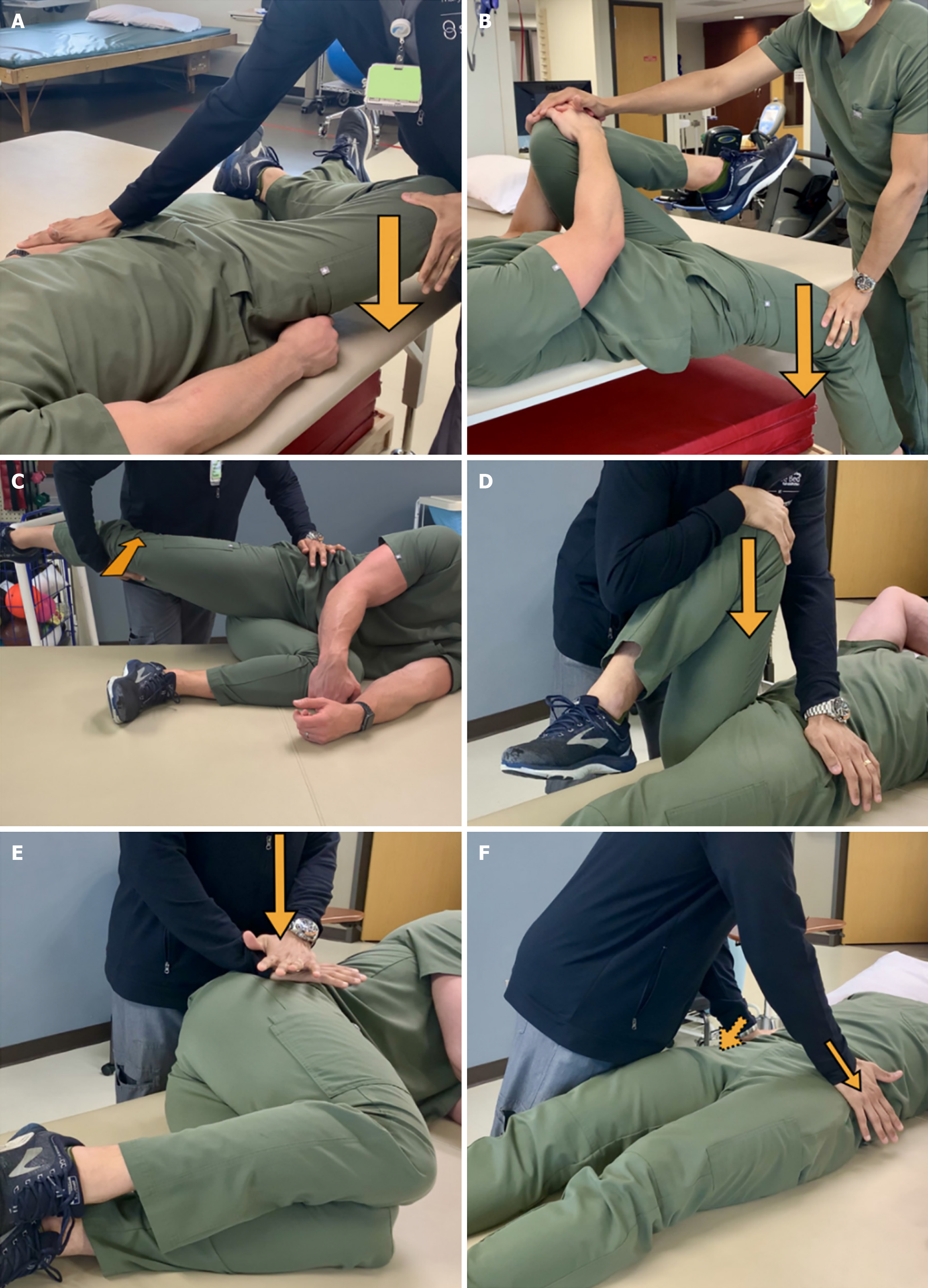
Figure 3 Clinical provocative tests for the assessment of sacroiliac joint pain[17].
These tests are most commonly used physical examination tests designed to reproduce pain arising from the SI joint with the application of controlled mechanical stress across the joint. A: Flexion-abduction-external-rotation test; B: Gaenslen test; C: Gaenslen test (modified); D: Thigh thrust; E: Compression test; F: Distraction test. Citations: Buchanan P, Vodapally S, Lee DW, Hagedorn JM, Bovinet C, Strand N, Sayed D, Deer T. Successful Diagnosis of Sacroiliac Joint Dysfunction. J Pain Res 2021; 14: 3135-3143. Copyright ©The author(s) 2021. Published by Dove Medical Press. The article is open access (Supplementary material).
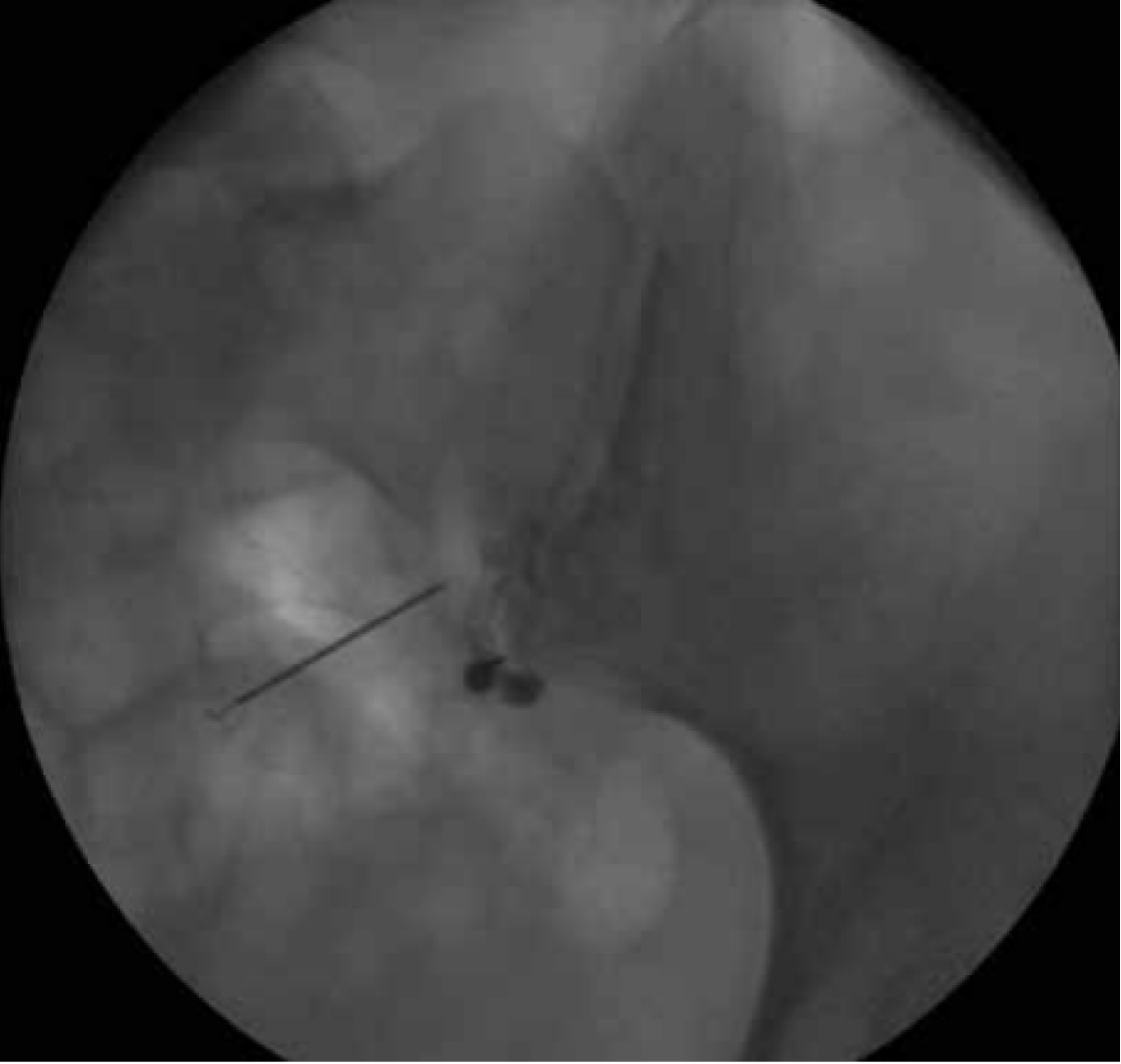
Figure 4 The inferior approach (lower one-third) of the sacroiliac joint is outlined using fluoroscopy[49].
Citations: Gupta S. Double needle technique: An alternative method for performing difficult sacroiliac joint injections. Pain Physician 2011; 14: 281-284. Copyright ©The American Society of Interventional Pain Physicians. Published by the American Society of Interventional Pain Physicians. The article is open access (Supplementary material).
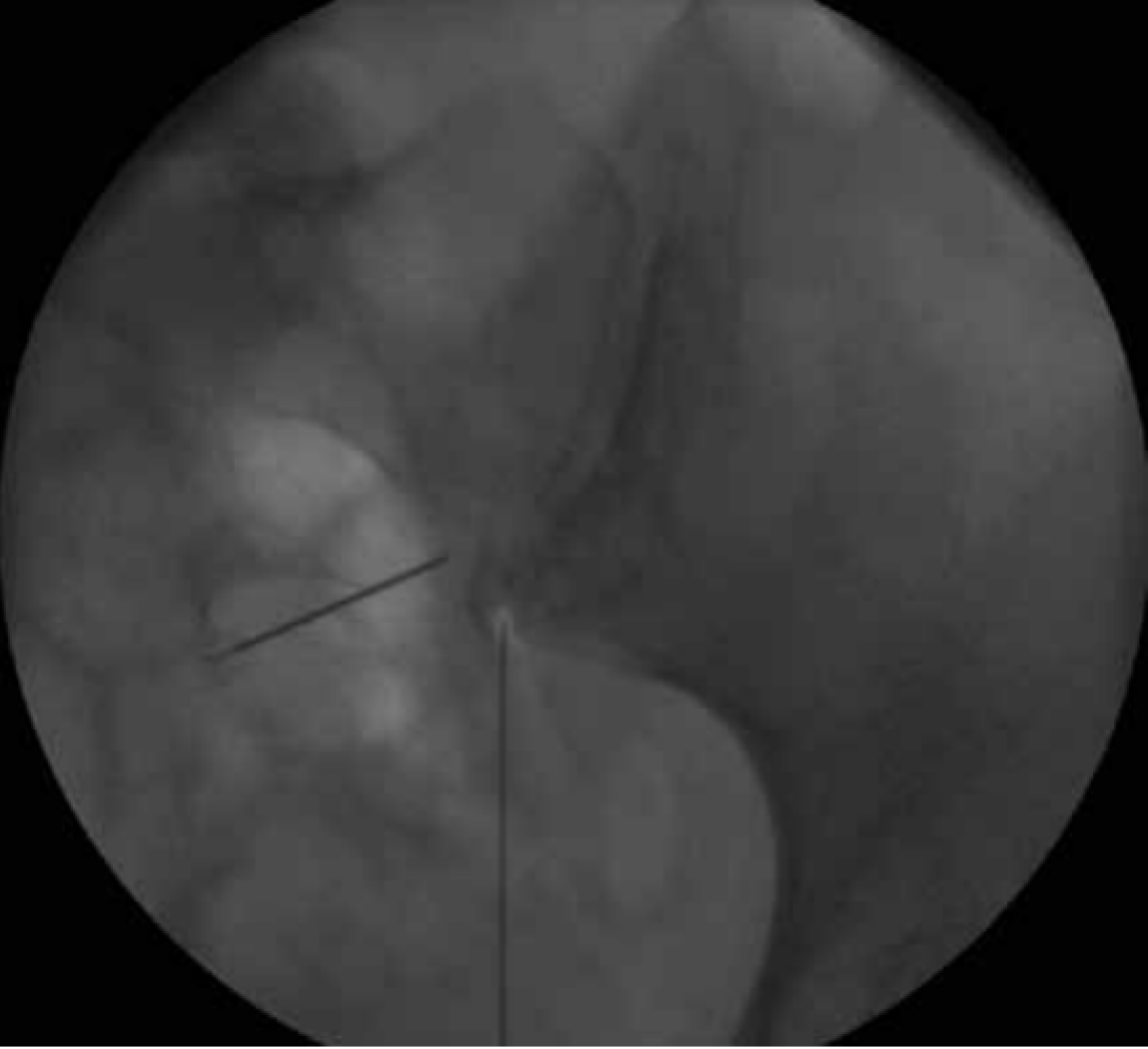
Figure 5 Dynamic fluoroscopy indicating two needles for the treatment of sacroiliac joint[49].
Citations: Gupta S. Double needle technique: An alternative method for performing difficult sacroiliac joint injections. Pain Physician 2011; 14: 281-284. Copyright ©The American Society of Interventional Pain Physicians. Published by the American Society of Interventional Pain Physicians. The article is open access (Supplementary material).
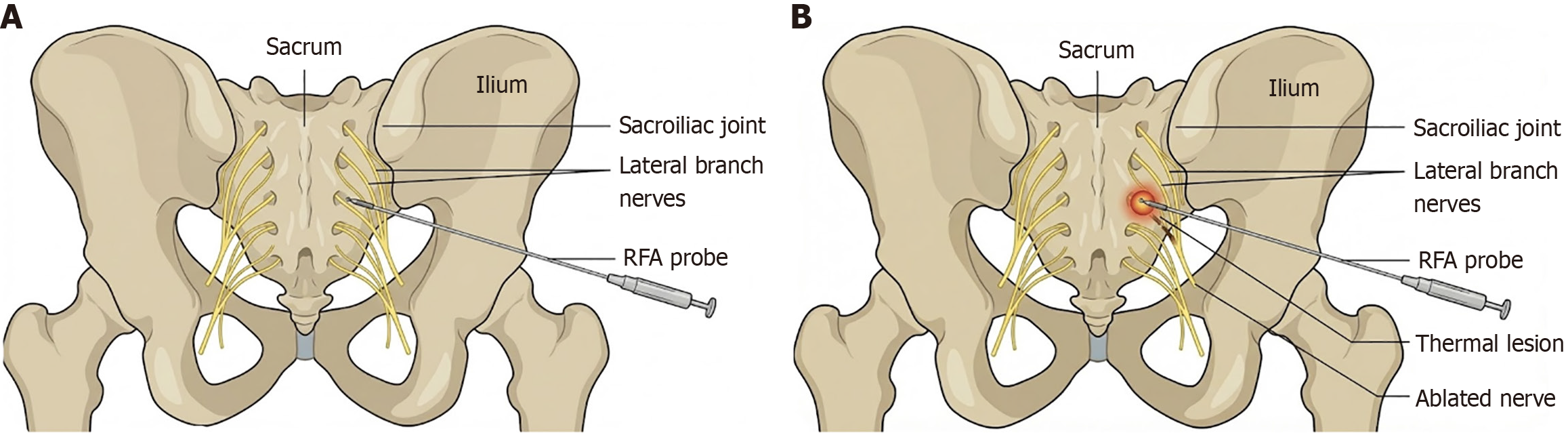
Figure 6 This medical illustration compares the sacroiliac joint pre and post radiofrequency ablation.
A: This image shows the correct posterior anatomical view of the sacrum and ilium. The lateral branches of the posterior sacral nerves are visible, and a radiofrequency ablation probe is positioned on one of them, ready for the procedure; B: This image shows the same posterior view after the radiofrequency ablation procedure has been performed. A thermal lesion is now visible at the tip of the probe, and the targeted nerve is ablated, interrupting the pain signals. RFA: Radiofrequency ablation.
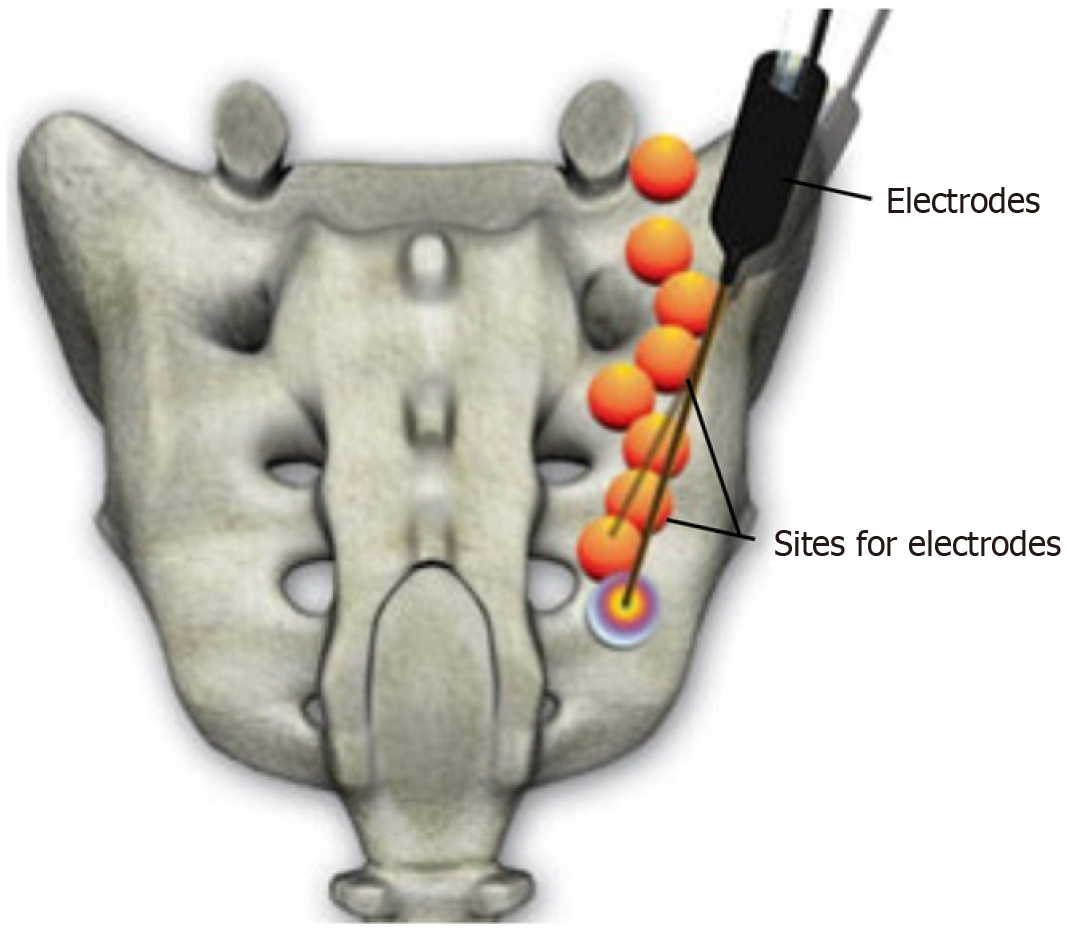
Figure 7 Placement of probes during cooled radiofrequency ablation of dorsal sacral nerve fibers supplying sacroiliac joints[74].
Citations: Biswas BK, Dey S, Biswas S, Mohan VK. Water-cooled radiofrequency neuroablation for sacroiliac joint dysfunctional pain. J Anaesthesiol Clin Pharmacol 2016; 32: 525-527. Copyright ©Journal of Anaesthesiology Clinical Pharmacology. Published by Research Society of the Anaesthesiology Clinical Pharmacology. The article is open access (Supplementary material).
- Citation: Soin A, Mandava A, Soin G, Kloth D, Staats P, Kalia H, Kim P. Sacroiliac joint injections and radiofrequency ablation for pain management: A clinical review. World J Orthop 2026; 17(6): 120581
- URL: https://www.wjgnet.com/2218-5836/full/v17/i6/120581.htm
- DOI: https://dx.doi.org/10.5312/wjo.v17.i6.120581