
















Copyright: ©Author(s) 2026.
World J Orthop. Jun 18, 2026; 17(6): 116787
Published online Jun 18, 2026. doi: 10.5312/wjo.v17.i6.116787
Published online Jun 18, 2026. doi: 10.5312/wjo.v17.i6.116787
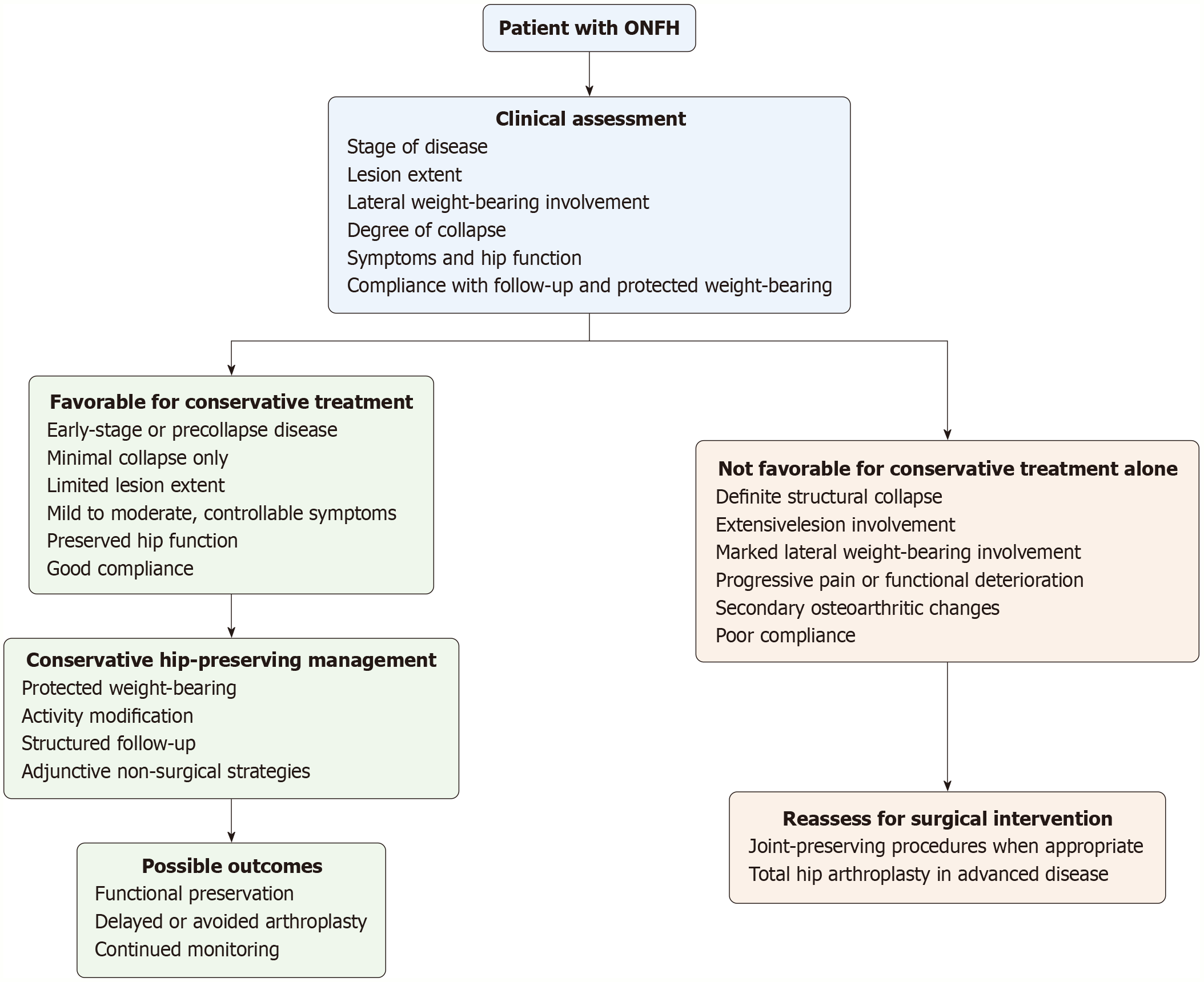
Figure 1 Suggested framework for conservative treatment selection in osteonecrosis of the femoral head.
Patients with osteonecrosis of the femoral head should be evaluated according to disease stage, lesion extent, lateral weight-bearing involvement, degree of collapse, symptoms, hip function, and compliance with protected weight-bearing and follow-up. Patients with early-stage disease, limited lesion extent, minimal collapse, controllable symptoms, and preserved hip function may be considered suitable for conservative hip-preserving management. In contrast, patients with definite structural collapse, extensive lesion involvement, progressive symptoms, secondary osteoarthritic changes, or poor compliance are generally not favorable candidates for conservative treatment alone and should be reassessed for surgical intervention. ONFH: Osteonecrosis of the femoral head.
- Citation: Fu XP. From radiological stability to functional preservation: Reconsidering the value of conservative treatment for osteonecrosis of the femoral head. World J Orthop 2026; 17(6): 116787
- URL: https://www.wjgnet.com/2218-5836/full/v17/i6/116787.htm
- DOI: https://dx.doi.org/10.5312/wjo.v17.i6.116787