
















Copyright: ©Author(s) 2026.
World J Orthop. May 18, 2026; 17(5): 118475
Published online May 18, 2026. doi: 10.5312/wjo.v17.i5.118475
Published online May 18, 2026. doi: 10.5312/wjo.v17.i5.118475
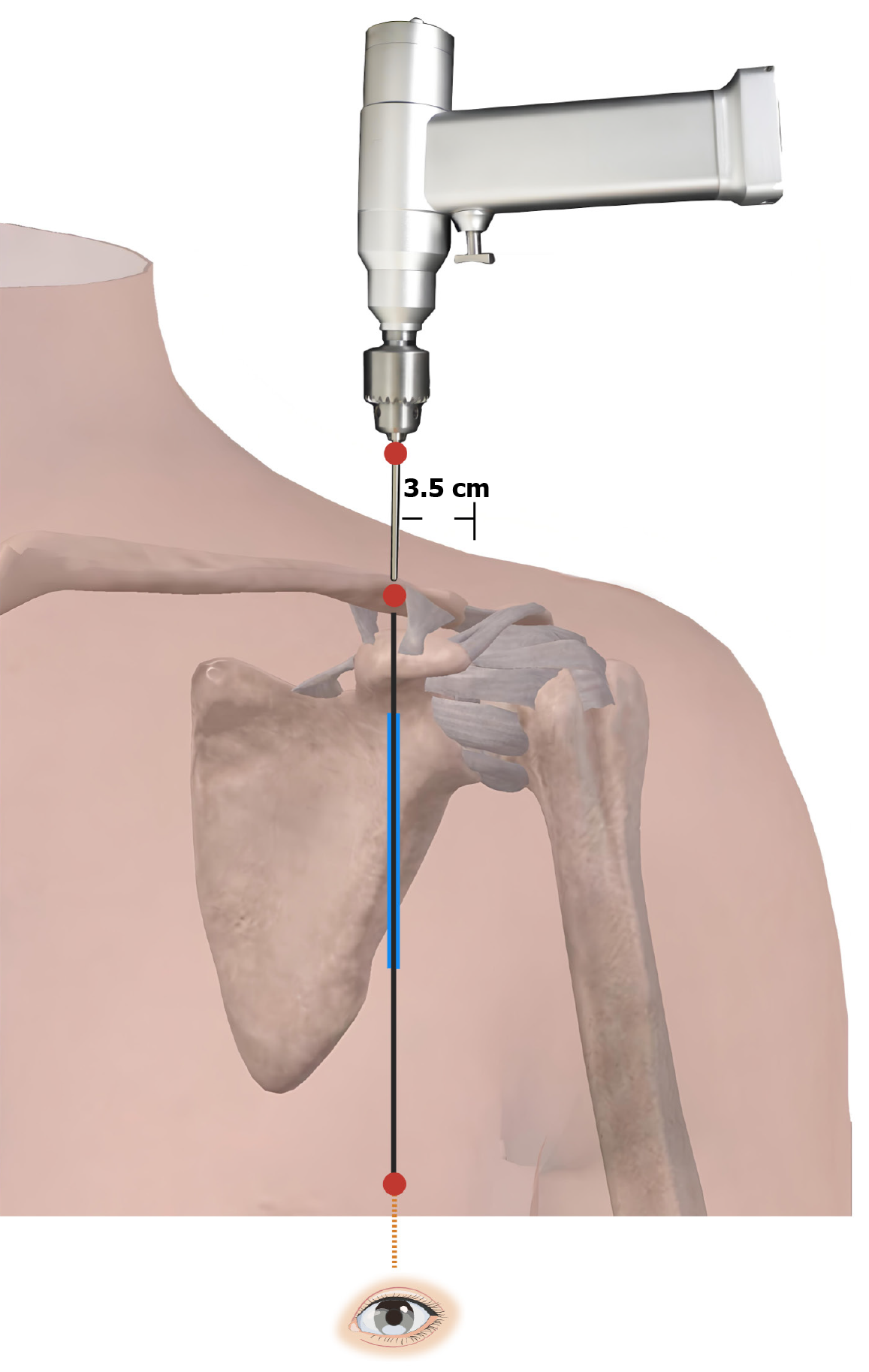
Figure 1 Schematic diagram of the three-point positioning technique.
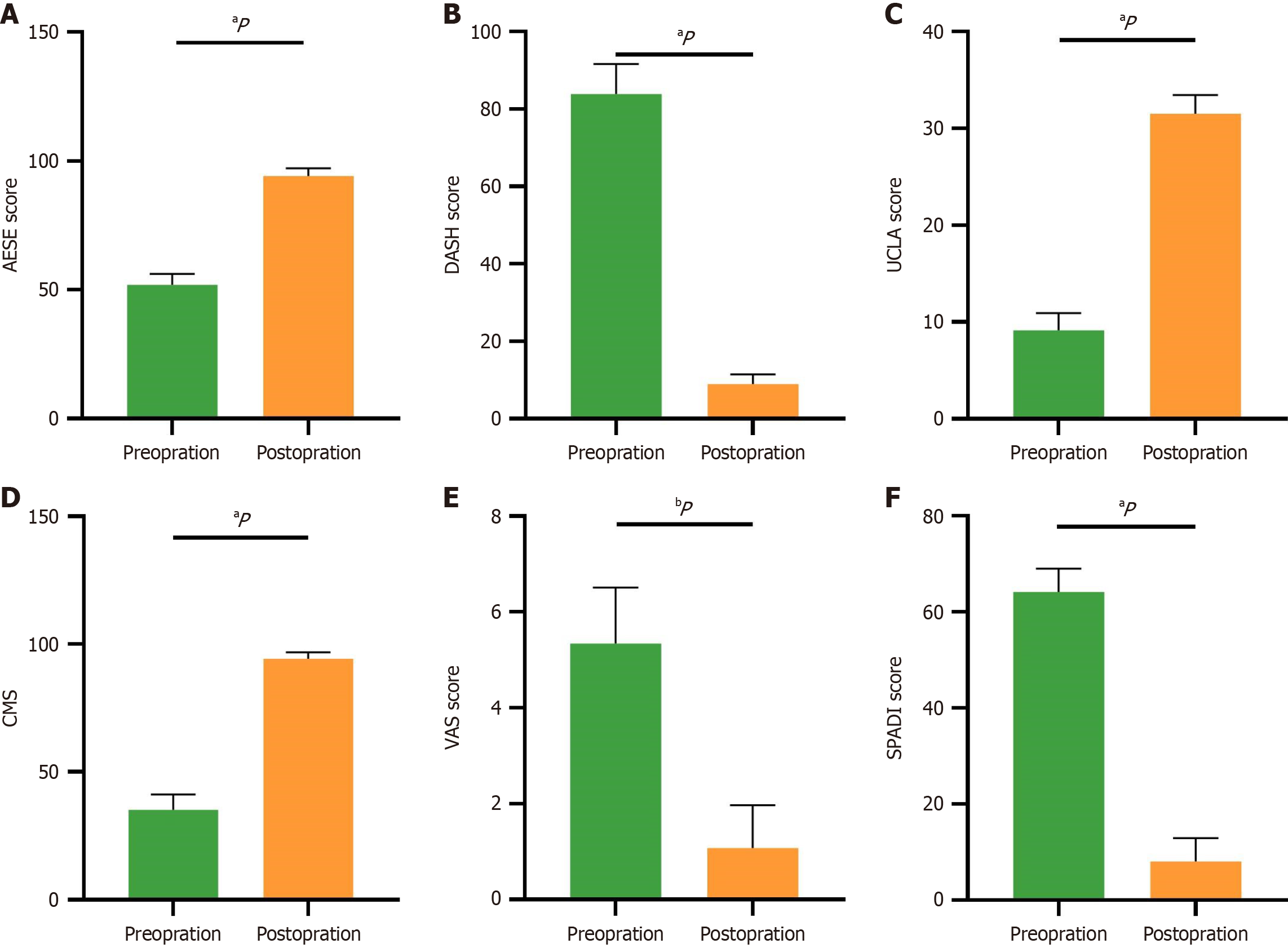
Figure 2 Comparisons between preoperative and postoperative clinical evaluations.
Comparisons between preoperative and postoperative scores. A: American Shoulder and Elbow Surgeons score; B: Shoulder and Elbow score; C: University of California, Los Angeles score; D: Constant-Murley score; E: Visual Analog Scale score; F: Shoulder Pain and Disability Index score. aP < 0.001, this shows that there was a significant difference before and after surgery using the Student’s t-test (P < 0.05); bP < 0.001, this shows that there was a significant difference before and after surgery using the Mann-Whitney U test (P < 0.05). ASES: The American Shoulder and Elbow Surgeons score; DASH: Shoulder and Elbow score; UCLA: University of California, Los Angeles score; CMS: Constant-Murley score; VAS: Visual Analog Scale score; SPADI: Shoulder Pain and Disability Index score.
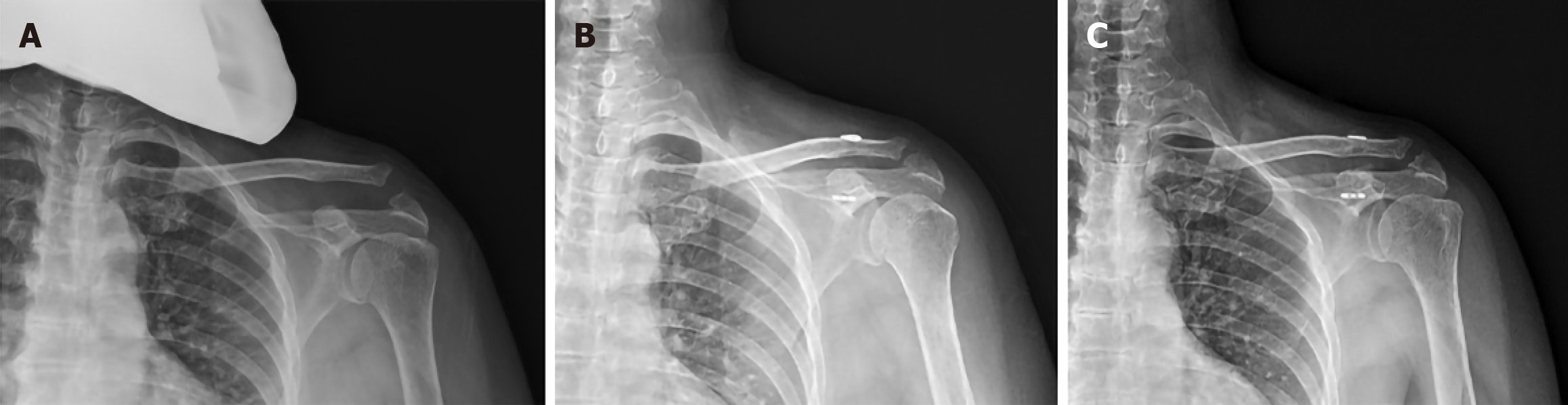
Figure 3 Serial radiographs of a 61-year-old man treated with the TightRope system using the novel 3-point positioning technique.
A: Preoperative anteroposterior radiograph showing Rockwood type III acromioclavicular joint dislocation; B: 1-month postoperative plain radiograph; C: 12-month postoperative plain radiograph showing good maintenance of joint reduction with the TightRope system using the novel 3-point positioning technique.
- Citation: Chen FX, Zhao ZL, Xu HY, Ning FY. Novel 3-point positioning technique combined with the TightRope system for treating acute Rockwood type III acromioclavicular joint dislocation. World J Orthop 2026; 17(5): 118475
- URL: https://www.wjgnet.com/2218-5836/full/v17/i5/118475.htm
- DOI: https://dx.doi.org/10.5312/wjo.v17.i5.118475