
















Copyright: ©Author(s) 2026.
World J Orthop. Apr 18, 2026; 17(4): 115014
Published online Apr 18, 2026. doi: 10.5312/wjo.v17.i4.115014
Published online Apr 18, 2026. doi: 10.5312/wjo.v17.i4.115014
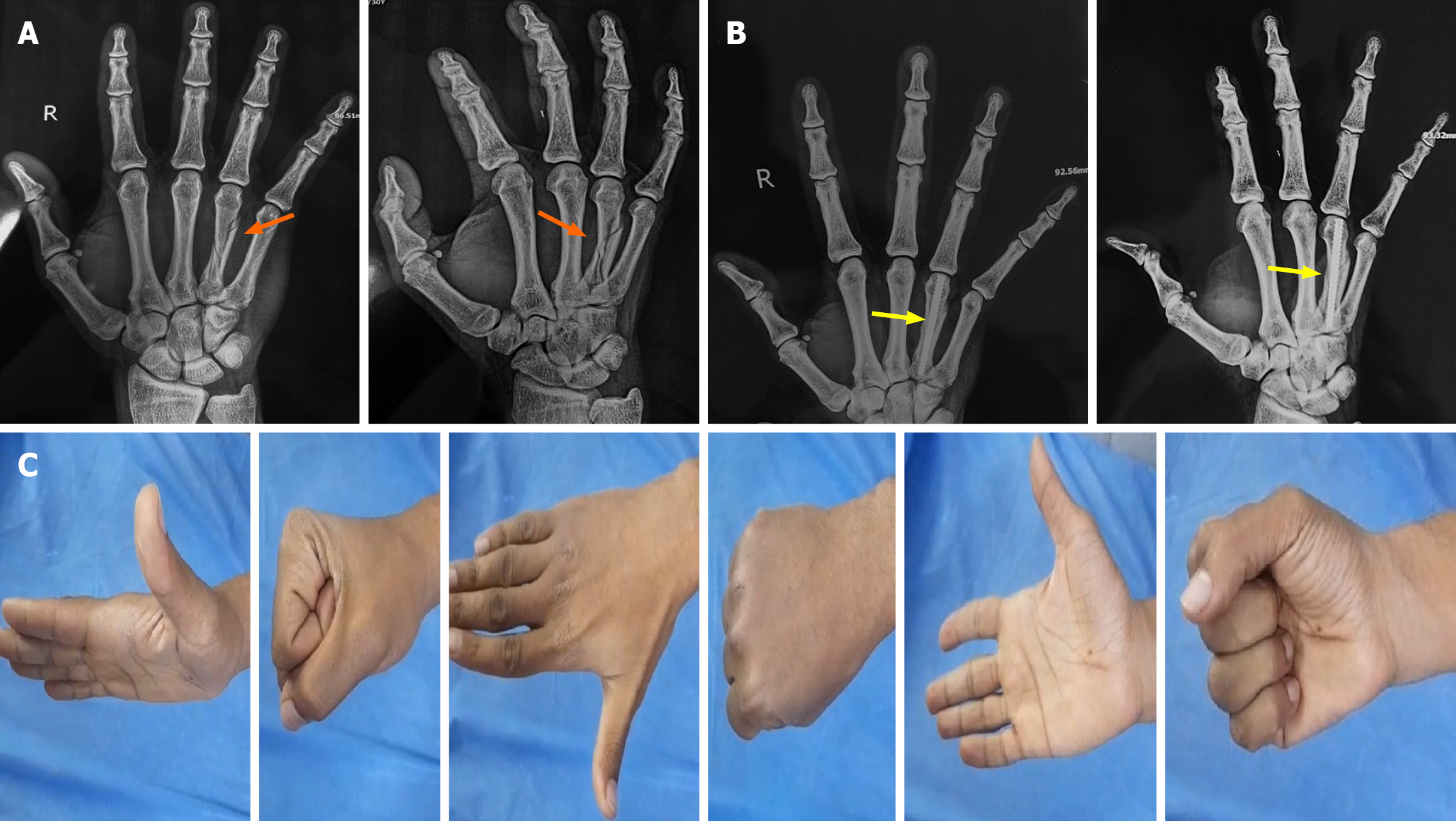
Figure 1 Male patient, 31 years old, presented with right fourth metacarpal comminuted diaphyseal fracture (orange arrow), which was treated by closed reduction and retrograde intramedullary headless screw fixation using Acutrak screw 4 mm (yellow arrow).
A: Preoperative radiographs; B: Eight weeks follow up radiographs; C: Eight weeks follow up clinical outcome.
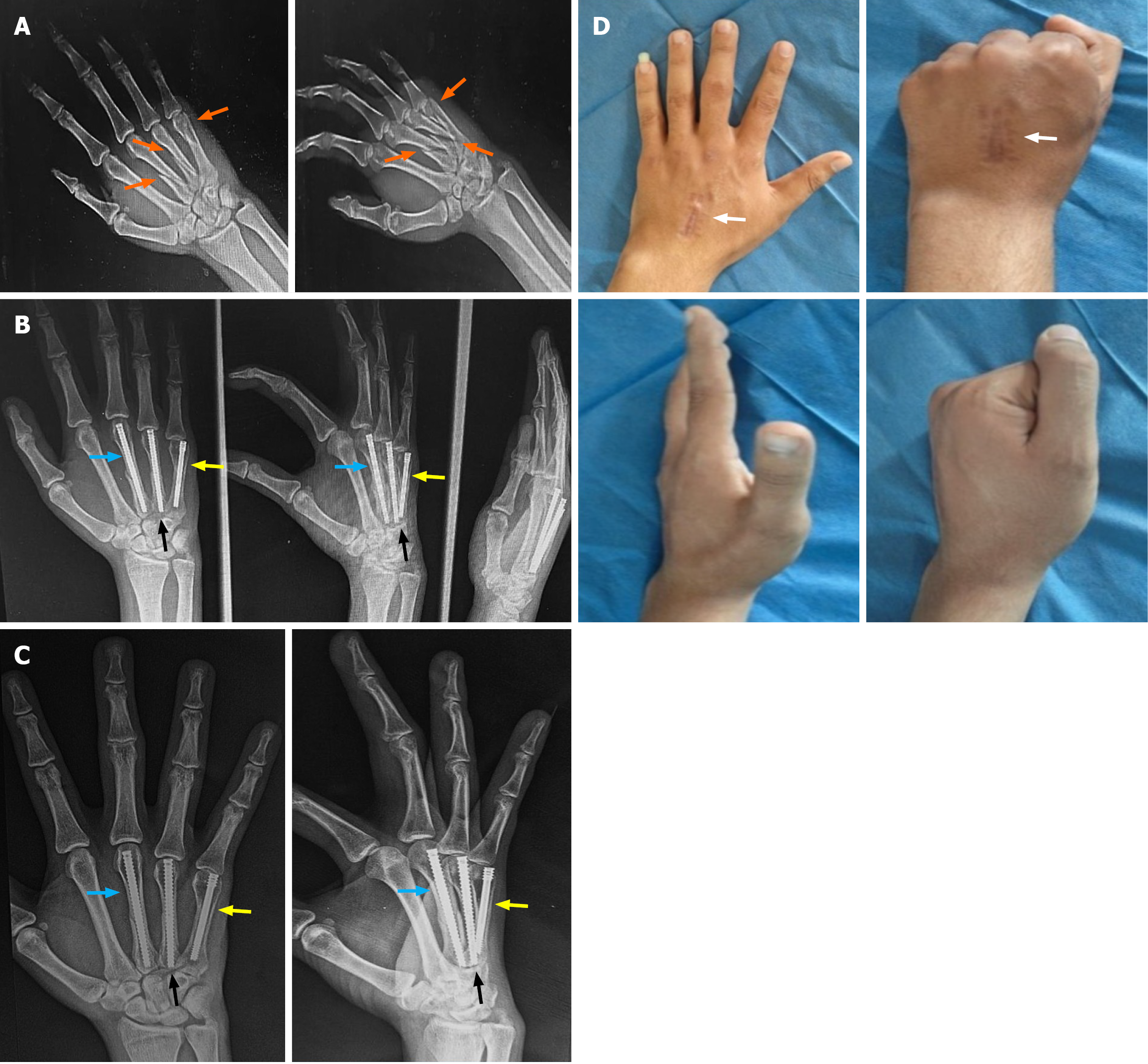
Figure 2 Male patient, 25 years old, presented with fracture of the left third, fourth, and fifth metacarpal fractures (orange arrows).
The fourth and fifth metacarpal fractures were treated by closed reduction and retrograde fixation using an Acutrak screw 4 mm for the fourth metacarpal (black arrow) and a Herbert screw 3.5 mm for the fifth metacarpal (yellow arrow). The third metacarpal fracture required open reduction, and fixation was performed using an Acutrak screw 4mm (blue arrow). A: Preoperative plain radiographs; B: Eight weeks follow up plain radiographs; C: Six months follow up plain radiographs; D: Six months follow up clinical outcome (the (white arrow showing the scar of the open reduction surgical approach for managing the third metacarpal fracture).
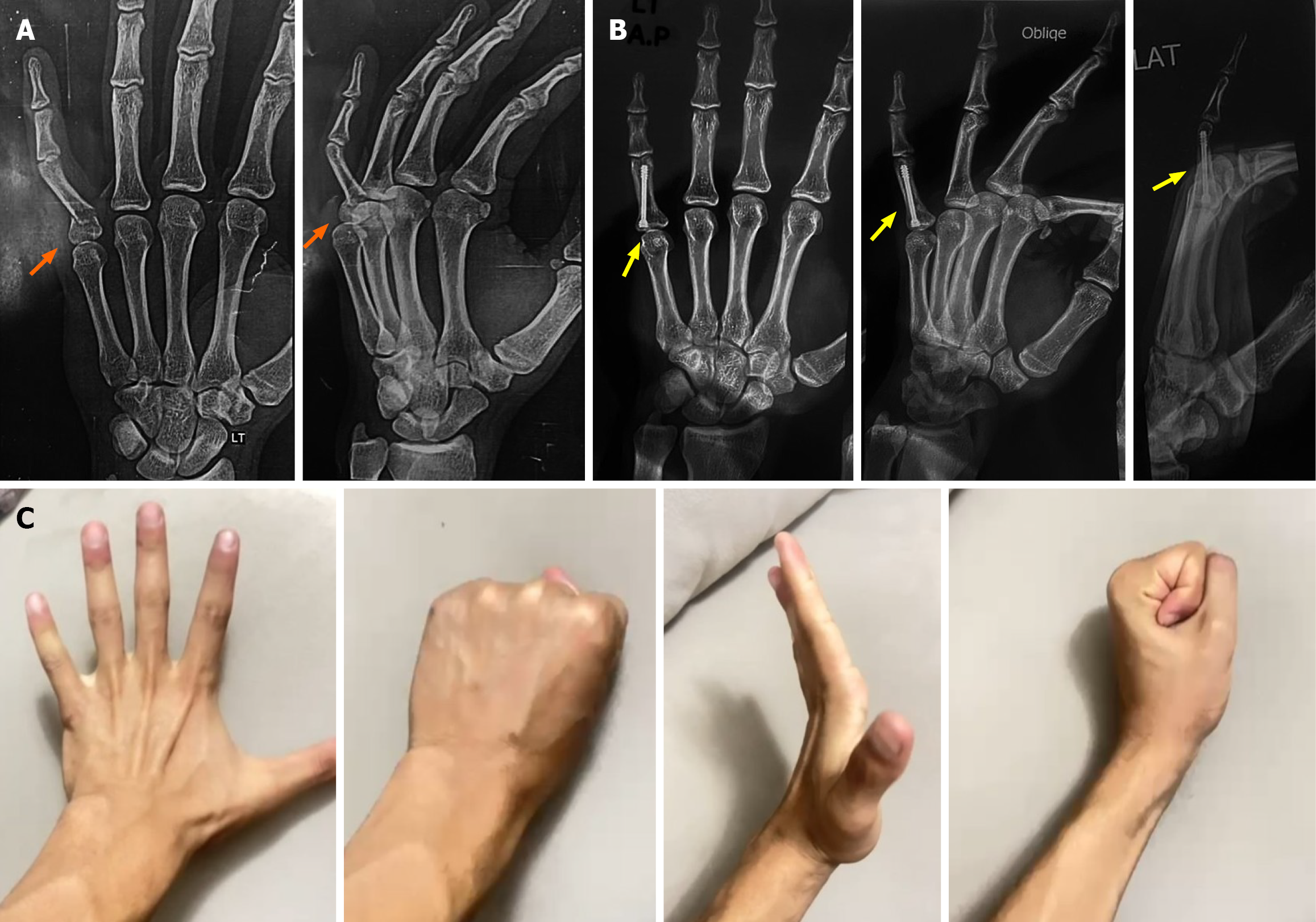
Figure 3 Male patient, 25 years old, presented with a fracture of the left little finger proximal phalanx (orange arrow).
He was treated by Closed reduction and antegrade fixation using a Herbert screw 2.7 mm (yellow arrow). A: Preoperative plain radiographs; B: Eight months follow up plain radiographs; C: Eight months follow up clinical outcome.
- Citation: Saleh WR, Khalifa AA, Ragheb YF, El-Sayed A, Megahed AA. Intramedullary headless screw fixation of extraarticular metacarpal and proximal phalanx fractures, North African trauma center early experience. World J Orthop 2026; 17(4): 115014
- URL: https://www.wjgnet.com/2218-5836/full/v17/i4/115014.htm
- DOI: https://dx.doi.org/10.5312/wjo.v17.i4.115014