
















©The Author(s) 2026.
World J Orthop. Feb 18, 2026; 17(2): 110517
Published online Feb 18, 2026. doi: 10.5312/wjo.v17.i2.110517
Published online Feb 18, 2026. doi: 10.5312/wjo.v17.i2.110517
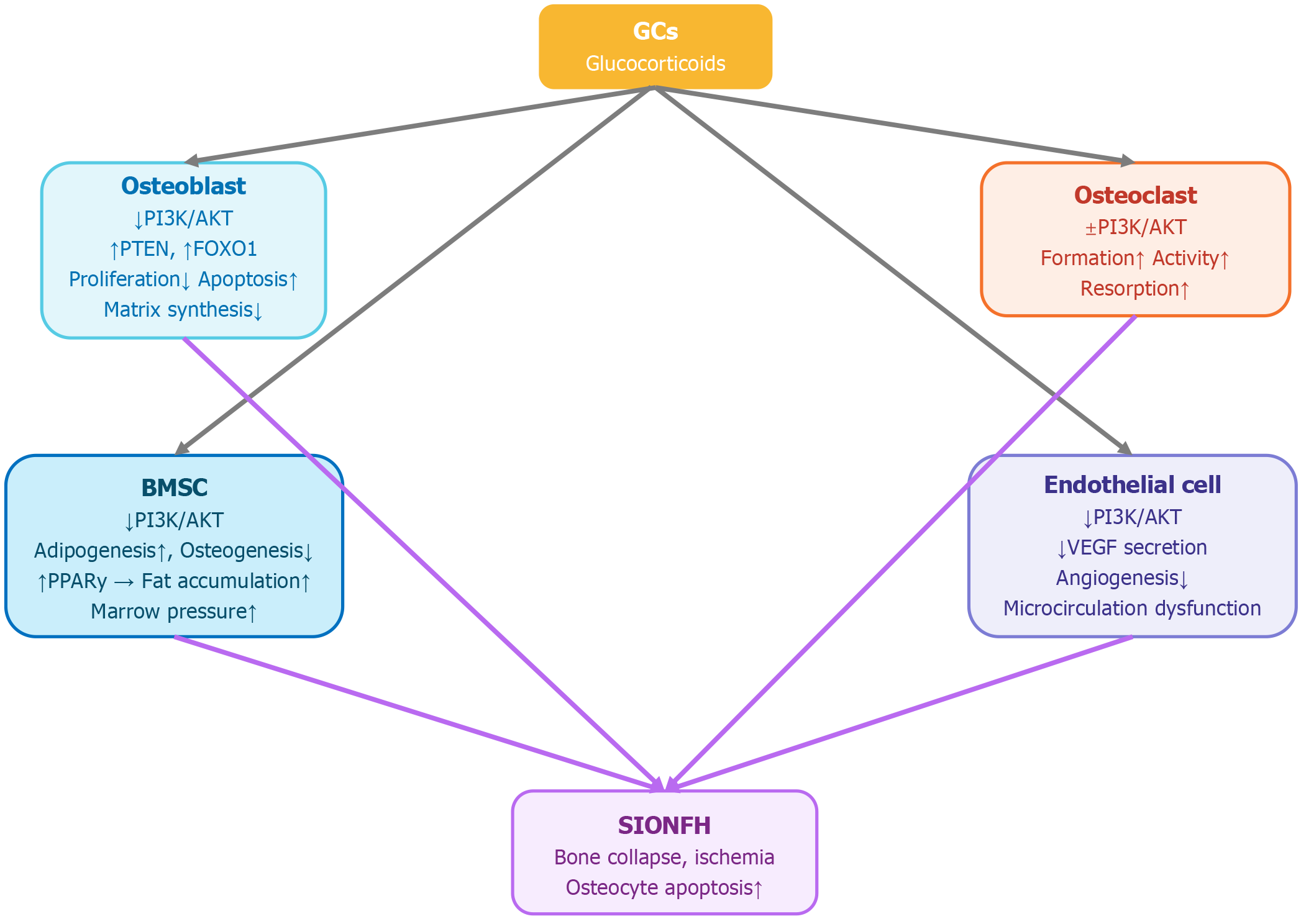
Figure 1 Mechanistic illustration of glucocorticoid disruption of phosphatidylinositol-3-kinase/protein kinase B signaling in steroid-induced osteonecrosis of the femoral head.
Glucocorticoids (GCs) disrupt phosphatidylinositol-3-kinase/protein kinase B (PI3K/AKT) signaling in multiple bone-related cell types, contributing to steroid-induced osteonecrosis of the femoral head. In osteoblasts, GCs upregulate phosphatase and tensin homolog and forkhead box O1, reducing proliferation and matrix synthesis while increasing apoptosis. In osteoclasts, GCs enhance PI3K/AKT activity, promoting osteoclastogenesis and bone resorption. In bone marrow mesenchymal stem cells, GCs suppress PI3K/AKT and activate proliferator-activated receptor gamma, driving adipogenesis and increasing bone marrow pressure. In endothelial cells, GCs inhibit PI3K/AKT signaling and vascular endothelial growth factor secretion, impairing angiogenesis. These combined effects contribute to ischemia, bone collapse, and osteocyte death, which are hallmarks of steroid-induced osteonecrosis of the femoral head. GC: Glucocorticoid; PI3K/AKT: Phosphatidylinositol-3-kinase/protein kinase B; PTEN: Phosphatase and tensin homolog; FOXO1: Forkhead box O1; BMSC: Bone marrow mesenchymal stem cell; PPARγ: Proliferator-activated receptor gamma; SIONFH: Steroid-induced osteonecrosis of the femoral head; VEGF: Vascular endothelial growth factor.
- Citation: Wang YN, Jiang JX, Pang CX, Sun L, Sun R, Wang FM, Jiang HJ. Phosphatidylinositol-3-kinase/protein kinase B signaling dysregulation in steroid-induced osteonecrosis of the femoral head: A minireview of therapeutic implications. World J Orthop 2026; 17(2): 110517
- URL: https://www.wjgnet.com/2218-5836/full/v17/i2/110517.htm
- DOI: https://dx.doi.org/10.5312/wjo.v17.i2.110517