
















©The Author(s) 2025.
World J Orthop. Dec 18, 2025; 16(12): 112435
Published online Dec 18, 2025. doi: 10.5312/wjo.v16.i12.112435
Published online Dec 18, 2025. doi: 10.5312/wjo.v16.i12.112435
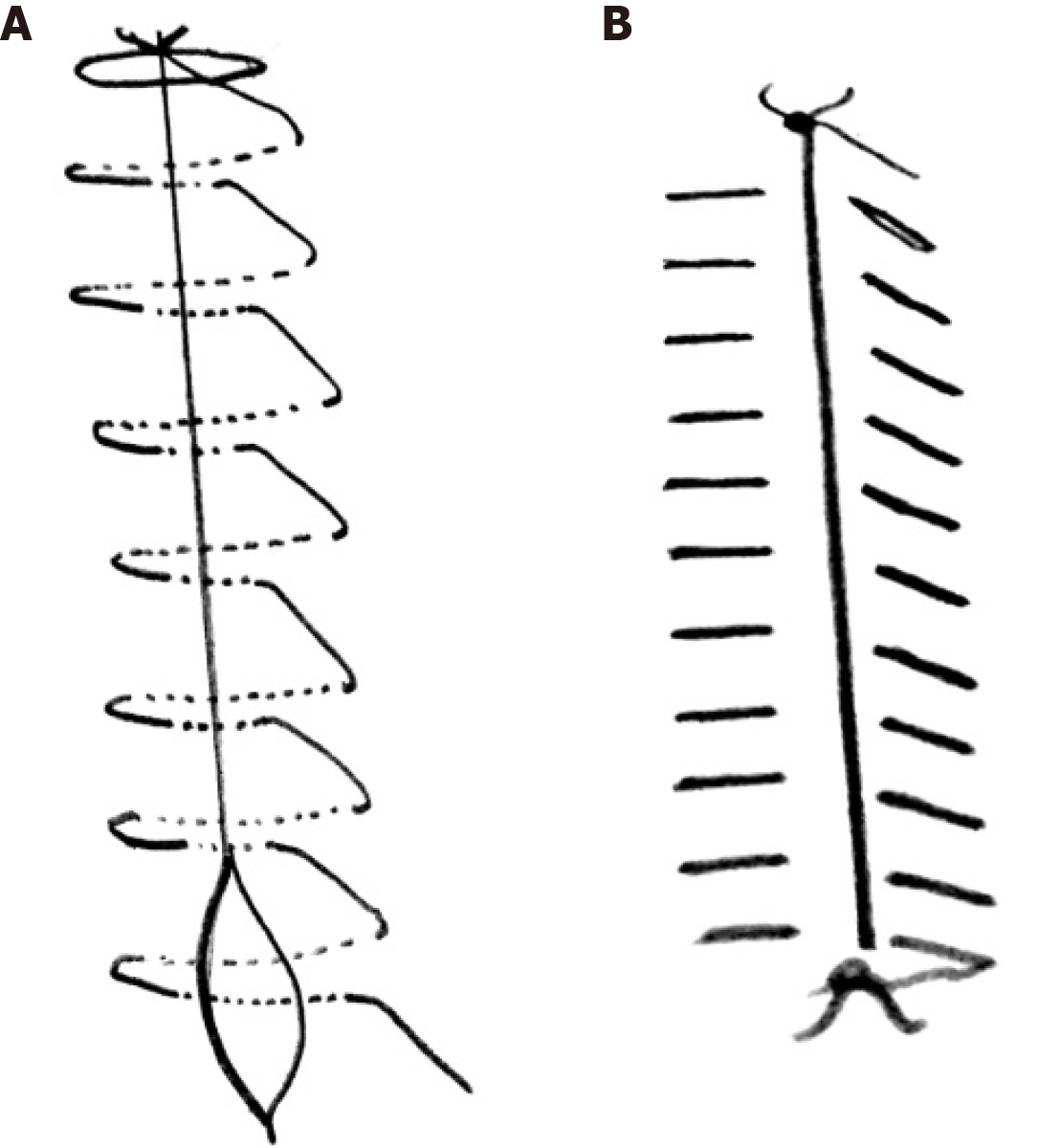
Figure 1 The technique of applying the combined oblique and vertical everting running stitch and the appearance after placement of the final knot.
A: Application; B: Final knot appearance and no suture marks over the wound.
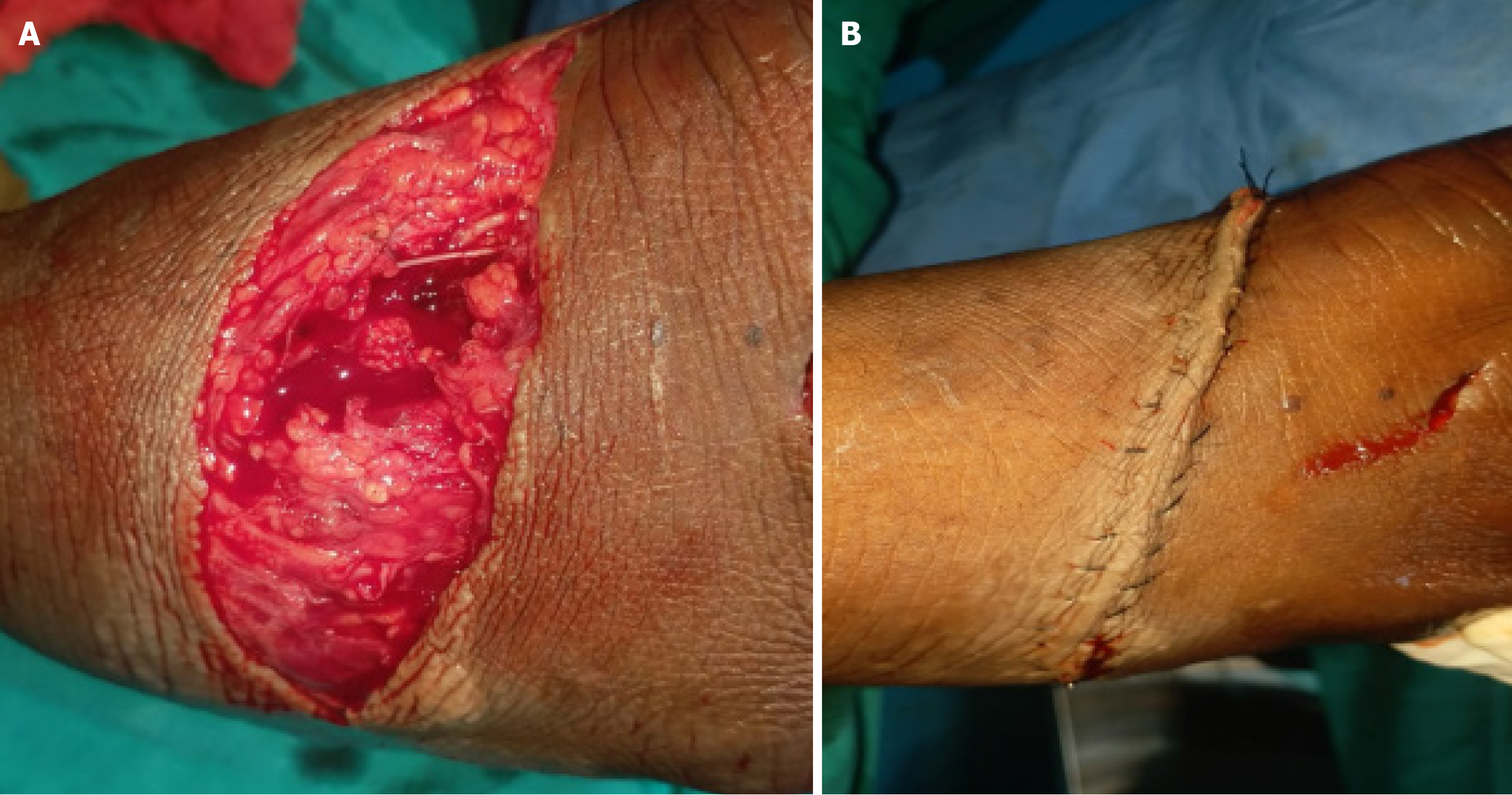
Figure 2 Clinical photographs of the combined oblique and vertical everting running stitch applied on a widely retracted wound and its appearance after complete closure.
A: Wound before suturing; B: Wound after suturing.
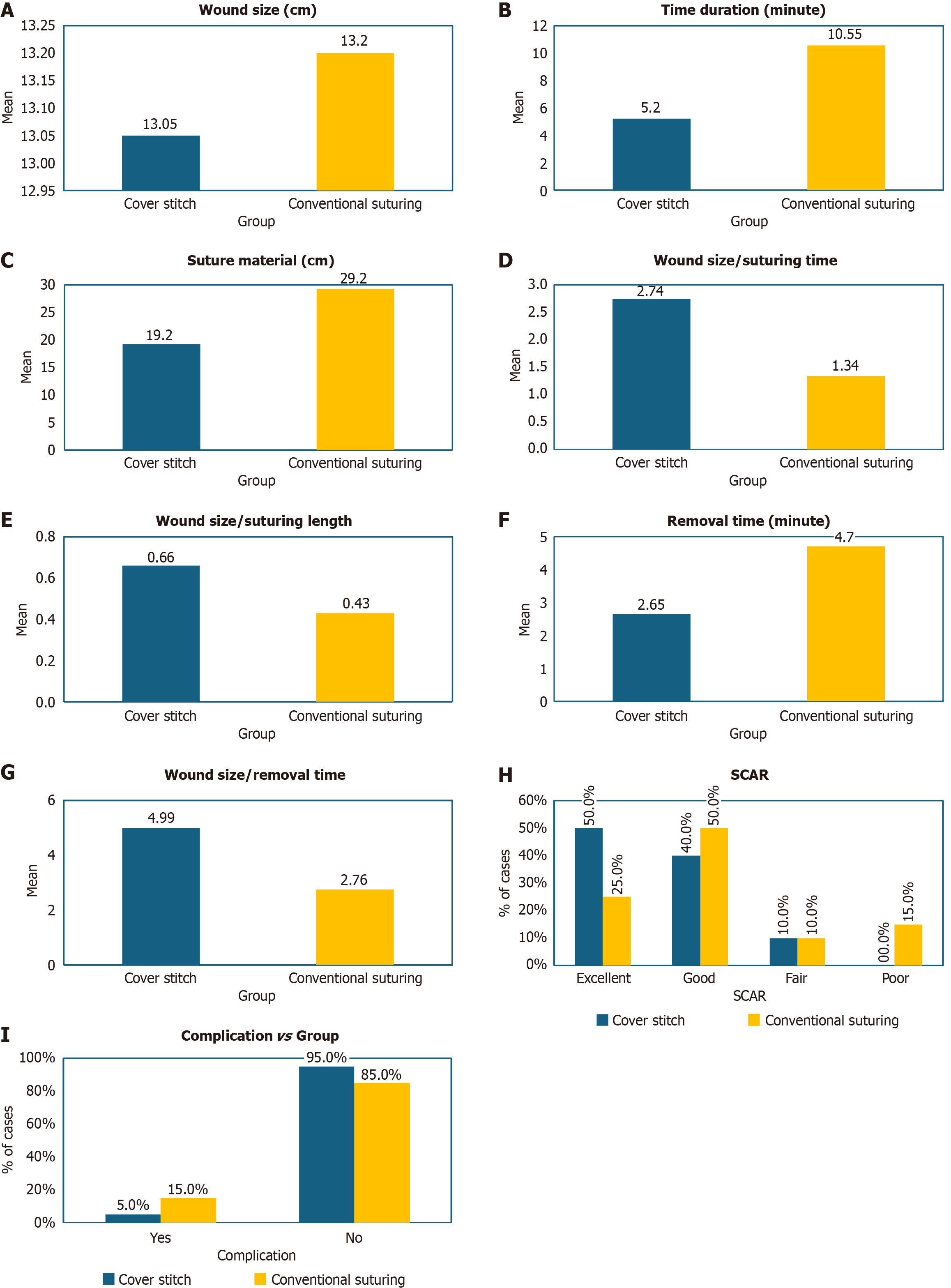
Figure 3 Statistical analysis.
A: Wound size between the two groups are totally different showing no significance (P = 0.909); B: The time needed to suture the wound is less in group 1 compared to the group 2 (P < 0.001); C: The length of the suture needed in the combined oblique and vertical everting running stitch group was less compared to conventional suturing group (P < 0.001); D: Group 1 shows significant results than group 2 in terms of wound size to suturing time ratio (P < 0.001); E: The wound size to suturing length ratio was observed as less in combined oblique and vertical everting running stitch group and high in conventional suturing group in terms of (P < 0.001); F: The suture removal time was recorded less in combined oblique and vertical everting running stitch group than in conventional group (P < 0.001); G: There are better results seen in group 1 than in group 2 in terms of wound size to removal time ratio (P < 0.001); H: In combined oblique and vertical everting running stitch group, according to modified Hollander score scale there are 10 cases which showed excellent outcome whereas in conventional group, there are 5 cases which showed excellent outcome (P < 0.005); I: In group 1, 1 case had superficial infection, whereas in group 2, 3 cases resulted in wound dehiscence (P < 0.005). SCAR: In combined oblique and vertical everting running stitch group, according to modified Hollander score scale there are 10 cases which showed excellent outcome whereas in conventional group, there are 5 cases which showed excellent outcome (P < 0.005).
- Citation: Sadiq M, Neerudi SR, Kasam RR, Koribilli SP, Naik VRS, Naik BD, Singh PK, Manne A, Kothalanka UK, Mettu AK, Nunnabatla K, Ale SK, Mallepogu KK, Bebartta SP. Comparative study between combined oblique and vertical everting running stitch and the conventional suturing technique. World J Orthop 2025; 16(12): 112435
- URL: https://www.wjgnet.com/2218-5836/full/v16/i12/112435.htm
- DOI: https://dx.doi.org/10.5312/wjo.v16.i12.112435