
















Copyright: ©Author(s) 2026.
World J Cardiol. May 26, 2026; 18(5): 119321
Published online May 26, 2026. doi: 10.4330/wjc.v18.i5.119321
Published online May 26, 2026. doi: 10.4330/wjc.v18.i5.119321
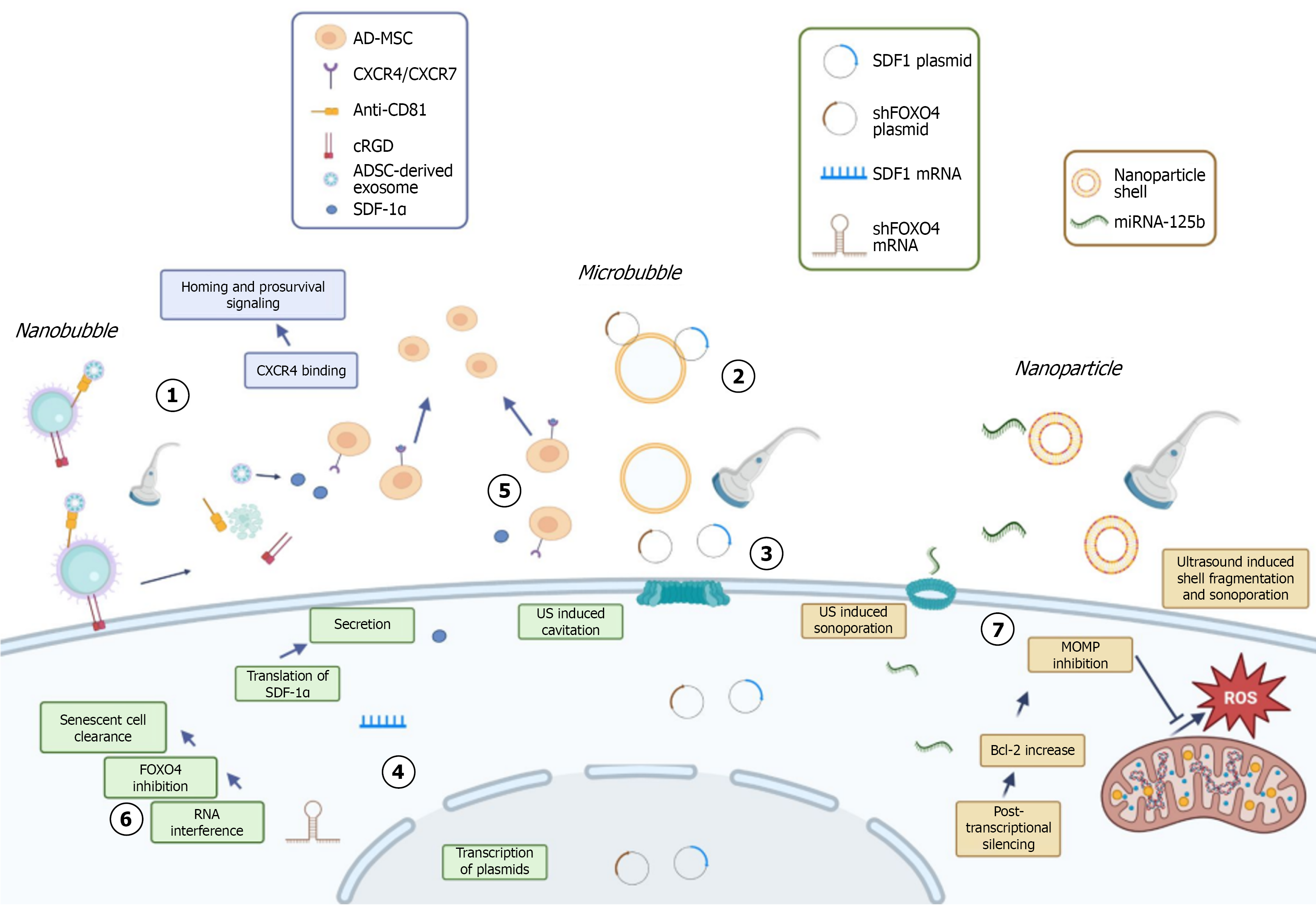
Figure 1 Ultrasound-enabled delivery platforms for myocardial repair signaling (schematic).
Schematic comparison of: (1) Targeted nanobubbles carrying adipose-derived mesenchymal stem cell exosomes enriched for SDF-1α via anti-CD81 tethering and cRGD targeting, with LIPUS used to increase myocardial localization and exosome availability; (2) Cationic microbubbles carrying SDF1 and shFOXO4 plasmids delivered by ultrasound-targeted microbubble destruction; (3-6): Enabling cellular entry (3) and transcription (4), with SDF-1α secretion supporting chemotactic homing (5) and ShFOXO4 driving FOXO4 knockdown to promote senescent-cell clearance (6); and (7) Phase-change nanoparticles delivering miR-125b to support post-transcriptional silencing and reduced intrinsic apoptosis signaling. This figure is a conceptual synthesis and is not intended to imply that every intermediate node shown was directly measured in each cited study. This figure was created by BioRender.com (Supplementary material). LIPUS: Low-intensity pulsed ultrasound; UTMD: Ultrasound-targeted microbubble destruction; SDF-1α: Stromal cell-derived factor-1α; AD-MSC: Adipose-derived mesenchymal stem cell; ROS: Reactive oxygen species; MOMP: Mitochondrial outer membrane permeabilization.
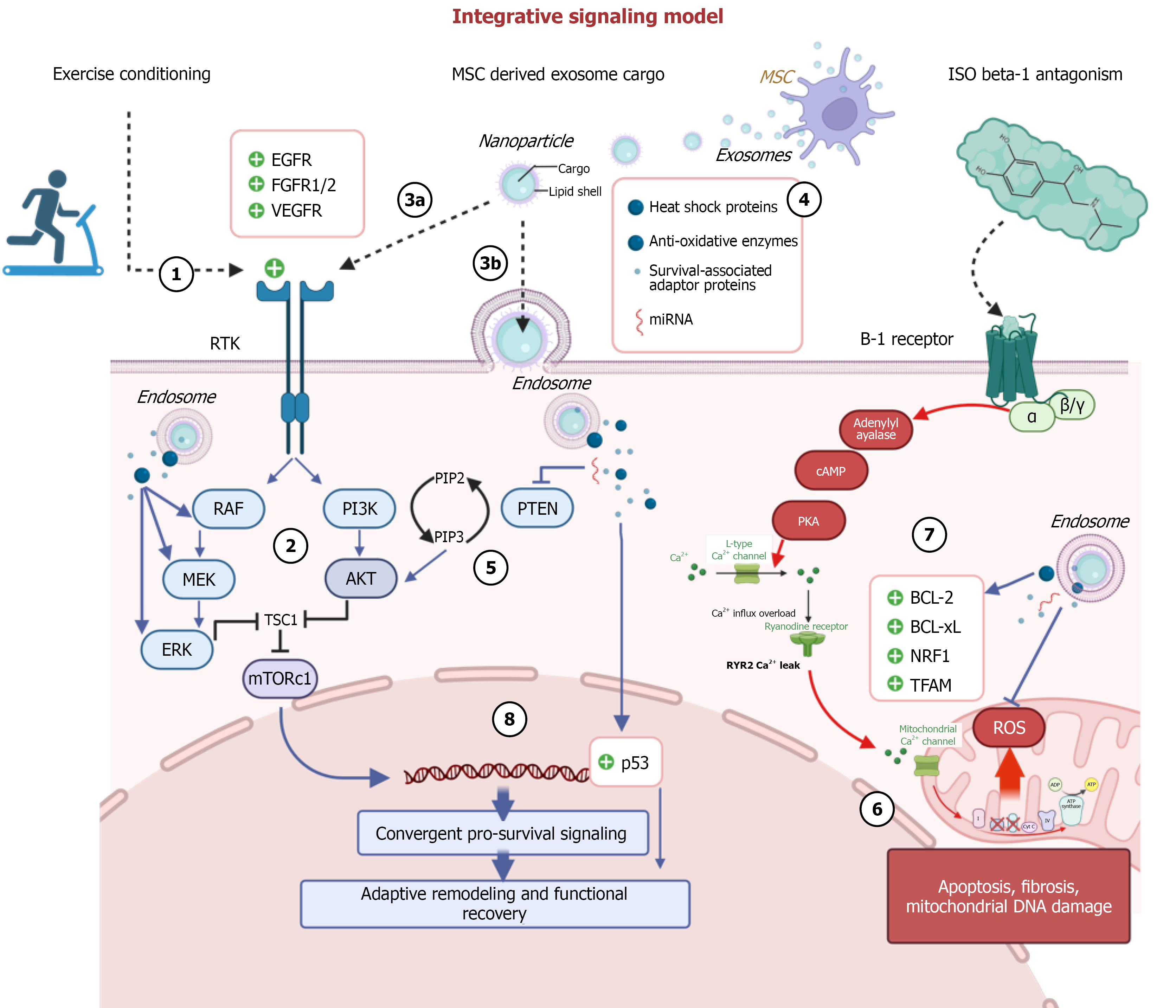
Figure 2 Integrative signaling model of exercise conditioning and mesenchymal stem cell-derived exosome therapy in isoproterenol-induced myocardial ischemia.
(1) Exercise conditioning activates RTK signaling through growth factor pathways, including EGFR, FGFR1/2, and VEGFR, thereby priming downstream intracellular survival pathways; (2) RTK activation engages RAF-MEK-ERK and PI3K-Akt-mTOR signaling cascades that regulate cytoprotection, metabolic adaptation, and autophagic balance; (3a) Mesenchymal stem cell-derived exosomes (MSC-EXO) modulate cardiomyocyte signaling at the plasma membrane through RTK antagonism or receptor interference; (3b) In parallel, exosomes undergo vesicle fusion with the plasma membrane followed by endosome formation, enabling intracellular cargo delivery; (4) Exosomal cargo includes heat shock proteins, antioxidative enzymes, survival-associated adaptor proteins, and microRNAs that modulate intracellular signaling networks; (5) These paracrine inputs suppress negative regulators like PTEN to balance PIP2 and PIP3 levels, which reinforces Akt pathway activity. Meanwhile, isoproterenol-induced β1-adrenergic overstimulation activates adenylyl cyclase and the cAMP-PKA pathway, which causes calcium influx through long-lasting (L-type) channels and leads to sustained intracellular calcium loading; (6) Excess mitochondrial Ca2+ impairs electron transport chain complexes II and III, which causes electron leak and reactive oxygen species generation, which drives oxidative damage, mitochondrial DNA injury, and activation of pro-apoptotic signaling pathways; (7) Exercise-primed signaling and MSC-EXO cargo counteract these processes by enhancing antioxidant defenses, stabilizing mitochondrial function, and upregulating anti-apoptotic and mitochondrial biogenesis-associated transcriptional programs, including BCL-2, BCL-xL, NRF1, and TFAM, in part through p53-dependent regulation; and (8) ERK and Akt-mTOR signaling support regulated autophagy, limit apoptosis and fibrosis, preserve mitochondrial integrity, and promote adaptive remodeling and functional recovery following myocardial ischemic injury. This figure was created by BioRender.com (Supplementary material). MSC: Mesenchymal stem cell; ISO: Isoproterenol; ROS: Reactive oxygen species.
- Citation: Strouse J, Cottiere S, Lucke-Wold B. Mechanistic convergence of exercise and mesenchymal stem cell-derived exosome signaling in isoproterenol-induced myocardial injury. World J Cardiol 2026; 18(5): 119321
- URL: https://www.wjgnet.com/1949-8462/full/v18/i5/119321.htm
- DOI: https://dx.doi.org/10.4330/wjc.v18.i5.119321