
















Copyright: ©Author(s) 2026.
World J Cardiol. Oct 26, 2026; 18(10): 125900
Published online Oct 26, 2026. doi: 10.4330/wjc.125900
Published online Oct 26, 2026. doi: 10.4330/wjc.125900
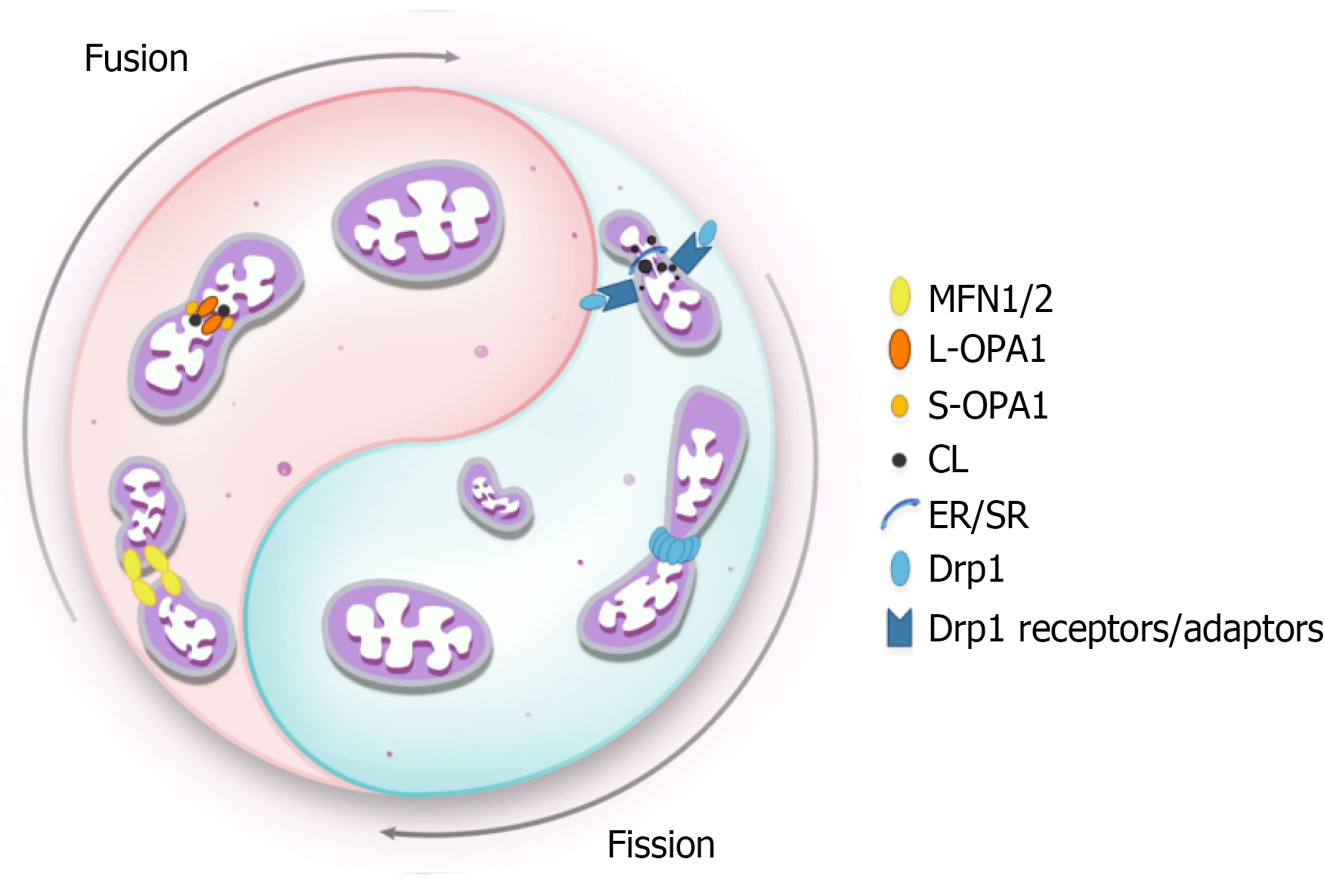
Figure 1 Molecular machinery of mitochondrial fusion and fission.
Mitochondrial fusion involves mitofusin 1 (MFN1) and MFN2, the long forms of optic atrophy 1 (L-OPA1) and short forms of optic atrophy 1 (S-OPA1), and cardiolipin (CL). MFN1 and MFN2 mediate outer mitochondrial membrane (OMM) tethering and fusion through trans interactions, oligomeric rearrangement, and guanosine triphosphate hydrolysis. At the inner mitochondrial membrane, membrane-anchored L-OPA1 interacts with CL on the opposing membrane to promote membrane tethering and fusion. S-OPA1 can cooperate with L-OPA1 in OPA1-dependent membrane remodeling, although the precise functional division between the two forms remains incompletely defined. Mitochondrial fission involves the endoplasmic reticulum (ER) or sarcoplasmic reticulum (SR), dynamin-related protein 1 (Drp1), and OMM-associated receptor or adaptor proteins, including mitochondrial fission factor, mitochondrial fission 1 protein, and mitochondrial dynamics proteins of 49 kDa and mitochondrial dynamics proteins of 51 kDa (MiD49 and MiD51). ER/SR-mitochondria contact sites mark and partially constrict prospective division sites. Drp1 is subsequently recruited from the cytosol to the OMM, where it assembles into oligomeric rings or helices. Guanosine triphosphate hydrolysis drives conformational changes in the Drp1 oligomer, promoting further membrane constriction and mitochondrial scission. MFN1/2: Mitofusin 1/2; L-OPA1: Long forms of optic atrophy 1; S-OPA1: Short forms of optic atrophy 1; CL: Cardiolipin; ER: Endoplasmic reticulum; SR: Sarcoplasmic reticulum; Drp1: Dynamin-related protein 1.
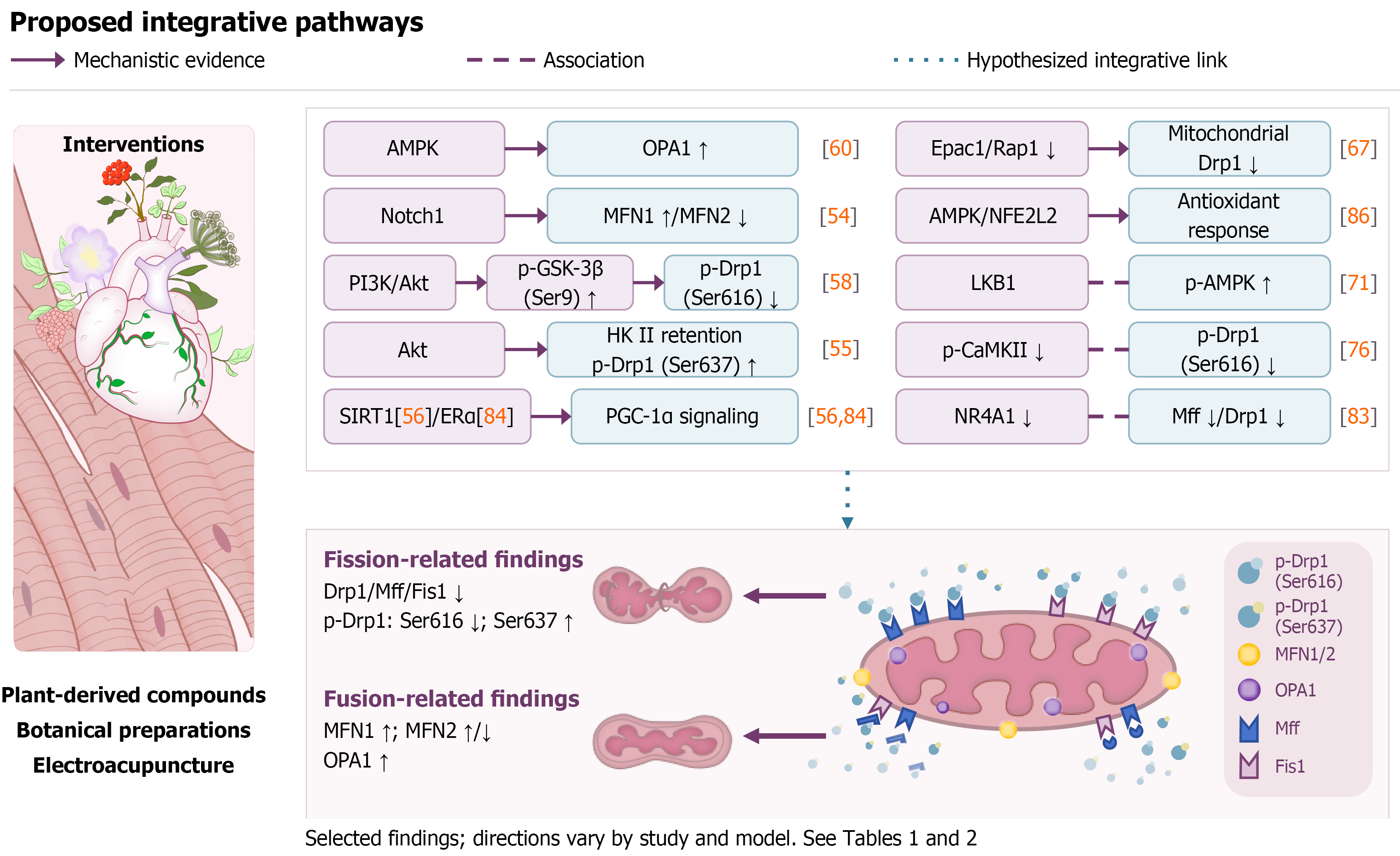
Figure 2 Proposed pathways through which plant-derived interventions and electroacupuncture may influence fission-dominant mitochondrial disruption in myocardial ischemia/reperfusion injury and related experimental models.
This integrative schematic summarizes reported pathways and molecular findings for chemically defined plant-derived compounds, multi-component botanical preparations and electroacupuncture in myocardial ischemia/reperfusion injury and related models. Reported upstream or associated routes include phosphoinositide 3-kinase/protein kinase B/glycogen synthase kinase 3β signaling and mitochondrial hexokinase II retention; liver kinase B1/AMP-activated protein kinase; sirtuin 1/peroxisome proliferator-activated receptor-γ coactivator 1α (PGC-1α) signaling associated with nuclear respiratory factors 1 and 2 and mitochondrial transcription factor A; estrogen receptor α/PGC-1α; AMPK-nuclear factor erythroid 2-related factor 2-associated antioxidant signaling; Notch1; exchange protein directly activated by cyclic adenosine monophosphate 1/Ras-related protein 1; nuclear receptor subfamily 4 group A member 1/mitochondrial fission factor (Mff); and Ca2+/calmodulin-dependent protein kinase II. Fusion-related findings include increased mitofusin 1 (MFN1) or optic atrophy 1 and context-dependent changes in MFN2. Fission-related findings include reduced Mff, mitochondrial fission 1 protein or dynamin-related protein 1 (Drp1), reduced Drp1 Ser616 phosphorylation and increased Drp1 Ser637 phosphorylation. Solid lines indicate within-study mechanistic support, dashed lines indicate associative relationships, and dotted blue lines indicate cross-study integrative or hypothesized links. This schematic does not represent a single experimentally validated causal network. Connections to grouped findings indicate pathway-level convergence rather than regulation of every marker; study-specific molecular associations, model directness, mechanistic causality and intervention timing are detailed in Tables 1 and 2. AMPK: AMP-activated protein kinase; OPA1: Optic atrophy 1; Epac1: Exchange protein directly activated by cyclic adenosine monophosphate 1; Rap1: Ras-related protein 1; Drp1: Dynamin-related protein 1; MFN1: Mitofusin 1; NFE2L2: Nuclear factor erythroid 2-related factor 2; PI3K: Phosphoinositide 3-kinase; Akt: Protein kinase B; GSK-3β: Glycogen synthase kinase 3β; LKB1: Liver kinase B1; HK II: Hexokinase II; CaMKII: Calmodulin-dependent protein kinase II; SIRT1: Sirtuin 1; PGC-1α: Peroxisome proliferator-activated receptor-γ coactivator 1α; NR4A1: Nuclear receptor subfamily 4 group A member 1; Mff: Mitochondrial fission factor; Fis1: Fission 1 protein.
- Citation: Sun L, Sun XY, Na ZH, Liu YJ, Li L, Cao TY, Li XR, Fan YD, Hu GP, Wang S. Excessive mitochondrial fission in myocardial ischemia/reperfusion injury: Pathophysiological relevance and potential cardioprotective modulation by plant-derived interventions and electroacupuncture. World J Cardiol 2026; 18(10): 125900
- URL: https://www.wjgnet.com/1949-8462/full/v18/i10/125900.htm
- DOI: https://dx.doi.org/10.4330/wjc.125900