
















Copyright: ©Author(s) 2026.
World J Gastrointest Surg. Sep 27, 2026; 18(9): 121591
Published online Sep 27, 2026. doi: 10.4240/wjgs.121591
Published online Sep 27, 2026. doi: 10.4240/wjgs.121591
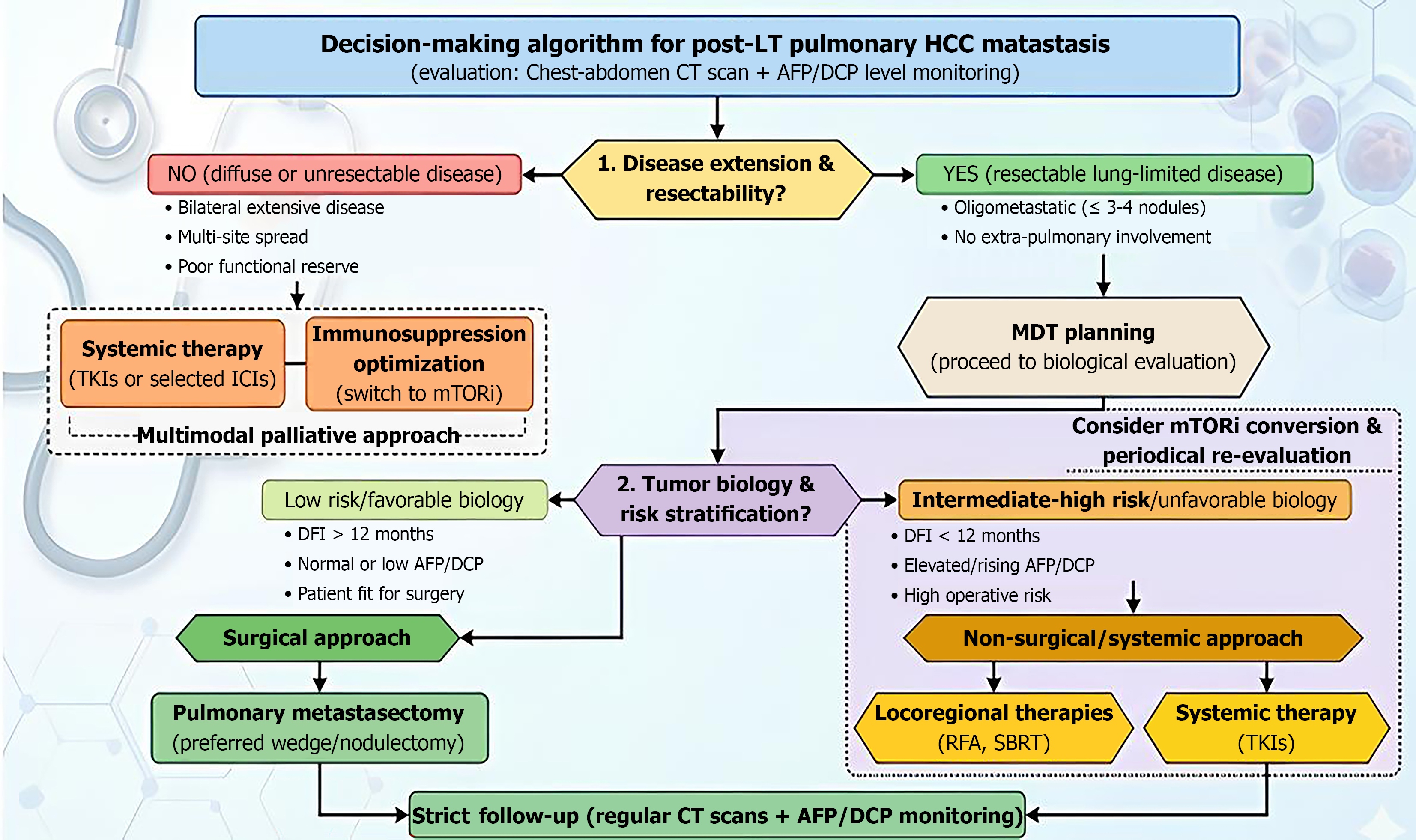
Figure 1 Clinical decision-making algorithm for the management of pulmonary metastases from hepatocellular carcinoma after liver transplantation.
The flowchart illustrates the diagnostic and therapeutic pathway based on disease extension, resectability, and tumor biology. High-risk patients or those with unfavorable biology are directed toward systemic or locoregional therapies, while those with favorable biological features (e.g., disease-free interval > 12 months, low alpha-fetoprotein) are candidates for surgical resection. Conversion to mammalian target of rapamycin inhibitors and multidisciplinary team involvement are highlighted as core components of the multimodal approach. LT: Liver transplantation; HCC: Hepatocellular carcinoma; CT: Computed tomography; AFP: Alpha-fetoprotein; DCP: Des-gamma-carboxy prothrombin; ICIs: Immune checkpoint inhibitors; mTORi: Mammalian target of rapamycin inhibitors; MDT: Multidisciplinary team; DFI: Disease-free interval; RFA: Radiofrequency ablation; SBRT: Stereotactic body radiation therapy; TKIs: Tyrosine kinase inhibitors.
- Citation: Pardolesi A, Ferrari M, Leuzzi G, Ceruti E, Cioffi U, De Simone M, Cioffi G, Solli P. Pulmonary metastasectomy for recurrent hepatocellular carcinoma after liver transplantation: A therapeutic challenge. World J Gastrointest Surg 2026; 18(9): 121591
- URL: https://www.wjgnet.com/1948-9366/full/v18/i9/121591.htm
- DOI: https://dx.doi.org/10.4240/wjgs.121591