
















Copyright: ©Author(s) 2026.
World J Gastrointest Surg. Sep 27, 2026; 18(9): 117029
Published online Sep 27, 2026. doi: 10.4240/wjgs.117029
Published online Sep 27, 2026. doi: 10.4240/wjgs.117029
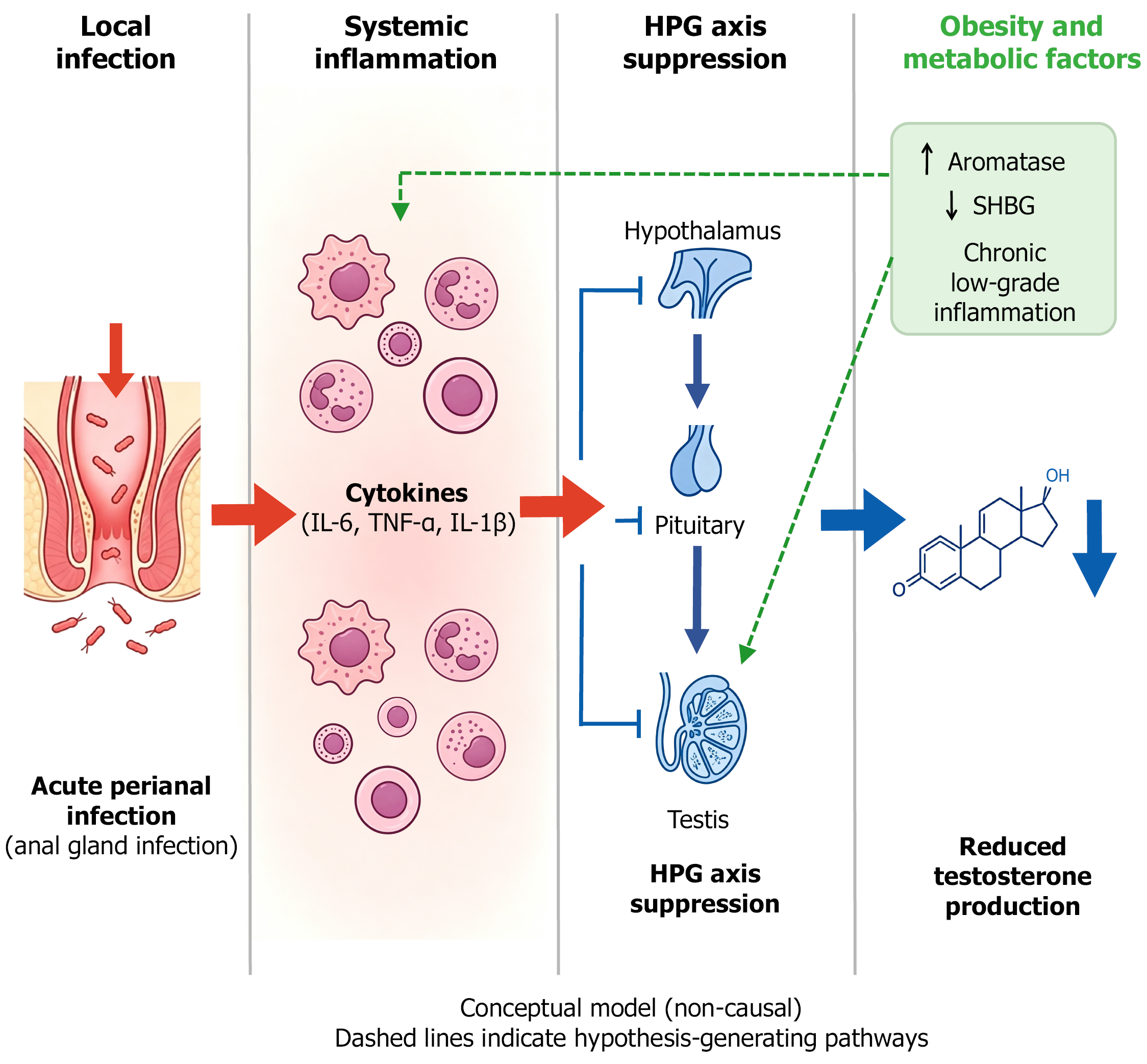
Figure 1 Proposed conceptual model linking acute perianal infection, systemic inflammation, and transient testosterone suppression.
Acute perianal infection may trigger a systemic inflammatory response, leading to increased circulating cytokines, including interleukin-6 and tumor necrosis factor-α. Elevated cytokines may suppress the hypothalamic-pituitary-gonadal axis. This suppression may reduce testosterone production. Obesity and metabolic factors may further modify this process by promoting chronic inflammation, reducing sex hormone-binding globulin levels, and increasing aromatase activity, thereby amplifying testosterone suppression. All pathways shown are conceptual and hypothesis-generating and should not be interpreted as established causal relationships. IL: Interleukin; TNF-α: Tumor necrosis factor-α; HPG: Hypothalamic-pituitary-gonadal; SHBG: Sex hormone-binding globulin.
- Citation: Zhang ZJ, Wang JX, Wang CX, He L. Deconstructing the androgen function in active perianal infection: Investigating inflammation-driven hypogonadal state. World J Gastrointest Surg 2026; 18(9): 117029
- URL: https://www.wjgnet.com/1948-9366/full/v18/i9/117029.htm
- DOI: https://dx.doi.org/10.4240/wjgs.117029