
















Copyright: ©Author(s) 2026.
World J Gastrointest Surg. Aug 27, 2026; 18(8): 115464
Published online Aug 27, 2026. doi: 10.4240/wjgs.115464
Published online Aug 27, 2026. doi: 10.4240/wjgs.115464
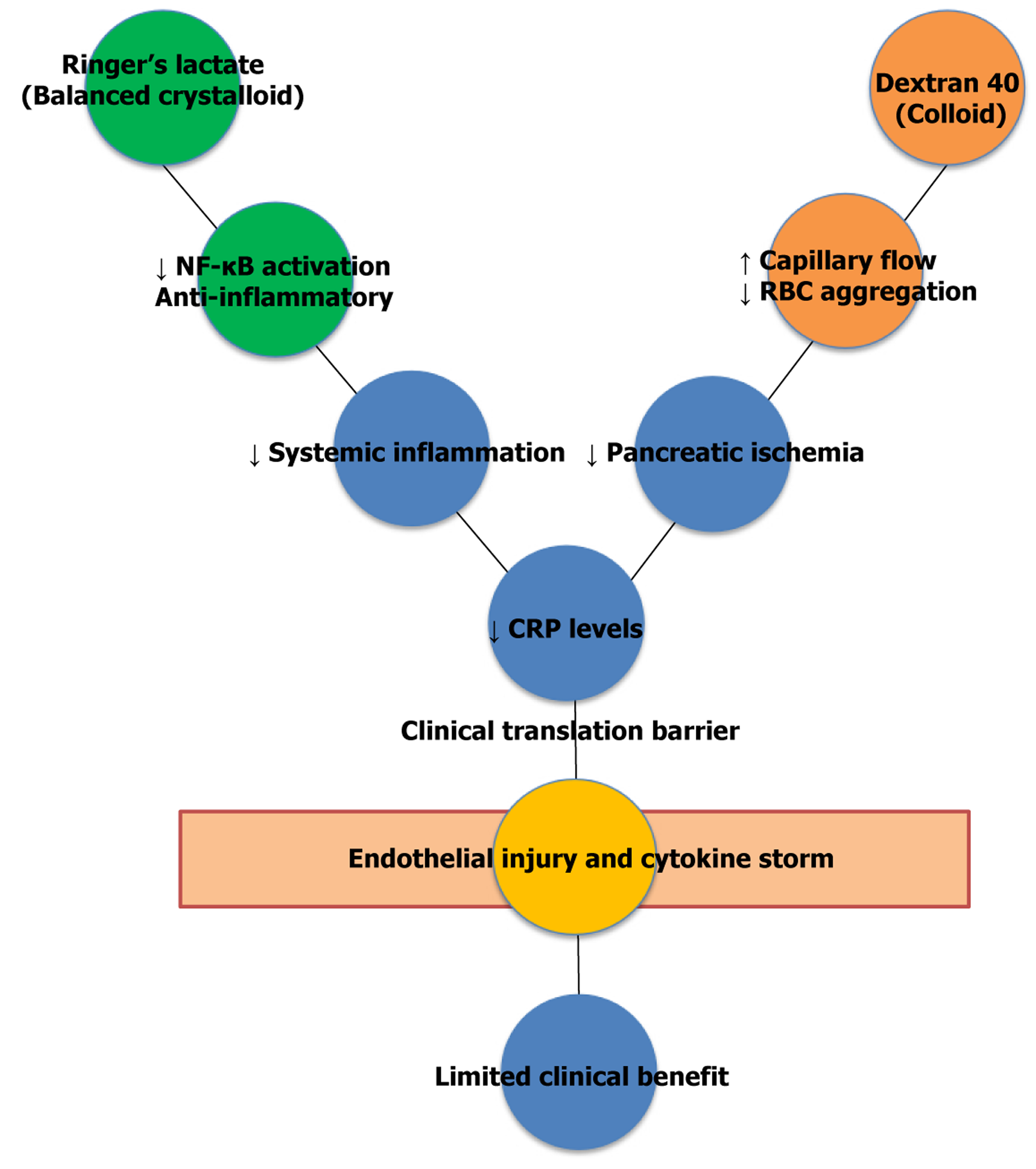
Figure 1 Proposed mechanisms linking fluid composition to microcirculatory and inflammatory outcomes in acute pancreatitis.
Balanced crystalloids Ringer’s lactate solution improves macrocirculatory stability, mitigates acidosis, and exerts anti-inflammatory effects through lactate-mediated suppression of neutrophil activation. Colloid solutions such as dextran 40 enhance microvascular shear, reduce erythrocyte aggregation, and may transiently preserve endothelial glycocalyx integrity, supporting capillary perfusion. Both pathways converge on reducing inflammatory biomarkers (e.g., C-reactive protein), yet a persistent barrier - represented by sustained endothelial injury, cytokine amplification, and capillary leak - limits translation of biochemical improvement into clinical endpoints. This framework illustrates why early biochemical responses may not correspond to meaningful reductions in organ failure or systemic inflammatory response syndrome. CRP: C-reactive protein; NF-κB: Nuclear factor kappa B; RBC: Red blood cell.
- Citation: Othman AAA. Colloids in acute pancreatitis: Microcirculatory advantage or inflammatory mirage. World J Gastrointest Surg 2026; 18(8): 115464
- URL: https://www.wjgnet.com/1948-9366/full/v18/i8/115464.htm
- DOI: https://dx.doi.org/10.4240/wjgs.115464