
















Copyright: ©Author(s) 2026.
World J Gastrointest Surg. Jul 27, 2026; 18(7): 121387
Published online Jul 27, 2026. doi: 10.4240/wjgs.v18.i7.121387
Published online Jul 27, 2026. doi: 10.4240/wjgs.v18.i7.121387
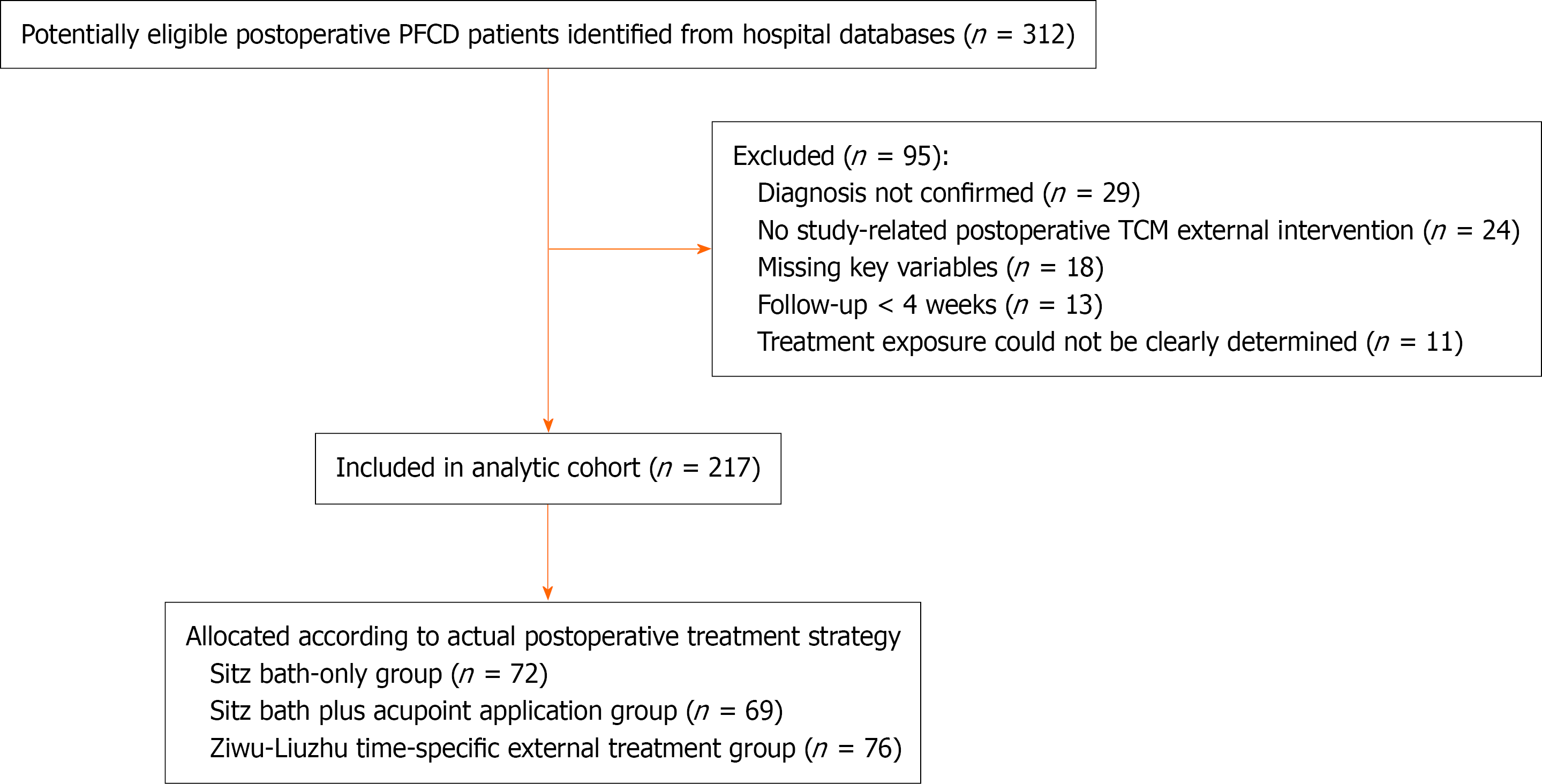
Figure 1 Flowchart of patient screening, eligibility assessment, exclusion, and final group allocation.
PFCD: Perianal fistulizing Crohn’s disease; TCM: Traditional Chinese medicine.
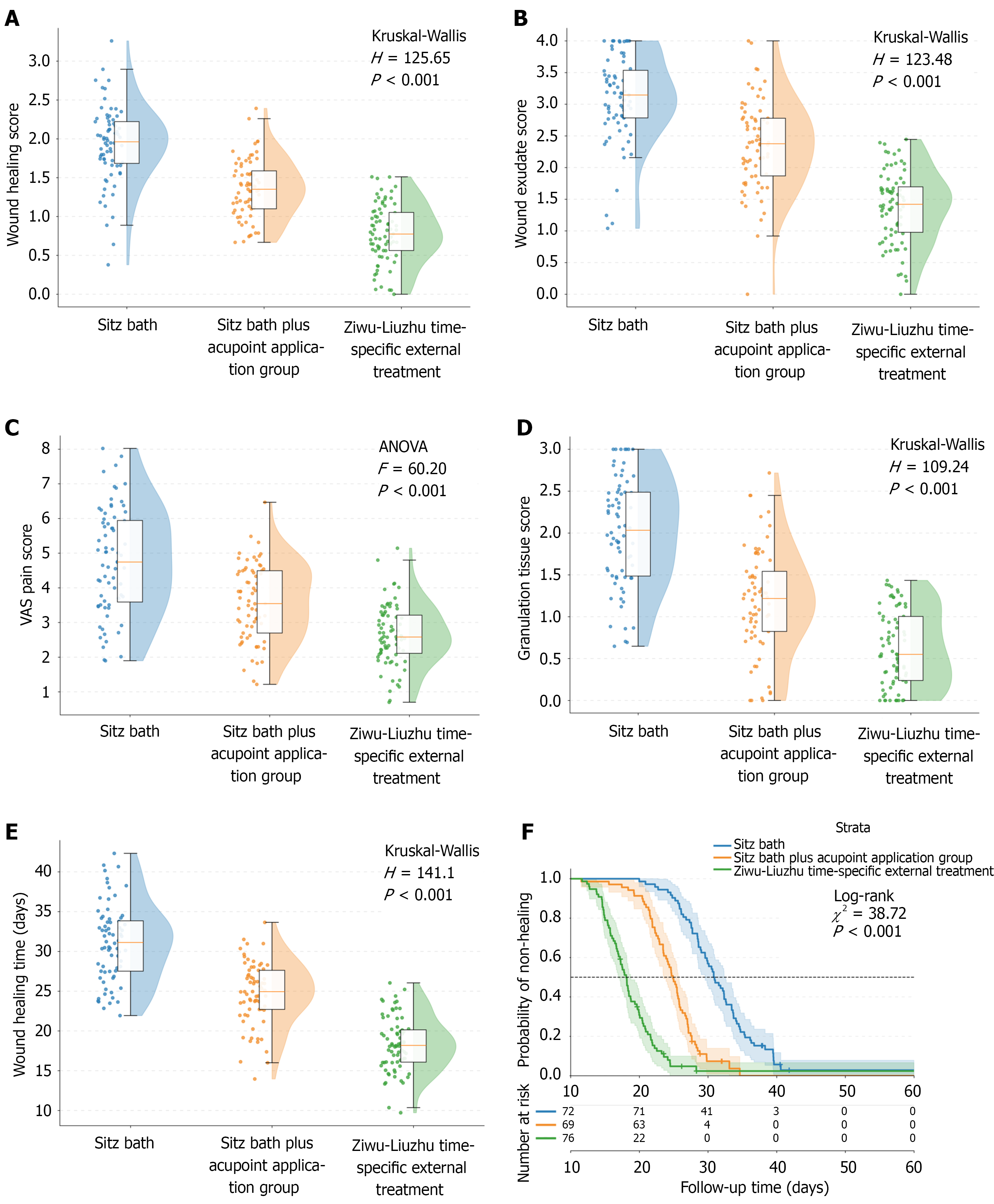
Figure 2 Comparison of postoperative wound healing-related outcomes at week 4 among perianal fistulizing Crohn’s disease patients in the three treatment groups.
A: Distribution of wound healing scores, the Ziwu-Liuzhu time-specific external treatment group had the lowest scores, indicating the most favorable wound recovery; B: Distribution of wound exudate scores; The Ziwu-Liuzhu time-specific external treatment group showed markedly less wound exudation than the other two groups; C: Comparison of pain intensity assessed by the Visual Analogue Scale (VAS); The Ziwu-Liuzhu time-specific external treatment group had significantly lower VAS scores than both the sitz bath plus acupoint application group and the sitz bath-only group; D: Distribution of granulation tissue growth scores; The Ziwu-Liuzhu time-specific external treatment group had substantially lower granulation tissue growth scores than the other two groups; E: Comparison of wound healing time; The Ziwu-Liuzhu time-specific external treatment group had the shortest wound healing time; F: Kaplan-Meier analysis of wound healing time across the three treatment groups. The log-rank test showed a statistically significant difference among the wound healing curves, with the Ziwu-Liuzhu time-specific external treatment group demonstrating the highest probability of wound healing. ANOVA: Analysis of variance; VAS: Visual Analogue Scale.
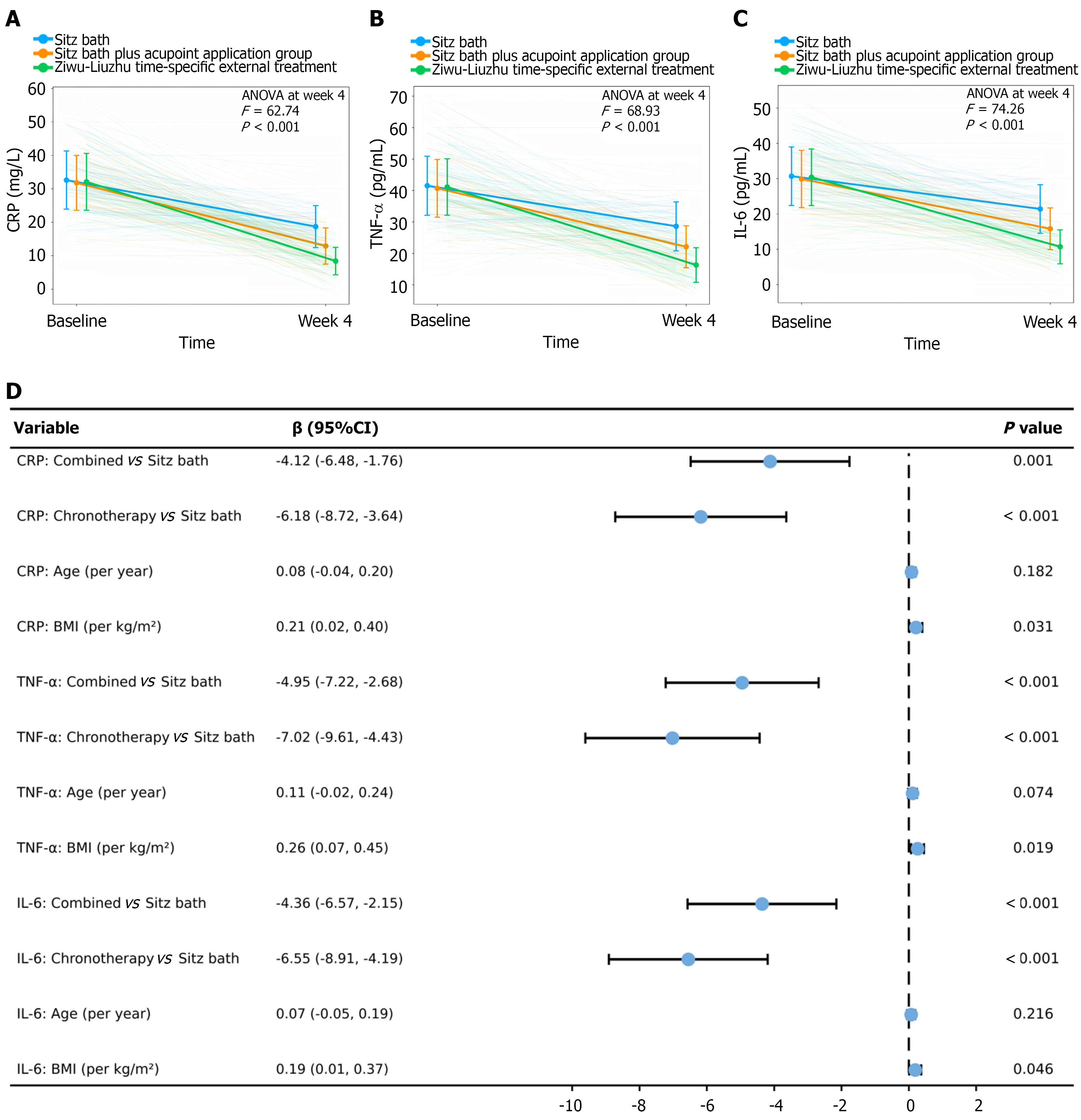
Figure 3 Changes in inflammatory markers and multivariable regression results among the three treatment groups.
A: Trends in C-reactive protein (CRP) levels before and after treatment. CRP levels decreased significantly after treatment in all three groups, with the greatest reduction observed in the Ziwu-Liuzhu group; B: Trends in tumor necrosis factor-α (TNF-α) levels. The Ziwu-Liuzhu time-specific external treatment group had the lowest post-treatment TNF-α level; C: Trends in interleukin-6 (IL-6) levels. The Ziwu-Liuzhu time-specific external treatment group showed the most pronounced decline in IL-6; D: Forest plot of multivariable linear regression analysis showing the associations of treatment strategy and related variables with changes in inflammatory markers. After adjustment for potential confounders, including age, sex, body mass index, and disease severity, the Ziwu-Liuzhu time-specific external treatment group strategy remained significantly associated with lower inflammatory levels. ANOVA: Analysis of variance; CRP: C-reactive protein; TNF: Tumor necrosis factor; IL: Interleukin; CI: Confidence interval; BMI: Body mass index.
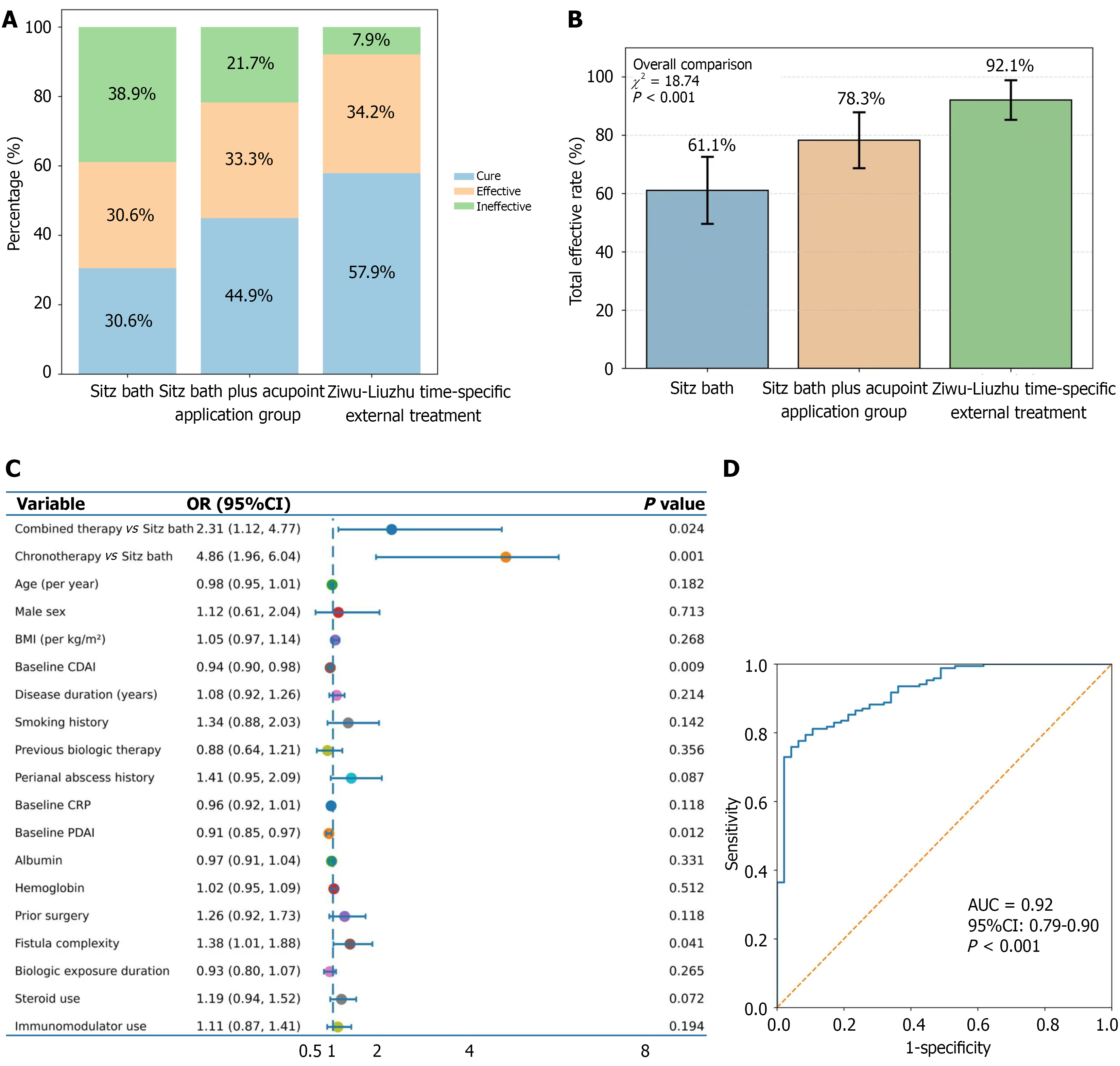
Figure 4 Effects of different treatment strategies on overall postoperative efficacy in perianal fistulizing Crohn’s disease patients and evaluation of the efficacy prediction model.
A: Composition of clinical efficacy outcomes across the three groups, including clinical cure, effective response, and ineffective response. The Ziwu-Liuzhu time-specific external treatment group had the highest proportion of clinical cure; B: Comparison of overall response rates among the three groups; The Ziwu-Liuzhu time-specific external treatment group showed the highest overall response rate; C: Forest plot of multivariable logistic regression analysis showing that the Ziwu-Liuzhu treatment strategy was significantly associated with treatment response and served as an independent predictor of favorable efficacy; D: Receiver operating characteristic curve of the efficacy prediction model constructed from the multivariable analysis. The curve was clearly above the diagonal reference line, indicating good discriminative performance of the model. OR: Odds ratio; CI: Confidence interval; AUC: Area under the curve; CRP: C-reactive protein; CDAI: Crohn’s Disease Activity Index; PDAI: Perianal Disease Activity Index; BMI: Body mass index.
- Citation: Zhao SY, Ma SJ, Ouyang CX, Zhu SL, Xiao XB. Ziwu-Liuzhu-guided combined external therapy promotes wound healing in postoperative perianal fistulizing Crohn’s disease. World J Gastrointest Surg 2026; 18(7): 121387
- URL: https://www.wjgnet.com/1948-9366/full/v18/i7/121387.htm
- DOI: https://dx.doi.org/10.4240/wjgs.v18.i7.121387