
















Copyright: ©Author(s) 2026.
World J Gastrointest Surg. Jul 27, 2026; 18(7): 119305
Published online Jul 27, 2026. doi: 10.4240/wjgs.119305
Published online Jul 27, 2026. doi: 10.4240/wjgs.119305
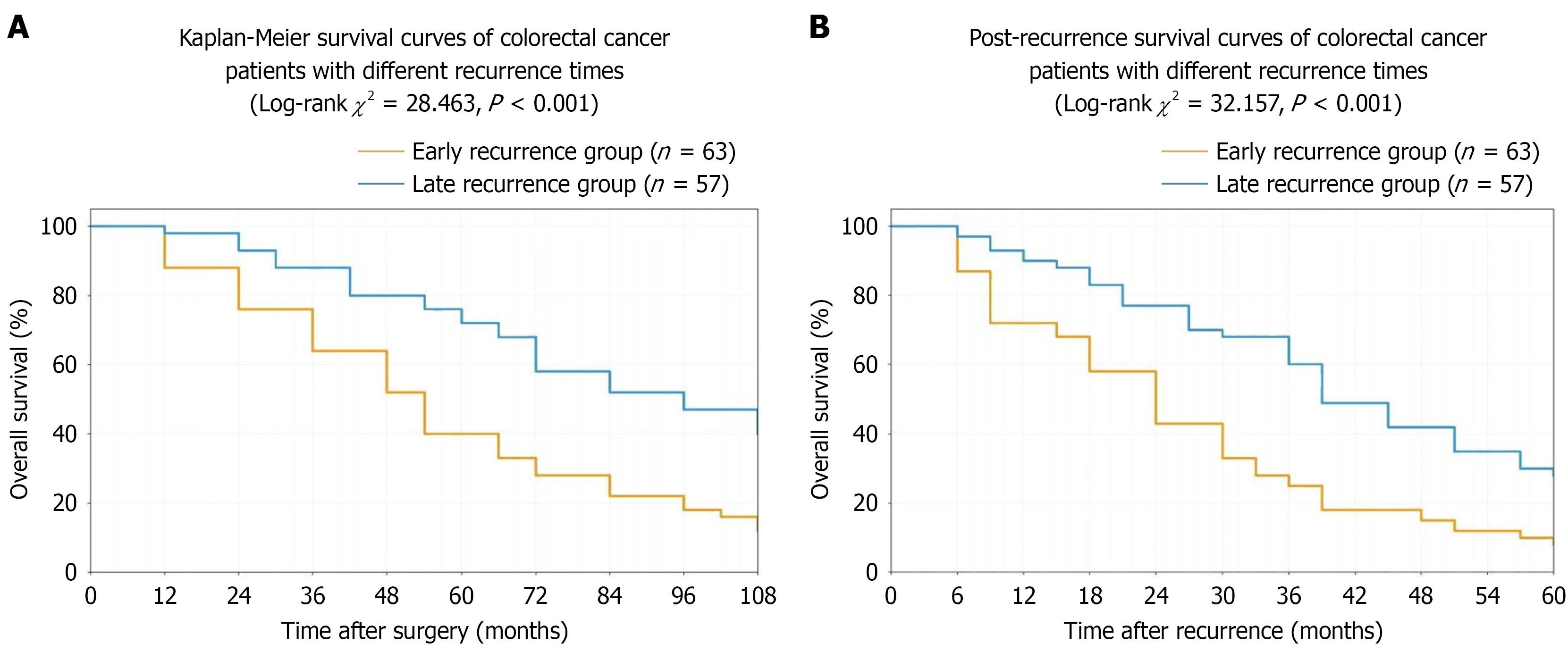
Figure 1 Kaplan-Meier survival curves comparing early and late recurrence groups in colorectal cancer patients.
A: Overall survival curves showing significantly worse prognosis in the early recurrence group (median 36.8 months) compared to the late recurrence group (median 68.5 months) (Log-rank P < 0.001); B: Post-recurrence survival curves demonstrating markedly shorter survival after recurrence in the early recurrence group (median 14.6 months) than in the late recurrence group (median 33.2 months) (Log-rank P < 0.001).
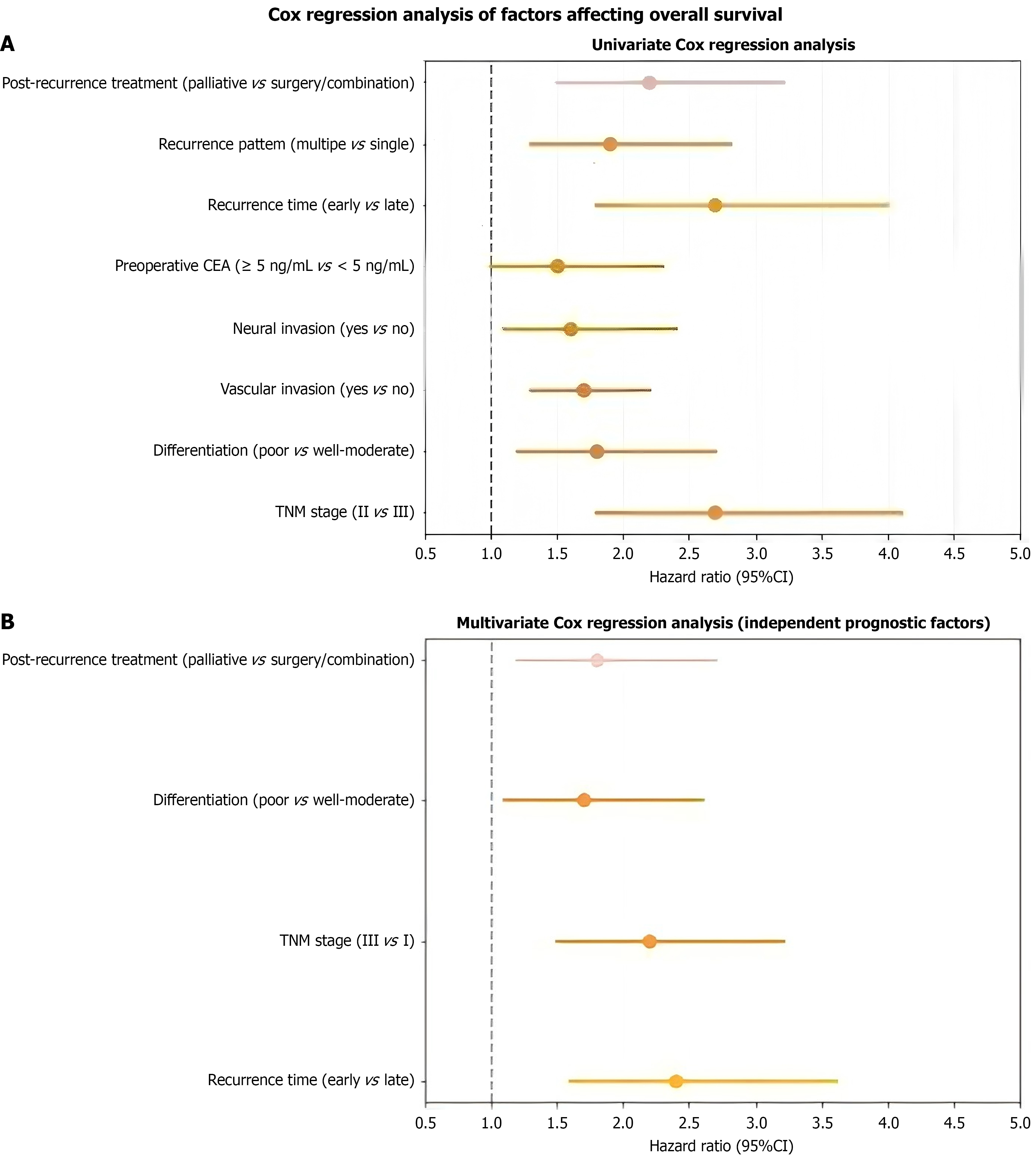
Figure 2 Cox regression analysis of factors affecting overall survival in colorectal cancer patients.
A: Forest plot illustrating univariable Cox regression analysis of prognostic factors for overall survival; B: Forest plot illustrating multivariable Cox regression analysis of prognostic factors for overall survival. Univariable analysis identified eight significant factors associated with survival, including TNM stage, differentiation, vascular and neural invasion, preoperative carcinoembryonic antigen, recurrence time, recurrence pattern, and post-recurrence treatment (all P < 0.05). After multivariable adjustment, three variables remained independent prognostic factors: TNM stage [hazard ratio (HR) = 2.08, P < 0.001], differentiation grade (HR = 1.38, P = 0.043), and recurrence time (HR = 2.94, P < 0.001). Recurrence time emerged as the strongest independent predictor of overall survival, emphasizing its critical role in prognostic stratification. CEA: Car
- Citation: Zhou XM, Zeng ZY, Liu BG, Yin NN, Qu HB. Relationship between postoperative tumor recurrence time and long-term survival in colorectal cancer patients. World J Gastrointest Surg 2026; 18(7): 119305
- URL: https://www.wjgnet.com/1948-9366/full/v18/i7/119305.htm
- DOI: https://dx.doi.org/10.4240/wjgs.119305