
















Copyright: ©Author(s) 2026.
World J Gastrointest Surg. Jun 27, 2026; 18(6): 119246
Published online Jun 27, 2026. doi: 10.4240/wjgs.119246
Published online Jun 27, 2026. doi: 10.4240/wjgs.119246
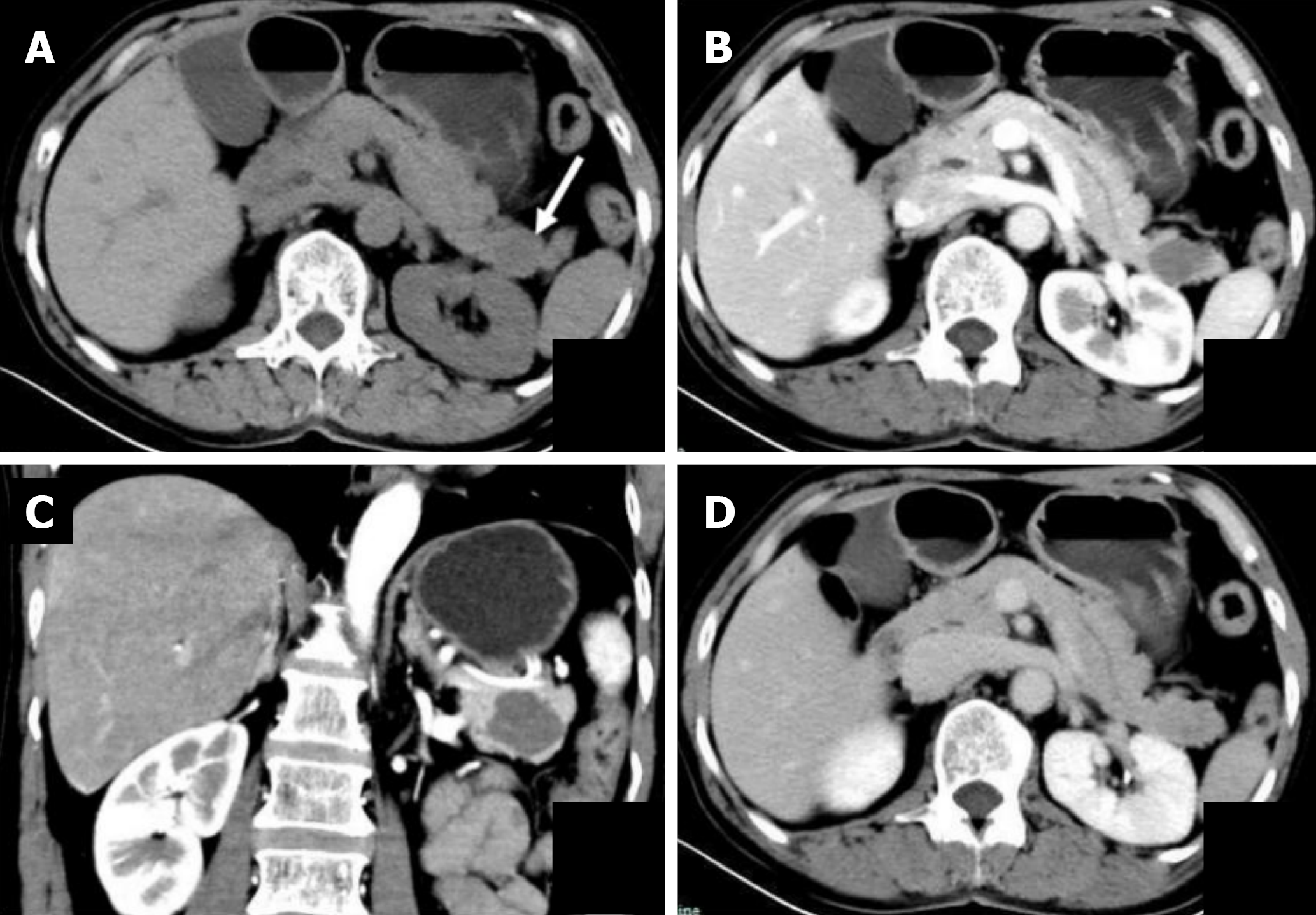
Figure 1 Preoperative computed tomography findings of the pancreatic schwannoma.
A: Plain computed tomography (CT) scan showing a well-marginated, slightly hypodense mass (arrow) in the pancreatic tail; B: Contrast-enhanced CT scans in the arterial phase demonstrating inhomogeneous mild enhancement of the lesion; C: Contrast-enhanced CT scans in the arterial phase demonstrating inhomogeneous mild enhancement of the lesion; D: Contrast-enhanced CT scan in the parenchymal phase showing progressive enhancement of the mass.
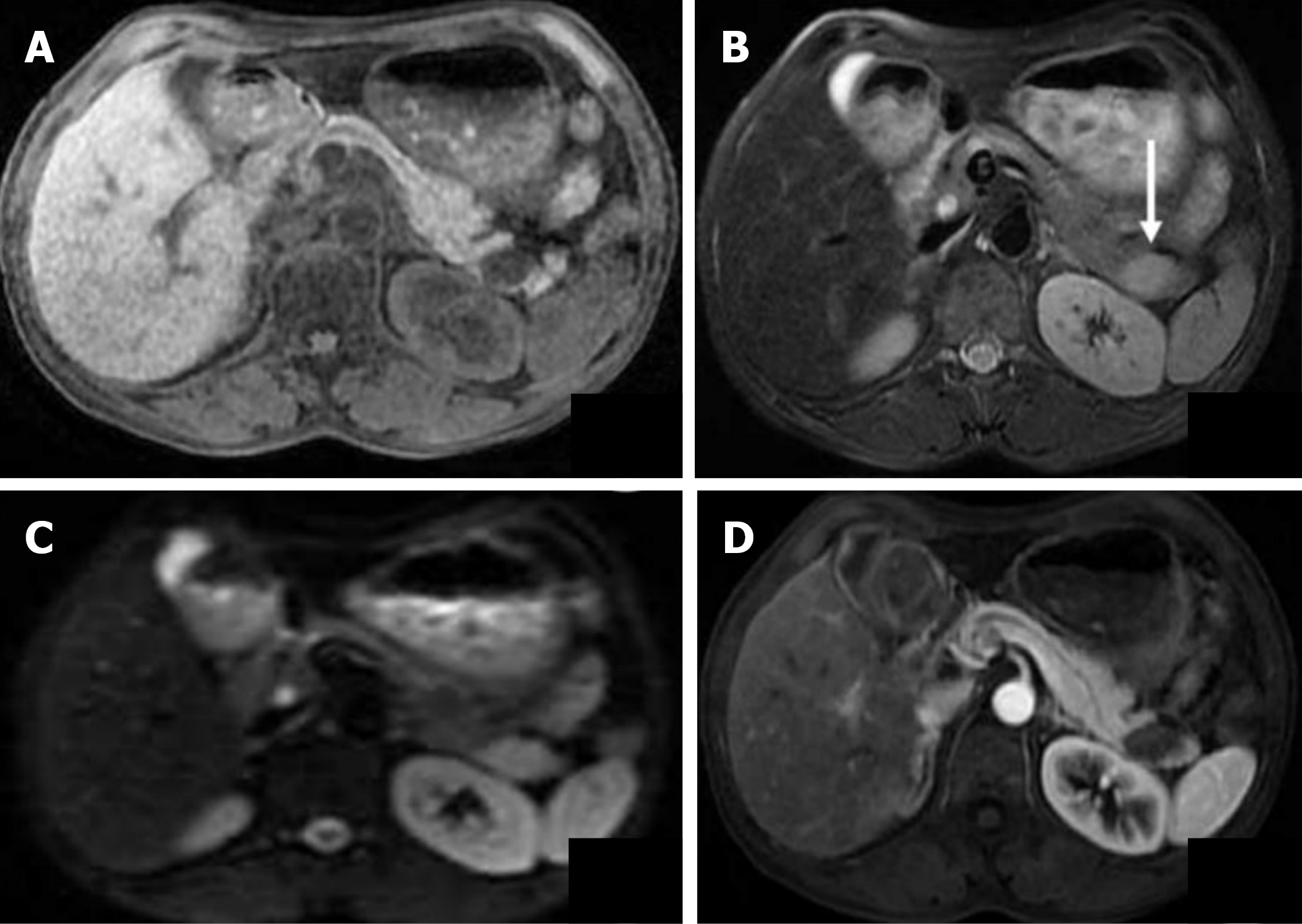
Figure 2 Preoperative magnetic resonance imaging findings of the pancreatic schwannoma.
A: T1-weighted image showing a hypointense mass (arrow) in the pancreatic tail; B: T2-weighted image showing a slightly hyperintense mass; C: Diffusion-weighted imaging showing increased signal intensity of the lesion; D: T1 fat saturation postcontrast image showing mild enhancement of the mass after gadolinium administration.

Figure 3 Histopathological and immunohistochemical features of the pancreatic schwannoma.
A: Hematoxylin and eosin staining (× 200) showing tumor cells arranged in palisades and whorls, with spindle-shaped nuclei, fine chromatin, and absence of mitosis; B: Immunohistochemical staining (× 100) showing negative expression of smooth muscle actin; C: Immunohistochemical staining (× 100) showing diffuse strong positivity for S-100 protein.
- Citation: Xu SM, Qiu LY. Incidental schwannoma of the pancreatic tail mimicking a solid pseudopapillary tumor: A case report. World J Gastrointest Surg 2026; 18(6): 119246
- URL: https://www.wjgnet.com/1948-9366/full/v18/i6/119246.htm
- DOI: https://dx.doi.org/10.4240/wjgs.119246