
















Copyright: ©Author(s) 2026.
World J Gastrointest Surg. Jun 27, 2026; 18(6): 117909
Published online Jun 27, 2026. doi: 10.4240/wjgs.117909
Published online Jun 27, 2026. doi: 10.4240/wjgs.117909
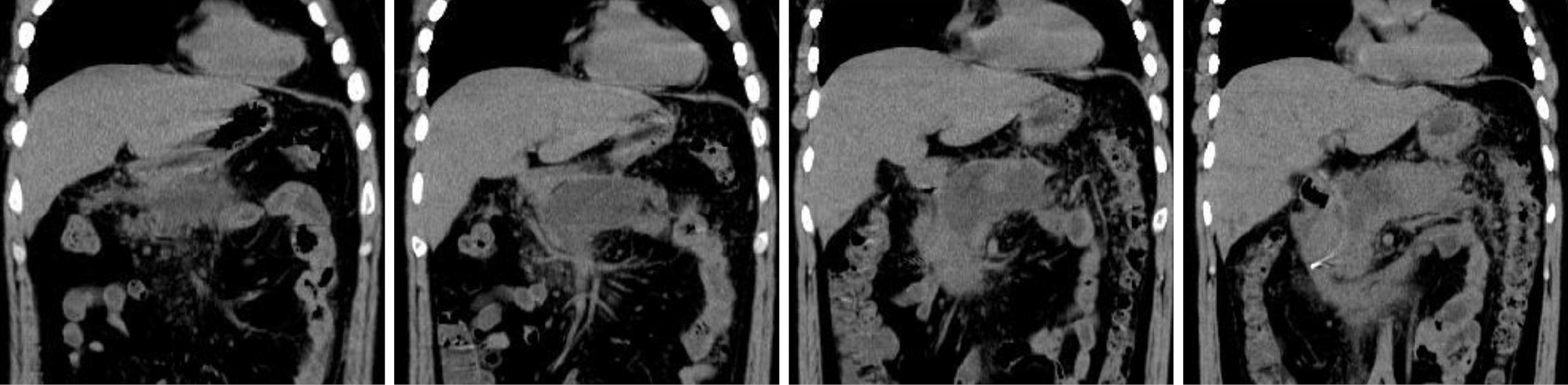
Figure 1
Abdominal computed tomography demonstrating the formation of peripancreatic walled-off necrosis in a 34-year-old man.
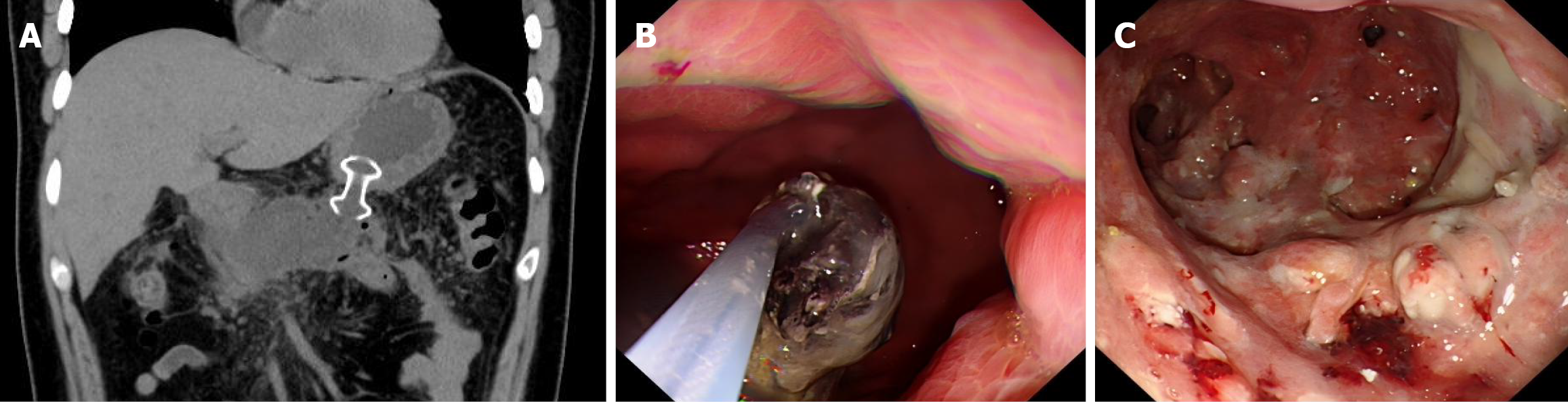
Figure 2 Endoscopic retrieval of necrotic debris via the lumen-apposing metal stents lumen.
A: Abdominal computed tomography showing the lumen-apposing metal stents in good position and fully expanded; B: Endoscopic view using a retrieval net to extract necrotic debris; C: Visualization of the entire cavity after debris removal.

Figure 3 Significant reduction of the peripancreatic collection post-debridement.
A-C: Abdominal computed tomography scans showing marked decrease in collection size; D: Endoscopic view confirming near-complete cavity closure.

Figure 4
Abdominal computed tomography revealing recurrent peripancreatic fluid collection.
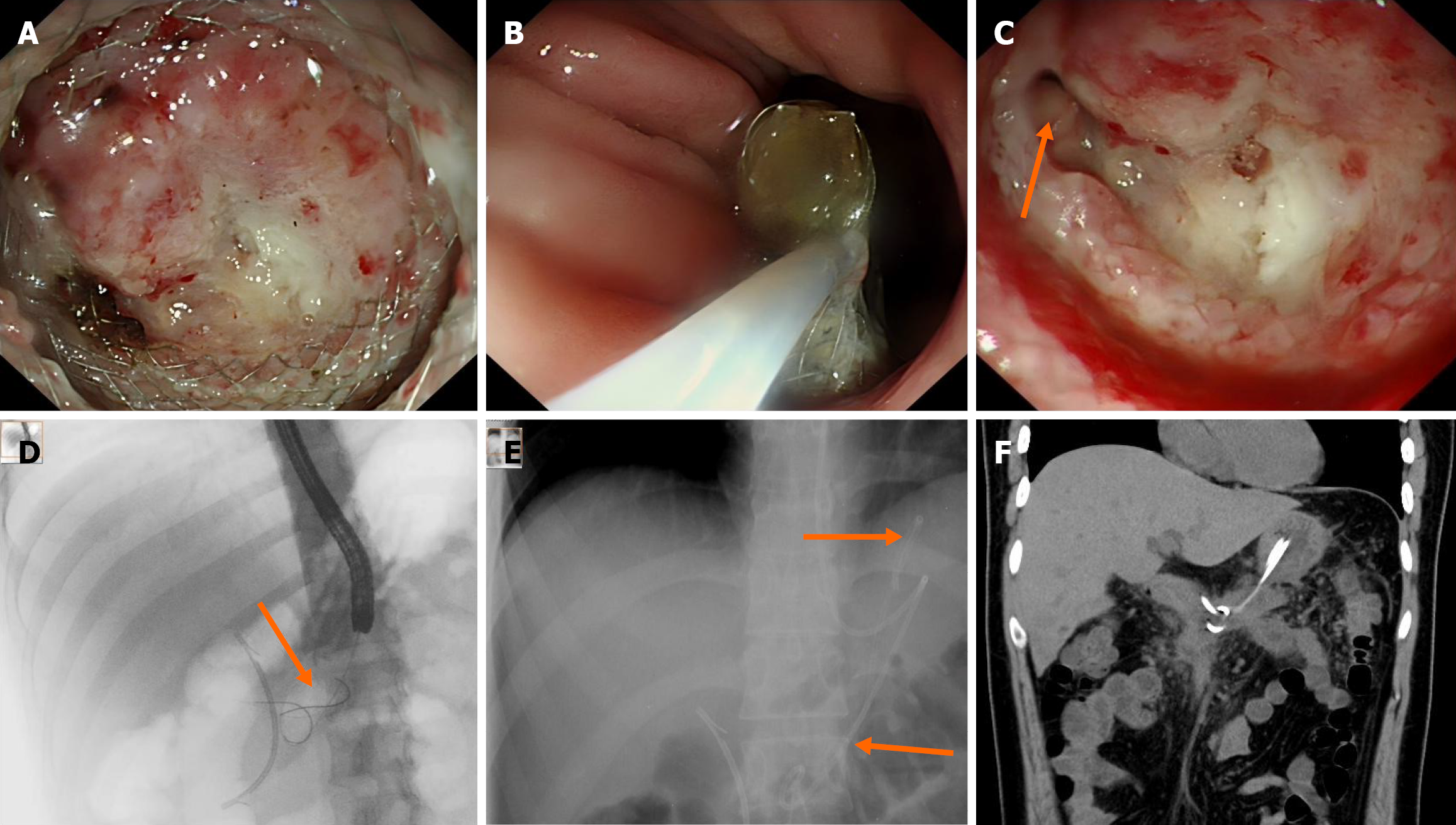
Figure 5 Management of branch cavity ostium occlusion by lumen-apposing metal stents edge with plastic stents placement.
A: Endoscopic view showing sealed lumen-apposing metal stents cavity-side opening; B: Lumen-apposing metal stents removal using a snare; C: Small fistula with purulent discharge at the 9 o’clock position of the cavity wall; D: Fluoroscopic confirmation of guidewires access into recurrent collection (arrow indicates guidewires); E: Fluoroscopic view showing nasobiliary drainage tube and double-pigtail stent placement (arrows indicate devices); F: Follow-up computed tomography demonstrating proper stents position and near-complete resolution of the collection.
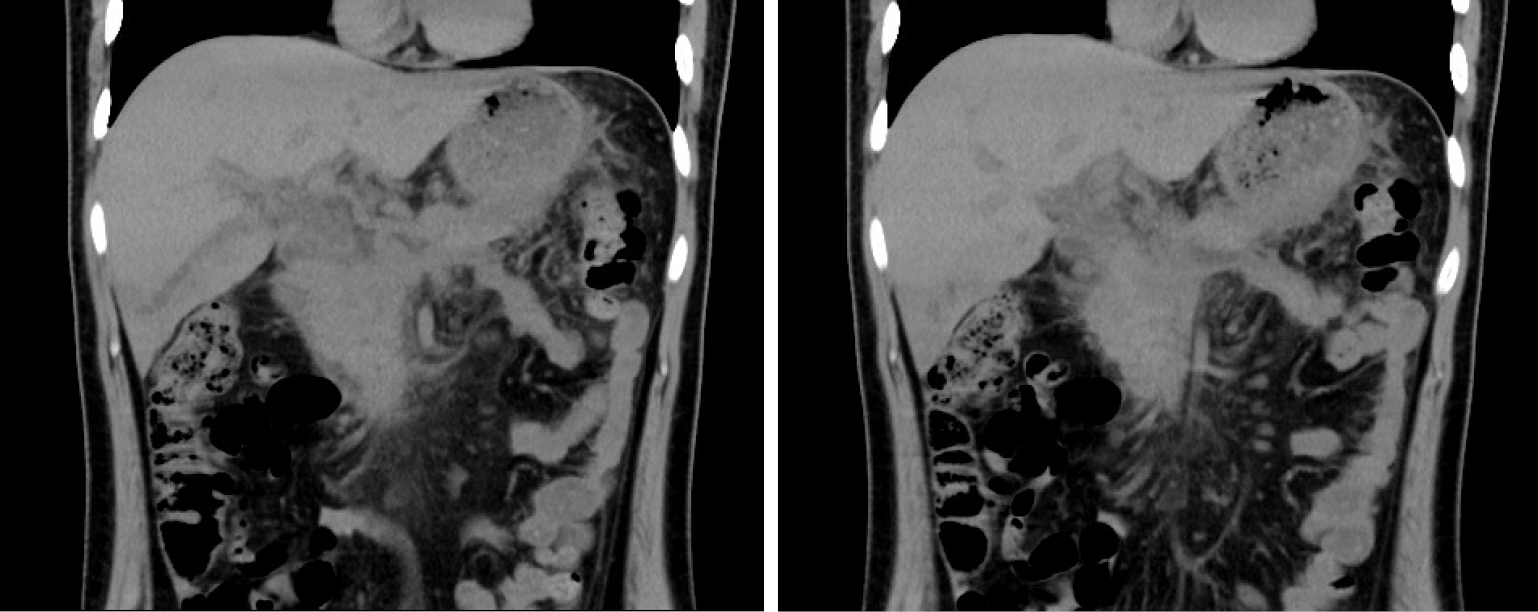
Figure 6 Follow-up abdominal computed tomography at three months.
Post-procedure showed slight pancreatic swelling with essentially normal morphology, and near-complete resolution of the cavity without recurrence.
- Citation: Liao DX, Yang L, Gou HX, Li X, Xie Q, Luo H, Wen Y. Successful redrainage after failure of lumen-apposing metal stents by addressing flange-induced ostial occlusion: A case report. World J Gastrointest Surg 2026; 18(6): 117909
- URL: https://www.wjgnet.com/1948-9366/full/v18/i6/117909.htm
- DOI: https://dx.doi.org/10.4240/wjgs.117909