
















Copyright: ©Author(s) 2026.
World J Gastrointest Surg. May 27, 2026; 18(5): 117395
Published online May 27, 2026. doi: 10.4240/wjgs.v18.i5.117395
Published online May 27, 2026. doi: 10.4240/wjgs.v18.i5.117395
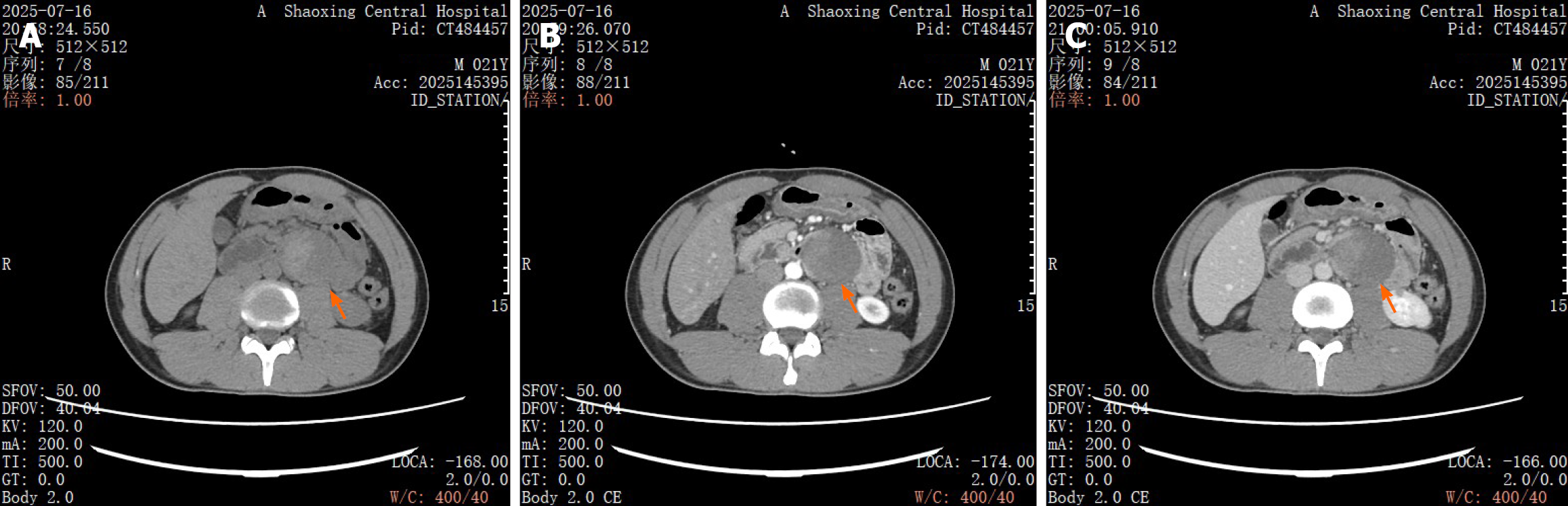
Figure 1 Contrast-enhanced computed tomography on admission.
A: Non-contrast phase: A round-like hypodense lesion with well-defined margins and heterogeneous internal density, showing areas of slightly higher attenuation; B: Arterial phase: Wall enhancement is observed, while the interior of the lesion shows no enhancement, with an indistinct boundary between the lesion and the duodenum; C: Venous phase: Findings similar to those in the arterial phase.
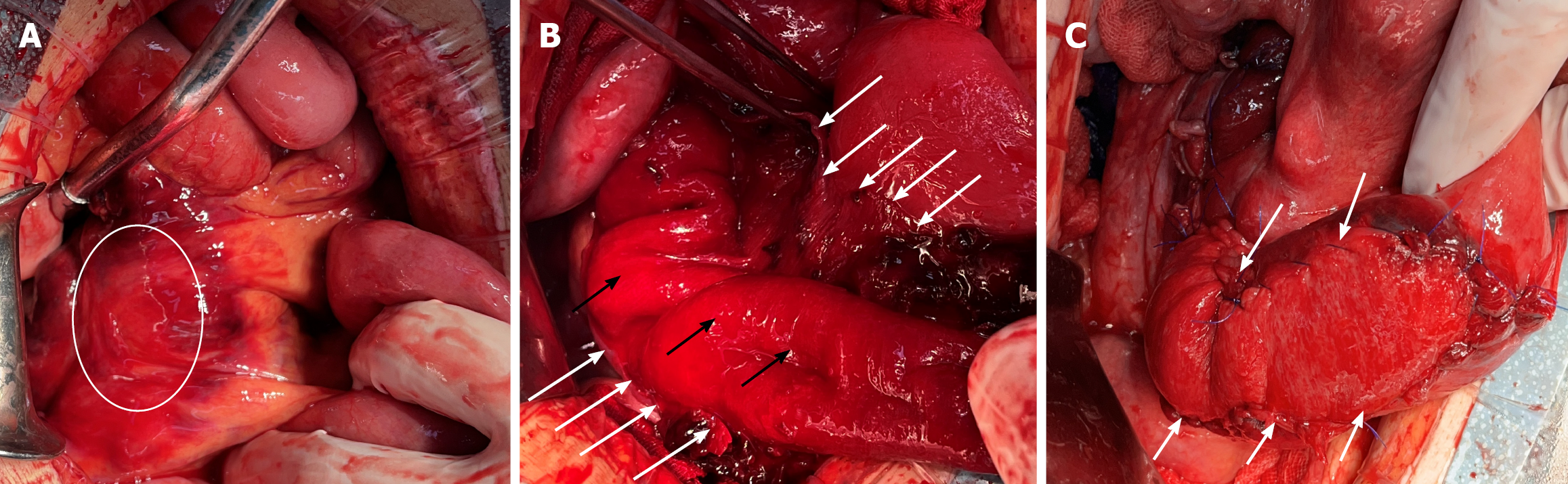
Figure 2 Intraoperative findings.
A: Large hematoma; B: Following evacuation of the hematoma, serosal rupture was observed; C: Serosal repair. White arrows indicate the serosal edge; black arrows indicate the jejunal muscular layer.
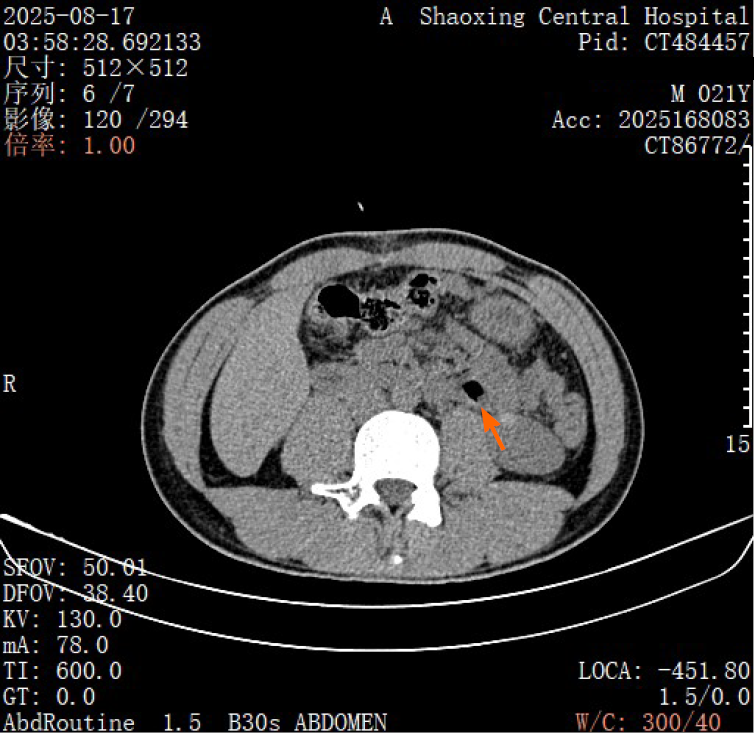
Figure 3
No intra-abdominal effusion or mass was found on computed tomography one month later.
- Citation: Huang HJ, Lin MJ, Li JT. Delayed rupture of a jejunal subserosa hematoma following blunt abdominal trauma: A case report and review of literature. World J Gastrointest Surg 2026; 18(5): 117395
- URL: https://www.wjgnet.com/1948-9366/full/v18/i5/117395.htm
- DOI: https://dx.doi.org/10.4240/wjgs.v18.i5.117395