
















Copyright: ©Author(s) 2026.
World J Gastrointest Surg. May 27, 2026; 18(5): 116488
Published online May 27, 2026. doi: 10.4240/wjgs.v18.i5.116488
Published online May 27, 2026. doi: 10.4240/wjgs.v18.i5.116488
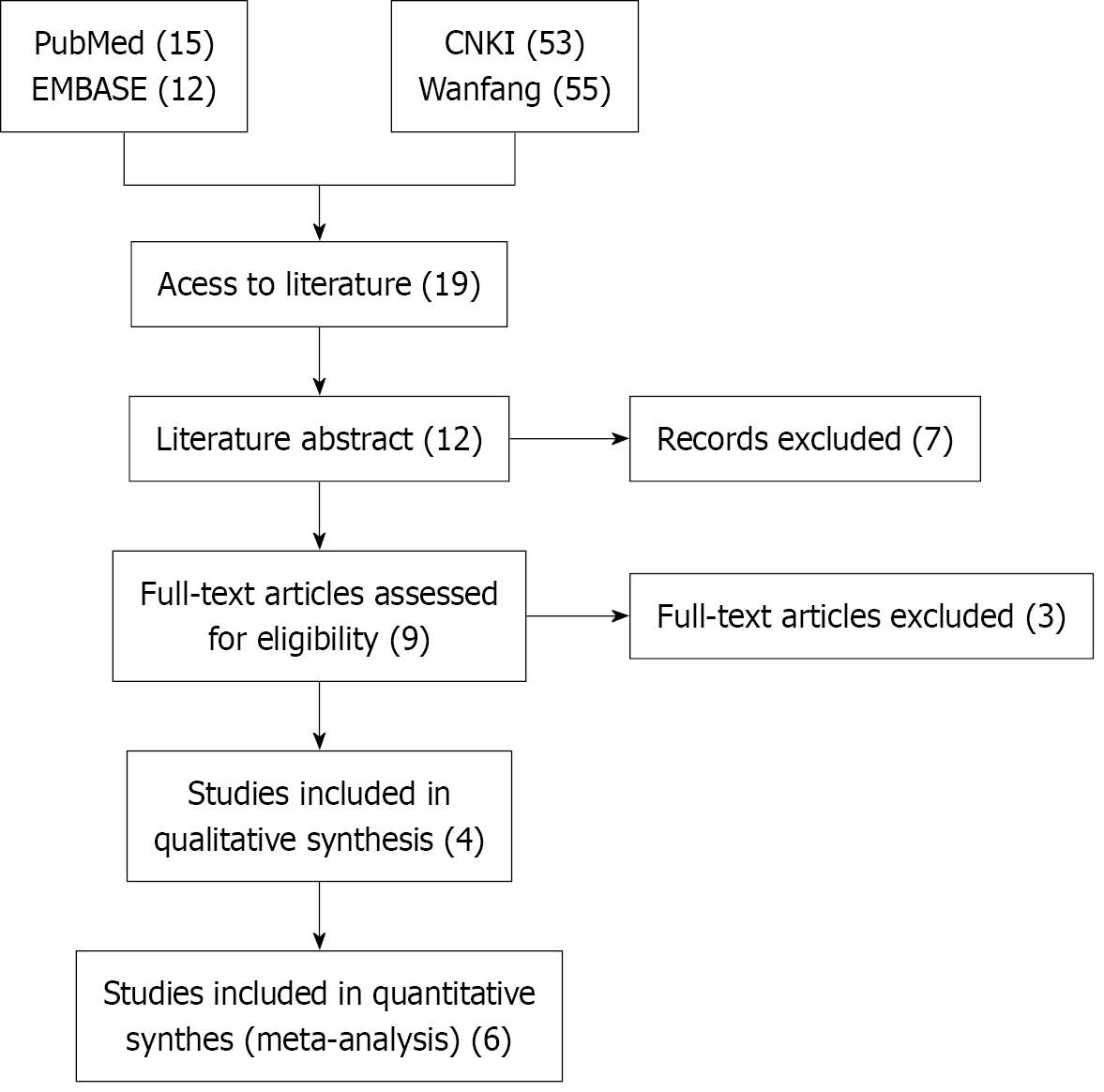
Figure 1 PRISMA flow diagram of literature screening process.
A total of 135 records were identified through database searches (PubMed: 15, EMBASE: 12, CNKI: 53, Wanfang: 55). After removing 22 duplicates, 113 records were screened by title and abstract. Following initial screening, 101 records were excluded, leaving 12 full-text articles for eligibility assessment. Of these, 6 were excluded (3 for non-randomized controlled trial design, 2 for intervention not matching inclusion criteria, 1 for incomplete data). Finally, 6 studies were included in qualitative synthesis and quantitative synthesis (meta-analysis).
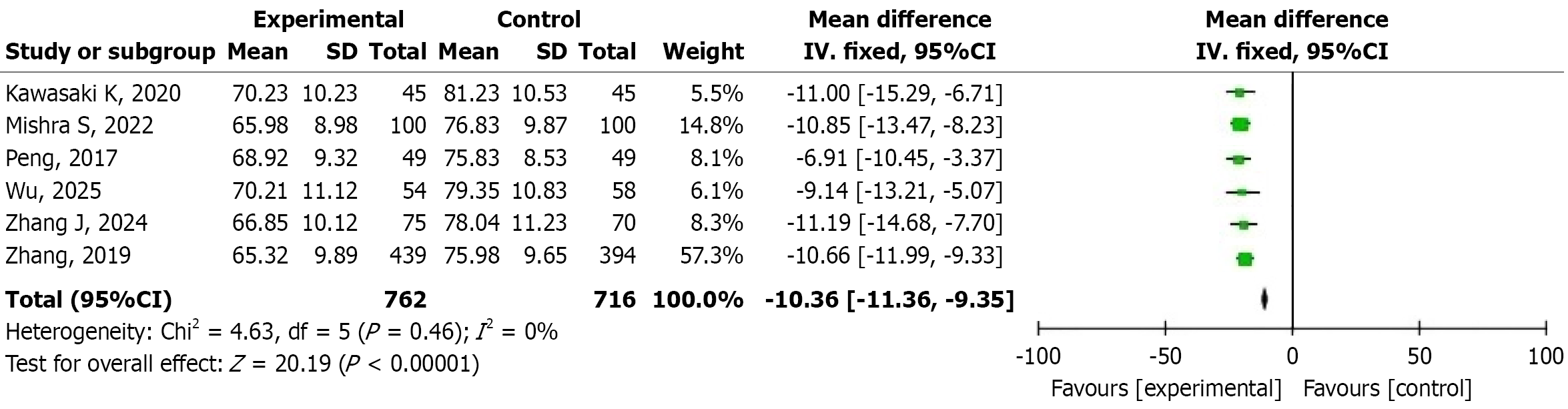
Figure 2 Meta-analysis of the effect of Chinese herbal enema on time to first flatus in postoperative gastric cancer patients.
This forest plot includes 6 randomized controlled trials, using a fixed-effects model to analyze the effect of Chinese herbal enema treatment on postoperative gastrointestinal function in gastric cancer patients. Results show: Pooled effect size mean difference = -10.36 (95% confidence interval: -11.36 to -9.35, Z = 20.19, P < 0.00001), suggesting that Chinese herbal enema can significantly improve postoperative gastrointestinal function. Heterogeneity test I2 = 0% (P = 0.46), indicating good homogeneity among studies. Squares represent effect sizes of individual studies, horizontal lines represent 95% confidence intervals, and the diamond represents the pooled effect size. CI: Confidence interval.
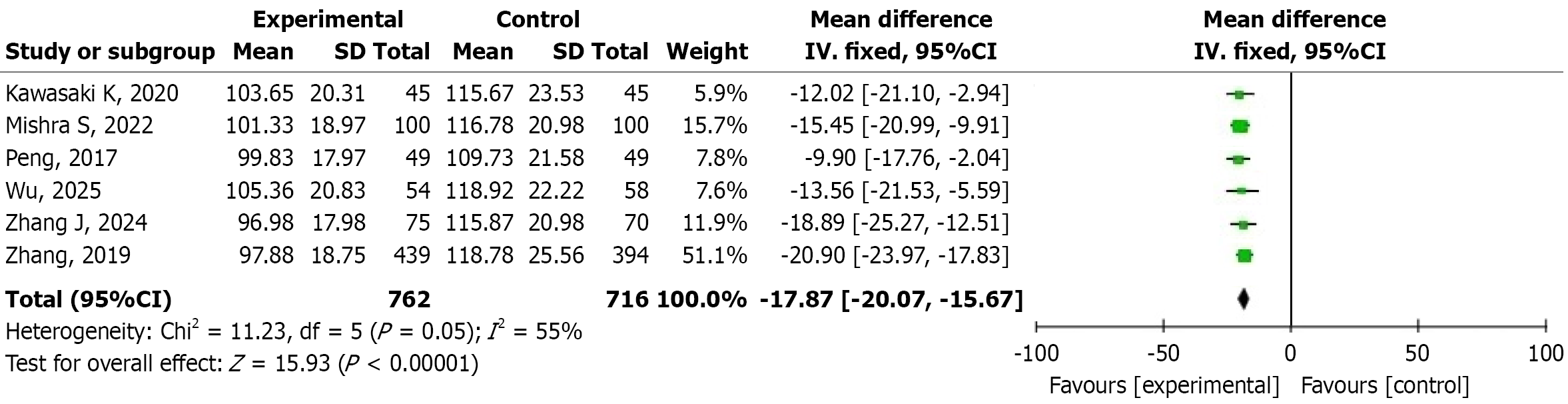
Figure 3 Meta-analysis of the effect of Chinese herbal enema on time to first defecation in postoperative gastric cancer patients.
Including 6 studies, analyzed using a random-effects model. Pooled effect size mean difference = -17.87 (95% confidence interval: -20.07 to -15.67, P < 0.00001), suggesting that Chinese herbal enema significantly improves postoperative gastrointestinal function. Heterogeneity test I2 = 55% (P = 0.05), with moderate heterogeneity present. Square sizes represent study weights, and the diamond represents the pooled effect size and its confidence interval. CI: Confidence interval.
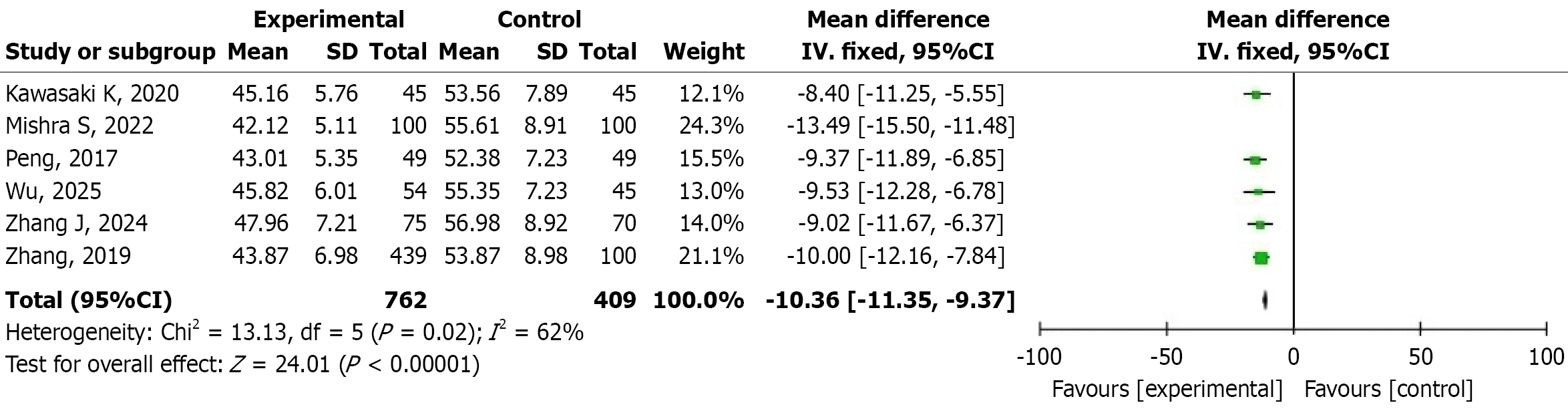
Figure 4 Meta-analysis of the effect of Chinese herbal enema on bowel sound recovery time in postoperative gastric cancer patients.
Including 6 studies, analyzed using a random-effects model. Pooled effect size mean difference = -10.36 (95% confidence interval: -11.35 to -9.37, P < 0.00001), showing that Chinese herbal enema significantly improves postoperative gastrointestinal function. Heterogeneity test I2 = 62% (P = 0.02), suggesting considerable heterogeneity among studies. Squares represent individual study effect sizes, square sizes reflect study weights, and the diamond represents the pooled effect size. CI: Confidence interval.
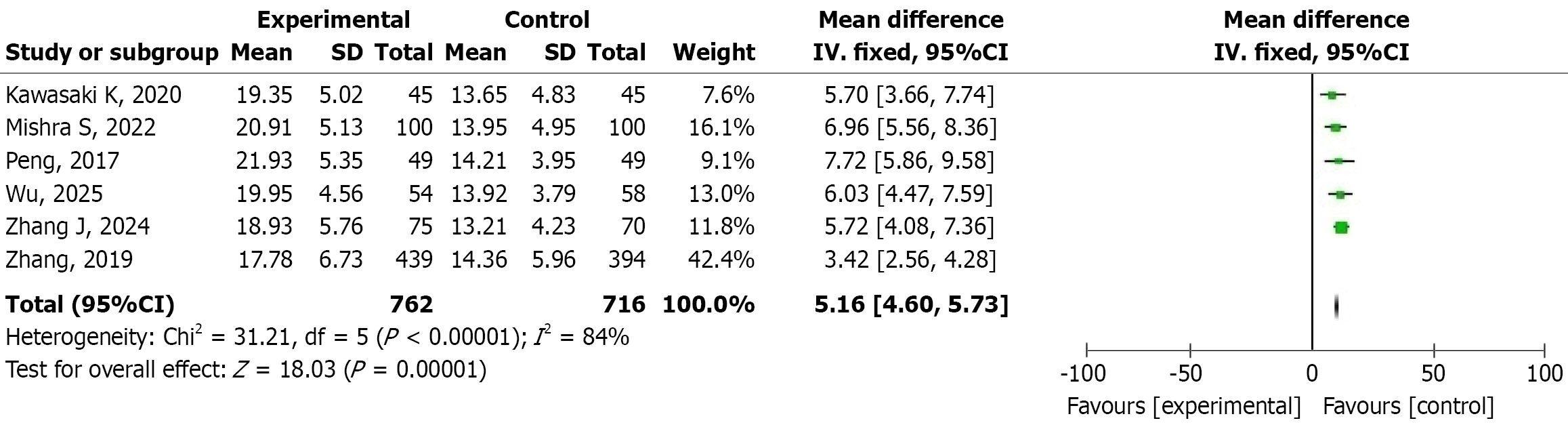
Figure 5 Meta-analysis of the effect of Chinese herbal enema on intestinal flora improvement in postoperative gastric cancer patients.
Including 6 studies, analyzed using a random-effects model. Pooled effect size mean difference = 5.16 (95% confidence interval: 4.60-5.73, P < 0.00001), suggesting that Chinese herbal enema significantly improves intestinal flora status. Heterogeneity test I2 = 84% (P < 0.00001), with considerable heterogeneity present. Squares represent individual study effect sizes and weights, and the diamond represents the pooled effect size. CI: Confidence interval.
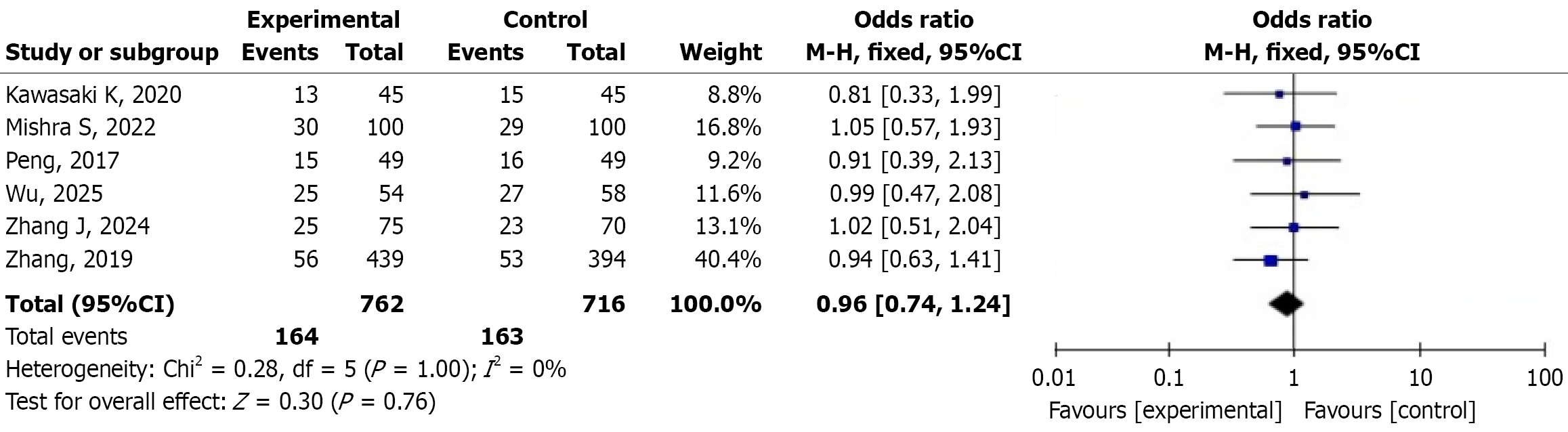
Figure 6 Meta-analysis of postoperative complication rates in both groups.
Including 6 studies, analyzed using a fixed-effects model. Pooled odds ratio = 0.96 (95% confidence interval: 0.74-1.24, P = 0.76), suggesting no statistically significant difference between groups. Heterogeneity test I2 = 0% (P = 1.00), with excellent homogeneity among studies. Squares represent individual study effect sizes, and the diamond represents the pooled effect size. CI: Confidence interval.
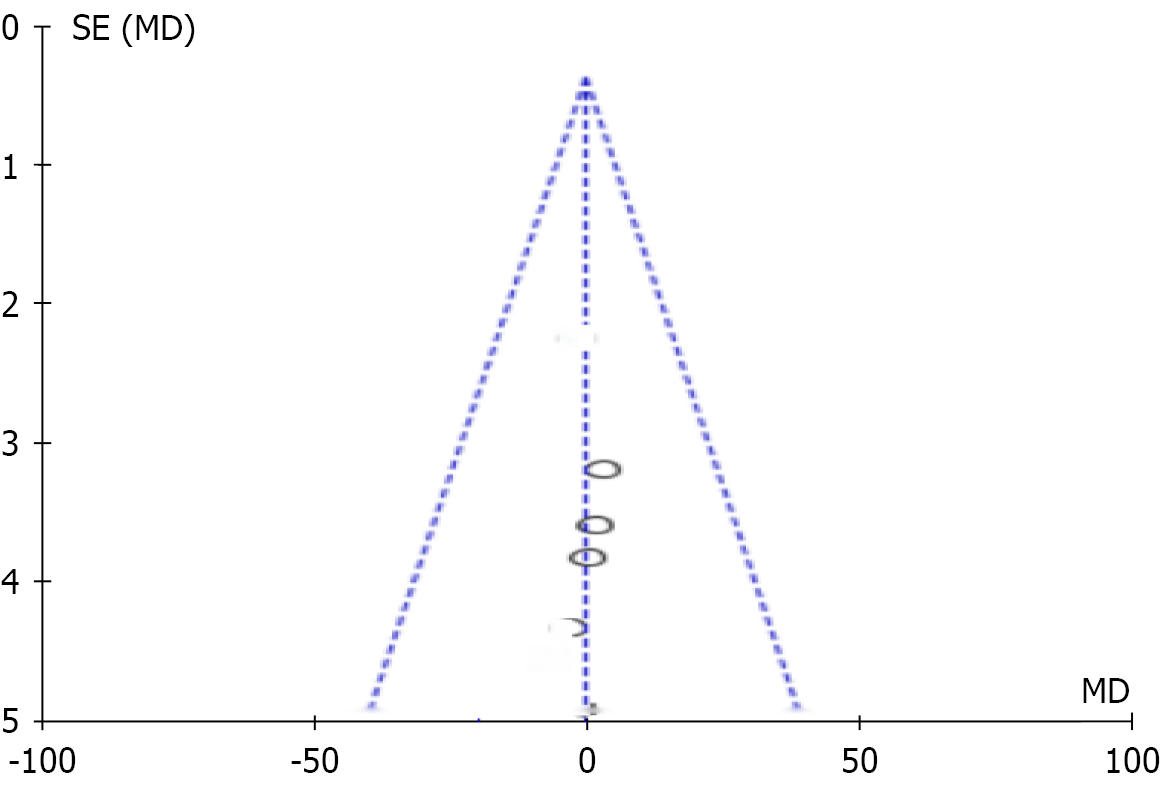
Figure 7 Funnel plot for bias assessment of postoperative complications in the meta-analysis.
The funnel plot is used to assess publication bias for the complication outcome. The vertical axis is standard error SE(log[odds ratio]), and the horizontal axis is odds ratio. The scatter distribution of 6 studies is basically symmetric, concentrated at the top and middle of the funnel, with no obvious asymmetry, suggesting no significant publication bias. MD: Mean difference.
- Citation: Xie XX, Wang ZH, Zhang SL, Yang W. Effect of Chinese herbal medicine enema on postoperative gastrointestinal function in gastric cancer patients: A meta-analysis. World J Gastrointest Surg 2026; 18(5): 116488
- URL: https://www.wjgnet.com/1948-9366/full/v18/i5/116488.htm
- DOI: https://dx.doi.org/10.4240/wjgs.v18.i5.116488