
















Copyright: ©Author(s) 2026.
World J Gastrointest Surg. Oct 27, 2026; 18(10): 120555
Published online Oct 27, 2026. doi: 10.4240/wjgs.120555
Published online Oct 27, 2026. doi: 10.4240/wjgs.120555
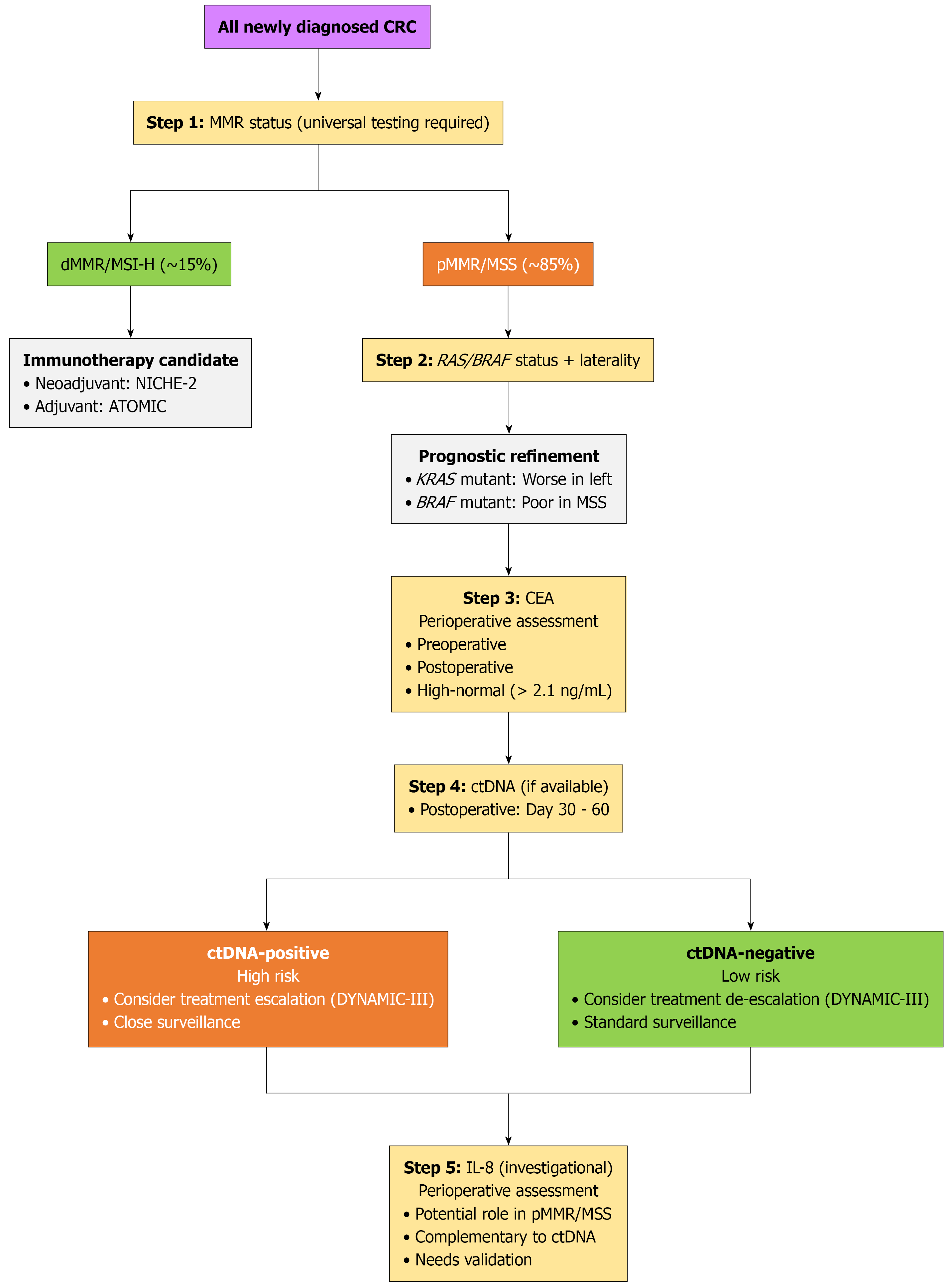
Figure 1 This sequential algorithm illustrates a stepwise approach to integrating established and emerging biomarkers into clinical decision-making for colorectal cancer.
Mismatch repair status is the first and most critical step, directing patients with deficient mismatch repair tumors toward immunotherapy (neoadjuvant or adjuvant). For proficient mismatch repair/microsatellite stable tumors, RAS/BRAF mutational status and tumor laterality refine prognosis. Perioperative carcinoembryonic antigen provides additional risk stratification, with high-normal levels (≥ 2.1 ng/mL) warranting closer surveillance. Where available, postoperative circulating tumor DNA enables dynamic risk assessment and treatment adjustment, with the DYNAMIC-III trial demonstrating safe de-escalation in circulating tumor DNA-negative patients. Interleukin-8 remains investigational, with potential complementary value in selected subgroups. All decisions should be made in a multidisciplinary team context, weighing all factors. Interleukin-8 is presented as an investigational biomarker and should not be interpreted as a clinically validated marker. CRC: Colorectal cancer; MMR: Mismatch repair; dMMR: Deficient mismatch repair; pMMR: Proficient mismatch repair; MSI-H: Microsatellite instability-high; MSS: Microsatellite stable; CEA: Carcinoembryonic antigen; ctDNA: Circulating tumor DNA; IL-8: Interleukin-8.
- Citation: Ismaili N. Evolving landscape of biomarkers in colorectal cancer: From interleukin-8 to integrated multi-marker strategies. World J Gastrointest Surg 2026; 18(10): 120555
- URL: https://www.wjgnet.com/1948-9366/full/v18/i10/120555.htm
- DOI: https://dx.doi.org/10.4240/wjgs.120555