
















Copyright: ©Author(s) 2026.
World J Diabetes. Jun 15, 2026; 17(6): 120343
Published online Jun 15, 2026. doi: 10.4239/wjd.120343
Published online Jun 15, 2026. doi: 10.4239/wjd.120343
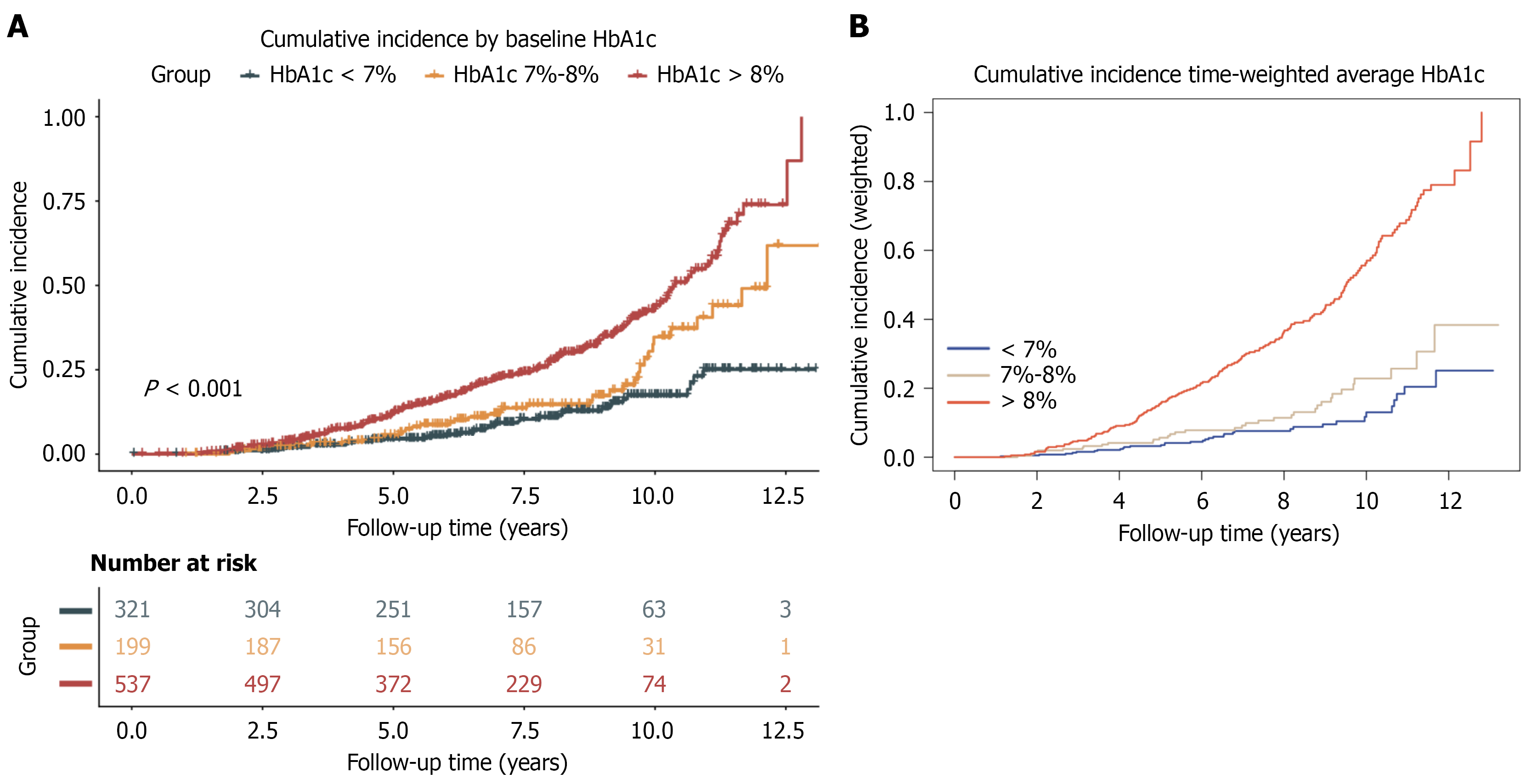
Figure 1 Cumulative incidence curves for incident diabetic kidney disease according to baseline and time-weighted average glycated hemoglobin.
A: Standard Kaplan-Meier cumulative incidence curves stratified by baseline glycated hemoglobin (HbA1c); B: Simon-Makuch cumulative incidence curves stratified by time-weighted average HbA1c, analyzed as a time-dependent covariate. Participants were categorized by predefined clinical thresholds: < 7% (class 1), 7%-8% (class 2), and > 8% (class 3). Differences among groups were evaluated by the log-rank test (overall P < 0.001). HbA1c: Glycated hemoglobin.
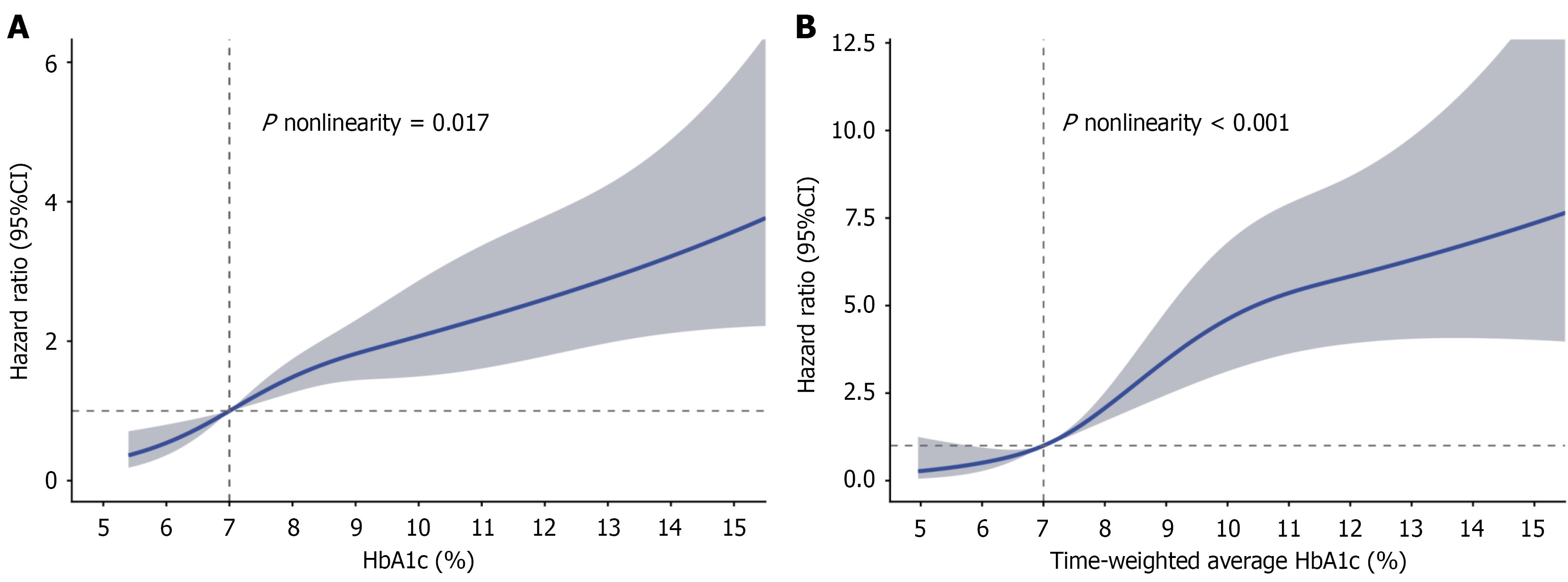
Figure 2 Restricted cubic spline curves for the association of glycated hemoglobin with the risk of incident diabetic kidney disease.
A: Baseline glycated hemoglobin (HbA1c); B: Time-weighted average HbA1c. The solid blue lines indicate the estimated hazard ratios, and the shaded regions represent the 95% confidence intervals. The models were fully adjusted for age, sex, body mass index, hypertension, major adverse cardiovascular and cerebrovascular events, hyperlipidemia, angiotensin-converting enzyme inhibitor/angiotensin II receptor blocker treatment, diabetes duration, blood urea nitrogen, creatinine, uric acid, low-density lipoprotein cholesterol, lipoprotein(a), urinary albumin-to-creatinine ratio, and measurement intensity. The vertical dashed line indicates the inflection point. The horizontal dashed lines represent the reference hazard ratio of 1.0. HbA1c: Glycated hemoglobin; CI: Confidence interval.
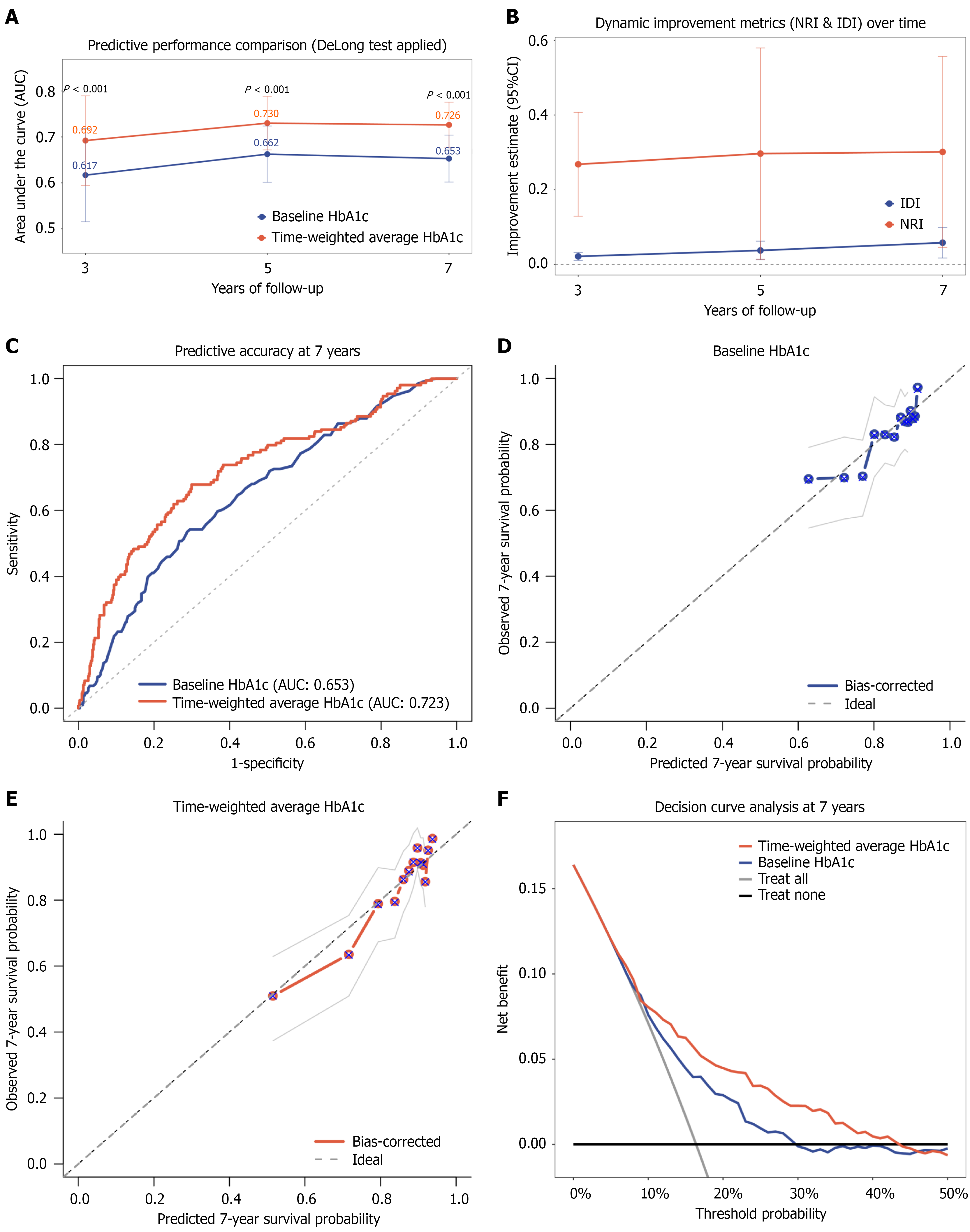
Figure 3 Predictive performance and clinical utility of baseline glycated hemoglobin vs time-weighted average glycated hemoglobin for incident diabetic kidney disease.
A: Comparison of time-dependent areas under the receiver operating characteristic curves (AUCs) at 3 years, 5 years, and 7 years of follow-up (P values derived from DeLong’s test); B: Dynamic variations of integrated discrimination improvement and net reclassification improvement metrics over time; C: Time-dependent receiver operating characteristic curves comparing the discriminative ability of the two metrics for predicting diabetic kidney disease at 7 years; D: Calibration curves assessing the agreement between predicted and observed 7-year survival probabilities for baseline glycated hemoglobin (HbA1c); E: Calibration curves assessing the agreement between predicted and observed 7-year survival probabilities for time-weighted average HbA1c; F: Decision curve analysis evaluating the net clinical benefit of the predictive models at 7 years across a range of threshold probabilities. AUC: Area under the receiver operating characteristic curve; HbA1c: Glycated hemoglobin; IDI: Integrated discrimination improvement; NRI: Net reclassification improvement.
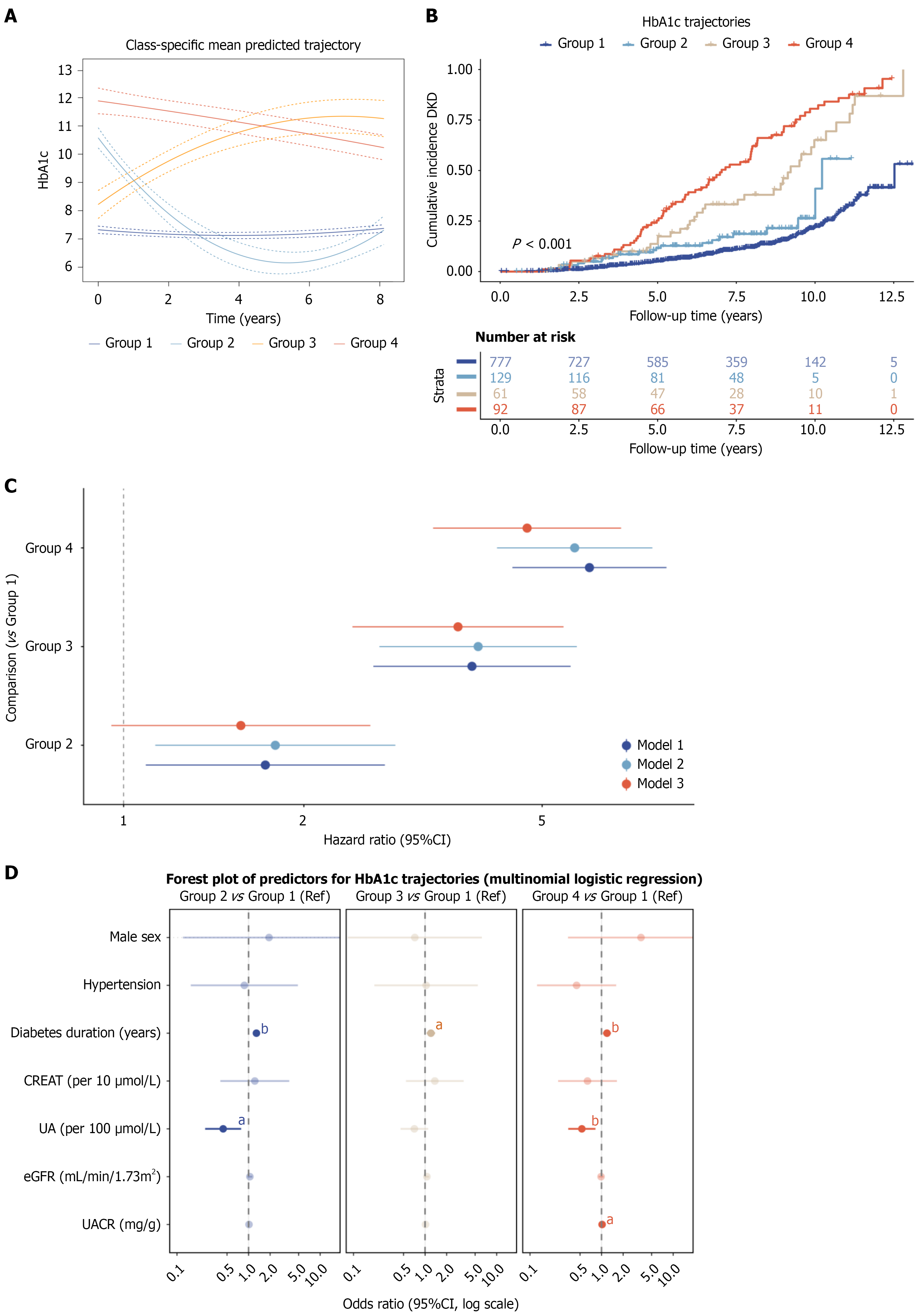
Figure 4 Identification of glycated hemoglobin trajectories and their associations with incident diabetic kidney disease.
A: Class-specific mean predicted trajectories of glycated hemoglobin (HbA1c) over time, derived from group-based trajectory modeling; B: Kaplan-Meier cumulative incidence curves for diabetic kidney disease (DKD) stratified by the four identified HbA1c trajectory groups; C: Forest plot illustrating the hazard ratios and 95% confidence intervals for incident DKD across trajectory groups, with group 1 (low-stable) as the reference. Model 1 was unadjusted. Model 2 was adjusted for age and sex. Model 3 was adjusted for age, sex, body mass index, hypertension, major adverse cardiovascular and cerebrovascular events, hyperlipidemia, angiotensin-converting enzyme inhibitor/angiotensin II receptor blocker treatment, diabetes duration, blood urea nitrogen, creatinine, uric acid, low-density lipoprotein cholesterol, lipoprotein(a), urinary albumin-to-creatinine ratio, and measurement intensity; D: Forest plot showing the odds ratios and 95% confidence intervals from multivariable multinomial logistic regression analysis for baseline predictors of trajectory membership, with group 1 serving as the reference category. aP < 0.05 vs group 1. bP < 0.01 vs group 1. DKD: Diabetic kidney disease; HbA1c: Glycated hemoglobin; CI: Confidence interval; CREAT: Creatinine; UA: Uric acid; eGFR: Estimated glomerular filtration rate; UACR: Urinary albumin-to-creatinine ratio.
- Citation: Zou HY, Jiang H, Guo XD, Wen ZY, Shi Y, Zhou AD, Wang MM, Xu F, Cai MY. Dynamic glycemic exposure and trajectory profiling for incident diabetic kidney disease: A longitudinal cohort study. World J Diabetes 2026; 17(6): 120343
- URL: https://www.wjgnet.com/1948-9358/full/v17/i6/120343.htm
- DOI: https://dx.doi.org/10.4239/wjd.120343