
















Copyright: ©Author(s) 2026.
World J Diabetes. Jun 15, 2026; 17(6): 120010
Published online Jun 15, 2026. doi: 10.4239/wjd.120010
Published online Jun 15, 2026. doi: 10.4239/wjd.120010
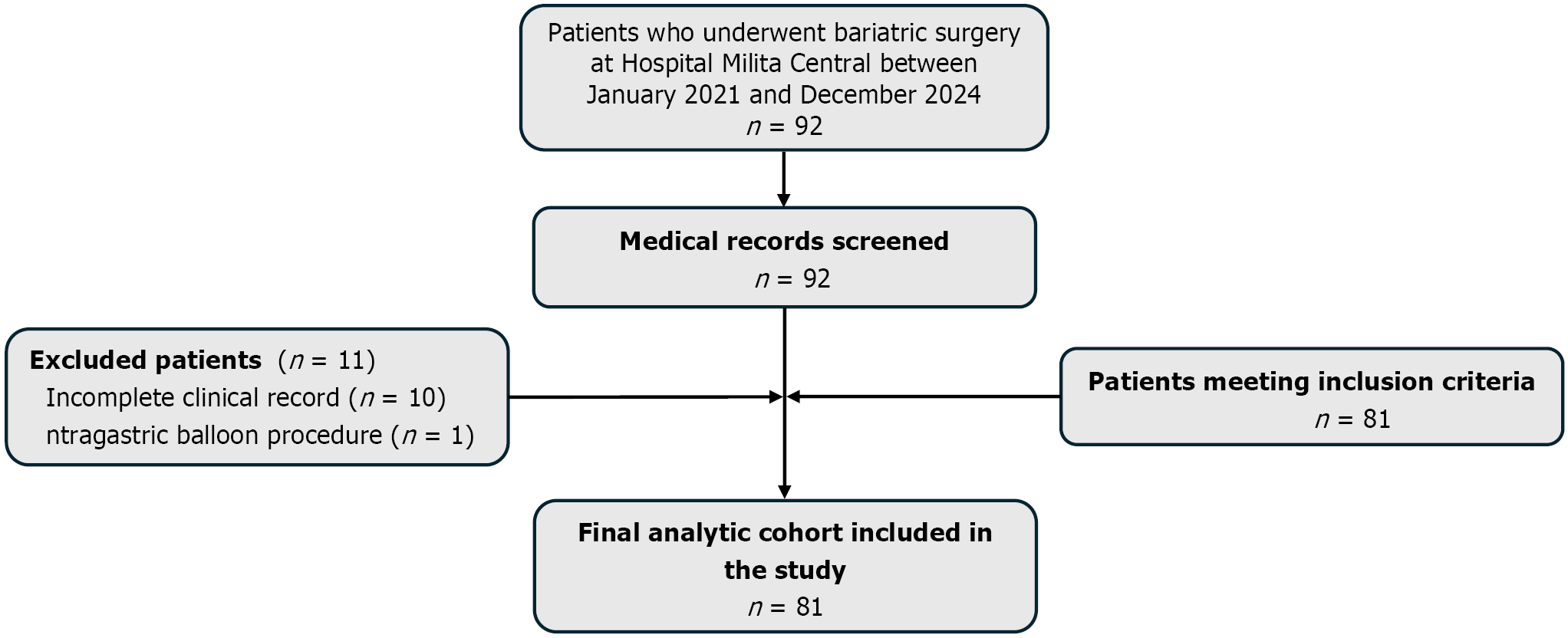
Figure 1
Flow diagram of patient selection for the retrospective cohort of patients undergoing bariatric surgery at Hospital Militar Central between 2021 and 2024.
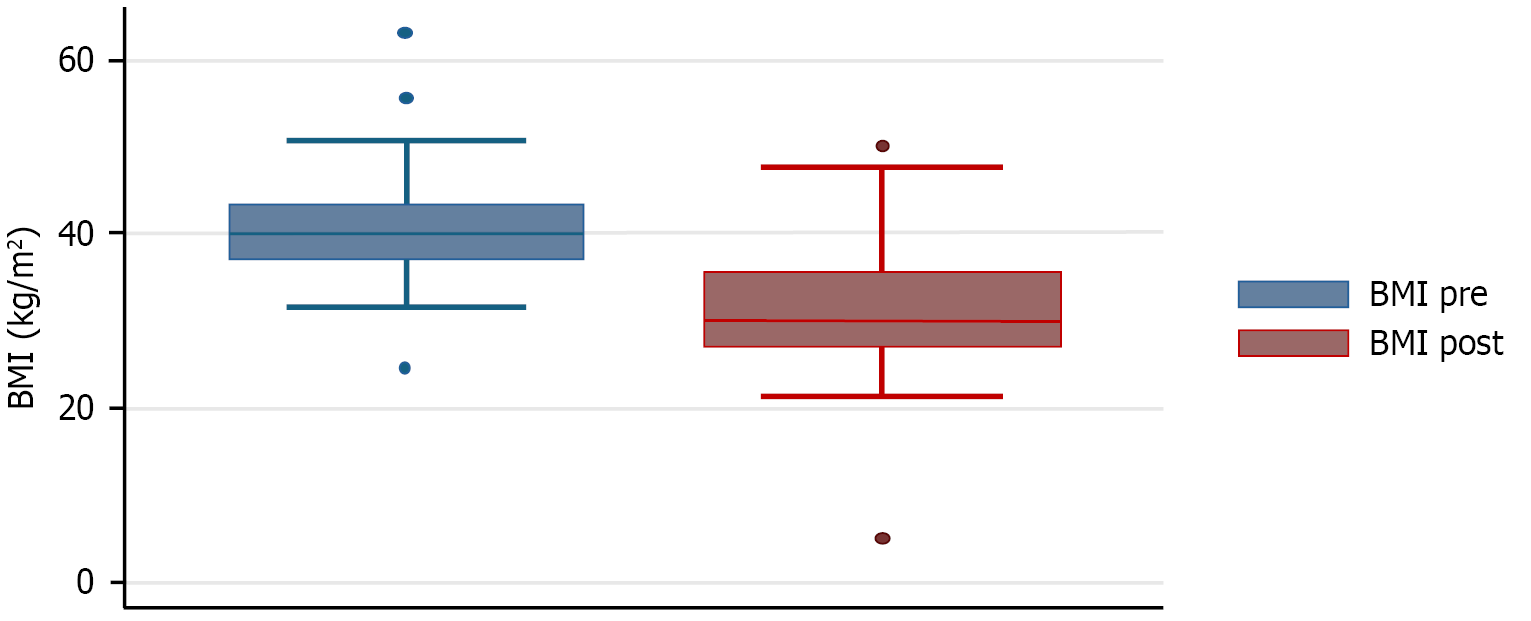
Figure 2 Changes in body mass index before and after bariatric surgery in the overall cohort.
Box plots show the distribution of body mass index values in the preoperative period and during postoperative follow-up. The boxes represent the interquartile range, the horizontal line within each box indicates the median, whiskers represent the range excluding outliers, and dots indicate outlier values. BMI: Body mass index.
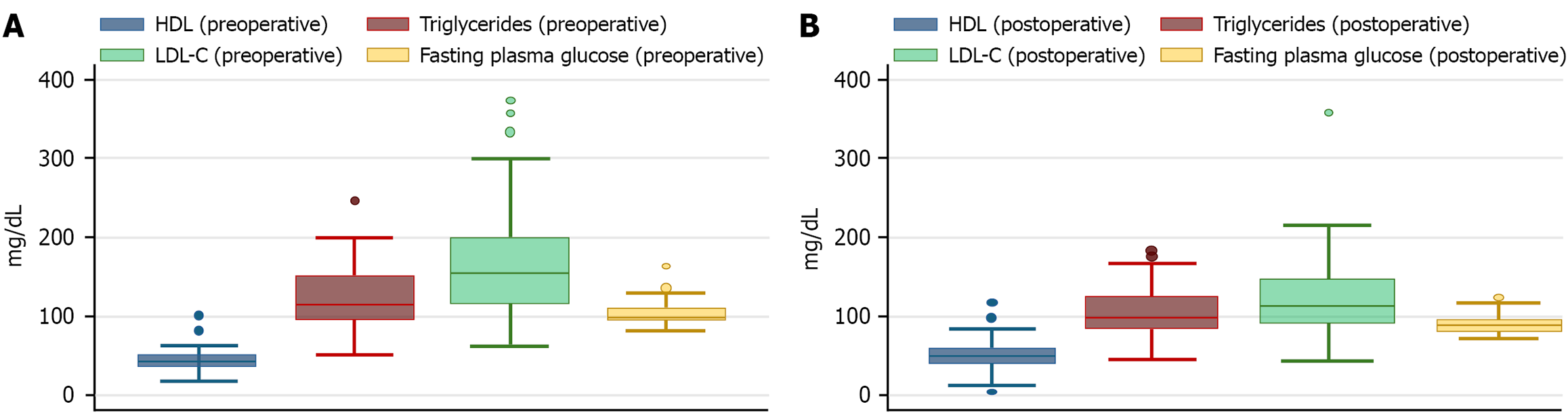
Figure 3 Changes in lipid profile before and after bariatric surgery in the overall cohort.
A: Preoperative lipid profile in overall cohort; B: Postoperative lipid profile in overall cohort. Box plots show the distribution of body mass index values in the preoperative period and during postoperative follow-up. The boxes represent the interquartile range, the horizontal line within each box indicates the median, whiskers represent the range excluding outliers, and dots indicate outlier values. HDL: High-density lipoprotein; LDL-C: Low-density lipoprotein cholesterol.
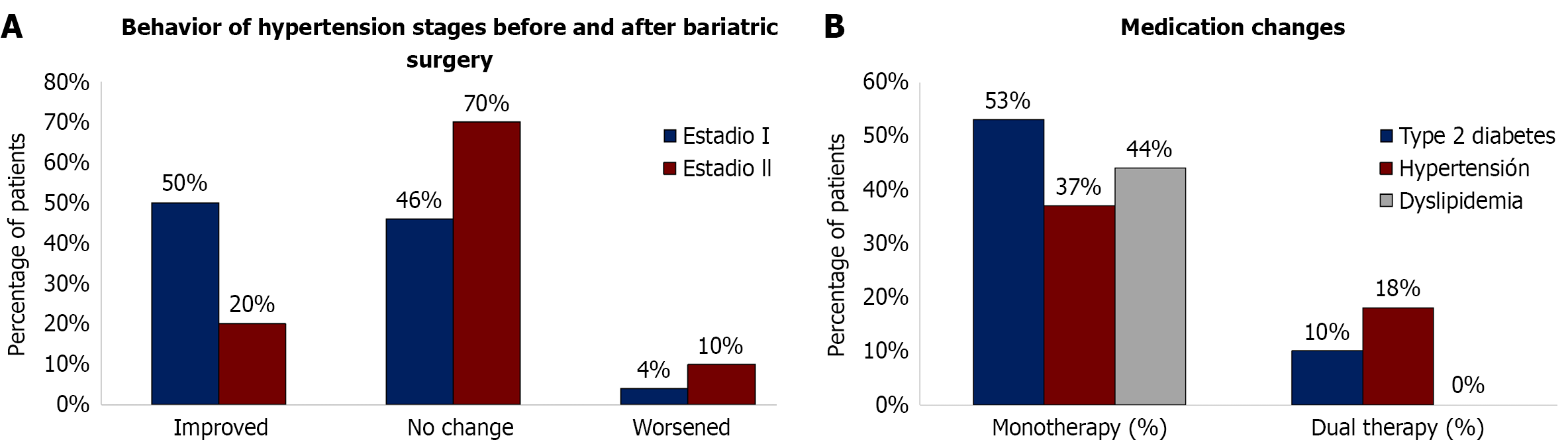
Figure 4 Behavior of hypertension stages before and after bariatric surgery.
A: Classification of hypertension stages at baseline and postoperatively; B: Pharmacological management of diabetes, hypertension, and dyslipidemia before and after surgical intervention.
- Citation: Cisneros MA, Portilla N, Rincon O, Uscategui C, Alvarez M, Guzman I, Parra D, Llanos C, Romero I. Improvement in glycemic control after bariatric surgery beyond weight loss. World J Diabetes 2026; 17(6): 120010
- URL: https://www.wjgnet.com/1948-9358/full/v17/i6/120010.htm
- DOI: https://dx.doi.org/10.4239/wjd.120010