
















©2013 Baishideng Publishing Group Co.
World J Gastrointest Endosc. Mar 16, 2013; 5(3): 128-131
Published online Mar 16, 2013. doi: 10.4253/wjge.v5.i3.128
Published online Mar 16, 2013. doi: 10.4253/wjge.v5.i3.128
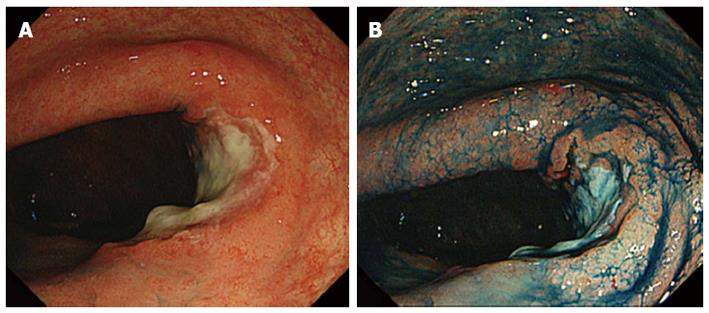
Figure 1 An advanced neoplasm, 35 mm in size, in the rectum.
A: Colonoscopy shows an ulcerative lesion in the rectum, the biopsy of which proved to be well differentiated adenocarcinoma; B: Chromoendoscopy with indigo carmine dye spray shows the lesion clearly.
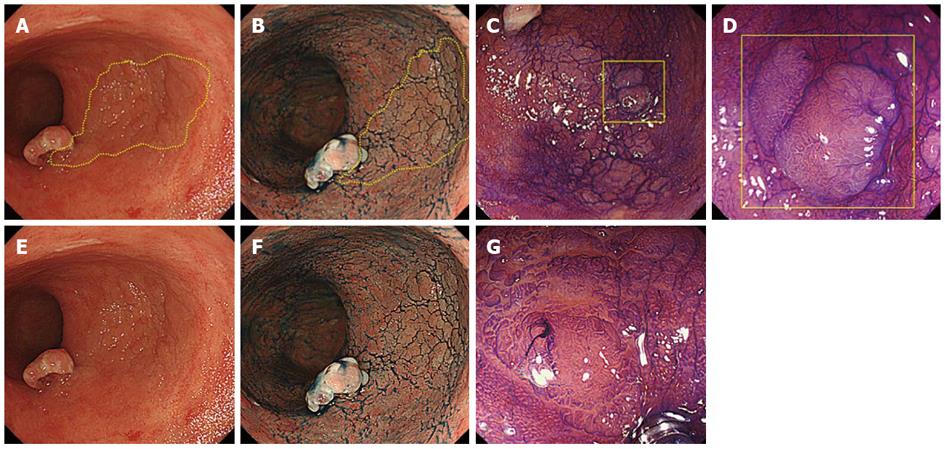
Figure 2 A flat adenoma, 35 mm in size, in the anterior wall of the low rectum.
A: The lesion was detected as a slight decline in vascular permeability on routine observation; B: Although we could highlight the irregular surface by spraying indigo carmine solution, it was difficult to trace the margin of the lesion; C, D: The surface structure of the lesion is composed mainly of IIIL pits with partially mixed IV pits on magnifying endoscopy with crystal violet staining; E: Figure A showing lesion borders without the aid of yellow lines; F: Figure B showing lesion borders without the aid of yellow lines; G: Magnifying endoscopy with crystal violet staining effectively delineates the margin of the lesion.
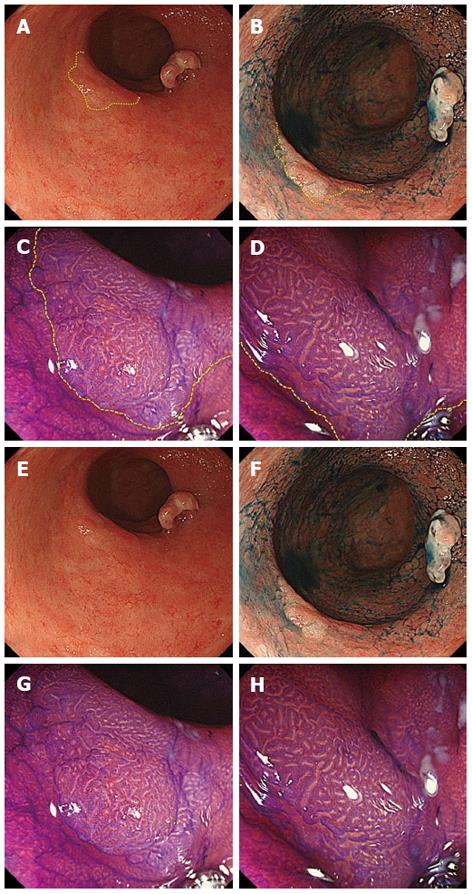
Figure 3 A slightly elevated adenoma, 10 mm in size, in the posterior wall of the low rectum.
A: The lesion was detected with a slight decline in vascular permeability on routine observation; B: Although we could highlight the irregular surface by spraying indigo carmine solution, it was not possible to determine the area of the lesion; C: Regarding surface structure, the lesion is composed mainly of IIIL pits with partially mixed IV pits on magnifying endoscopy with crystal violet staining; D: Magnifying endoscopy with crystal violet staining effectively delineates the margin of the lesion; E: Figure A showing lesion borders without the aid of yellow lines; F: Figure B showing lesion borders without the aid of yellow lines; G: Figure C showing lesion borders without the aid of yellow lines; H: Figure D showing lesion borders without the aid of yellow lines.
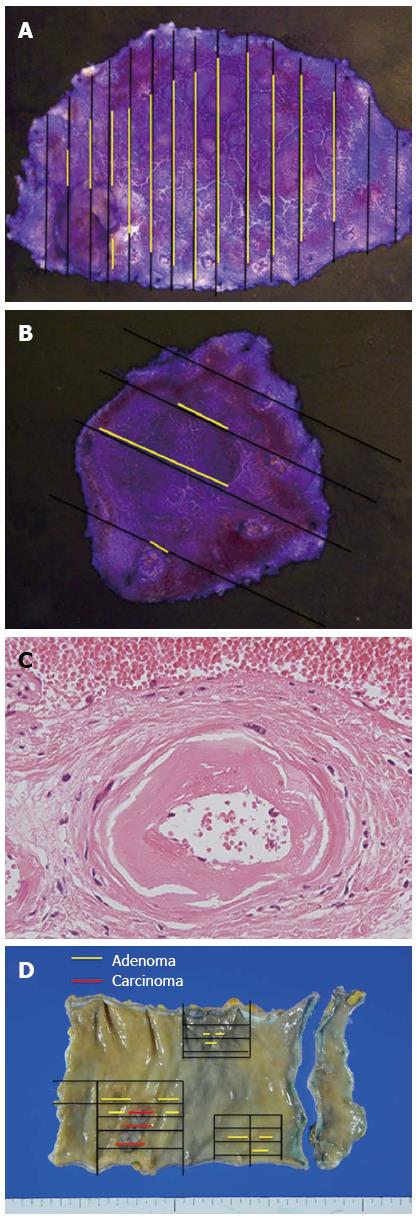
Figure 4 Resected specimens.
A: A complete one-piece resection of 52 mm × 30 mm in size with tumor-free margins was achieved; B: Complete one-piece resection with tumor-free margins 18 mm × 18 mm; C: Microscopy of the resected specimens revealed increased vessel wall thickness in the submucosal layer and the serous coat of the large intestine around the tumors, indicating chronic radiation proctitis; D: A well-differentiated adenocarcinoma, 35 mm × 18 mm, invading beyond the muscularis propriae (pT3). None of the 10 lymph nodes retrieved were involved (pN0). Moreover, adenomatous change, which endoscopic observation failed to detect, was found.
- Citation: Asayama N, Ikehara H, Yano H, Saito Y. Endoscopic submucosal dissection of multiple flat adenomas in the radiated rectum. World J Gastrointest Endosc 2013; 5(3): 128-131
- URL: https://www.wjgnet.com/1948-5190/full/v5/i3/128.htm
- DOI: https://dx.doi.org/10.4253/wjge.v5.i3.128